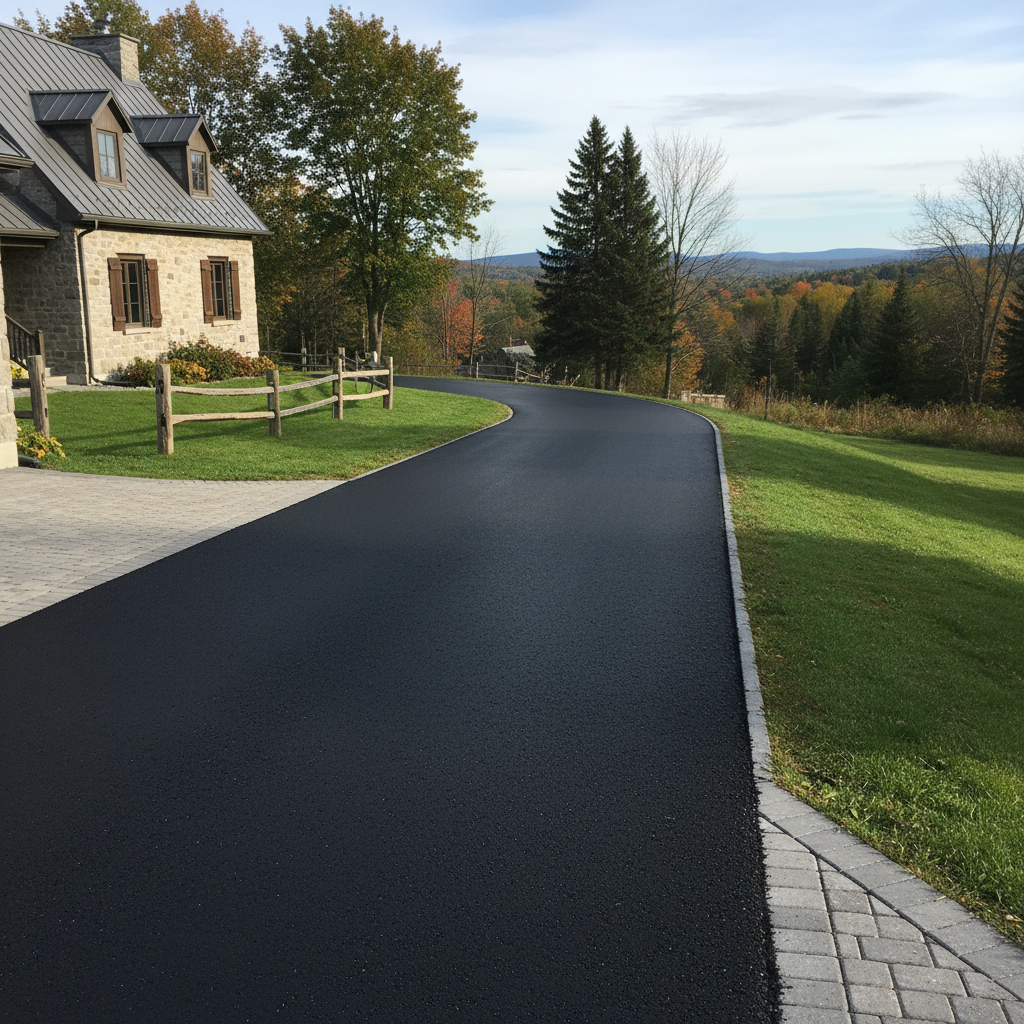
Driveway paving options and costs in Redcliff
Redcliff homeowners typically have three driveway directions: asphalt for value, interlocking pavers for curb appeal, or concrete for a hard, long-wearing surface. In Redcliff, most households live in single-detached homes—77.8% of dwellings—so driveway paving is a frequent, practical upgrade. The homeowner share is also strong (1,685 homeowner households, 77.1% of households own), which means you’ll often see repeat work as properties age; notably, 54.7% of homes were built before 1981, and older sites commonly need re-grading, drainage fixes, or partial base rebuilds before any new surface will last.
In the Lethbridge–Medicine Hat area, pricing is heavily influenced by frost depth and freeze–thaw cycles. Southern Alberta winters can drive frost penetration to around the 6 ft range, so contractors often design bases and buried structures deeper than you’d see in milder climates. That pushes excavation and compaction scope up, especially where clay or poor drainage shows up. The paving season is also shorter—hot-mix asphalt requires sustained air temperatures above about 10°C—so spring scheduling windows fill quickly and can raise unit rates.
Local demand is especially noticeable around established residential pockets like the downtown and central Redcliff areas, where many driveways tie into older lots and access is tight for equipment and hauling. With that in mind, here’s a side-by-side comparison of typical installed costs so you can benchmark quotes before site measures and base repairs.
| Material |
Lifespan |
Maintenance |
Best For |
Price per sq ft |
| Asphalt (new installation, proper base) |
15–25 years |
Seal 3–5 years after placement, then every 3–5 years |
Best balance of upfront cost and performance on a rebuilt base |
$10.50–$18.50 |
| Asphalt (overlay on existing gravel base) |
10–18 years |
Seal and patch as needed; performance depends on existing drainage |
Budget option when base is stable and properly graded |
$7.50–$14.00 |
| Interlocking concrete pavers |
25–40+ years |
Weed control if needed; reset/replace individual stones |
Long-term curb appeal and easy spot repairs |
$15.00–$26.00 |
| Poured concrete (broom finish) |
20–35 years |
Reseal optional; manage cracking with proper base |
Clean look and durable surface for plowing |
$16.00–$28.00 |
| Exposed aggregate concrete |
20–35 years |
Reseal optional; occasional patching |
Slip-resistant finish with decorative texture |
$20.00–$35.00 |
| Gravel / crushed stone (budget option) |
3–8 years |
Re-level and top up every 1–3 years |
Low-cost, temporary surface while planning longer-term improvements |
$4.00–$9.00 |
Prices are estimates only and vary by project scope, site access and material selection.
What affects the price of paving in Redcliff
If you’re seeing two quotes that differ by 30–50% for what looks like the same driveway, that gap is usually explained by base preparation and site conditions—not just the surface material. In Lethbridge–Medicine Hat and across Alberta, frost depth and freeze–thaw cycles are decisive cost factors. With southern Alberta commonly seeing frost penetration around the 6 ft range, contractors often require a thicker, well-compacted granular base to prevent frost heave and early cracking. In milder regions, you might get away with less granular thickness; here, that depth can mean extra excavation, more aggregate, and more time to compact in lifts.
The paving season also tightens scheduling. Asphalt crews need workable conditions (air temperatures generally above about 10°C), and when late spring rain or early cold snaps hit, contractors either rebook or add crews to protect timelines. That concentration of demand can push asphalt installation rates toward the upper end of the bands—so one driveway might land around the lower side near $6,000 – $12,000, while another with heavy base rebuilds can move closer to the high end.
Concrete pricing can also move with your site. For example, if your driveway is on a clay-heavy lot, engineers and contractors often recommend extra granular underdrainage or a deeper base to control pumping; that can push a poured slab from a straightforward install toward the higher end of the typical $8,000 – $16,000 concrete band. If your existing apron and approach need forms, tie-ins, or dowel/edge detailing, costs rise even when square footage is similar. Conversely, if your old asphalt is well-drained and sound, an overlay strategy can lower excavation and reduce total cost.
| Price Factor |
Why It Matters |
Cost Impact |
| Driveway area in sq ft |
Most materials and production time scale directly with surface area |
Major driver (often the biggest line item) |
| Base depth required |
Frost line determines granular thickness to prevent heaving and cracking |
Major driver; deeper frost design increases excavation/aggregate |
| Grading and drainage work |
Slope corrections, ditches, culverts, and subgrade moisture control |
Can add 10–30% depending on severity and access |
| Tear-out of existing surface |
Breaking/hauling concrete or old asphalt; disposal fees |
Moderate to major; heavily dependent on thickness and disposal haul |
| Edge restraints and curbing |
Prevents pavers/spread, helps asphalt maintain shape and drainage lines |
Moderate; cost rises with complex radii and long edges |
| Sealing requirement |
Asphalt needs sealing to reduce oxidation and water intrusion |
Moderate; typically budget for a follow-up service 6–12 months later |
| Site access |
Narrow gates, limited staging, and long pushes/slopes for equipment |
Moderate; can add labour time and smaller production rates |
| Asphalt mix specifications |
Freeze–thaw-rated mix and proper binder content for Southern Alberta conditions |
Moderate; better mixes cost more but reduce early failures |
Permits & regulations in Alberta
In Alberta, paving a private driveway on your own property typically does not require a building permit. Where approvals often come into play is work that touches municipal infrastructure—especially anything in the municipal right-of-way. In practical terms for Redcliff homeowners, this is usually the difference between (1) replacing or paving within your lot versus (2) changing the way your driveway ties into the street.
Work that usually does NOT require a permit: removing and repaving your driveway surface within your property lines, installing a new asphalt or concrete field, adding standard subbase where confined to your lot, and replacing existing on-lot edges/liners.
Work that typically DOES require municipal approval: new curb cuts or widening an existing cut, altering boulevard areas, changing storm drainage patterns, rerouting/adjusting drainage that affects ditch flow, or any work that changes how water discharges toward/away from the road.
For utilities, use Alberta One-Call before any excavation so locates are marked on site.
To verify a contractor properly in Alberta, ask for: (1) licence info relevant to their trade/coverage and confirm it through the provincial/appropriate online registries; (2) certificate of insurance naming you/your property correctly where required—look for liability coverage limits and current dates; and (3) WSIB/WCB coverage proof if workers are involved. Request a clearance letter or current coverage confirmation and keep copies with your contract. If they can’t provide documentation, that’s a stop sign—especially in a frost-driven climate where excavation and base work must be done right.
Asphalt vs pavers vs concrete for Redcliff driveways
For Redcliff driveways, the decision usually comes down to upfront budget versus how much maintenance flexibility you want after freeze–thaw seasons. Asphalt tends to be the lowest upfront option and performs well when the base is rebuilt to frost-resistant standards; the trade-off is that asphalt should be sealed regularly—often starting 6–12 months after placement, then every 3–5 years—to slow oxidation and water intrusion. Interlocking concrete pavers cost more upfront, but they’re the most forgiving for local damage: if a small section settles or cracks, a contractor can lift and reset individual stones rather than replacing the whole surface.
Poured concrete sits in the middle for price and longevity, but it’s more sensitive to base preparation and frost movement. If concrete isn’t properly air-entrained and the base isn’t dense and well-drained, freeze–thaw can accelerate surface scaling and cracking—especially where meltwater has nowhere to go. In Southern Alberta, drainage design matters: crews typically aim for a controlled slope and robust subdrainage where needed so water doesn’t saturate the base.
Depth-wise, Lethbridge–Medicine Hat projects generally require a deeper, well-compacted granular build than what you might see in milder areas, because frost heave risk is real. With plowing, sand and salt, asphalt can track well if it’s sealed and patched on time; pavers usually shrug off this routine better due to their segmental nature. Concrete can hold up very well, but it needs the right mix and base—or it may show hairline cracking over the winters.
As a budget example: if an asphalt driveway comes in around the lower end near $6,000 – $12,000 because your subgrade is stable, switching to pavers may add roughly the difference between asphalt and the paver range near $9,000 – $18,000. That extra cost is most justified when you value curb appeal in front-facing areas and want repairability without full replacement.
| Material |
Frost Resistance |
Curb Appeal |
Repair Method |
Lifespan |
Price Band |
| Asphalt (sealed regularly) |
Good with frost-rated base and proper drainage |
Medium |
Mill/patch or full resurfacing if widespread |
15–25 years |
$6,000 – $12,000 |
| Interlocking concrete pavers |
Excellent when installed on a stable base with edge restraints |
High |
Lift/reset individual pavers; localized fixes |
25–40+ years |
$9,000 – $18,000 |
| Poured concrete (air-entrained) |
Very good with air-entrained mix and dense base |
Medium–High |
Patch for small areas; resurfacing or slab replacement if extensive |
20–35 years |
$8,000 – $16,000 |
| Exposed aggregate concrete |
Very good with proper finishing and curing |
High |
Patch/replace affected sections; may require aesthetic matching |
20–35 years |
$10,000 – $20,000 |
| Permeable pavers (drainage grid) |
Excellent where drainage is a chronic issue |
High (modern look) |
Reset pavers; maintain infill/filters to protect drainage |
20–35+ years |
$10,500 – $22,000 |
| Chip seal / tar-and-chip |
Moderate; sensitive to base quality and raveling |
Low–Medium |
Spot patch; occasional re-chip |
6–12 years |
$5,000 – $10,000 |
How to choose a paving contractor in Redcliff
Picking the right paving contractor in Redcliff is mostly about checking documentation and making sure your quote matches your soil and frost reality. Start by verifying Alberta coverage: request proof of liability insurance (certificate with current dates and appropriate limits), and ask for confirmation of WSIB/WCB coverage if they employ workers. You can typically review the insurance certificate directly for validity and named parties, and confirm clearance/coverage status through the coverage provider’s documentation. For licensing, ask for their Alberta contractor/trade details and confirm it through the relevant online registry or verification channel when available; a reputable paving company won’t hesitate to send the exact licence/trade references they operate under.
Then, get 2–3 itemised written quotes. You want line items that break out labour and materials—especially excavation, granular base depth, compaction, drainage corrections, geotextile/subdrain options, formwork/edges, haul and disposal, and the surface course. Avoid quotes that are a single lump-sum number without explaining what changes based on base condition.
Read the scope carefully: what’s excluded (for example, soil replacement beyond a certain thickness, hauling away debris, cutting and patching at tie-ins, or permit handling)? Ask whether permit pull is included if the work touches the boulevard/right-of-way, and whether disposal is included in the price.
Warranty matters: confirm the workmanship warranty length, what product/manufacturer warranty covers, and whether coverage transfers if you sell the property. For payment, never pay more than 10–15% upfront; use a holdback until the job is complete and you’re satisfied with drainage and compaction checks. Get a start date and completion estimate in writing—weather changes can happen, but your schedule should be documented.
- Ask for a site-specific base design or at least the proposed granular base depth and compaction notes.
- Confirm whether geotextile/subdrain is included or only offered as an add-on after excavation.
- Ensure excavation and disposal are clearly stated (how many inches and where spoil goes).
- Request line items for edge restraints/curbing—especially for pavers.
- Ask who supplies and places the asphalt/concrete mix and what freeze–thaw specification is used.
- Get assurance the contractor will follow hot-mix temperature/air-temperature requirements (important in spring/fall).
- Verify liability insurance and WSIB/WCB paperwork before work begins.
- Confirm warranty details in writing: workmanship, surface defects, and exclusions.
- Require a written schedule including weather contingency and how delays are handled.
- Agree on payment milestones tied to completed stages (e.g., base approval before surface placement).
- Ask for an as-built drain/slope check or grade verification method.
- Confirm cleanup and final grade restoration (topsoil/seeding/landscaping ties-in if applicable).
In Redcliff, common red flags include: a quote that skips granular base depth details; refusal to provide insurance/coverage clearance; vague “weather-dependent” schedules without a written plan; no mention of sealing for asphalt or curing for concrete; and contractors who won’t discuss drainage corrections even after they identify saturated/soft subgrade.
Frequently asked questions — paving in Redcliff
How do I compare paving quotes fairly?
In Redcliff and the wider Lethbridge–Medicine Hat region, “fair” comparisons come from matching scope, not just total price. Ask each contractor to itemise excavation, granular base depth (and whether it’s rebuilt below frost-susceptible material), compaction methods, drainage corrections, geotextile/subdrain options, edge restraints, and haul/disposal. For asphalt, confirm the freeze–thaw-rated mix and whether sealing is included or deferred for the first 6–12 months. If one quote looks cheaper but assumes an overlay on a marginal base, it can fail earlier during spring thaw. As a rough anchor, many driveways in this region land within asphalt paving at $6,000 – $12,000 or concrete at $8,000 – $16,000, but the base condition often determines where you actually fall.
Can asphalt be laid in cold weather in Redcliff?
Usually not reliably. Asphalt placement depends on air temperature and asphalt temperature; hot-mix asphalt needs appropriate conditions to compact and bond properly. In colder snaps in Alberta, even if the surface “looks dry,” compaction can fail and you can trap moisture or create weak joints that open up during the freeze–thaw cycle. For Redcliff, the practical paving season is typically late spring through early fall, when daytime temperatures can sustain workable conditions. A good contractor will either schedule placement when conditions meet requirements or delay the pour/placement. If someone promises asphalt in genuinely cold weather to hit a date, ask what temperature thresholds they’ll meet and how they’ll prevent early failures.
What is a driveway apron and do I need one in Redcliff?
A driveway apron is the transition section where your driveway meets the street (or curb area), designed to manage water and reduce damage from vehicle loads and plowing impacts. Whether you “need one” depends on your existing approach and how your driveway ties into the municipal area—especially if there’s a curb cut, boulevard grading, or drainage change. In many cases, the apron is needed to create a smooth, durable tie-in and to help control water runoff toward or away from the street. If any work involves the municipal right-of-way (like changing a curb cut or drainage direction), that typically requires municipal approval. A contractor should clearly indicate in their quote whether apron work is included and whether permits/approvals apply.
How do I maintain my driveway through Redcliff winters?
Winter maintenance in Redcliff is mostly about limiting water intrusion and avoiding excess abrasion. For asphalt, plan on regular patching of minor cracks and treat asphalt gently with plowing—use sharp scraping less aggressively than you would on rough gravel. Use sand/low-salt approaches when possible, because heavy de-icing salt can worsen surface ageing over time. Keep the driveway crowned or sloped correctly so meltwater doesn’t pond; if you see puddling after thaw, that’s a drainage red flag. For pavers, maintain joint sand and correct any areas that settle; pavers can be spot repaired if caught early. For concrete, use the right de-icer and avoid aggressive chipping, especially near edges. The best long-term maintenance is proper base and drainage from day one, which is why quotes should include those details.
Is it worth sealing a new driveway right away in Redcliff?
Often, yes—but not immediately in most cases. For asphalt, sealing right away can trap moisture if the pavement hasn’t cured enough. In Redcliff’s freeze–thaw environment, you’ll typically want to let the asphalt cure and then apply a seal coat when conditions are appropriate—commonly after the first season or within the first 6–12 months, depending on product and contractor guidance. After that, sealing every 3–5 years helps slow oxidation and water penetration, which protects the base from saturation and heave. If you’re comparing options, asphalt driveways commonly sit around $6,000 – $12,000, but sealing is part of keeping that cost-effective lifespan. If a contractor won’t discuss seal timing, ask for their written schedule and product recommendations.
What is a chip seal driveway and is it suited to Redcliff?
A chip seal (tar-and-chip) is an asphalt binder sprayed with aggregate chips for a textured wearing surface. It can be suited to Redcliff when your base is well-prepared and drainage is controlled; however, it generally doesn’t match the longevity of a full asphalt or paver install in freeze–thaw conditions. Where chip seal struggles is on marginal bases or where water ponds, because the chips can loosen (ravel) and the surface can degrade faster after repeated winter cycles. Some homeowners use it as a lower-cost interim surface, often in the ballpark of $5,000 – $10,000, but it usually needs more frequent maintenance or re-chipping than new asphalt. If you’re considering chip seal, ask the contractor to explain the base/granular requirements and how they’ll protect against frost-related movement.