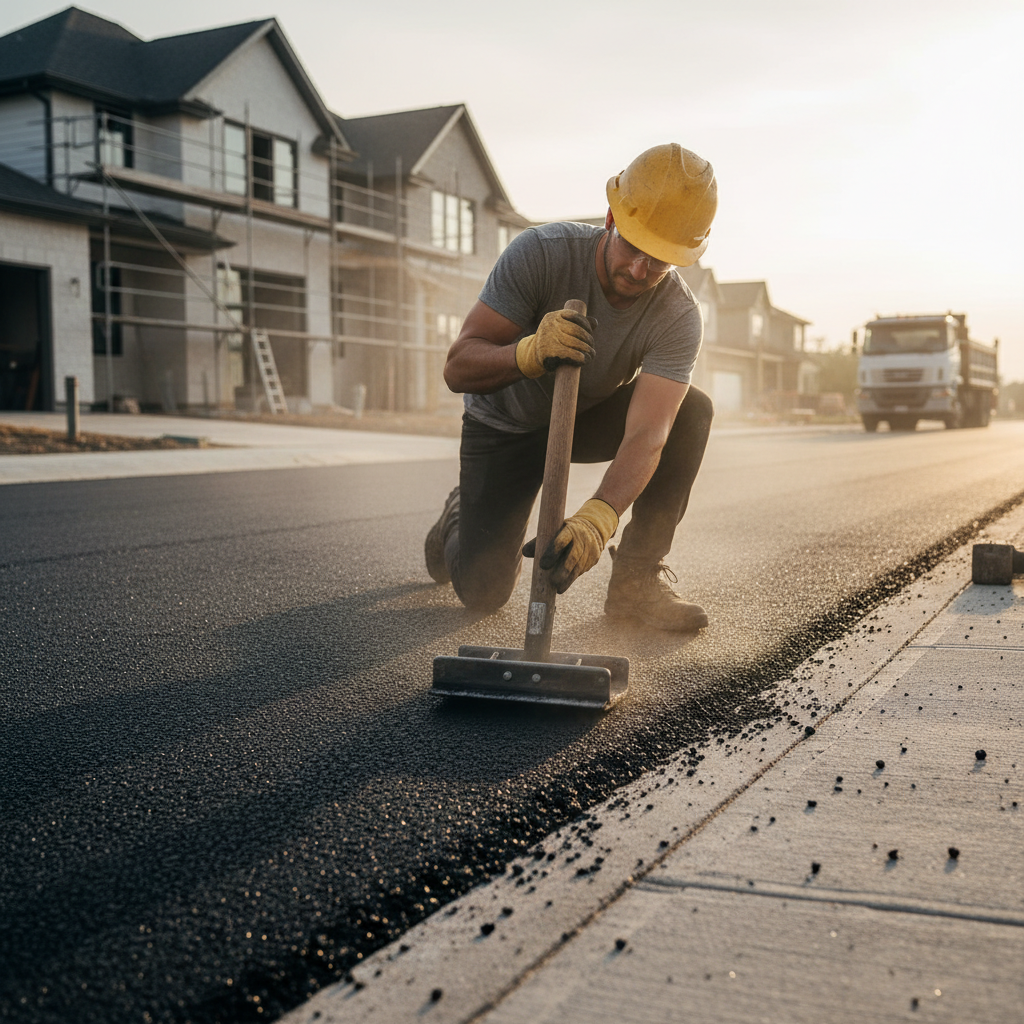
Driveway paving options and costs in McKenzie Towne
McKenzie Towne, Alberta has a lot to like about its walkable community feel, but the driveway hardscape has to earn its keep through Calgary’s cold continental winters. With a population of 17,505 (Statistics Canada, 2021 Census), the neighbourhood supports a steady pipeline of residential resurfacing work—especially along Stettler Avenue-area side streets and the busier approach roads where homeowners want their driveways to stay clean and usable through snow season.
Most private driveways here serve detached homes, which means lots of smaller-area projects that still require proper base preparation and reliable equipment access. In practice, that’s why paving quotes in McKenzie Towne can swing depending on lot conditions and how much excavation is needed.
Calgary’s freeze–thaw pattern is the big cost driver. Frost commonly penetrates to around 1.2 m, so contractors build deeper, well-graded granular bases and pay close attention to drainage and edge support to prevent heaving, cracking, and surface raveling. On top of that, the paving season is compressed—hot-mix asphalt generally needs air temperatures above 10°C for production and compaction—so spring and early-summer demand can tighten schedules and push pricing on smaller jobs.
Below is a homeowner-friendly comparison of the most common materials and typical ranges for McKenzie Towne. Use it to sanity-check what you’re being quoted before you compare contractor scopes in the next section.
| Material |
Lifespan |
Maintenance |
Best For |
Price per sq ft |
| Asphalt (new installation, proper base) |
15–25 years |
Sealcoating every 3–5 years; crack fill as needed |
Strong value with a smooth finish when base and drainage are done right |
$12–$20 |
| Asphalt (overlay on existing gravel base) |
10–18 years |
More frequent crack sealing; monitor edges and rutting |
Upgrading a gravel driveway without full removal when the base is stable |
$12–$18 |
| Interlocking concrete pavers |
25–35 years |
Occasional joint sand top-up; replace individual stones if damaged |
Premium curb appeal and easier localized repairs |
$18–$30 |
| Poured concrete (broom finish) |
25–40 years |
Seal as recommended; patch spalls; keep drainage positive |
Low visual fuss with a long service life when properly air-entrained |
$15–$25 |
| Exposed aggregate concrete |
25–40 years |
Seal periodically; repair surface chips locally |
Slip-resistant finish and higher-end look |
$18–$30 |
| Gravel / crushed stone (budget option) |
3–8 years |
Re-grade and top up annually; weed control; manage washouts |
Shortest upfront cost while you plan for a long-term hard surface |
$5–$10 |
Prices are estimates only and vary by project scope, site access and material selection.
What affects the price of paving in McKenzie Towne
In McKenzie Towne and across the Calgary region, two quotes for the “same” driveway can differ by 30–50% because the real work isn’t just laying asphalt or pouring concrete—it’s building a frost-stable assembly and making the site drain correctly. Some contractors price primarily on surface material, while others price what it truly takes: correct base thickness, compaction, proper slopes, and the excavation/haul-out needed to reach solid subgrade.
The decisive cost factor is Calgary’s frost depth and freeze–thaw cycles. Frost penetration to roughly 1.2 m means water expands in winter and subgrade can move if the granular base isn’t thick and well-graded. In colder regions like Alberta, that usually translates to a deeper, compacted granular base and more detailed edge support than you’d typically see in milder coastal climates. It also affects asphalt mix design—freeze-thaw-rated mixes cost more, but they hold up better under winter conditions.
Then there’s the paving season: because the window for asphalt placement is tighter (air temperatures often need to stay above about 10°C for proper production and compaction), crews and equipment are in higher demand from late spring to early fall. That seasonal pressure can raise per-square-foot pricing, particularly for smaller driveways where mobilization time is a bigger share of the total job.
Concrete examples in McKenzie Towne: if your driveway is near low spots where meltwater collects, drainage corrections and subbase rework can add costs that push concrete closer to the higher end of the $15,000 – $25,000 style project ranges you might see in Calgary (and can make pavers look more competitive). If your existing asphalt is sound, an overlay may keep you nearer the $12,000 – $18,000 style band for asphalt-style upgrades—but if the base is failing, overlay pricing can stop making sense quickly.
| Price Factor |
Why It Matters |
Cost Impact |
| Driveway area in sq ft |
Most line items scale directly with square footage and compaction coverage |
High—often the #1 driver of total price |
| Base depth required |
Frost line depth and soil stability dictate granular thickness to prevent heaving |
High—each added lift can increase excavation and hauling |
| Grading and drainage work |
Correct slope, ditching, and tie-ins prevent water ponding and edge failures |
Medium to high—especially for low spots or poor lot grading |
| Tear-out of existing surface |
Old asphalt/concrete must be broken, removed, and disposed of |
Medium—can become high if there’s thick reinforced concrete |
| Edge restraints and curbing |
Prevents paver spread and supports asphalt edges against winter movement |
Medium—often overlooked but crucial for longevity |
| Sealing requirement |
Asphalt relies on sealcoating to slow oxidation and help with winter surface wear |
Medium over the life of the driveway; may be recommended in Year 1 |
| Site access |
Narrow driveways or obstacles slow equipment, delivery, and grading |
Medium—labour time and extra handling increase costs |
| Asphalt mix specifications |
Freeze-thaw rated mixes improve performance in Alberta winters |
Low to medium—mix price can be offset by fewer early repairs |
Permits & regulations in Alberta
In Alberta, paving a private driveway within your own property usually does not require a building permit. That typically includes work like removing the existing driveway surface, excavating for base, installing asphalt or concrete, and connecting to your existing on-lot drainage—so long as you’re staying within your property boundaries and you’re not altering municipal infrastructure.
Where permits and approvals often come into play is when the job touches the municipal right-of-way. Examples include creating or changing a curb cut/apron, altering boulevard areas, or making changes to storm drainage that affect the public system. If your driveway ties into a municipal ditch or requires a change to how water runs toward a catch basin, the municipality may require approval before excavation or surface restoration.
To verify a contractor for a McKenzie Towne driveway, follow a simple step-by-step checklist. First, confirm licensing and business legitimacy using Alberta’s public online business/contractor information tools (and ensure the company is in good standing). Second, ask for a current certificate of insurance with liability coverage that matches the project scope. Third, confirm WSIB/WCB coverage so you’re protected if a worker is injured on-site. Finally, ask for a clearance letter or equivalent proof of coverage and review it for the company name and active dates.
Also remember to call Alberta One-Call before any digging, even for “minor” base work—utility locations can be buried deeper or shifted by previous landscaping.
Asphalt vs pavers vs concrete for McKenzie Towne driveways
For McKenzie Towne homeowners, the choice usually comes down to upfront cost, how much maintenance you’ll tolerate, and how each material behaves under Calgary’s deep freeze and winter routine (snowploughing, sanding/salting, and repeated freeze–thaw). Asphalt is typically the lowest upfront option, but it performs best with disciplined sealing every few years. Interlocking concrete pavers cost more to install, yet they’re repair-friendly: if a section settles or a damaged area occurs, you can lift and replace individual units instead of redoing the whole driveway. Poured concrete sits in the middle on price, but only if it’s correctly designed—air-entrainment and good finishing practices matter a lot in our cycle of freezing and thawing.
Base preparation and drainage are non-negotiable for all three. With frost commonly penetrating to about 1.2 m, the granular base and slope control help prevent water-driven movement. If water can’t get away, you’ll see cracking, rutting, and edge failures regardless of material.
Here’s a realistic dollar example: on a modest driveway, asphalt might land in the $12–$20 per-square-foot range, while pavers commonly sit closer to the $18–$30 band. The extra cost can be justified if you value curb appeal and want “localized repair” capability after winter settlement or future utility work. If you’re mainly focused on budget and smooth ride, asphalt often wins—provided the contractor installs the right base and plans sealing into the lifecycle.
| Material |
Frost Resistance |
Curb Appeal |
Repair Method |
Lifespan |
Price Band |
| Asphalt (sealed regularly) |
Good when base/drainage are engineered and mix is freeze–thaw rated |
Medium (clean, uniform look) |
Crack fill; localized patch; overlay when needed |
15–25 years |
$12–$20 |
| Interlocking concrete pavers |
Very good due to flexibility and rebuildable surface |
High (variety of colours/patterns) |
Lift-and-replace units; re-sand joints; re-level affected areas |
25–35 years |
$18–$30 |
| Poured concrete (air-entrained) |
Good to very good if air-entrained and properly jointed |
Medium to high (broom finish or upgrade finishes) |
Patch/patch-and-level; full replacement if widespread cracking |
25–40 years |
$15–$25 |
| Exposed aggregate concrete |
Good when properly mixed and finished for freeze–thaw durability |
Very high (texture and premium look) |
Localized resurfacing/patching depending on depth and damage |
25–40 years |
$18–$30 |
| Permeable pavers (drainage grid) |
Very good where drainage design is correct (subbase and outlets) |
High (modern, tidy look) |
Replace affected units; clean/maintain infiltration system |
20–30 years |
$20–$35 |
| Chip seal / tar-and-chip |
Moderate; better for low-speed surfaces and roads than driveways needing perfect ride |
Low to medium (more utility feel) |
Re-seal and top-up aggregates; patch localized failures |
7–12 years |
$8–$15 |
How to choose a paving contractor in McKenzie Towne
When you’re hiring a contractor for a driveway in Alberta, start by verifying coverage and accountability before you talk design. Ask for their current Alberta business details and confirm they’re operating under the correct company name on invoices. Request a certificate of liability insurance and check that it covers property damage and general liability at a level appropriate for your job size. Next, confirm WSIB/WCB coverage for their workers—get proof in writing (clearance letter or coverage document) and verify the dates are current. This protects you if there’s an injury on-site or if a claim is filed.
Then get 2–3 itemised written quotes. You want a breakdown that separates labour from materials (base, asphalt/concrete, geotextile if used, reinforcement if required, sealcoat or jointing materials, and disposal). Avoid “lump sum only” quotes that don’t explain what’s included. Read the scope for exclusions: is permit handling included (only if the job affects municipal areas), is excavation and haul-away included, and what happens if the contractor uncovers poor subgrade? Also confirm the warranty: look for a workmanship warranty length, what it covers, and whether it’s tied to the owner/house or transferable if you sell.
For payment schedule, use a rule of thumb: never pay more than 10–15% upfront. Hold back the remainder until the job is complete, clean, and meets the agreed finish and compaction expectations. Ask for a start date and completion estimate in writing so you understand how schedule pressures in Calgary’s short season may affect delivery.
- Verify Alberta business info and matching name on the quote and insurance documents.
- Get proof of liability insurance before signing anything.
- Confirm WSIB/WCB coverage and request a clearance letter or equivalent evidence.
- Use itemised quotes with labour and material line items (not just a total).
- Ask for base thickness and compaction expectations in writing.
- Confirm drainage plan: slope direction, tie-ins, and how water will be managed.
- Clarify disposal/haul-away included for removed asphalt or concrete.
- Check whether geotextile is included (or when it’s excluded) for weak subgrade.
- Require edge restraints/curbing details for pavers and stable asphalt edges.
- For asphalt, ask about sealcoat timing (often after installation and within a recommended window).
- Confirm warranty terms: workmanship length, exclusions, and whether it’s transferable.
- Agree on a written schedule with a start date and completion estimate.
Common red flags in McKenzie Towne: vague quotes that don’t state base thickness, “overlay is guaranteed” promises without core checks, missing proof of WSIB/WCB or insurance, refusal to itemise labour/materials, and contractors who want large upfront payments without a signed scope and timeline.
Frequently asked questions — paving in McKenzie Towne
Can asphalt be laid in cold weather in McKenzie Towne?
In McKenzie Towne (and across Alberta), asphalt placement is strongly limited by temperature and ground conditions. Hot-mix asphalt generally needs air temperatures above about 10°C for proper production, and crews also need the subbase to be dry enough to compact and bond. If it’s too cold, you can end up with poor compaction, reduced adhesion, and early raveling or patch failures—especially during Calgary’s freeze–thaw cycles. That’s why most driveway asphalt work is planned late spring through early fall, when scheduling demand is higher and pricing can reflect that short window. If you’re considering asphalt, ask your contractor what temperature thresholds they use and whether they’ll protect/temper the mix if nights are dropping.
What is a driveway apron and do I need one in McKenzie Towne?
A driveway apron is the sloped, finished transition area where your driveway meets the road or any municipal curb/boulevard zone—often shaped to help water run properly and to reduce abrupt ride-off at the curb cut. In McKenzie Towne, whether you “need” one depends on how your driveway connects to the adjacent curb and whether you’re making changes to the municipal right-of-way. If the work involves a new or altered curb cut, driveway approach, or storm drainage tie-in, you may need municipal approval before construction. For work kept strictly on your private property, it may not be required, but a well-built apron can still improve drainage and plow performance. Ask your contractor to confirm your exact tie-in location and whether any municipal approvals apply.
How do I maintain my driveway through McKenzie Towne winters?
Winter maintenance is about preventing water from getting into the pavement edges and limiting physical shock. For asphalt, don’t apply heavy de-icing salt directly on the surface repeatedly; use sand for traction when possible and keep the driveway free of meltwater ponding (don’t let snow piles block natural drainage). Plowing matters too: keep blade angles consistent and avoid scraping the edges, which can speed up raveling. For concrete, avoid harsh mechanical chipping at joints and spalls—catch small issues early with patching rather than waiting for full-depth damage. Across Calgary’s freeze–thaw cycle, the best long-term maintenance is also prevention: keep slopes correct, clear debris from any drainage channels, and plan regular crack sealing and (for asphalt) sealcoating in the 3–5 year window. The earlier you address cracks, the less costly repairs tend to be.
Is it worth sealing a new driveway right away in McKenzie Towne?
It’s usually worth sealing asphalt, but “right away” needs timing. In Alberta, contractors typically recommend waiting until the asphalt has cured and the surface is in the right condition for sealcoat—often after installation and within a recommended window—so the sealer can bond properly. If you seal too early, you risk trapping moisture and accelerating surface issues. For planning purposes, many homeowners budget for sealcoating as part of asphalt’s lifecycle; it’s commonly done every 3–5 years, and that maintenance is one reason asphalt can stay in the value range of roughly $12–$20 per square foot over the long run. Ask your contractor what curing time they require and what product system they’re using, and make sure the quote states whether sealcoating is included or a future allowance.
What is a chip seal driveway and is it suited to McKenzie Towne?
Chip seal (tar-and-chip) is a surface treatment that uses binder sprayed onto prepared asphalt base, followed by aggregate chips compacted into the binder. It’s commonly used for roads and some lower-demand surfaces because it’s more practical than premium asphalt for certain applications, but it doesn’t usually deliver the same uniform smoothness homeowners expect from driveways. In McKenzie Towne, it can be suited when you want a budget-friendly improvement and you’re comfortable with periodic maintenance—like aggregate top-ups or resealing as the surface ages. During Calgary’s freeze–thaw cycles, drainage and base stability become even more important so chips don’t loosen. If you’re comparing to a more traditional asphalt driveway, chip seal may land closer to a lower band (often around $8–$15 per square foot), but long-term ride and appearance are typically the trade-off. A good contractor will explain whether your site conditions match chip seal’s limits.
How much does driveway crack repair cost in McKenzie Towne?
Crack repair pricing varies with crack width, length, whether the driveway needs routing/cleaning, and how extensive the affected area is. For asphalt in Alberta, typical crack filling and patch repairs can be modest when caught early, but small areas can still cost a noticeable minimum due to labour and setup. As a ballpark for planning, many homeowners find repairs fall within the general “seal and repair” lifecycle range of $400–$1,500, depending on whether it’s a few short cracks or several sections needing prep and refill. If the pavement is already showing edge breaks, base failures, or widening cracks from freeze–thaw movement, the best fix may be localized patching or an overlay rather than repeated sealing. Ask for a scope that includes crack preparation method and whether the contractor will clean and route to ensure proper adhesion.