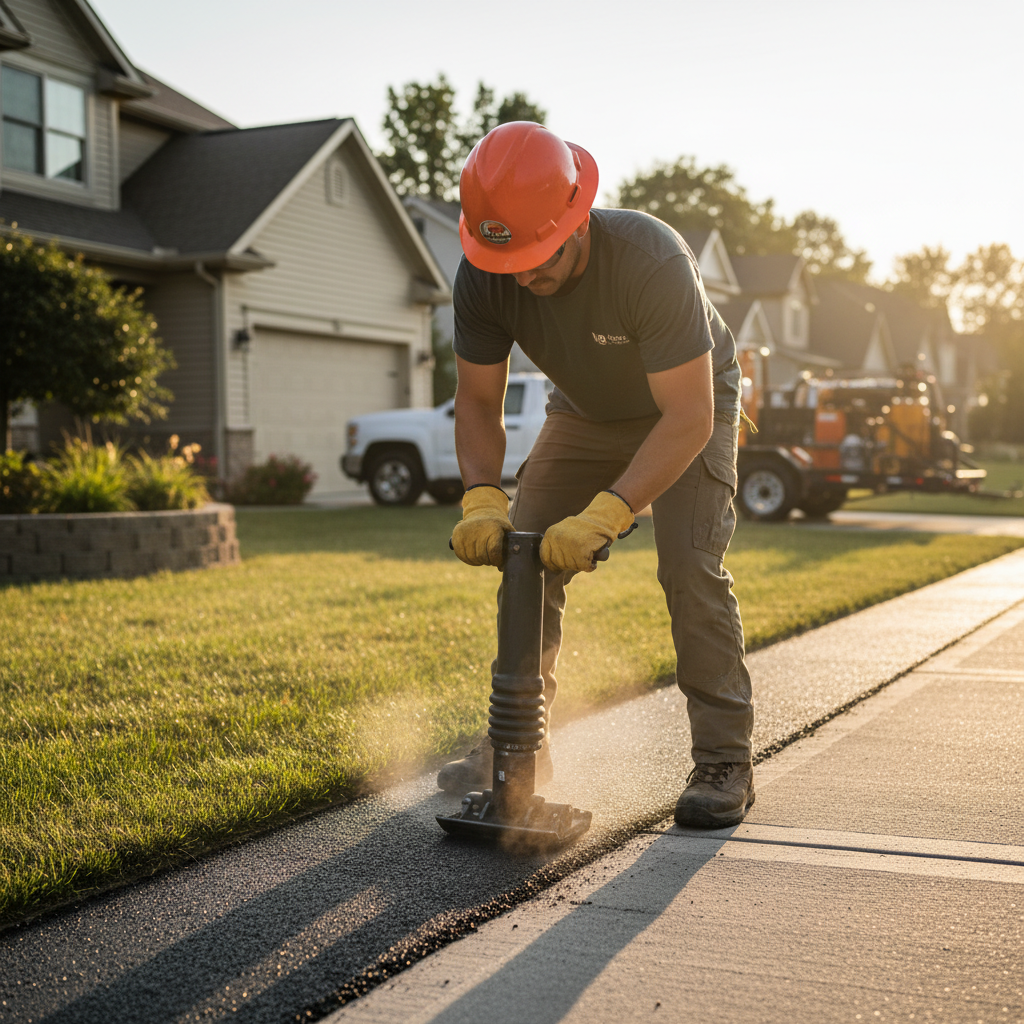
Driveway paving options and costs in High Level
High Level, Alberta has a driveway market shaped by long freeze–thaw cycles and frost penetration that can reach well beyond a metre. With 47.9% of dwellings being single-detached homes (Statistics Canada, 2021 Census), most driveways here tie directly into detached-house lots—so we see steady demand every spring as the ground firms up. The local economy also matters: median household income is reported at $104,000 (Statistics Canada, 2021 Census), which influences how homeowners balance upfront spend against long-term maintenance, especially when repairs or sealing schedules are part of the plan.
In the Athabasca–Grande Prairie–Peace River region’s cold frost-susceptible zone, paving costs trend toward the upper end because a thinner “base on soft soil” approach fails quickly. Many lots have fine-grained subgrades (clays and silts) that hold moisture and heave under freeze action, so contractors often need undercutting or stabilization plus a deeper, well-graded granular base. The paving window is also shorter: hot-mix asphalt requires warm conditions (typically air temps above 10°C) and spring scheduling is tight due to soft ground and heavier load restrictions. This is why even two similar-looking driveways can land far apart in price.
We also see the highest in-demand activity in older residential pockets near the core of High Level, where homes and grading were established decades ago and drainage is less refined. If you’re comparing options now, use the table below to benchmark typical material choices before you request an itemised quote.
| Material |
Lifespan |
Maintenance |
Best For |
Price per sq ft |
| Asphalt (new installation, proper base) |
15–25 years |
Seal coat every 3–5 years; spot patch as needed |
Value-focused driveways that still need a solid winter-ready base |
$6 – $12 |
| Asphalt (overlay on existing gravel base) |
10–18 years |
Higher patching frequency early on; seal as recommended |
Budget upgrades when the base is mostly stable and well-compacted |
$5 – $10 |
| Interlocking concrete pavers |
25–40 years |
Re-sand joints periodically; replace individual units if needed |
Curb appeal and easy spot repairs without tearing out the whole surface |
$12 – $20 |
| Poured concrete (broom finish) |
25–35 years |
Light sealing if desired; crack management and patching |
Clean, uniform look with strong performance when properly air-entrained |
$10 – $18 |
| Exposed aggregate concrete |
25–35 years |
Sealing recommended; occasional patching at stress points |
Texture and grip for winter driving; premium appearance |
$12 – $22 |
| Gravel / crushed stone (budget option) |
5–10 years |
Annual top-ups; regrading and weed control |
Short-term solutions or new pads where drainage must be tested |
$4 – $8 |
Prices are estimates only and vary by project scope, site access and material selection.
What affects the price of paving in High Level
In High Level and across the Athabasca–Grande Prairie–Peace River region, quotes for the same driveway can differ by 30–50% because the “hidden” work is what changes. Two contractors may both say “asphalt driveway,” but one includes undercutting to remove frost-susceptible soils and the other assumes the existing base is adequate. In a frost-susceptible zone where frost penetration can exceed 1 m and sometimes approach 1.5–2 m, the base design is not optional—it’s the foundation of your longevity. That’s one reason pricing here often lands toward the upper end of provincial norms, particularly for new installations where proper thickness and drainage are built in from day one.
Freeze–thaw cycles also compress the paving window. Hot-mix asphalt is typically laid when the air temperature is above about 10°C, and spring soil softness plus early fall frosts concentrate demand into a mid-May to September period. When scheduling is tight, mobilisation costs and crews operating on shorter windows can push total job pricing up. Mix design matters too: freeze–thaw-rated asphalt (proper grading and binder selection) can cost more than a basic “standard mix,” but it helps resist early raveling and cracking.
Concrete pricing can swing as well. For example, if your lot has poor drainage, you may need subdrain or regrading before concrete to prevent water cycling under the slab—this adds labour and materials. On the other hand, a well-compacted subgrade with good slope control can keep concrete closer to the mid-range, while heavy undercutting to stabilize clay soils can move it toward the higher end. As a practical benchmark, a new asphalt driveway often starts near the lower end of the $6,500–$12,000 band, while fully built paver projects frequently move into the $9,000–$18,000 range depending on base depth, edge restraints, and drainage.
| Price Factor |
Why It Matters |
Cost Impact |
| Driveway area in sq ft |
Most materials and machine time scale directly with surface area |
High impact (often 50%+ of the variance between quotes) |
| Base depth required |
Frost-susceptible soils need a deeper, well-compacted granular base |
High impact (undercut + aggregate tonnage can add $1,500–$6,000+) |
| Grading and drainage work |
Positive drainage keeps meltwater from cycling through freeze–thaw under the surface |
Medium to high impact (especially with low spots or poor down-slope) |
| Tear-out of existing surface |
Breaking, hauling, disposal, and re-compaction increase labour and equipment time |
Medium impact (can swing the job by several thousand dollars) |
| Edge restraints and curbing |
Prevents paver spread and protects asphalt edges from raveling |
Medium impact (more needed on wider, steeper or trafficked entrances) |
| Sealing requirement |
Asphalt sealing after curing helps protect binder against moisture and oxidation |
Low to medium impact (often a separate line item over the first year) |
| Site access |
Narrow approaches slow equipment, increase time for grading and material handling |
Low to medium impact (can become high on tight lots) |
| Asphalt mix specifications |
Freeze–thaw-rated mix and correct compaction targets improve winter durability |
Medium impact (higher materials cost, better long-term performance) |
Permits & regulations in Alberta
In Alberta, paving a private driveway within your own property usually does not require a building permit. Where rules change is when your project touches the municipal right-of-way (the area managed by the municipality), such as creating or modifying a curb cut, changing boulevard grading, or altering storm drainage flow near the street. For those portions, you typically need municipal approval before excavation and paving.
Lot-grading requirements can also apply. Some municipalities restrict how close a hard surface can be to property lines and may regulate how stormwater is handled so it doesn’t run onto neighbouring properties. In High Level, it’s especially important to confirm grading expectations up front because frost action magnifies drainage problems—water that ponds at the edge can lead to base saturation and early cracking or washboarding.
Before any digging, call for utility locates through Alberta One-Call and make sure the contractor’s excavation plan aligns with marked utilities. This is a simple step that protects you, too.
To verify your contractor in Alberta, ask for and review three things in writing: (1) licence/credentials from the appropriate Alberta trade registry for the scope they’re doing, (2) liability insurance certificate showing adequate coverage, and (3) WSIB/WCB clearance documentation for worker coverage. If you’re unsure what you’re looking at, request the latest certificates and clearance letter before work starts, not after mobilization.
Asphalt vs pavers vs concrete for High Level driveways
For High Level driveways, the best choice depends on how you want to manage winter wear and maintenance. Asphalt is usually the lowest upfront option and, when installed over a properly designed base, performs well in a freeze–thaw climate. The tradeoff is routine maintenance: asphalt typically needs a seal coat every 3–5 years to slow moisture penetration and oxidation, plus periodic patching where plow traffic stresses edges and joints.
Interlocking concrete pavers cost the most upfront, but they’re the most flexible for repair. In our region, frost heave and thawing water can create localized failures. With pavers, that’s often a “replace-and-reset” situation—removing a small section, correcting base/drainage, then reinstalling units—rather than tearing out an entire slab or larger asphalt panel.
Poured concrete sits in the mid-range. It can last decades if it’s air-entrained and built with proper thickness, reinforcement (as required), and joints planned for movement. However, concrete can crack in frost cycles if drainage is off or if the mix/air-entrainment isn’t right. If homeowners plan to use de-icing salt regularly, concrete still can work, but proper curing and air entrainment are critical to reduce freeze damage.
In the Athabasca–Grande Prairie–Peace River zone, all three need strong drainage design: positive slope away from the structure and away from any low areas where meltwater collects. A common example of where the price difference is justified: if asphalt bids come in around the $6,500–$12,000 range but paver pricing is closer to $12,000–$18,000, the higher cost can be worth it when you expect long-term vehicle traffic, want easy repairs, and have limited appetite for repeating seal-coat timelines.
| Material |
Frost Resistance |
Curb Appeal |
Repair Method |
Lifespan |
Price Band |
| Asphalt (sealed regularly) |
Good when base depth and drainage are built for frost action |
Medium |
Mill/patch small areas; seal to restore protection |
15–25 years |
$6,500 – $12,000 |
| Interlocking concrete pavers |
Very good with stable granular base and edge restraints |
High |
Remove and replace individual pavers or sections |
25–40 years |
$9,000 – $18,000 |
| Poured concrete (air-entrained) |
Good to very good with proper mix, joints, and drainage |
Medium to high |
Crack repair and patch; larger sections may require removal |
25–35 years |
$8,000 – $16,000 |
| Exposed aggregate concrete |
Good with correct base and curing; textured surface aids grip |
Very high |
Patch with matching finish; localized repairs possible |
25–35 years |
$10,000 – $18,000 |
| Permeable pavers (drainage grid) |
Very good when subdrains/graded base are engineered correctly |
High (clean, modern look) |
Replace units; address base/drainage where failures occur |
25–40 years |
$12,000 – $20,000 |
| Chip seal / tar-and-chip |
Moderate; surface wear can increase in harsh freeze–thaw |
Low to medium |
Rechip/over-surface; spot repairs |
6–12 years |
$6,000 – $11,000 |
How to choose a paving contractor in High Level
Choosing the right paving contractor in High Level is mostly about confirming they can build for frost and moisture—not just pour material. Start by verifying Alberta credentials and insurance. Ask for a current certificate of liability insurance (so you’re not left holding the bag if something goes wrong), and confirm workers coverage through WSIB/WCB clearance where applicable. If a company can’t provide documentation promptly, that’s a serious caution sign.
Next, get 2–3 itemised written quotes. The best quotes break down labour and materials separately (base preparation, granular supply, compaction, asphalt mix, paver bedding, edge restraints, disposal/tip fees). Avoid “one number” lump sums unless they include everything in writing—especially excavation, haul-away, and restoration. Ask if the quote includes utility locate marking coordination and whether disposal of old asphalt/concrete is covered.
Warranty matters in our climate. Look for a workmanship warranty and clarify whether it’s time-based (for example, months/years) and what failures qualify—settlement from drainage issues may not be covered if base work was inadequate. Also ask about the product/manufacturer warranty and whether it’s transferable to the homeowner if you sell the property.
For payment, never agree to more than 10–15% upfront. Hold back the remainder until the job is complete and surfaces are clean, edges are finished, and any curing/sealing requirements are scheduled as part of the scope. Finally, insist on a written timeline with a start date and completion estimate—late spring and early fall frosts can disrupt work, and you want it spelled out.
- Confirm the contractor’s Alberta licensing/credential matches the work scope.
- Request the liability insurance certificate and verify coverage limits.
- Get WSIB/WCB clearance documentation before crews begin.
- Ask for a detailed plan for frost-susceptible soils: undercutting, stabilization, base depth, and compaction targets.
- Check drainage approach: slope, culverts/subdrains if needed, and positive water movement away from the surface.
- Require written disposal/tip fee coverage for old asphalt or concrete.
- Ensure edge restraints/curbing are included (especially for pavers).
- Ask whether sealing is included for asphalt and when it will be applied after curing.
- Verify joints and air-entrainment for concrete (air-entrained mix is critical).
- Confirm site access assumptions and how materials will be moved on your lot.
- Review the warranty length and what’s excluded (settlement from poor drainage, improper vehicle loads, etc.).
- Use a payment schedule with a small deposit and holdback until final completion.
Red flags I see in High Level include: quotes that ignore base depth or drainage, “cookie-cutter” sections without a site evaluation, no written scope for tear-out/disposal, refusing to provide insurance/clearance documentation, and warranty language that’s vague or doesn’t specify workmanship terms.
Frequently asked questions — paving in High Level
How long before I can drive on new asphalt?
In High Level, the wait time depends on air temperature, base dryness, and how the asphalt is compacted. As a practical rule, light traffic is often restricted until the surface cools enough to prevent tracking and raveling. Many contractors schedule opening for day-of or within 24–48 hours for typical driveway lifts, but if it’s cool or damp, it can take longer. The longer wait is usually about preventing tire pickup and maintaining the compaction achieved during rolling.
If your driveway is in the $6,500–$12,000 asphalt band, the scope typically includes proper base preparation, which helps asphalt perform immediately and later through freeze–thaw. Even when you can drive sooner, avoid heavy turns and parking on soft spots until the full cure window is complete. Ask your contractor for a written “open to traffic” time based on conditions that day.
What causes potholes and how are they repaired?
Potholes in High Level usually start with water. In a frost-susceptible zone with long freeze–thaw cycles, moisture gets into small voids or weak base areas, expands during freezing, then breaks the asphalt surface when it thaws. Common triggers include poor drainage, edge failure from plow traffic, and compacted base that wasn’t deep or well-graded enough for the site’s soil type.
Repairs are typically done by cutting out the failed area to reach stable material, cleaning and drying it, then patching with properly compacted base (as needed) and hot-mix asphalt. A good contractor won’t just “top it up”—they address the cause by correcting base and drainage where possible. If you’ve been on gravel or had localized settlement, that repair method matters because repeated failures often mean the base needs a more engineered rebuild.
How do I prepare for a paving project?
Preparation in High Level is mostly about access and protecting the finished surface. Before crews arrive, clear vehicles, remove landscaping that could interfere, and make sure gates and approach routes can handle equipment and material delivery. Mark utilities on your side where applicable and ensure the contractor has completed Alberta One-Call locates before excavation begins.
Plan for the short effective paving window—late spring conditions can still be unpredictable. If your quote is asphalt in the $6,500–$12,000 range or pavers closer to the $9,000–$18,000 band, confirm when the contractor expects to cut, grade, and compact, and what happens if weather delays the asphalt laydown. Also discuss how snow management will work after the install and whether sealing is scheduled when the asphalt is ready.
Finally, review your scope for tear-out and disposal, so you know where material will go and how long you’ll be without use.
How do I compare paving quotes fairly?
To compare quotes fairly in High Level, insist on itemised scopes and like-for-like base specifications. The biggest differences often aren’t the visible surface—they’re in excavation depth, granular base thickness, compaction approach, edge restraints, drainage corrections, and disposal/tip fees. A quote that looks cheaper may be assuming thinner base, fewer drainage controls, or minimal tear-out.
Ask each contractor to list quantities (for example, square footage and base depth) and specify the asphalt mix approach for freeze–thaw performance. For asphalt, confirm sealing requirements after the initial cure period. For concrete, confirm air-entrainment and jointing plan. For pavers, confirm bedding layer details and the restraint system.
Then compare apples to apples across the price bands: if one quote lands near $8,000–$16,000 for concrete while another uses different thicknesses and drainage work, it’s not an even comparison. Use the written scope and ask questions before signing.
Can asphalt be laid in cold weather in High Level?
Asphalt installation in High Level is limited by temperature. Hot-mix asphalt typically needs air temperatures above roughly 10°C (and appropriate surface conditions) so the mix can be placed, spread, and compacted to spec. Laying it too cold increases the risk of poor compaction, reduced density, and early failures that show up as raveling or cracking after freeze–thaw cycles.
If a contractor promises “cold weather paving,” ask how they’ll meet compaction targets and what their procedure is for cold mornings, frost-affected subgrades, and water presence. In this region, soft spring ground plus early fall frosts tighten the paving window, so responsible crews schedule to conditions instead of rushing. That’s part of why pricing may trend toward the upper end of the $6,500–$12,000 asphalt band.
If temperatures dip, the right response is to pause or adjust the schedule, not to compromise base prep and compaction.
What is a driveway apron and do I need one in High Level?
A driveway apron is the transition area where your driveway surface meets the street or a curb cut—often including the properly built segment that connects different surface elevations. In High Level, an apron can be important where the street edge, ditch line, or culvert needs a smoother, stronger transition to prevent edge breakdown and water infiltration. If meltwater and slush can reach the edge of your driveway, frost action can then worsen the base saturation and lead to premature cracking.
Whether you need one depends on your existing approach, how drainage is routed, and whether any right-of-way changes are involved. If your project includes modifying a curb cut or boulevard grading, that’s the kind of work that generally requires municipal approval. Your contractor should identify whether an apron/transition is part of your scope and clarify it in writing, including any grading or drainage adjustments.
For most homeowner-private driveway builds on your own property, apron needs may be minimal—but in areas where the entrance transitions to municipal infrastructure, it’s often the difference between “looks fine now” and “holds up through winter.”