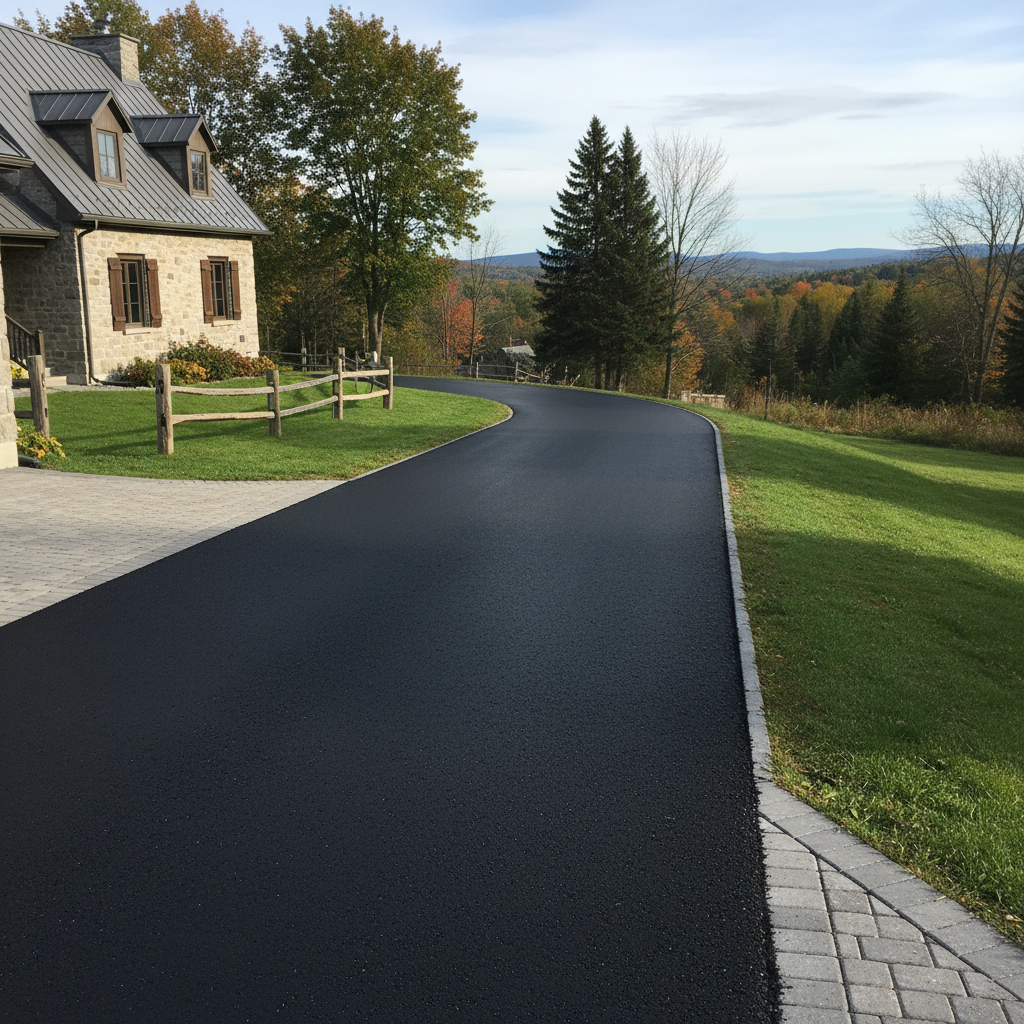
Driveway paving options and costs in Vulcan
Vulcan is a small community in southern Alberta, and most private driveways here are tied to single-detached homes—about 77.0% of dwellings are detached, so the addressable market is large for residential resurfacing and new builds. With a population of 1,769 (Statistics Canada, 2021 Census) and roughly 670 homeowner households, you’ll also notice a practical focus on long-term maintenance rather than “lowest first cost.” That matters in Vulcan because the Lethbridge–Medicine Hat region has deep seasonal frost and repeated freeze–thaw cycles. Frost penetration in this belt is commonly around the 6 ft range, so contractors plan buried base and drainage carefully to reduce heaving and early cracking.
Pricing can differ from place to place across the region due to the short paving season—hot-mix asphalt typically needs air temps above 10°C—plus scheduling pressure when weather windows open late spring into early fall. If your property has clay or poor drainage, expect extra excavation and a deeper, well-compacted granular base. In Vulcan, this trade is especially active around the downtown core and older residential lanes where driveways were often built decades ago (nearly half of local homes were built before 1981, Statistics Canada, 2021 Census), creating a strong demand for overlays, tear-outs, and drainage fixes.
Below is a clear side-by-side comparison of common driveway materials in Vulcan, including typical lifespan and installed cost ranges. Use it to anchor your quote conversations, then we’ll fine-tune based on your driveway size, base condition, and access.
| Material |
Lifespan |
Maintenance |
Best For |
Price per sq ft |
Price Range |
| Asphalt (new installation, proper base) |
15–25 years |
Seal every 3–5 years; crack fill as needed |
Good balance of cost and performance in freeze–thaw |
$6–$10 |
$6,500–$11,000 |
| Asphalt (overlay on existing gravel base) |
10–18 years |
Seal every 3–5 years; monitor for base settlement |
When the sub-base is stable and you’re limiting excavation |
$5–$9 |
$6,000–$10,500 |
| Interlocking concrete pavers |
25–40 years |
Replace individual stones if damaged; occasional joint sand top-up |
High curb appeal and easy localized repairs |
$10–$16 |
$9,500–$17,500 |
| Poured concrete (broom finish) |
20–30 years (with air-entrainment and good base) |
Seal if desired; patch spalls; manage cracks early |
Low routine maintenance with strong curb lines |
$10–$15 |
$8,500–$15,500 |
| Exposed aggregate concrete |
20–30 years |
Seal selectively; clean and re-seal when water repellency drops |
Slip resistance and premium appearance |
$12–$18 |
$10,000–$16,500 |
| Gravel / crushed stone (budget option) |
5–10 years |
Re-grade, top up stone, and add new fines to lock in every 1–3 years |
Temporary solution or overflow parking with minimal expense |
$3–$6 |
$3,000–$6,000 |
Prices are estimates only and vary by project scope, site access and material selection.
What affects the price of paving in Vulcan
In Vulcan, it’s common to see quotes for the “same-looking” driveway land 30–50% apart across the Lethbridge–Medicine Hat area and even within Alberta. The main reason isn’t just the asphalt or concrete—it’s what’s happening underneath. With deep frost conditions and repeated freeze–thaw cycles, your driveway needs a properly engineered granular base, compaction, and drainage that can handle movement without pumping fines or fracturing the surface. Contractors who can’t (or don’t) build for that risk have to price in rework risk, while crews who do the excavation and base work thoroughly often cost more up front but reduce early failure.
Frost line depth and freeze–thaw cycles are decisive cost factors in this region. Deeper frost generally means a thicker compacted granular base—think in the ballpark of 6–12 inches for typical southern Alberta residential driveway designs, rather than the thinner assemblies you may see discussed in milder coastal climates. That extra depth increases hauling, aggregate quantity, and labour time. The shorter paving season also tightens scheduling because hot-mix asphalt placement typically requires air temperatures above 10°C, which concentrates demand in late spring and early fall. Mix design matters too; freeze–thaw-rated asphalt (with appropriate binder and gradation) can add incremental material cost.
Two concrete examples of how local conditions change cost in Vulcan: first, a driveway on clay or poor drainage may require extra excavation and a geotextile or drainage correction layer—often pushing a project toward the higher end of the $6,000–$12,000 asphalt band. Second, if your driveway is very accessible and drainage is already good, new asphalt may sit nearer $6,500–$11,000, because the crew spends less time on grading, forming, and base rehab. Housing age also plays a role: with many homes built before 1981 (Statistics Canada, 2021 Census), older base material and settlement are more common, which can drive tear-out and base replacement costs upward.
| Price Factor |
Why It Matters |
Cost Impact |
| Driveway area in sq ft |
Most material and paving labour scale directly with square footage |
High |
| Base depth required |
Frost protection depends on compacted granular thickness and subgrade condition |
Medium–High |
| Grading and drainage work |
Slope correction, swales, culverts or interception drains prevent water-driven failure |
Medium–High |
| Tear-out of existing surface |
Concrete breaking/hauling or asphalt milling adds equipment time and disposal fees |
High |
| Edge restraints and curbing |
Prevents paver spread and contains asphalt; improves long-term alignment |
Medium |
| Sealing requirement |
Asphalt should be sealed after curing (often within 6–12 months) to slow oxidation |
Low–Medium (timing dependent) |
| Site access |
Narrow lots, tight turns, or limited staging slow equipment and increase labour |
Medium |
| Asphalt mix specifications |
Freeze–thaw-rated design costs more but improves durability under Alberta cycles |
Low–Medium |
Permits & regulations in Alberta
In Alberta, paving a private driveway on your own property typically does not require a building permit, especially when you’re replacing like-for-like surfacing and staying within the established lot grading you already have. However, work that affects municipal infrastructure or right-of-way elements usually does require approval. In Vulcan (and across Alberta), that’s commonly the case if you need a new or widened curb cut, alter the boulevard area, change storm drainage patterns, or tie into municipal drainage systems. If your project involves moving catch basins, adjusting surface drainage that runs toward a ditch/inlet, or changing the approach between the driveway and the road, confirm the local approval requirements before the first shovel of excavation.
Homeowners should also call for utility locates before any digging. Use Alberta One-Call (for locates) to mark buried services, and ask the contractor to provide locate documentation and a pre-excavation plan. Then verify the contractor’s credentials: (1) check the contractor’s Alberta licence/registration status using the appropriate provincial online resources; (2) request a current certificate of liability insurance showing adequate coverage for driveway work; and (3) confirm WSIB/WCB clearance or account status as applicable for the crew installing the asphalt/concrete. Step-by-step, you should ask for the licence details and insurance certificate before signing, then keep copies for your records and project file.
Asphalt vs pavers vs concrete for Vulcan driveways
For Vulcan driveways, asphalt, interlocking pavers, and concrete all can perform well—but each fits different homeowner priorities under freeze–thaw. Asphalt is usually the lowest upfront option and keeps costs predictable, but it needs planned maintenance: seal after initial curing and typically re-seal every 3–5 years to slow oxidation. Interlocking concrete pavers cost more up front, yet they’re highly repairable—one broken section can be lifted, the base corrected, and stones reset without replacing the entire field. Poured concrete sits in the middle on price, but it’s more susceptible to visible cracking if the base isn’t right and if air-entrainment isn’t specified for freeze–thaw conditions.
In the Lethbridge–Medicine Hat frost environment, base preparation is decisive for all three. You should expect a deeper, well-compacted granular base with robust drainage to reduce heaving. For asphalt and pavers, proper slope and edge containment help prevent water ponding and edge breakdown during spring thaw. For concrete, we recommend air-entrained mix and correct finishing timing; broom finish improves slip resistance, which matters when ploughing and sanding leave residue on the surface.
Which holds up best to winter maintenance routines (ploughing, sand, and occasional de-icing)? Asphalt and pavers handle traffic impacts well when installed on the right base; pavers are especially forgiving because localized repairs are straightforward. Concrete can be durable, but once cracking starts—especially if de-icing is heavy—it can lead to more frequent patching. A practical example: if a typical asphalt driveway lands around $6,000–$12,000, pavers for the same footprint might land in the $9,000–$18,000 range. That extra cost is usually justified when you want the best curb appeal, plan to keep the home long term, or you expect future base adjustments (drainage correction, utility work) and prefer repairability.
| Material |
Frost Resistance |
Curb Appeal |
Repair Method |
Lifespan |
Price Band |
| Asphalt (sealed regularly) |
Good when base and drainage are engineered for freeze–thaw |
Medium |
Crack fill, patch cuts, and mill/overlay if needed |
15–25 years |
$6,000–$12,000 |
| Interlocking concrete pavers |
Very good; individual units tolerate movement and allow corrections |
High |
Lift-and-reset damaged sections; re-sand joints |
25–40 years |
$9,000–$18,000 |
| Poured concrete (air-entrained) |
Good when properly air-entrained and built on the right base |
Medium–High |
Patch spalls, epoxy crack repair, or section replacement |
20–30 years |
$8,000–$16,000 |
| Exposed aggregate concrete |
Good to very good with air entrainment and correct finish |
High |
Patch and resurface small areas; larger fixes often section-based |
20–30 years |
$10,000–$16,500 |
| Permeable pavers (drainage grid) |
Very good for water management when designed correctly |
Medium–High |
Localized paver replacement; inspect underdrain if needed |
20–35 years |
$10,500–$19,500 |
| Chip seal / tar-and-chip |
Moderate; best for low-speed areas and maintenance planning |
Low–Medium |
Rechip / re-spray; pothole patching |
7–12 years |
$4,500–$9,500 |
How to choose a paving contractor in Vulcan
Choosing the right contractor in Vulcan starts with verification, not charm. In Alberta, ask for three things up front: (1) proof of Alberta licensing/registration for the work they’re doing; (2) a current certificate of liability insurance (with the named insured and coverage limits clearly shown); and (3) WSIB/WCB clearance or coverage details for the workers performing the installation. How to check: request the licence/registration number, then verify it through the official online registry; for insurance, confirm it hasn’t expired and that the scope includes paving/contracting; and for WSIB/WCB, ask for the clearance letter or proof of account standing so you’re not exposed to unpaid workplace coverage disputes.
Next, get 2–3 itemised written quotes. You want a breakdown that shows labour, excavation, haul/disposal, base materials, geotextile/drainage (if needed), and the surfacing itself—rather than one “lump sum” number. Carefully review exclusions: is permit work included (if needed), is disposal included, and is the existing surface tear-out priced separately? Clarify warranty too: ask for the workmanship warranty length and what it covers (cracking, settlement, base failures), and whether it’s transferable if you sell your home. For payment, never pay more than 10–15% upfront, and hold back a portion until completion and final cleanup. Finally, request a written start date and realistic completion estimate—spring weather can delay crews, so schedules should account for thaw days and curing time.
- Confirm their Alberta licence/registration number and trade scope matches your project.
- Verify liability insurance certificate date, coverage limits, and address/location of work.
- Request WSIB/WCB clearance (or proof of account standing) before work starts.
- Ask for an itemised quote: excavation, base, drainage, labour, materials, and disposal.
- Confirm whether the quote includes grading, compaction testing, and protective layers.
- Check if tear-out is included (and whether concrete/asphalt removal is priced per ton/load).
- Make sure edge restraints/curbing or containment is specified (especially for pavers).
- For asphalt, confirm sealcoat timing and who supplies crack filler.
- Ask for mix type/specifications relevant to freeze–thaw performance.
- Confirm warranty details in writing: workmanship duration and what counts as a defect.
- Ensure payment terms are staged (small deposit, holdback until completion).
- Get a start date, curing/thermal readiness notes, and a weather contingency plan.
In Vulcan, red flags I watch for include: no written itemised scope (especially base thickness and drainage), refusal to provide insurance/WSIB/WCB proof, “too-good-to-be-true” pricing that ignores subgrade prep, pressure to pay a large deposit upfront, and vague warranty language that doesn’t specify workmanship versus materials.
Frequently asked questions — paving in Vulcan
Can asphalt be laid in cold weather in Vulcan?
In Vulcan and across Alberta, asphalt placement is heavily temperature-dependent. Even when crews are eager to work, hot-mix asphalt usually can’t be laid reliably if conditions can’t support proper compaction and mat temperature—air temperatures generally need to be warm enough (often around or above 10°C) so the mix can be placed, rolled, and compacted correctly. Cold weather increases the risk of poor bond, trapped moisture, and early cracking when freeze–thaw cycles return. If you’re getting work done late in the season, ask the contractor to commit to a date based on actual weather and to describe how they’ll handle curing and traffic control. If your driveway is being resurfaced, they should also confirm whether an overlay is feasible given your base condition and whether drainage issues are being corrected first.
What is a driveway apron and do I need one in Vulcan?
A driveway apron is the transition section at the approach—where the driveway meets the road/boulevard—and it’s designed to prevent abrupt edges that can break off under ploughing, turning traffic, and spring thaw settlement. In Vulcan, whether you “need” an apron depends on where your driveway ties in and the existing curb/approach condition. If your project requires a new or widened curb cut, changes to boulevard grading, or altered storm drainage, that kind of work is the area where municipal approval can be required, so confirm before excavation. For a typical private resurfacing on your own property, you often don’t need anything beyond a properly built edge and smooth approach. The best approach is to have your contractor assess your current lip condition and drainage slope and then include the apron details in the quote scope.
How do I maintain my driveway through Vulcan winters?
Winter maintenance is mostly about preventing water damage and surface breakdown, not “washing” the driveway clean. After snowfall, ploughing with controlled blade pressure helps avoid gouging; allow sand to stay where needed for traction rather than over-applying salts. For asphalt, plan on sealing on schedule—commonly every 3–5 years—to protect against oxidation from freeze–thaw and daily temperature swings. Crack fill should be done as soon as cracks show up so they don’t widen with thaw cycles. Keep drainage clear at the edges and any swales so meltwater doesn’t pond on the driveway. If your driveway is older (many Vulcan homes are built before 1981, Statistics Canada, 2021 Census), inspect the edges more often because settlement at the transitions can become a water entry point in spring.
Is it worth sealing a new driveway right away in Vulcan?
Often, yes—but timing matters. Asphalt needs time to cure before sealcoat so it bonds properly and doesn’t trap moisture. In Vulcan, a common expectation is to seal after initial curing, often within a window of about 6–12 months depending on weather and mix design, and then follow a maintenance cycle every few years. Sealing early can be worth it if your quote includes the correct timing and the contractor uses the right product for freeze–thaw durability. If you just paid for a new asphalt installation that falls in the $6,000–$12,000 range, sealing is usually one of the best cost-effective ways to protect that investment. Ask your contractor whether your plan is “seal once, then every 3–5 years,” and get that detail in writing.
What is a chip seal driveway and is it suited to Vulcan?
Chip seal (tar-and-chip) is a surface treatment that uses a sprayed binder and aggregate chips to create a textured driving surface. It’s sometimes chosen for lower-cost budgets or for areas that see less traffic, but it’s not as “clean-finish” as asphalt or pavers. In Vulcan’s freeze–thaw climate, chip seal can work when the base is properly prepared and maintenance is planned, but it generally has a shorter service life. Typical expectations are around 7–12 years depending on drainage, ploughing impacts, and how quickly you address worn spots. If your goal is a long-term driveway with easy repairs, asphalt in the $6,000–$12,000 band or interlocking pavers in the higher $9,000–$18,000 band usually provide better long-run outcomes. Still, chip seal can be a reasonable option for budget-focused driveways if you’re comfortable with periodic re-surfacing.
How much does driveway crack repair cost in Vulcan?
Crack repair in Vulcan can vary based on crack width, depth, and whether water is getting underneath the surface. For minor surface cracks, contractors commonly do crack cleaning, sealing, and refill work that is priced per linear foot or per section. For bigger failures—especially where the crack has become an opening that allows freeze–thaw water infiltration—repairs may require a cut-out patch, base stabilization, and repaving of the affected area. As a planning reference, local sealing and repair work is often in the $300–$2,500 range for small areas, while widespread cracking or base-related movement can push the scope toward an overlay or partial replacement. If your driveway is showing repeated cracking near wheel paths, it’s usually a sign the base/drainage needs attention, not just a surface fix.