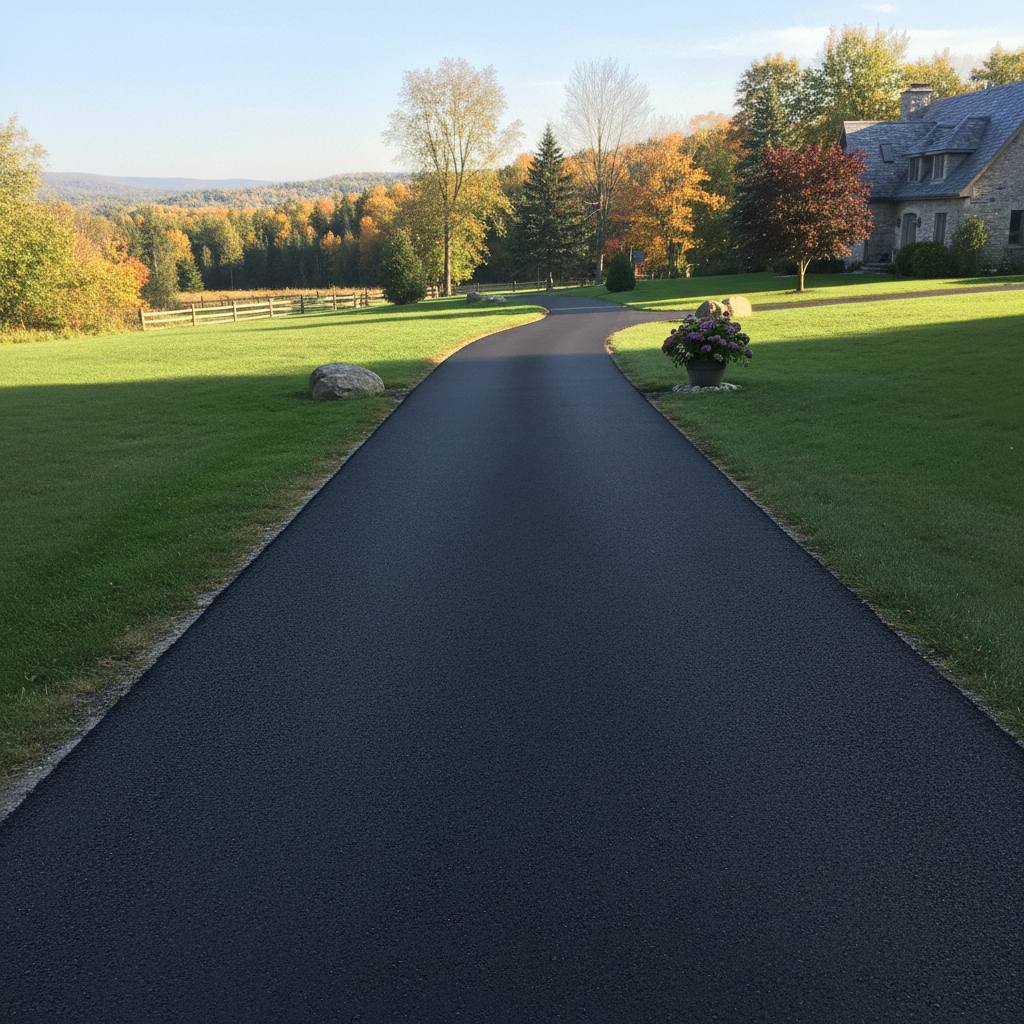
Driveway paving options and costs in Magrath
Magrath driveways get a lot of wear because the housing stock is older in much of the community—about 54.0% of homes were built before 1981 (Statistics Canada, 2021 Census). That matters: older lots often have settled subgrades, weaker drainage, and driveways that weren’t designed around today’s freeze–thaw expectations. The upside is that Magrath is also dominated by single-detached homes—88.8% of dwellings are that type—so most private driveway work is straightforward to access and falls under typical residential-scale pricing. With homeowner households making up 77.9% of all households (Statistics Canada, 2021 Census), there’s strong demand every spring and early summer.
In the Lethbridge–Medicine Hat economic region, costs are shaped by frost depth and repeated freeze–thaw cycles. Frost commonly penetrates to around the 6 ft range, so contractors need a properly compacted granular base below the pavement—plus drainage corrections—otherwise you can see heaving, pumping, and cracking sooner than expected. The paving season is also effectively tighter than in milder parts of Alberta, because hot-mix asphalt needs warm air and stable weather, concentrating scheduling and labour.
You’ll feel that in pricing. For many Magrath homes near the main built-up area and residential streets off Highway 3A, driveway replacement and overlays are especially busy in late spring. Below is a quick comparison so you can line up apples-to-apples when you ask for quotes for your driveway size, base depth, and finish choice—then match the best option to your budget and winter maintenance routine.
| Material |
Lifespan |
Maintenance |
Best For |
Price per sq ft |
Price Range |
| Asphalt (new installation, proper base) |
15–25 years |
Seal every 3–5 years; patch small failures promptly |
Lowest upfront cost with good performance when base is correct |
$4.50–$8.00 |
$6,000–$12,000 |
| Asphalt (overlay on existing gravel base) |
8–15 years |
Seal annually in early years if needed; more frequent patching |
Shorter-term upgrade when subgrade is still solid |
$3.75–$7.00 |
$5,000–$10,500 |
| Interlocking concrete pavers |
25–40 years |
Re-level or replace individual stones as needed |
Curb appeal and easy localized repairs |
$10.00–$15.50 |
$9,000–$18,000 |
| Poured concrete (broom finish) |
20–30 years |
Limited maintenance; seal periodically if desired |
Clean look and solid feel under ploughing |
$9.50–$14.25 |
$8,000–$16,000 |
| Exposed aggregate concrete |
25–35 years |
Seal every few years to preserve finish |
Slip resistance and a higher-end surface texture |
$11.00–$16.00 |
$9,500–$17,500 |
| Gravel / crushed stone (budget option) |
3–7 years |
Re-grade and top up annually; add fines to stabilize |
Lowest cost where drainage and access are already good |
$1.50–$3.50 |
$3,000–$6,500 |
Prices are estimates only and vary by project scope, site access and material selection.
What affects the price of paving in Magrath
In Magrath and the broader Lethbridge–Medicine Hat region, even “the same driveway” can come in 30–50% apart between quotes. The usual reason isn’t the asphalt or concrete itself—it’s the amount of excavation, the depth and quality of the granular base, and whether drainage issues are corrected before the surface goes down. Two contractors can both offer asphalt in the same price band, but one may be building the driveway on a well-compacted frost-protected base while the other is just placing hot mix over weak soils. That difference shows up later as pumping, rutting, and alligator cracking.
Frost line depth and freeze–thaw cycles are decisive cost factors here. Southern Alberta’s frost penetration is commonly around 6 ft, which means driveways should be designed with a thicker, well-compacted granular base to sit below the susceptible zone and resist heaving. In practice, you’ll often see base thickness in the 6–12 inch range depending on subgrade conditions and drainage, not just a thin “top lift.” On top of that, the paving season is shorter: hot-mix asphalt is typically laid when air temperatures are reliably above about 10°C, so scheduling pressure can increase labour premiums in late spring and early summer.
Concrete pricing can also move based on local site conditions. For example, if your yard drains poorly and water pools near the garage slab or old footing lines, concrete and asphalt both need slope corrections and drainage work to prevent undermining. Conversely, if you’re overlaying sound pavement or replacing a driveway on a firm, previously graded base, you can keep the project closer to the lower end of the $6,000–$12,000 asphalt range. Also, many Magrath homes have older driveways that need tear-out; breaking and hauling old concrete or oxidized asphalt adds disposal and equipment time, pushing totals toward the upper end.
| Price Factor |
Why It Matters |
Cost Impact |
| Driveway area in sq ft |
Most materials and labour scale directly with surface area |
Large impact; commonly 50%+ of the total |
| Base depth required |
Frost resistance depends on granular thickness and compaction |
Can add hundreds to thousands depending on excavation |
| Grading and drainage work |
Fixing slope and directing water prevents frost heave and subgrade failure |
Often increases cost by 10–30% on problematic sites |
| Tear-out of existing surface |
Concrete/asphalt removal adds breaking, haul-off, and disposal fees |
Can add 15–40% depending on depth and access |
| Edge restraints and curbing |
Prevents paver spread and maintains straight asphalt edges |
Moderate; improves long-term shape and drainage |
| Sealing requirement |
Asphalt needs seal timing to protect against Alberta weathering |
Lower single-project cost, but affects life-cycle spending |
| Site access |
Narrow lots slow equipment movement and increase labour time |
Can raise costs significantly on tight properties |
| Asphalt mix specifications |
Freeze–thaw-rated mixes cost more but reduce early cracking |
Typically modest but noticeable on small projects |
Permits & regulations in Alberta
In Alberta, paving a private driveway within your own property usually does not require a building permit. That’s typical when you’re resurfacing or reconstructing your driveway on your parcel without changing municipal drainage or altering the curb/sidewalk area. The work that often does require municipal approval is anything affecting the municipal right-of-way, including a new or modified curb cut, changes to boulevard grading, or any adjustment to storm drainage that ties into municipal infrastructure.
In Magrath, also pay attention to lot-grading rules and drainage expectations. Some municipalities restrict how close to property lines you can place hard surfaces or how you manage stormwater runoff so it doesn’t flow onto neighbouring lots. Before excavation, always complete utility locates using Alberta One-Call. This is non-negotiable for safety and to avoid costly delays if services run where you plan to cut and excavate.
When verifying a contractor in Alberta, do it step-by-step. First, confirm the contractor is properly registered/licensed for the work they’re promising (check their public registry information online). Next, request a Certificate of Insurance for liability coverage and ensure the coverage limits are appropriate for driveway reconstruction. Also confirm workers’ coverage under the relevant WCB/workers’ compensation system (ask for proof/clearance documentation). Lastly, don’t skip written confirmation: a contractor should be able to provide their insurance certificate and any required clearance quickly, before you sign.
Asphalt vs pavers vs concrete for Magrath driveways
For Magrath, choosing between asphalt, interlocking pavers, and concrete comes down to balancing upfront cost, freeze–thaw durability, and winter maintenance. Asphalt usually has the lowest installed price, and when built on a deep, well-compacted granular base it performs very well through southern Alberta winters. The catch is routine: asphalt should be sealed every 3–5 years to protect against surface oxidation and moisture intrusion. Interlocking concrete pavers cost more upfront, but they’re ideal when you want curb appeal and the option to fix localized failures by lifting and re-laying only affected sections. Poured concrete sits in the middle on cost, but it must be properly air-entrained and finished to handle freeze–thaw movement. If it’s under-designed on base or drainage, cracking can show up earlier, especially where de-icing and ploughing introduce stress cycles.
Because frost penetration is substantial in the Lethbridge–Medicine Hat region, base preparation drives performance more than the surface choice. In practical terms, many Magrath driveways need deeper excavation and a thicker granular base than you might see in milder climates—often in the 6–12 inch range depending on soil and how water drains. Drainage matters: fixing slope and preventing water from ponding is a major reason one contractor’s asphalt can last 15+ years while another’s looks rough in 5–8.
To make this real with money: if an asphalt driveway comes in around $6,000–$12,000, interlocking pavers frequently land in the $9,000–$18,000 range. That extra investment is justified when you expect heavier use, want a more decorative finish, or you prefer repairability over total replacement after minor subgrade movement. If your driveway is straightforward (good drainage, accessible site), asphalt can be the value play—especially when you’re willing to seal on schedule.
| Material |
Frost Resistance |
Curb Appeal |
Repair Method |
Lifespan |
Price Band |
| Asphalt (sealed regularly) |
Good with deep granular base and drainage |
Moderate (clean, dark finish) |
Mill/patch locally |
15–25 years |
$6,000–$12,000 |
| Interlocking concrete pavers |
Very good when edges and base are engineered |
High (varied patterns/colours) |
Lift and re-lay individual stones |
25–40 years |
$9,000–$18,000 |
| Poured concrete (air-entrained) |
Good if air-entrained and properly based |
Moderate to high |
Small patching; larger issues may require section replacement |
20–30 years |
$8,000–$16,000 |
| Exposed aggregate concrete |
Good with correct mix and base |
High (textured, upscale look) |
Limited patching options; may need slab replacement for larger repairs |
25–35 years |
$9,500–$17,500 |
| Permeable pavers (drainage grid) |
Very good where drainage design is done correctly |
High (clean lines; modern look) |
Replace units if needed; maintain drainage structure |
20–35 years |
$10,000–$19,000 |
| Chip seal / tar-and-chip |
Fair to good; performance varies by base prep |
Low to moderate |
Spot rework; periodic top-up |
7–12 years |
$3,500–$8,000 |
How to choose a paving contractor in Magrath
Choosing the right paving contractor in Magrath starts with credentials and proof, not promises. In Alberta, verify licensing/registration appropriate to the work and ask for liability insurance documentation (Certificate of Insurance). Make sure the certificate shows coverage that matches the type of project—driveway reconstruction is not a minor handyman job. Also confirm workers’ compensation coverage status through the relevant WCB/workers’ compensation system; ask for the clearance/proof document so you’re not left exposed if a worker is injured on site.
Next, get 2–3 itemised written quotes. Ask for a breakdown that separates labour and materials, and make sure the scope is detailed: excavation depth, base thickness, compaction method, drainage/grading corrections, geotextile use (if included), and the finished surface thickness. Confirm if the quote includes tear-out and disposal, or if disposal is “by owner.” Also check whether a permit is required and whether the contractor will handle municipal approvals if your driveway ties into a curb cut or right-of-way work.
Warranty matters for workmanship and product. Ask how long the workmanship warranty lasts, what “failure” means, and whether exclusions apply to subgrade movement or drainage conditions. For asphalt, sealing and maintenance timing can affect what’s considered normal wear. Payment scheduling should be conservative: never pay more than 10–15% upfront, and hold back until substantial completion and cleanup are done. Finally, require a start date and completion estimate in writing so you know what “weather delay” means in your contract.
- Request proof of liability insurance (Certificate of Insurance) before work begins.
- Confirm workers’ compensation coverage/clearance document (WCB) for Alberta.
- Get an itemised quote: excavation, base materials, compaction, paving placement, and finishing.
- Verify base depth and compaction requirements (not just the surface thickness).
- Ask who does utility locates and whether the schedule accounts for locate delays.
- Clarify drainage/grading scope: slope corrections, ditch tie-ins, and any drainage materials.
- Confirm tear-out and disposal are included (concrete/asphalt debris removal).
- Check for edge restraints (paver edging/curb forms) to prevent lateral movement.
- Ask about geotextile and separation layers if soils are clay-rich or frost-susceptible.
- Confirm seal coat timing for asphalt (typically after curing) and whether it’s included.
- Review warranty: workmanship duration, product warranty terms, and transferability.
- Set a payment schedule with a holdback until the final inspection and cleanup.
In Magrath, red flags include: (1) quoting without stating base depth and compaction steps, (2) refusing to provide insurance/WCB documentation, (3) using vague language like “as required” for drainage/grading, (4) asking for large deposits upfront, and (5) giving an early-finish promise without a weather-delay plan for the late-spring/early-fall asphalt window.
Frequently asked questions — paving in Magrath
How do I prepare for a paving project?
Start by clearing the driveway area of vehicles, stored items, and anything that limits equipment access. In Magrath, contractors often work during a shorter asphalt window, so the day-to-day schedule matters—plan to keep traffic off the work zone during construction. If you have pets, arrange an alternate spot so workers can safely complete excavation and compaction.
Also, ask your contractor how they will handle tear-out and disposal of old asphalt or concrete. If there’s any planned work near municipal right-of-way (for example, a modified curb cut), you’ll want clarity on permits/approvals. Finally, confirm utility locates are handled before excavation. A good contractor will include this in the schedule and won’t start cutting until locates are done.
If you’re comparing budgets, remember many residential asphalt projects in this region land around $6,000–$12,000, but prep work can push the final number up when drainage or base is corrected.
How do I compare paving quotes fairly?
To compare quotes fairly in Alberta, require the same scope on each proposal. Look for itemised sections: excavation depth, base thickness, granular type, geotextile (if included), compaction method, drainage/grading work, surface thickness, and edge restraints. If one quote is “asphalt only” and another includes tear-out, disposal, and drainage correction, the price difference can easily reach the 30–50% range even for the same driveway size.
Make sure lifespan assumptions align with local freeze–thaw conditions. Asphalt performance depends on building the driveway on the right granular base below the frost-susceptible zone. Also ask when seal coats are included; for asphalt, sealing after curing (often 6–12 months) can be critical to long-term durability.
When you’re seeing numbers, use the regional bands as a reality check. For instance, if one contractor quotes asphalt around $6,000–$12,000 but doesn’t mention base depth or compaction, it may be missing key cost items.
Can asphalt be laid in cold weather in Magrath?
In Magrath, cold weather can affect asphalt placement, and most reputable contractors will not pave when conditions are too cold or unstable. Hot-mix asphalt typically needs air temperatures reliably above about 10°C for proper placement and compaction. If it’s near freezing or windy/cold enough to cool the mat quickly, you can get poor compaction and early surface issues.
Because Lethbridge–Medicine Hat has a shorter season, scheduling is more critical than in milder areas. Contractors often aim for late spring into early fall weather windows to reduce freeze-related risk and ensure the asphalt gets to a good density.
If you’re offered a “cold weather” date, ask how the contractor protects the work, what temperature criteria they follow, and whether they still meet compaction requirements. The safest approach is to plan for the normal asphalt season; it protects the investment you’re making in a $6,000–$12,000 driveway range.
What is a driveway apron and do I need one in Magrath?
A driveway apron is the transition area at the edge where your driveway meets the street or approach—often involving thicker pavement, ramps/slope transitions, and sometimes curb/sidewalk tie-ins. Whether you need one in Magrath depends on how your driveway currently connects to the approach and whether water is being directed properly away from the curb cut area.
If your driveway crosses a municipal curb or you’re changing the curb opening (or altering drainage tied to the municipal right-of-way), that work may require municipal approval and is more likely to need an apron-style transition for longevity. A properly built apron reduces edge break-up from vehicle loads and helps prevent water from infiltrating the base at the transition point—important in freeze–thaw weather.
Ask your contractor to explain the exact location, tie-in method, and whether the approach section is included in the quote. This is one place where “cheaper” quotes can omit the transition work and later show cracking at the edge.
How do I maintain my driveway through Magrath winters?
Winter maintenance in Magrath is about reducing moisture and minimizing surface damage. For asphalt, avoid piling de-icing salt heavily on the surface—saltwater can accelerate aging and surface breakdown over time. Use sand or light salt applications where appropriate, and remove snow in a way that doesn’t scrape the surface.
Keep an eye on drainage: if you notice water ponding after thaw, that’s often a sign the grading needs correction. When water infiltrates the base, freeze–thaw can cause pumping and settlement.
For asphalt, plan sealing as part of the life-cycle. Many driveways benefit from a seal coat after initial curing, typically within the 6–12 month window, then again about every 3–5 years depending on traffic and weather exposure. If your budget is around $6,000–$12,000, sealing is usually the most cost-effective step to protect that investment.
Is it worth sealing a new driveway right away in Magrath?
In most cases, sealing “right away” isn’t the goal—timing is. For a new asphalt driveway in Magrath, the asphalt needs to cure so the seal coat can bond correctly. Many contractors recommend sealing after curing and after the initial period of drying, often somewhere around the 6–12 month range, then maintaining with reseals about every 3–5 years.
If you seal too early, you can trap moisture and reduce adhesion, which may lead to premature wear. That’s why reputable contractors tie seal timing to weather and cure conditions and include it in their scope planning.
If your contractor quotes the surfacing in the typical $6,000–$12,000 asphalt band but doesn’t mention seal-coat timing, ask directly whether it’s included or when you should schedule it. In southern Alberta’s freeze–thaw environment, sealing is often a small cost compared with the benefit of slowing moisture intrusion and protecting the base-built asphalt system.