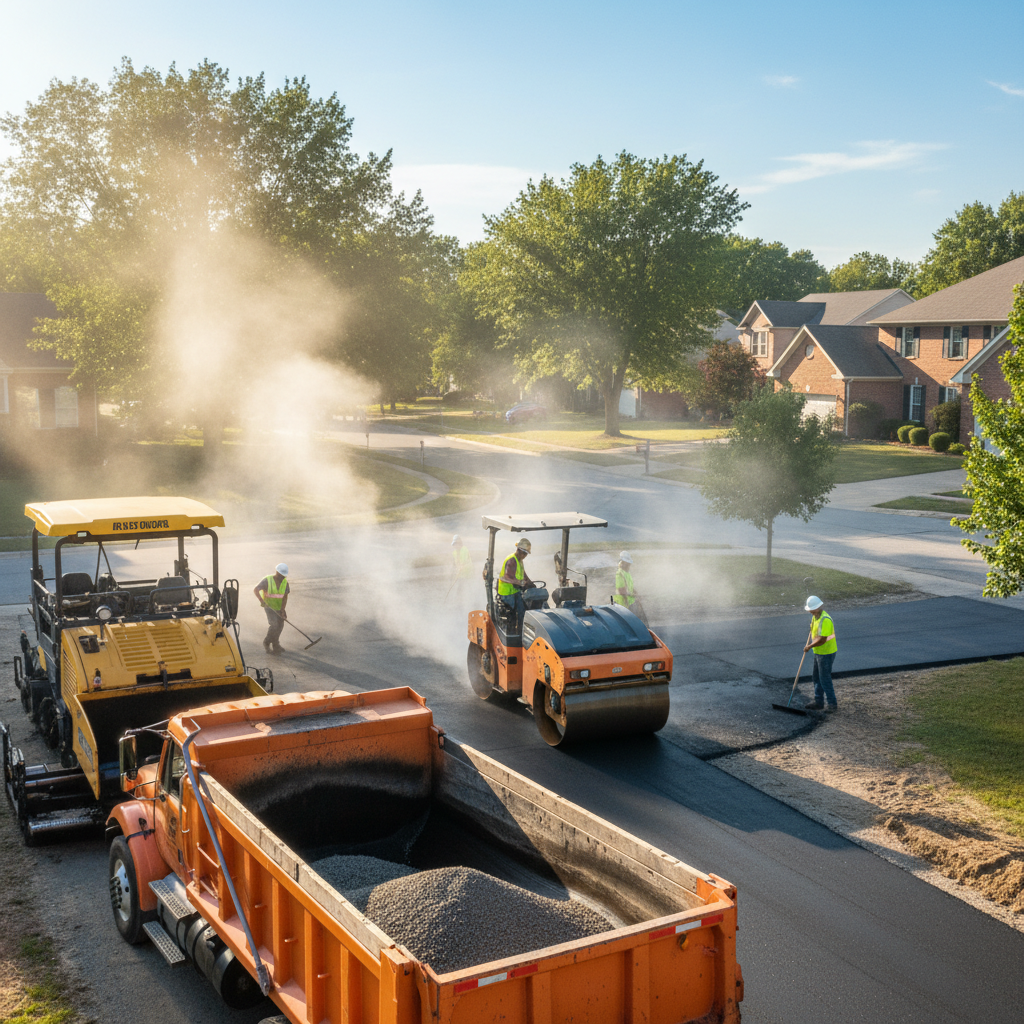
Driveway paving options and costs in Bearspaw
Driveway paving in Bearspaw, Alberta is a popular upgrade for homes in and around Rocky View County, especially for residents who want a cleaner, safer surface than gravel. With a population of 5,567 people (Statistics Canada, 2021 Census), Bearspaw is small enough that word-of-mouth matters, yet it’s part of the wider Calgary housing market where driveways are increasingly treated like “outdoor living space.” Most private driveways in the area serve single-detached homes, so the material choice has a direct impact on winter safety, plowing friendliness, and day-to-day maintenance.
In Calgary’s cold continental climate, frost can penetrate to about 1.2 m (4 ft) and freeze–thaw cycles are frequent. That’s why paving quotes are strongly tied to base depth, compaction, and drainage—not just the final asphalt or concrete finish. A driveway that’s built with a deeper, well-graded granular base and tight edge support costs more upfront, but it’s what helps reduce heaving, cracking, and raveling. The other pricing driver is timing: the paving season is compressed late spring through early fall, so summer scheduling pressure and equipment mobilization can move prices within the $12–$20 asphalt band. This is especially noticeable for work around Bearspaw’s busier residential pockets near local shopping/commuter routes, where contractors are balancing multiple projects at once.
Below is a practical side-by-side comparison so you can estimate budgets before site measurement.
| Material |
Lifespan |
Maintenance |
Best For |
Price per sq ft |
| Asphalt (new installation, proper base) |
15–25 years |
Sealcoat every 3–5 years; patch minor cracks as needed |
Lowest upfront cost with a smooth, plowable surface (when base and drainage are right) |
$12–$20 |
| Asphalt (overlay on existing gravel base) |
8–15 years |
More frequent patching; plan to replace base if it’s unstable |
Budget refresh when gravel base is firm, well-drained, and properly shaped |
$10–$16 |
| Interlocking concrete pavers |
20–30+ years |
Occasional re-leveling/sand top-up; replace individual pavers if needed |
Curb appeal and easy spot repairs without tearing up the whole driveway |
$18–$30 |
| Poured concrete (broom finish) |
25–35 years |
Keep joints maintained; minor crack repairs over time |
Long-term, low-visual-maintenance driveways |
$15–$25 |
| Exposed aggregate concrete |
25–35 years |
Crack repair as needed; reseal only if specified for your finish |
Slip resistance and an upscale look that hides minor surface wear |
$18–$28 |
| Gravel / crushed stone (budget option) |
3–8 years |
Regrade seasonally; top up annually; manage potholes and ruts |
Short-term solution or interim surface before asphalt/concrete |
$6–$12 |
Prices are estimates only and vary by project scope, site access and material selection.
What affects the price of paving in Bearspaw
Even when two neighbours describe “the same driveway,” quotes in Calgary and across Alberta can swing 30–50% because the real cost is in the site preparation: how deep the base must be, how much drainage correction is needed, and how hard the tear-out and disposal will be. Asphalt may land in the common $12–$20 per-square-foot band when the subgrade is stable and access is straightforward, but the price moves up quickly once freeze–thaw protection becomes more involved. Concrete can look cheaper on paper until you account for removing old slabs, forming edges, and the finish/jointing required to manage cracking in Alberta’s winter cycles.
In our region, frost line depth and freeze–thaw cycles are decisive cost factors. With frost routinely reaching about 1.2 m (4 ft), contractors usually need a thicker compacted granular base and well-graded aggregates to prevent subgrade movement. This typically means deeper granular structure than you’d see in milder coastal areas. The paving season is also shorter here because hot-mix asphalt needs air and surface conditions suitable for placement and compaction (often above about 10°C). When spring schedules tighten, labour and equipment demand increases, which can drive costs up for smaller jobs or those needing re-scheduling around weather.
Concrete examples from Bearspaw: a driveway that’s sloped poorly toward the garage typically costs more because we must rebuild the crown/slope and daylight it to proper drainage to reduce freeze-related surface deterioration. On the other hand, a site with stable clay and clean drainage paths can reduce base rework. For asphalt, switching from a “thin overlay” approach to a full-depth base rebuild usually moves the budget toward the mid-to-upper $12–$20 band, but it’s often the difference between a driveway that lasts years versus one that needs major patching early.
| Price Factor |
Why It Matters |
Cost Impact |
| Driveway area in sq ft |
The more square footage, the more base, asphalt/concrete, and finishing labour you need |
Low to high (often the largest line item) |
| Base depth required |
Frost protection depends on granular thickness and compaction quality |
Can add a major premium when deeper structure is required |
| Grading and drainage work |
Proper slope and positive drainage prevent water expansion under freeze–thaw cycles |
Moderate to high, depending on excavation and pipe work |
| Tear-out of existing surface |
Removing concrete slabs or old asphalt increases labour, equipment time, and disposal |
Moderate to high, especially with reinforced concrete |
| Edge restraints and curbing |
Edges keep pavers and asphalt from spreading and reduce water infiltration |
Moderate; often required for lasting results |
| Sealing requirement |
Asphalt needs sealing after initial cure (commonly 6–12 months) to slow oxidation |
Moderate ongoing cost; reduces premature failure |
| Site access |
Narrow lots or long haul distances slow equipment movement and increase labour time |
Low to moderate, higher for outlying or tight sites |
| Asphalt mix specifications |
Freeze–thaw-rated mix design can cost more but improves durability in Alberta |
Moderate premium within the asphalt price band |
Permits & regulations in Alberta
For most homeowners in Bearspaw, paving a private driveway within your own property typically does not require a building permit—especially when you’re staying within the existing footprint and you’re not changing storm drainage routes. Where permits or municipal approvals come into play is usually when work affects the municipal right-of-way or changes drainage infrastructure. That means new curb cuts, modifications to the boulevard, or any altered storm drainage that impacts how water leaves your lot generally needs approval from the municipality responsible for that road segment.
There can also be lot-grading or surface-flow rules tied to municipal bylaws. Even if the paving itself is “no permit,” you still need to ensure your new hard surface doesn’t redirect runoff onto a neighbour’s property, and you may be limited in how close you can place hard surfacing to property lines. Before excavation, always call for utility locates through Alberta One-Call and confirm any underground services near the proposed base and forming lines.
To verify a contractor in Bearspaw step by step: (1) confirm their Alberta business licence/contractor status through the appropriate online channels and ensure the company name matches the paperwork; (2) ask for a current certificate of insurance with liability coverage naming you as additional insured where applicable; (3) request proof of Workers’ compensation coverage (WSIB/WCB coverage) and review that it’s active and matches the contractor’s legal entity. A reputable paving contractor won’t hesitate to provide these documents before starting.
Asphalt vs pavers vs concrete for Bearspaw driveways
Choosing between asphalt, interlocking pavers, and concrete in Bearspaw comes down to balancing upfront cost, freeze–thaw resilience, and winter maintenance. Asphalt usually offers the lowest upfront cost, commonly within the $12–$20 per-square-foot band when the base is built correctly. The trade-off is maintenance: you’ll want sealcoat planning every 3–5 years and regular crack patching to keep water out before winter. In Calgary’s cold continental climate, that maintenance matters because water infiltration + freeze–thaw cycles are what drive surface deterioration.
Interlocking concrete pavers cost more upfront (often $18–$30 per-square-foot), but they’re repair-friendly. If a section settles, the contractor can lift and re-base that zone without replacing the whole driveway—an advantage when subsurface conditions are variable in semi-rural sites. Poured concrete sits mid-range (commonly $15–$25 per-square-foot) and can be long-lasting, especially when you specify air-entrained concrete and proper jointing. Even so, concrete is still susceptible to cracking if joints, base support, or drainage aren’t handled well, particularly with freeze–thaw cycling and repeated plowing.
As an example, for a 600 sq ft driveway, asphalt at roughly $12–$20 per sq ft may land around $7,200–$12,000, while pavers at $18–$30 per sq ft can be about $10,800–$18,000. That price difference is justified when you want maximum curb appeal and you value targeted repairs—especially if you expect future landscaping changes or you’re concerned about soil movement.
| Material |
Frost Resistance |
Curb Appeal |
Repair Method |
Lifespan |
Price Band |
| Asphalt (sealed regularly) |
Good when built on a deep, well-drained base; sealcoat helps limit water intrusion |
Moderate (clean, smooth finish) |
Patch and reseal localized areas |
15–25 years |
$12–$20 |
| Interlocking concrete pavers |
Very good with correct bedding and edge restraints; handles freeze–thaw with flexible joints |
High |
Lift/replace individual pavers or re-level sections |
20–30+ years |
$18–$30 |
| Poured concrete (air-entrained) |
Good when air-entrained and jointed; base drainage is critical |
Moderate to high |
Crack repair/sealant, patching at joints or localized repairs |
25–35 years |
$15–$25 |
| Exposed aggregate concrete |
Good when properly cured and protected; slip resistance helps in winter conditions |
High |
Localized patching and resurfacing only when needed |
25–35 years |
$18–$28 |
| Permeable pavers (drainage grid) |
Very good when installed with correct sub-base and separation to prevent clogging |
High (modern look) |
Remove and clean/replace grid or pavers as needed |
15–25 years |
$22–$38 |
| Chip seal / tar-and-chip |
Fair to good; performance depends heavily on binder control and traffic pattern |
Low to moderate (texture-rich finish) |
Re-chip or spot patch |
6–12 years |
$10–$16 |
How to choose a paving contractor in Bearspaw
When you’re picking a paving contractor in Bearspaw, start with verification, not promises. In Alberta, ask for proof of licensing/registration for the business entity, then get liability insurance documentation and confirm it’s current (a certificate of insurance). For workers’ coverage, request proof of WSIB/WCB coverage; the coverage should be active and tied to the contractor doing the work, not just “a subcontractor somewhere down the chain.” A good contractor will provide these documents quickly and clearly.
Next, request 2–3 itemised written quotes. You want labour and materials breakdowns (base, asphalt/concrete, saw cutting, compacting, forming, drainage corrections, disposal). Avoid quotes that are only a lump sum because it’s impossible to compare “like-for-like” scope. Read what’s excluded: is tear-out disposal included? Are utility locates included? Is the permit or municipal approval process included if the work touches right-of-way elements? For sealing, confirm whether asphalt sealing is included or priced separately, and what the recommended cure window is (often 6–12 months after install).
Warranty matters: ask about workmanship warranty length and whether manufacturer warranty applies to materials. Find out if warranties are transferable to a future homeowner. For payment scheduling, plan to never pay more than 10–15% upfront, and insist on a holdback until completion and cleanup. Finally, get the start date and completion estimate in writing; in Bearspaw’s short paving window, timing is part of the quality plan.
- Verify Alberta business details match the quote, invoice, and insurance certificate.
- Confirm current liability insurance and ask if you’re listed as additional insured (where applicable).
- Check WSIB/WCB coverage is active and tied to the paving crew’s employer.
- Ask for 2–3 recent references from nearby Calgary-area homes with similar driveway sizes.
- Require itemised quotes: base prep, compaction, drainage work, materials, saw cuts, disposal.
- Clarify tear-out scope: includes breaking, hauling, and grading back to grade?
- Confirm base spec: aggregate type/size, lift thickness, and compaction targets.
- For asphalt, confirm mix design is freeze–thaw appropriate and note sealing plan (6–12 months).
- For concrete, ask for air-entrainment and jointing plan (saw cuts/expansion joints).
- Review edge treatment: restraints/curbs to prevent paver spread and water infiltration.
- Ask what’s excluded for permit/municipal approval if any right-of-way impacts occur.
- Use a payment schedule with small deposit, and holdback until final inspection and cleanup.
Red flags I see too often in Bearspaw include quotes that don’t describe the base or drainage work, contractors who won’t provide insurance/WSIB/WCB proof, payments that demand a large upfront deposit, no mention of sealing for asphalt (or jointing for concrete), and “one-size-fits-all” pricing without site measurement and frost-depth/base discussion.
Frequently asked questions — paving in Bearspaw
Can asphalt be laid in cold weather in Bearspaw?
In Bearspaw, Alberta, asphalt is usually not laid when it’s too cold because proper placement and compaction need suitable air and surface temperatures. Even though Calgary’s season extends from late spring into early fall, asphalt still needs conditions that allow the hot mix to be compacted to spec. If the ground is very cold or frozen, contractors will often need to delay or use specialized controls, and even then you risk weak compaction and early raveling. For homeowners, that means a “late-fall rush” can cost more long-term. If you’re aiming for the $12–$20 per sq ft asphalt band, plan the work during weather windows that allow consistent compaction and a proper cure.
What is a driveway apron and do I need one in Bearspaw?
A driveway apron is the transition section at the driveway approach—typically the area near the sidewalk/road edge or where the driveway surface meets the adjacent paved area. In many Bearspaw driveway builds, an apron improves drainage control, prevents edge breakdown, and helps the plow blade “ride” over a smoother transition instead of catching on a lip. Whether you need one depends on your site layout (grade differences, curb/sidewalk presence, and where runoff concentrates). If your driveway ties into a curb cut or changes the boulevard grading, that can fall under municipal approval requirements. A contractor should assess the slope and surface-flow path and recommend an apron if you’re seeing water pooling or if the approach grade changes.
How do I maintain my driveway through Bearspaw winters?
In Alberta winters, maintenance is mainly about keeping water out and avoiding damage from snow removal. For asphalt, plan to patch small cracks early so moisture doesn’t enter and expand during freeze–thaw cycles. Use plastic shovels or a light touch where possible to reduce gouging, and avoid scraping aggressive ruts that can tear up the surface. For concrete, keep joints clean and remove debris that can hold meltwater. If you salt, do it sparingly—salt and thawing cycles can accelerate surface wear on concrete if it’s not properly air-entrained and finished. The long-term goal is to keep drainage working: don’t let snowbanks block swales or redirect meltwater toward your foundation or neighbour’s property.
Is it worth sealing a new driveway right away in Bearspaw?
Usually, no—you generally shouldn’t seal new asphalt immediately after paving in Bearspaw. Asphalt sealing is commonly done after the surface has cured, often around 6–12 months after installation, depending on weather and the product used. Sealing too early can trap moisture and affect adhesion, leading to premature failure. The upside of sealing at the right time is meaningful: it slows oxidation and helps reduce water penetration at the surface level, which matters in a freeze–thaw climate where trapped moisture expands. If you’re budgeting, ask whether sealing is included. Many homeowners start with asphalt in the $12–$20 per sq ft range, then add sealing costs later as part of a lifecycle plan.
What is a chip seal driveway and is it suited to Bearspaw?
Chip seal (tar-and-chip) is a thinner surface treatment where a binder is applied and aggregate chips are spread and compacted. It can be a cost-effective option, often within lower budget bands than full asphalt paving, but it’s not as smooth or durable as thick asphalt or pavers when you factor in Alberta’s winter loading and plowing. In Bearspaw’s freeze–thaw conditions, performance depends heavily on correct binder application rate, aggregate selection, and how well the driveway is prepared and drained. If your driveway sees frequent vehicle turning, heavy snow storage near edges, or lots of de-icing chemical splash, chip seal may require more frequent rework than homeowners expect. It’s typically best for lower-speed, lower-impact driveways where you accept a more textured surface.
How much does driveway crack repair cost in Bearspaw?
Crack repair pricing varies by crack width, length, whether it’s a “surface crack only” versus a failing base, and how much cleaning/prep is required. In Alberta, small asphalt crack filling can be relatively modest, but once cracks are wide, interlaced, or accompanied by edge breakdown, the contractor may recommend patching or localized base correction to prevent reappearance. Many homeowners end up comparing crack repair to the broader maintenance plan: sealing and targeted repairs help avoid the faster deterioration that comes from freeze–thaw moisture expansion. As a planning reference for Bearspaw, sealing and repair as a whole commonly lands in the $400–$1,500 range depending on driveway size and scope, while serious failure may push toward a patch or overlay approach.