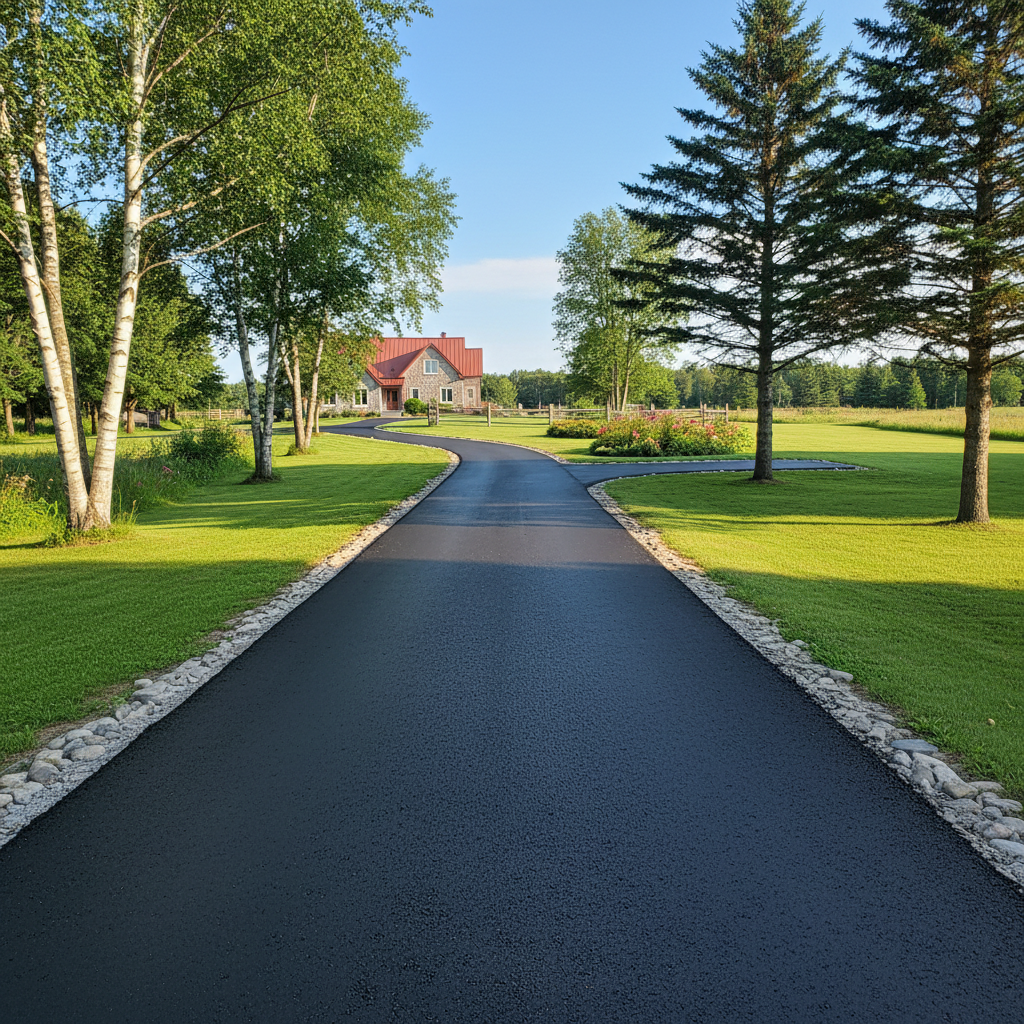
Driveway paving options and costs in West Springs
West Springs, Alberta is a fast-growing community of about 11,560 residents (Statistics Canada, 2021 Census), and most private driveways here are tied to single-family homes—so driveway upgrades are a steady demand line for local paving crews. When homeowners compare bids, it helps to know that the “same” driveway can price very differently based on subgrade condition, how much granular base is required to manage Calgary’s deep frost, and how tight the access is on newer or semi-rural lots around the neighbourhood.
Calgary’s cold continental climate drives costs because frost can penetrate roughly 1.2 m (4 ft), creating strong freeze–thaw movement. Asphalt and concrete must be supported by deeper, well-graded aggregate layers and properly drained edges to limit heaving, cracking, and surface raveling. On top of that, the paving season is short—most asphalt paving and concrete finishing has to happen from late spring to early fall when temperatures and curing conditions allow reliable compaction and set. In peak months, scheduling pressure and crew availability can raise unit pricing, especially for smaller jobs that still require the same mobilization.
In West Springs, demand is often especially noticeable in the interior streets where driveways are longer and access can be tight for skid steers and paving rollers—so planning for base, drainage, and proper edge restraint typically becomes the difference between a short-lived patch and a long-lasting finish. Use the guide below to compare common materials and realistic per-square-foot expectations, then we’ll explain what moves those numbers up or down.
| Material |
Lifespan |
Maintenance |
Best For |
Price per sq ft |
| Asphalt (new installation, proper base) |
12–20 years |
Sealcoat every 3–5 years; crack touch-ups as needed |
Good value with a smooth, modern look |
$12–$20 |
| Asphalt (overlay on existing gravel base) |
10–15 years |
Sealcoat every 3–5 years; more frequent minor repairs if drainage is weak |
Budget-friendly upgrades when base is stable |
$10–$16 |
| Interlocking concrete pavers |
20–30+ years |
Joint sand replenishment; replace individual pavers if needed |
Curb appeal and easy localized repairs |
$18–$30 |
| Poured concrete (broom finish) |
20–30 years |
Reseal if desired every 5–8 years; crack repair as required |
Durability and clean, straightforward maintenance |
$15–$25 |
| Exposed aggregate concrete |
20–30 years |
Sealing every 6–10 years; manage minor cracking with routine patching |
Premium appearance and better slip resistance |
$18–$28 |
| Gravel / crushed stone (budget option) |
5–10 years |
Ongoing top-ups; grading and weed control; re-compaction |
Temporary solution or low initial cost |
$6–$12 |
Prices are estimates only and vary by project scope, site access and material selection.
What affects the price of paving in West Springs
In West Springs and the wider Calgary area, two homeowners can receive quotes that differ by 30–50% for what looks like the “same” driveway. The biggest drivers are the amount of excavation required, how much granular base has to be rebuilt for freeze–thaw performance, and whether drainage and edge support need correction. Labour and equipment costs also shift with job size and timing—when the paving season is busy, contractors still have to mobilize crews and rollers, so small projects can feel disproportionately expensive.
Frost line depth and freeze–thaw cycles are decisive cost factors in Calgary’s cold continental climate. When frost penetrates deeply (about 1.2 m), subgrade movement becomes a real risk, so contractors typically build a deeper, compacted granular base and use well-graded aggregates to reduce pumping and heaving. If drainage is poor, water expands during freezing and can pry at weak spots—leading to cracking and raveling that costs more to fix later. Asphalt mix design also matters: a freeze–thaw-rated mix can cost more than standard mix, but it’s part of ensuring the driveway holds up through Alberta winters.
Concrete costs can rise quickly when the site needs extra grading, water management, or thicker support to address weak soils. A driveway that requires significant tear-out (old asphalt or deteriorated concrete) and disposal will generally come in higher than a “pave over stable base” scenario. Conversely, costs can drop when the existing base is well-compacted and drainage is already correct—sometimes making asphalt a strong value within the $12–$20 per-square-foot range. For higher curb appeal and easier patch-and-replace repairs, pavers in the $18–$30 band can be worth the premium when the homeowner values long-term maintainability.
| Price Factor |
Why It Matters |
Cost Impact |
| Driveway area in sq ft |
Most materials and paving time scale directly with surface area |
Low to high; primary driver |
| Base depth required |
Frost management determines granular thickness and compaction requirements |
Can add significant excavation and aggregate cost |
| Grading and drainage work |
Correct slope and positive drainage prevent water pooling and heave |
Raises labour; may require additional base and shaping |
| Tear-out of existing surface |
Breaking, hauling, and disposal add time and disposal fees |
Often one of the largest “surprise” increases |
| Edge restraints and curbing |
Prevents lateral movement and paver spread; supports asphalt edges |
Moderate increase for materials and placement time |
| Sealing requirement |
Asphalt typically needs sealcoat after initial cure to slow oxidation and damage |
Extra future cost; improves long-term performance |
| Site access |
Narrow driveways and limited staging slow equipment movement |
Can add labour time and sometimes smaller-batch deliveries |
| Asphalt mix specifications |
Freeze–thaw-rated mix improves durability in Alberta winters |
Generally higher materials cost per tonne |
Permits & regulations in Alberta
In Alberta, paving a private driveway within your own property typically doesn’t require a building permit when you’re working on areas wholly on your land and you’re not altering public infrastructure. However, work in the municipal right-of-way commonly does require municipal approval—especially if you’re creating a new curb cut, changing the boulevard, reconnecting or altering storm drainage, or modifying catch basins and drainage routes. If your driveway ties into a municipal roadway or you’ll be adjusting drainage flow patterns, that’s the point where approvals become more likely. Some municipalities also enforce lot-grading rules that restrict how close hard surfaces can be to property lines and how runoff must be directed, which matters in West Springs where drainage issues can show up after spring melt.
Step-by-step, here’s how a homeowner in West Springs should verify a contractor and stay protected:
- Call for utility locates before digging (Alberta One-Call) so excavators don’t hit buried services.
- Ask the contractor to confirm whether any curb cut or drainage modifications trigger municipal approvals.
- Verify the contractor’s Alberta licence status using the appropriate online registry and ensure their name matches the quote.
- Request a current certificate of insurance (liability) with coverage amounts appropriate for paving work.
- Confirm WSIB/WCB coverage documentation for workers on site (or the contractor’s exemption status if applicable).
- Get the clearance letter or coverage proof in writing before work starts.
Do not rely on “we’ve done this before” alone—tie the permit/approval question and insurance documents to the specific scope written in the contract.
Asphalt vs pavers vs concrete for West Springs driveways
For West Springs driveways, the choice usually comes down to balancing upfront cost, winter durability, and how much repair hassle you’re willing to manage over time. Asphalt is typically the lowest upfront option, with smooth rolling surfaces and straightforward maintenance—but it performs best when it’s built on the right base and sealed regularly (often every 3–5 years). Pavers cost more at the start, yet they handle Alberta freeze–thaw movement better from a homeowner perspective because individual stones can be reset if a section needs attention, without tearing out the entire driveway. Poured concrete usually sits in the mid-range for cost and looks clean for decades, but it’s more sensitive to cracking if drainage, thickness, or air entrainment aren’t right for Calgary’s deep frost.
Because frost can penetrate deeply (about 1.2 m), all three options depend on strong granular base and proper drainage design. Asphalt and concrete should have well-graded crushed stone, compacted to reduce water movement. In practice, drainage correctness often matters more than the material brand. Interlocking pavers can be forgiving when minor settlement happens, but only if edge restraints and proper compaction are done. When winter includes plowing and de-icing (salt and sand), choosing air-entrained concrete and using freeze–thaw-rated asphalt mixes becomes crucial.
A concrete example: a 500 sq ft driveway can land around the $12–$20 per-square-foot range for asphalt (base included), while pavers often land in the $18–$30 band. That premium is justified when you expect easier long-term patch repairs, prefer crisp curb appeal, or want a finish that can tolerate localized issues without full replacement. If you want the lowest maintenance planning, pavers and well-built concrete are often more predictable over time; if you want the lowest upfront and don’t mind periodic sealing, asphalt is usually the best fit.
| Material |
Frost Resistance |
Curb Appeal |
Repair Method |
Lifespan |
Price Band |
| Asphalt (sealed regularly) |
Good when base/drainage are correct and mix is freeze–thaw rated |
Medium (smooth, modern look) |
Cut-and-patch sections |
12–20 years |
$12–$20 |
| Interlocking concrete pavers |
Very good; tolerates minor movement with segmented surface |
High (variety of patterns/colours) |
Replace individual pavers and re-sand the joints |
20–30+ years |
$18–$30 |
| Poured concrete (air-entrained) |
Good with correct thickness, air entrainment, and drainage |
Medium to high (clean, uniform finish) |
Spot patching; may require sealing for longevity |
20–30 years |
$15–$25 |
| Exposed aggregate concrete |
Good with freeze–thaw design and controlled finishing |
High (textured premium look) |
Limited patching options; may require surface refinishing for cosmetic match |
20–30 years |
$18–$28 |
| Permeable pavers (drainage grid) |
Very good when designed with proper underdrain and subgrade capacity |
High (modern sustainable look) |
Replace individual pavers; inspect/check underdrain function |
15–25+ years |
$20–$35 |
| Chip seal / tar-and-chip |
Fair to good; more sensitive to base prep and winter wear |
Low to medium (utility finish) |
Spot renewals; periodic re-chipping |
6–12 years |
$10–$15 |
How to choose a paving contractor in West Springs
Choosing the right contractor matters more than picking the cheapest line item. Start by verifying Alberta licensing in the contractor’s legal name (make sure it matches the quote and contract). Next, ask for liability insurance—your certificate should show coverage limits appropriate for paving activities and include your address or at least the project location details. Finally, confirm WSIB/WCB coverage for workers: request documentation showing active coverage (or a clear explanation if the contractor uses a subcontracting structure that changes coverage responsibility). If you see outdated paperwork or the contractor hesitates to provide it, that’s a meaningful warning sign.
Then get 2–3 itemised written quotes. Look for a materials + labour breakdown (not just a lump sum) that specifies base depth, granular type, asphalt thickness or concrete thickness, edge restraints, drainage corrections, and tear-out scope. Ask whether disposal is included and whether permit/municipal approval steps are included if your driveway impacts boulevard or drainage. Compare warranties too: confirm workmanship warranty length, whether there’s a separate manufacturer warranty for materials, and whether coverage is transferable if you sell your home. For payments, avoid paying more than about 10–15% upfront; hold back a portion until the job is complete and surfaces are finished as agreed. In cold climates, timeline clarity is essential—insist on a start date and an estimated completion window in writing, since delays can affect curing and final texture on asphalt and concrete.
- Confirm Alberta licence and business name match the contract
- Request proof of liability insurance (current expiry date)
- Verify WSIB/WCB coverage and keep a copy of clearance proof
- Ask for itemised labour + materials (base, thickness, aggregate gradation)
- Clarify scope exclusions: what is not included in the price
- Confirm tear-out and disposal: who hauls and what landfill costs are covered
- Check edge restraint plan (curbs/steel edging for pavers; proper asphalt edge support)
- Require a drainage plan: slope and where runoff will go
- Ask about curing and weather cut-offs for asphalt and concrete
- Get warranty terms in writing: workmanship length and limits
- Agree on payment schedule with a holdback until final inspection
- Ensure start and completion dates are on the contract
Red flags I see in West Springs include vague “we’ll prep it properly” wording with no base depth specified, quotes that ignore drainage corrections, contractors who cannot explain their asphalt mix or concrete air-entrainment approach, insurance documents that are expired or missing project details, and requests for large upfront deposits without a signed schedule.
Frequently asked questions — paving in West Springs
Do I need a permit to pave my driveway in Alberta?
In Alberta, paving work within your own property typically doesn’t require a building permit. However, if your project involves work in the municipal right-of-way—like a new or modified curb cut, changes to boulevard, or altering storm drainage—you should expect municipal approval steps. West Springs homeowners often assume “driveway = no permits,” but the moment drainage routing or boulevard grades change, the municipality may get involved. Before excavation, confirm whether the contractor is handling approvals (if required) and ensure Alberta One-Call utility locates are completed. A good quote will clearly separate what’s on your land from what affects municipal infrastructure.
How long before I can drive on new asphalt?
For new asphalt in West Springs, timing depends on weather and the lift thickness, but most driveways are ready for light vehicle traffic once the surface has cooled and set to a firm, non-tracking state. In practice, many homeowners are driving on it the same day or within 24–48 hours when conditions are warm and dry. If it’s cool or damp, it can take longer because compaction and curing slow down. Avoid turning cars sharply, parking heavy loads, or using de-icing too early. Also, remember that asphalt sealing is typically planned later—often after the initial cure window—so don’t confuse “driveable” with “ready for sealcoat.”
What causes potholes and how are they repaired?
Potholes usually start from water entering through cracks or weak edge areas, then expanding during freeze–thaw cycles. In Calgary’s cold continental climate, frost penetration and repeated thawing can loosen the base, causing surface breakdown and loss of support. Repairs depend on the cause: a proper contractor cuts back to sound material, removes the failed asphalt and any compromised base, then rebuilds with new compacted granular base before repaving or patching. Quick “surface-only” patches can fail again because they don’t restore base support or fix drainage. If you’re seeing recurring failures, ask about drainage slope and edge restraint—those details often decide whether repairs last.
How do I prepare for a paving project?
Preparation is one of the easiest ways to keep costs from rising and avoid damage. In West Springs, start by clearing the driveway path completely (vehicles, trailers, stored items) and marking any underground utilities or sprinkler lines you know about. Schedule Alberta One-Call utility locates before excavation. Confirm with your contractor whether any tear-out will require temporary access changes to neighbours or curb areas. If you have landscaping near the edges, plan protection or relocation. Finally, review the quote scope: disposal included or not, drainage fixes included or not, and whether base thickness is being measured/confirmed. The tighter the pre-planning, the fewer “extras” appear on the day crews arrive.
How do I compare paving quotes fairly?
To compare quotes fairly in Alberta, don’t focus only on the final total or one “price per sq ft” line. Ask for an itemised breakdown: base depth, granular type, asphalt or concrete thickness, edge restraints, drainage correction, tear-out, and disposal. Confirm whether the contractor is using freeze–thaw-rated asphalt mix or air-entrained concrete where required. When you see asphalt pricing that falls outside the typical band—like below the general $12–$20 range—ask what’s being reduced. Similarly, don’t compare pavers only by appearance; pavers often fall within the $18–$30 band, and that premium is usually tied to materials, setting base, and the edge support that keeps joints stable through winter.
Can asphalt be laid in cold weather in West Springs?
Asphalt can’t be treated like a “summer-only” finish in the literal sense—crews can work in cooler conditions—but it’s not reliable to lay asphalt in the true cold without proper temperature and weather planning. Hot-mix asphalt generally needs air temperatures above about 10°C to support consistent placement and compaction, and the roadbed needs to be suitable (not frozen or overly wet). In West Springs, spring and fall windows are tight because freeze–thaw cycles can begin quickly when temperatures drop overnight. A quality contractor will state temperature cut-offs, drying/compaction approach, and scheduling contingency. If someone promises asphalt in clearly cold conditions, ask how they’ll meet compaction and curing requirements—otherwise you risk early rutting, cracking, and shortened lifespan.