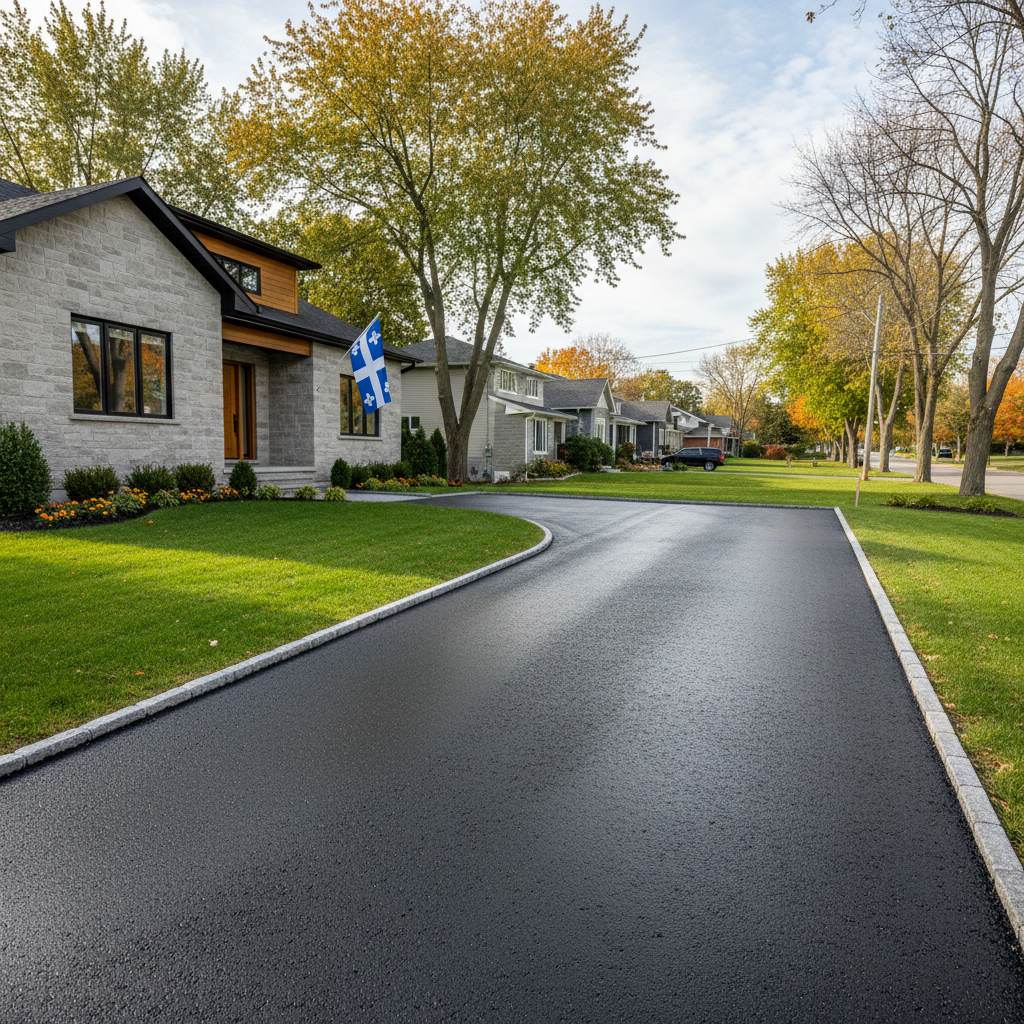
Driveway paving options and costs in Windsor
In Windsor, Ontario, homeowners typically choose among asphalt, interlocking concrete pavers, and concrete based on budget, winter durability, and how the driveway looks in front of a home. With Windsor’s housing stock leaning heavily toward single-detached dwellings (60.1% of homes) and a large pool of homeowner households (62.5% of households own) (Statistics Canada, 2021 Census), driveways are a major part of property value—and also a major source of maintenance headaches when frost starts lifting weak spots. Even in one of Ontario’s milder southern markets, Windsor still faces freeze-thaw cycles that can pry open tiny cracks, pump fines out of the base, and trigger early repairs if excavation and drainage aren’t done correctly.
Pricing across the Windsor–Sarnia region can also shift with seasonal demand. Hot-mix asphalt needs air temperatures above about 10°C to place and compact properly, so spring and late-fall work often costs more due to schedule pressure and shorter curing windows. Availability of crews and equipment can tighten when multiple neighbourhood projects run at once. In Windsor’s South Walkerville and along parts of Tecumseh Road (where access and boulevard work can come into play), asphalt and paver demand stays steady because homeowners want reliable winter performance without constant touch-ups.
To compare apples to apples, use the table below as a starting point. Your final number still depends on excavation depth, base condition, drainage corrections, and how much tear-out is involved.
| Material |
Lifespan |
Maintenance |
Best For |
Price per sq ft |
Price Range |
| Asphalt (new installation, proper base) |
15–25 years |
Seal every 3–5 years; crack-fill as needed |
Good value and smooth ride |
$3.50 – $7.50 |
$8,000–$18,000 |
| Asphalt (overlay on existing gravel base) |
10–20 years |
Seal periodically; monitor edges and low spots |
When the base is sound and removal is limited |
$3.00 – $6.50 |
$6,500–$14,500 |
| Interlocking concrete pavers |
25–40 years |
Joint sand top-ups; replace individual stones if needed |
Max curb appeal and easy localized repairs |
$7.00 – $13.00 |
$14,000–$28,000 |
| Poured concrete (broom finish) |
20–30 years |
Crack sealing; keep edges free of debris and standing water |
Low visual complexity and straightforward maintenance |
$6.00 – $11.00 |
$12,000–$22,000 |
| Exposed aggregate concrete |
20–30 years |
Seal periodically; clean out debris from joints/edges |
Decorative look with slip resistance |
$7.50 – $13.50 |
$16,000–$28,000 |
| Gravel / crushed stone (budget option) |
5–10 years |
Regrade and top up annually; control weeds and washout |
Temporary solution or low initial spend |
$1.50 – $3.50 |
$4,000–$8,000 |
Prices are estimates only and vary by project scope, site access and material selection.
What affects the price of paving in Windsor
In Windsor–Sarnia, two quotes for the “same” driveway can land 30–50% apart because the real variables are underground. Asphalt might be priced as “$8–$14 per sq ft” in the market, but that band assumes you can build the right base, manage drainage, and keep excavation within a normal footprint. If your site has clay-heavy soil, soft subgrade, or poor slope toward the street, contractors often have to excavate deeper and add more granular stone to reduce the risk of freeze-thaw pumping.
Frost line depth and freeze-thaw cycles are decisive cost factors in southern Ontario. Windsor’s freeze-thaw action can lift weak bases, so deeper frost protection and a thicker compacted granular base are commonly required. In practice, that means more excavation and more base thickness than homeowners expect—especially where water can sit. Ontario frost design guidance has historically treated much of the province as needing roughly 3 to 5 feet of frost-protection excavation depending on soil and exposure, which is why base thickness and drainage details matter more than surface material alone. As a result, projects that start closer to the frost-protection requirement often land in the higher end of the asphalt pricing band and push paver/complete rebuild budgets upward too.
Concrete costs can also swing. For example: (1) if your driveway currently has old broken concrete, demolition and hauling can add significant labour; (2) if you have to rework grading to shed water, both concrete and asphalt require extra base and formwork/edge work; (3) if de-icing habits and winter sanding expose weaker edges, air-entrainment and proper finishing become non-negotiable. Homes built before 1981 make up 68.0% of the housing stock (Statistics Canada, 2021 Census), and older driveways often hide drainage issues that only show up once we strip the surface and inspect the base.
That’s why the best way to compare quotes is to compare the excavation depth, base build, and drainage plan—not just the final material. Use the factors below as a checklist when you review itemized proposals.
| Price Factor |
Why It Matters |
Cost Impact |
| Driveway area in sq ft |
Labour and materials scale directly with surface area and thickness. |
High (often the biggest driver) |
| Base depth required |
Frost risk increases with moisture; deeper frost protection means more compacted stone. |
High (can change total by 20–40%) |
| Grading and drainage work |
Correct slope and add drainage to prevent water pooling under pavement. |
Medium to High (common in older properties) |
| Tear-out of existing surface |
Breaking concrete or removing failed asphalt adds disposal, labour, and subgrade inspection. |
Medium (can be major on thick slabs) |
| Edge restraints and curbing |
Prevents paver spread and asphalt edge deterioration under plough/snow load. |
Medium |
| Sealing requirement |
Asphalt needs sealing after cure (often within 6–12 months) to protect against water and oxidation. |
Low to Medium (but important) |
| Site access |
Narrow driveways slow equipment movement and can increase labour hours. |
Medium |
| Asphalt mix specifications |
Freeze-thaw-rated mix design and appropriate asphalt cement improve performance in Ontario winters. |
Low to Medium (usually worth the cost) |
Permits & regulations in Ontario
In Ontario, paving a private driveway on your own property typically does not require a building permit—especially when you’re replacing the driveway surface and staying within your existing driveway footprint. However, driveway work that touches the municipal right-of-way often does require municipal approval, because it can affect stormwater, the boulevard, or traffic safety. In Windsor, the kinds of work that usually require approvals include: creating or changing a curb cut, altering the boulevard, changing driveway ties to municipal curb/gutter, and modifying storm drainage patterns (for example, redirecting water so it doesn’t run across sidewalks or onto adjacent properties). Some areas also have lot-grading rules that restrict how close a hard surface can be to property lines and how water must be shed.
Before excavation, always arrange utility locates through Ontario One Call. Then verify your contractor’s compliance step-by-step:
- Ontario licence: confirm the contractor is registered/qualified for the work they’re doing (use Ontario’s public business/contractor registry sources where applicable, and ask for their licence details in writing).
- Liability insurance: request a current certificate of insurance showing coverage limits and the job address.
- WSIB (Workers’ Safety and Insurance Board) coverage: ask for proof/clearance documentation for the company and confirm it’s current for the period of work.
- Keep it in the contract: have licence/insurance/WSIB details referenced in your quote or agreement.
Doing this upfront prevents delays, holds, and liability disputes later—especially on projects with deeper excavation where unforeseen utilities or drainage conflicts can arise.
Asphalt vs pavers vs concrete for Windsor driveways
For Windsor driveways, the best choice comes down to how your property handles moisture and how much you want to “fix locally” versus “replace when it fails.” Asphalt is usually the lowest upfront option, typically priced in the driveway paving band of roughly $8–$14 per sq ft, but it relies on a strong compacted base and needs sealing every 3–5 years to slow water penetration. Interlocking concrete pavers cost more upfront—often landing in the $18–$32 per sq ft market band—but they’re highly repairable: if a section settles, a contractor can lift and relay only that area instead of replacing the whole driveway. Poured concrete is a mid-range solution (commonly around $12–$20 per sq ft) and can last well if you use air-entrained concrete and control joints properly; in Windsor’s freeze-thaw environment, however, cracking is a reality when drainage isn’t managed and water can sit under edges.
Base preparation is the equalizer across all three. Windsor–Sarnia’s winter maintenance routine—salt, sanding, and ploughing—puts stress on edges and any low spots that trap water. In practice, you should expect a substantial compacted granular base and correct grading so water drains away from the slab or asphalt. Where paver joints are well sanded and edges are restrained, they tend to tolerate winter movements better. With concrete, air-entrainment and finishing matter; with asphalt, mix design plus a later sealing schedule matter.
Here’s a practical example: if your contractor’s estimate for an asphalt driveway is around $10,000 and pavers come in around $18,000 for the same footprint, the $8,000 difference is usually justified if you value curb appeal, want easy partial repairs, or anticipate future utility work or minor settlement. If your soil is consistent and drainage is engineered, asphalt can be the most cost-effective path—provided you budget for sealing.
| Material |
Frost Resistance |
Curb Appeal |
Repair Method |
Lifespan |
Price Band |
| Asphalt (sealed regularly) |
Good with proper base and drainage |
Medium |
Patch and hot-mix/overlay sections |
15–25 years |
$8–$14 |
| Interlocking concrete pavers |
Very good; movements are easier to manage |
High |
Lift/replace individual pavers or zones |
25–40 years |
$18–$32 |
| Poured concrete (air-entrained) |
Good with joints and water control |
Medium |
Crack repair/seal; localized patching |
20–30 years |
$12–$20 |
| Exposed aggregate concrete |
Good with correct finishing and base |
High |
Localized patching and sealing |
20–30 years |
$14–$24 |
| Permeable pavers (drainage grid) |
Excellent where drainage is designed correctly |
High/Modern |
Replace affected paver blocks; maintain base layers |
20–35 years |
$22–$38 |
| Chip seal / tar-and-chip |
Moderate; depends heavily on application quality |
Low to Medium |
Re-surface or section re-chip |
7–15 years |
$6–$12 |
How to choose a paving contractor in Windsor
Start by verifying licensing, insurance, and work coverage before you sign anything. In Ontario, ask the contractor for: (1) their Ontario business/contractor registration details, (2) a certificate of liability insurance showing the policy is active and matching your job address, and (3) WSIB/WCB coverage evidence—then confirm the coverage is current for the timeframe of the project. Don’t rely on verbal confirmation; ask for documents and keep copies.
Next, get 2–3 itemised written quotes (labour + materials breakdown). A lump sum makes it hard to compare excavation depth, base thickness, drainage work, disposal fees, and edge restraint. Read the scope carefully: what is excluded (for example, removing old footings, hydro/utility adjustments, excess excavation, or repairing settled subgrade)? Ask if a permit is required and whether the contractor will handle it. Confirm disposal is included for asphalt/concrete removal.
Warranty should be in plain language: workmanship warranty length, what’s covered (material vs labour), whether the warranty requires routine maintenance (like asphalt sealing timing), and whether it’s transferable if you sell the property. For payment, never pay more than 10–15% upfront. Use a holdback until final grade, compaction, cleanup, and asphalt cure requirements are met.
Finally, request the start date and completion estimate in writing, and ask how they’ll schedule paving if weather affects curing windows.
- Confirm WSIB and request a clearance/coverage document for the company.
- Request a current certificate of insurance (liability) and verify limits.
- Ask for proof of Ontario registration/qualification for the scope being quoted.
- Get itemised excavation, base, and surface line items—not just “materials.”
- Verify base thickness and compaction requirements (and what testing they do).
- Confirm drainage plan: slope targets and how water will be managed.
- Check what tear-out includes: depth, hauling, and disposal location.
- Ask about edge restraints/curb ties and joint sand (for pavers).
- For asphalt, confirm lift thickness, rollers/compaction method, and sealing timeline.
- Review warranty terms for workmanship and the process for making a claim.
- Use a payment schedule with a holdback until final acceptance.
- Get a written schedule: start date, milestone dates, and weather contingency.
Red flags I see too often in Windsor include: vague scopes with no excavation/base thickness stated; quotes that don’t address drainage even when there’s low or clay-heavy ground; crews starting without utility locates; warranties that cover “materials only” and not workmanship; and payment requests that exceed 10–15% upfront with no holdback until completion.
Frequently asked questions — paving in Windsor
How do I maintain my driveway through Windsor winters?
In Windsor and across southern Ontario, winter maintenance is mainly about managing water and avoiding unnecessary stress on edges. Start by keeping the surface clear of debris so water doesn’t pool in low areas. During snow removal, avoid digging into the driveway with sharp plough blades—edge damage is a common cause of premature failure because freeze-thaw can then widen openings. For asphalt, plan on crack-filling small cracks early and staying consistent with sealing (often every 3–5 years) to slow water penetration. Use sand for traction where possible instead of over-applying salt, because excess salt and brine can accelerate surface wear. If you notice potholes after thaw periods, patch promptly so moisture doesn’t reach the base.
Is it worth sealing a new driveway right away in Windsor?
In Windsor, sealing is usually worth it, but “right away” depends on cure time. Asphalt needs time to cool, oxidize properly, and cure before a sealer can bond without causing tracking or premature blistering. Many contractors schedule sealing after the driveway has cured—often within a 6–12 month window—so you’re protecting the surface before water finds its way into tiny voids. If your quote includes asphalt paving in the $8–$14 per sq ft band, ask whether sealing is included and what product is planned. Sealing too early can reduce performance, and sealing too late can mean the driveway is already allowing oxidation and moisture infiltration.
What is a chip seal driveway and is it suited to Windsor?
A chip seal (tar-and-chip) driveway is a thin binder layer sprayed over prepared base, then covered with stone chips and rolled in. It can be a budget-friendly option when priced around the lower end of the paving spectrum (for example, roughly $6–$12 per sq ft), and it can provide a textured surface for traction. In Windsor’s freeze-thaw conditions, however, chip seal performance depends heavily on base quality, drainage, and installation technique. If your driveway already has drainage problems or unstable subgrade, chip seal won’t “fix” the underlying issue and may require re-surfacing sooner than asphalt or pavers. For most homeowners seeking long-term curb value in Windsor, asphalt or pavers usually provide a more predictable lifespan when the base is engineered correctly.
How much does driveway crack repair cost in Windsor?
Crack repair in Windsor commonly falls into the sealing & repair band of about $2–$6 per sq ft for typical patch-and-seal work, but the real number depends on crack width, length, and whether the contractor confirms the base is sound. Hairline cracks may only require crack filling and surface cleaning, while wider cracks with edge separation may need saw-cut sealing, localized patching, or even partial rebuild. If drainage issues are present—like water running toward the garage—repairs can fail early unless the slope and edge conditions are addressed. When you’re comparing quotes, ask whether the proposal includes surface prep (cleaning, joint opening) and whether it includes patching around the crack, not just sealing the surface.
What base thickness do I need for pavers in Windsor?
For pavers in Windsor, base thickness is determined by frost exposure risk and how much moisture the subgrade can hold. In practice, a properly designed paver base often includes multiple layers—compact granular base plus a bedding sand layer—so the system stays stable through freeze-thaw. Ontario frost design guidance has historically treated many parts of the province as needing roughly 3 to 5 feet of frost-protection excavation depending on soil and exposure, which is why your contractor should evaluate your specific site conditions rather than quoting only on surface square footage. If you have clay-heavy soil or poor drainage, expect deeper excavation and more granular stone to reduce heaving. The best way to confirm base thickness is to ask your contractor for an itemised cross-section with layer depths and compaction requirements.
How do I get the most accurate paving quote in Windsor?
To get an accurate paving quote in Windsor, schedule a site visit where the contractor can inspect the base, slope, and drainage, not just measure square footage. Provide (or ask for) photos of existing low areas, where water collects, and any prior repairs. Request 2–3 itemised written quotes that show excavation depth, base and bedding materials, compaction methods, drainage corrections, edge restraints, and disposal. Confirm whether tear-out includes concrete/asphalt removal down to a specified depth and what happens if subgrade is weaker than expected. If you’re choosing asphalt, ask about freeze-thaw-rated mix approach and whether the quote anticipates sealing after cure. Using the city’s market ranges (asphalt $8–$14 per sq ft, pavers $18–$32, concrete $12–$20) as a sanity check helps, but the best pricing match comes from the details behind those numbers.