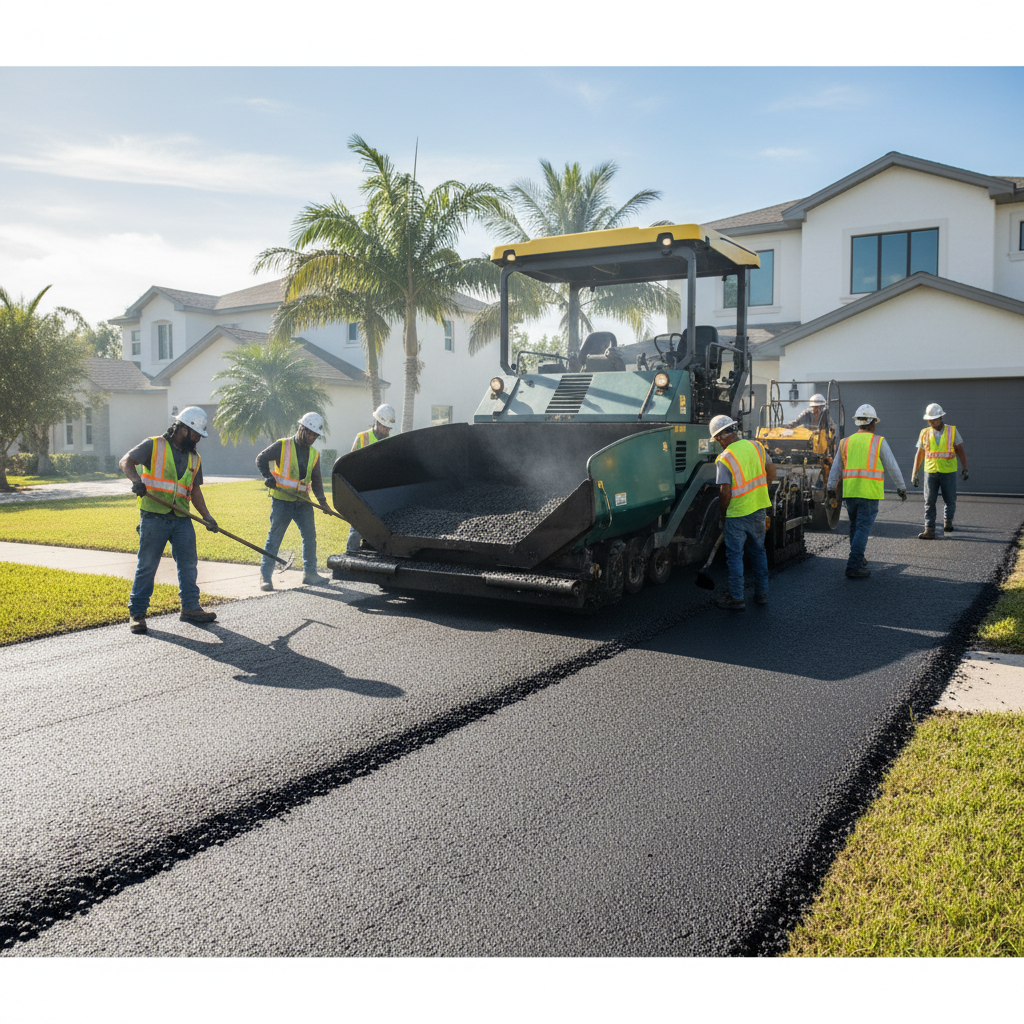
Driveway paving options and costs in White Rock
White Rock is a coastal community where homeowners want a driveway that stays neat through frequent rain events, and still performs during the region’s shallow freeze-thaw cycles. With 24.0% of dwellings being single-detached homes (Statistics Canada, 2021 Census), most private driveways are tied to detached properties—so demand is especially consistent in neighbourhoods like West Beach and Crescent Beach where many lots have traditional driveway layouts and regular vehicle traffic.
In the Lower Mainland–Southwest, paving costs are shaped less by deep inland frost and more by drainage quality and repeated temperature swings around a relatively shallow frost line. Contractors in White Rock plan base thickness and granular drainage so water doesn’t sit under asphalt or pavers; that’s what helps prevent rutting, edge failure, and reflective cracking during wetter winters. Even though asphalt paving can take advantage of a longer season than Northern BC, heavy rainfall and shoulder-season storms still compress workable windows and can tighten scheduling—so you’ll often see pricing reflect how much equipment time and crew availability are needed to get the base built, compacted, and protected properly.
Typical residential specs line up with common regional practice: new asphalt driveways often assume about 6 inches of compacted granular base plus roughly 2.5–3 inches of asphalt surface, while weak or saturated soils can require deeper excavation. Below is a realistic side-by-side comparison so you can gauge what different surfaces cost per square foot and what lifespan to expect.
| Material |
Lifespan |
Maintenance |
Best For |
Price per sq ft |
| Asphalt (new installation, proper base) |
12–20 years |
Seal every 3–5 years |
Best value for a smooth, quiet ride |
$12–$20 |
| Asphalt (overlay on existing gravel base) |
8–15 years |
Seal every 3–5 years; monitor base |
When base is sound and excavation is limited |
$14–$22 |
| Interlocking concrete pavers |
20–30 years |
Occasional panel replacement; re-sand as needed |
Curb appeal and easy spot repairs |
$20–$40 |
| Poured concrete (broom finish) |
20–30 years |
Seal optional; patching for spalls |
Simple maintenance and clean lines |
$18–$35 |
| Exposed aggregate concrete |
20–30 years |
Sealer as recommended; crack monitoring |
Slip resistance and premium look |
$22–$45 |
| Gravel / crushed stone (budget option) |
3–7 years (varies with drainage and grading) |
Top up and re-grade annually |
Short-term access while planning a full build-out |
$8–$15 |
Prices are estimates only and vary by project scope, site access and material selection.
What affects the price of paving in White Rock
In White Rock and across the Lower Mainland–Southwest, two quotes for the “same size driveway” can differ by 30–50% because the biggest cost drivers aren’t the surface material alone—they’re the amount of excavation, base build-up, and drainage corrections needed to control water. That’s why a project that lands at the lower end of the regional asphalt band (roughly $12–$20 per sq ft) is usually one where the existing base is stable and the grade drains away from the house. If soil is saturated, or if the driveway pitch is barely shedding water, the job shifts toward higher labour and aggregate costs.
Freeze-thaw behaviour still matters even in coastal BC. While coastal frost penetration is typically shallower than in Ontario or Alberta, the region still expects engineered frost protection for exposed sections and edges. When freeze-thaw occurs around that shallow frost line, inadequate granular thickness and poor compaction can lead to heaving, rutting, and cracking—so contractors may need additional base depth (think coastal practice of about 4–6 inches for some protected areas, but more in exposed/wet sites) rather than “minimum” builds. Also, asphalt paving requires hot-mix placement when conditions are suitable; in colder regions, air temperatures below about 10°C can reduce workable time, which concentrates demand and can raise spring scheduling pressure—similar pressure can occur in White Rock during brief dry windows.
Concrete examples from White Rock that move costs quickly: (1) If your driveway subgrade is clay-heavy and holds water, the contractor may have to over-excavate and replace with properly graded granular base; that pushes you toward the upper end of asphalt pricing ($12–$20 rather than the low end). (2) If you’re in an area with narrow vehicle access near older homes (39.2% of homes built before 1981 (Statistics Canada, 2021 Census)), equipment time is slower and more labour goes into placement and compaction. (3) If the slope doesn’t meet drainage needs, you may pay for grading and drainage adjustments before any finish material goes down.
| Price Factor |
Why It Matters |
Cost Impact |
| Driveway area in sq ft |
Most line-items scale directly with square footage. |
Largest driver; expect higher costs quickly on longer driveways. |
| Base depth required |
Frost line and wet subgrade determine granular thickness and compaction. |
Adding inches of base can materially increase excavation and material delivery. |
| Grading and drainage work |
Slope, swales, and water management prevent freeze-thaw and edge failure. |
Can add significant labour if regrading or drain tie-ins are required. |
| Tear-out of existing surface |
Old asphalt or concrete must be broken up and hauled off. |
Hauling and disposal can move the project price up fast. |
| Edge restraints and curbing |
Prevents paver spread and maintains asphalt edge integrity. |
More materials and formwork/setting increases labour and cost. |
| Sealing requirement |
Asphalt needs sealing after installation to slow oxidation and water ingress. |
Budget added future cost (commonly every 3–5 years). |
| Site access |
Narrow lots or tight corners slow skid-steer, dump truck, and compactor movement. |
More hours and smaller load management increases labour cost. |
| Asphalt mix specifications |
Freeze-thaw-rated mix design improves durability in coastal cycles. |
Higher material cost; often necessary for longer service life. |
Permits & regulations in British Columbia
In British Columbia, paving your private driveway within your own property typically does not require a building permit. In most cases, you’re simply replacing an existing surface or installing a new hard surface on your lot. However, work that affects the municipal right-of-way can require municipal approval—this includes new or modified curb cuts, changes to the boulevard, and any alterations that impact storm drainage. Some neighbourhoods also enforce lot-grading expectations, which can restrict how close a driveway hard surface can be brought to property lines and how water must be managed to avoid runoff onto adjacent properties.
Before excavation, always arrange utility locates through BC 1 Call (like the Ontario One Call process you may be familiar with). That’s a basic safety requirement for contractors and it’s also the right step for homeowners so your contractor can dig with confidence.
For contractor verification in White Rock, ask for proof and check it directly: (1) British Columbia licensing—look up the contractor through the relevant online registry and confirm the business is in good standing; (2) liability insurance—request a current certificate of insurance and confirm coverage limits are appropriate for driveway work; (3) WSIB/WCB—verify the applicable coverage status for your contractor’s workforce (in BC, this is typically through WorkSafeBC). Finally, if curb or drainage tie-ins are involved, confirm in writing who is responsible for permits/approvals and whether they’re included in the quote scope.
Asphalt vs pavers vs concrete for White Rock driveways
Choosing between asphalt, interlocking pavers, and concrete in White Rock comes down to upfront cost, long-term maintenance preferences, and how well each option handles Lower Mainland–Southwest rain-driven drainage and winter freeze-thaw. Asphalt is typically the lowest upfront route and provides a smooth, uniform driving surface; with proper base drainage, it can perform well for many years. The trade-off is maintenance: you should plan for sealing every 3–5 years to protect the binder and slow water infiltration.
Interlocking concrete pavers cost more upfront, but they shine where you want curb appeal and flexible repair. If one section fails due to a localized drainage issue or utility repair, panels can be lifted and reset without tearing out the entire driveway. Poured concrete sits in the middle for cost and can last a long time, but freeze-thaw movements and settlement joints matter. In coastal BC, air-entrainment and appropriate thickness/joint spacing are critical; otherwise, cracking can show up earlier. Exposed aggregate adds slip resistance and visual texture, but it still needs a properly prepared base to avoid future cracking. Permeable pavers or drainage-grid systems can be a strong fit where you need better infiltration—though they rely on correct sub-base design to avoid saturation. Chip seal/tar-and-chip is usually a shorter-horizon surface or a budget option, not a direct replacement for a full asphalt driveway build.
In dollar terms, if your asphalt quote starts around $12–$20 per sq ft and your paver quote lands around $20–$40 per sq ft, the extra you pay is usually justified when you want longer service life, easier spot repairs, and a high-end look—especially on driveways in prominent areas like West Beach where curb appeal matters. If you’re trying to keep costs controlled and your drainage/base are sound, asphalt often remains the most practical choice for many detached homes.
| Material |
Frost Resistance |
Curb Appeal |
Repair Method |
Lifespan |
Price Band |
| Asphalt (sealed regularly) |
Good with proper drainage and base |
Moderate (clean, black finish) |
Mill and patch failed areas |
12–20 years |
$12–$20 |
| Interlocking concrete pavers |
Very good; individual units flex slightly |
High (varied patterns/colours) |
Lift/replace pavers and re-sand joints |
20–30 years |
$20–$40 |
| Poured concrete (air-entrained) |
Good if air-entrained and jointed |
Moderate to high (finish options) |
Crack repair and patching; larger issues may require section replacement |
20–30 years |
$18–$35 |
| Exposed aggregate concrete |
Good with correct base and protection |
High (texture and premium look) |
Patch by matching finish; spot repairs visible if large |
20–30 years |
$22–$45 |
| Permeable pavers (drainage grid) |
Very good for managing water at the surface |
High (modern drainage-friendly look) |
Remove affected units; clean and reset drainage layer |
15–25 years |
$25–$55 |
| Chip seal / tar-and-chip |
Fair to good; performance depends on prep and maintenance |
Low to moderate |
Spot patching or re-sealing; more frequent maintenance |
5–12 years |
$8–$16 |
How to choose a paving contractor in White Rock
Start with verification—because in White Rock, driveway performance lives or dies on base preparation, compaction, and water management, not just the top layer. Ask for proof of British Columbia licensing (and check it online for the business name), current liability insurance, and WorkSafeBC coverage for the workers who will be on site. If a contractor can’t provide certificates or it’s unclear who’s insured, walk away. For insurance, request a certificate of insurance and confirm the policy is active and appropriate for the scope (excavation, hauling, and asphalt/paver installation).
Then get 2–3 itemised written quotes. You want breakdowns by excavation, haul-away/disposal, granular base (and thickness), compaction, drainage/grading, asphalt or paver quantities, edge restraints/curbs, and surface course thickness. Avoid single lump-sum quotes that don’t show what’s included. Scope details matter: confirm whether permit/municipal approval steps are handled when right-of-way work is involved, and whether disposal is included for broken concrete/asphalt.
Warranty should be in writing. Ask for the workmanship warranty length (how many years they stand behind compaction and installation) and whether there’s a separate product/manufacturer warranty for asphalt mix or paver units. Also clarify if the warranty is transferable if you sell the home.
Payment scheduling should protect you: never pay more than 10–15% upfront. Use a holdback until the job is complete and reviewed. Finally, insist on a start date and a realistic completion estimate in writing, since coastal weather can delay base protection and surface placement.
- Confirm BC licence and check the registry before signing.
- Request current liability insurance certificates (active dates and coverage limits).
- Verify WorkSafeBC coverage for crew members.
- Ask for at least two recent driveway references in White Rock (photos help).
- Require an itemised quote: base thickness, compaction, and disposal listed.
- Confirm what’s included for grading and drainage (swale/slope corrections).
- Ask whether the contractor will protect base during rainy stretches.
- Clarify edge restraints/curbing requirements and how they’re installed.
- Get thickness details: asphalt lift(s) and concrete thickness/joints.
- Confirm sealing schedule for asphalt (typically after 6–12 months).
- Set payment terms: 10–15% max upfront; holdback until completion.
- Put the warranty terms in writing and ask who holds it if ownership changes.
Red flags in White Rock include: contractors quoting without discussing drainage and base prep; “one-size-fits-all” thickness promises; missing insurance/licence paperwork or certificates that can’t be verified; pressure to pay most of the job upfront; and quotes that don’t specify disposal/haul-away or whether right-of-way approvals are required for curb/drain changes.
Frequently asked questions — paving in White Rock
How often should I seal my asphalt driveway?
In White Rock and the Lower Mainland–Southwest, most asphalt driveways benefit from sealing every 3–5 years, especially if your surface gets heavy rain runoff or frequent vehicle turns. The goal is to slow binder oxidation and reduce water penetration that can soften the surface and accelerate base issues. If your driveway is newer, many contractors recommend waiting roughly 6–12 months after installation before the first seal coat so moisture and early curing are finished. If you’re comparing quotes, ask whether sealing is included or whether it’s a separate service later—sealing and repair work is commonly budgeted around $2–$6 per sq ft depending on condition and prep. Also note that sealing won’t fix poor drainage; you still need the base slope and compaction done right to prevent winter heaving.
Why does my driveway crack and heave in winter?
Cracking and heaving usually point to water and base issues rather than “just age.” In coastal BC, freeze-thaw cycles occur around a relatively shallow frost line, and repeated temperature swings can move water-laden soil if the granular base isn’t deep enough or isn’t properly compacted. Clay-heavy soils in parts of the Fraser Valley can hold moisture, so poor grading or blocked drainage can make the problem worse. Common symptoms include edge lifting, small bumps near the garage threshold, and cracks that widen after wet cold spells. If the driveway was built directly on weaker subgrade or without the drainage layer, the pavement may fail sooner even if the asphalt is the right thickness. A proper assessment often starts with checking slope, locating any low spots, and confirming base thickness and compaction—then selecting repairs or full reconstruction.
Do I need a permit to pave my driveway in British Columbia?
Often, you don’t need a permit to pave within your own property in British Columbia—especially when you’re replacing an existing driveway surface and not changing municipal infrastructure. In White Rock, the situations that typically require municipal approval involve municipal right-of-way impacts, such as new/modified curb cuts, changes to the boulevard, or modifications that affect storm drainage. Some municipalities also have lot-grading expectations, which can affect how close the hard surface can be brought to property lines and how runoff must be directed. Before work starts, confirm with your contractor who will handle approvals and what documentation is needed. Also ensure utility locates are completed through BC 1 Call before excavation. A good quote will state whether permit/approval steps (if needed) are included or excluded so there are no surprises.
How long before I can drive on new asphalt?
For new asphalt in White Rock, driveway access is often restricted briefly to allow the surface to cool and reach initial stability. Many contractors schedule paving early and then limit heavy turning or parking until the asphalt has cooled adequately—usually within the same day to the next day depending on weather, mix, and traffic control. Rain is the bigger risk than waiting a few hours; if wet weather interrupts curing, the surface can be damaged. Your contractor should provide a written access plan, especially if the job includes base work and multiple lifts. If you’re budgeting, remember that the sealing coat commonly happens later—after the asphalt has aged enough, often within the 6–12 month window—so the “ready to drive” timeline isn’t the same as the “ready to seal” timeline.
What causes potholes and how are they repaired?
Potholes typically start with water getting into a weak spot—through cracks, failed joints, or areas with poor drainage. In a coastal freeze-thaw environment like White Rock, that trapped water expands and contracts, loosening the base and breaking the asphalt surface. Common causes include inadequate base compaction, washboarding/voids after heavy runoff, or wheel paths where vehicles repeatedly stress the surface. Repairs are usually localized: the contractor cuts out the deteriorated asphalt, removes compromised material down to stable base, addresses drainage if needed, then replaces with properly compacted granular material and asphalt to match lift thickness. A proper repair includes edge cleaning and compaction—not just “dumping blacktop.” If you’re seeing widespread cracking or multiple potholes, it may be more cost-effective to plan a larger resurfacing or base correction instead of repeated patching.
How do I prepare for a paving project?
Preparation saves time and helps the contractor build the right base and drainage. In White Rock, start by marking any landscaping, irrigation lines, or structures that might be affected, and clear the work area of vehicles, trailers, and portable items. Ask the contractor about dumpster/haul route needs and confirm where excess material will be disposed. Utility locates via BC 1 Call should be arranged before excavation, and you should expect the contractor to do that scheduling as part of safe job planning. If your driveway connects to the boulevard or curb area, ask whether approvals are needed before the crew begins. Finally, plan for schedule flexibility: coastal storms can delay base protection and asphalt placement windows. When you review the quote, confirm scope items like tear-out/disposal, grading and drainage corrections, and whether sealing is planned later (often priced separately around $2–$6 per sq ft).