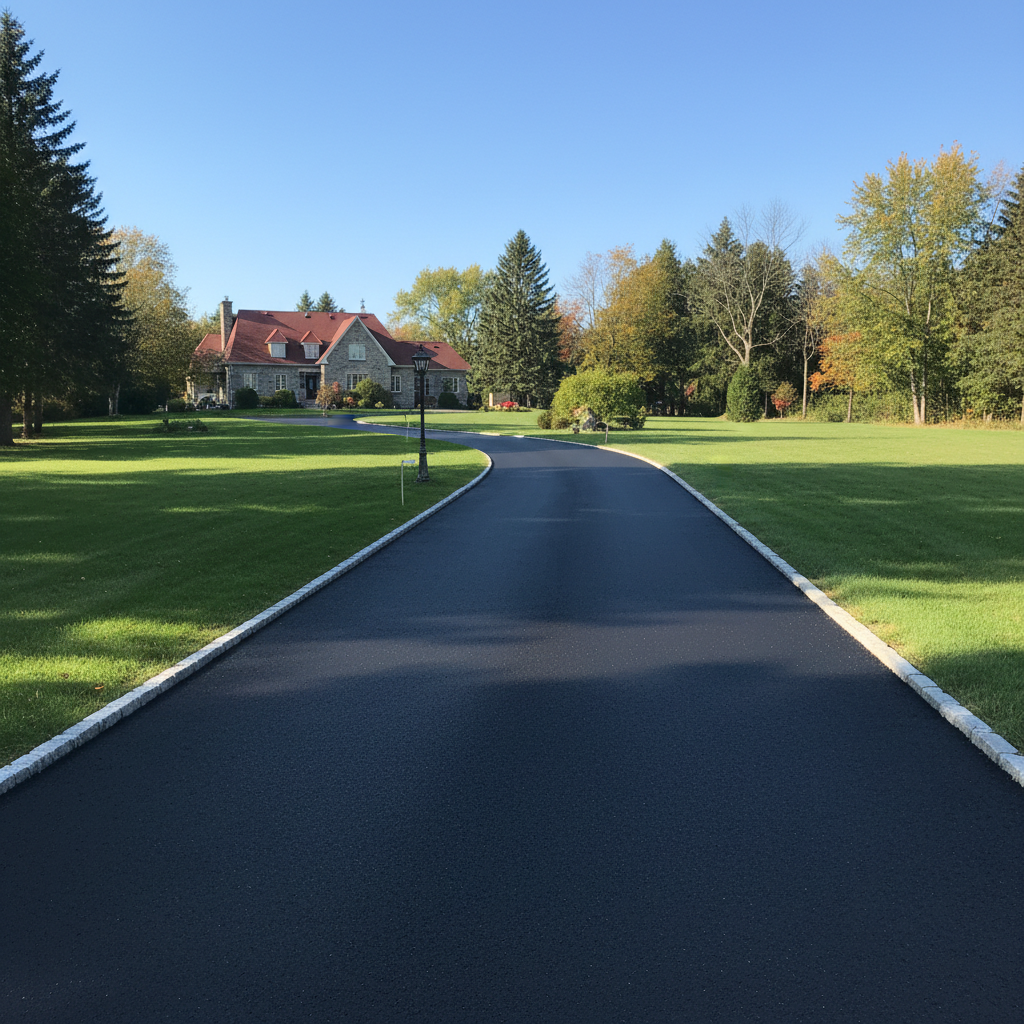
Driveway paving options and costs in Westridge
Westridge homeowners have several driveway surfacing options, and the “right” choice usually comes down to how your lot drains, how much traffic the driveway sees, and your tolerance for ongoing maintenance. Westridge’s population is small—2,521 residents (Statistics Canada, 2021 Census)—so trades can be busier during peak season, particularly around neighbourhood pockets where landscaping and curb appeal upgrades are common. In most homes, the driveway serves a detached house setting, which means private access driveways are the main demand driver.
In the Lower Mainland–Southwest, pricing is shaped more by intense rainfall, drainage quality, and shoulder-season storms than by deep Interior-style freezing. Even though coastal frost penetration is relatively shallow, regional practice still assumes a frost line on the order of 18" for sensitive infrastructure, so proper excavation, granular base, and slope/drainage detailing are where the money is usually won—or lost. That’s why two contractors can quote the same asphalt thickness but still land 30–40% apart once base depth, compaction testing, and disposal/haul-off are included.
If you’re weighing options, asphalt is typically the most budget-friendly to install, while interlocking pavers offer the best curb appeal and the most “replace-one-stone” flexibility. Concrete lands mid-to-upper depending on finish and whether you’re doing a full rebuild versus patching. With that in mind, here’s a practical cost comparison for Westridge projects that use locally common thicknesses and proper base preparation.
| Material |
Lifespan |
Maintenance |
Best For |
Price per sq ft |
| Asphalt (new installation, proper base) |
12–18 years |
Seal every 3–5 years; crack fill as needed |
Good value, smooth ride, straightforward repairs |
$12 – $20 |
| Asphalt (overlay on existing gravel base) |
8–14 years |
Seal every 3–5 years; localized base corrections if needed |
When base is sound and excavation can be reduced |
$10 – $17 |
| Interlocking concrete pavers |
20–30 years |
Weed control; re-screed sand; replace individual units |
High curb appeal; repairs without full replacement |
$20 – $40 |
| Poured concrete (broom finish) |
20–30 years |
Seal as needed (often optional); patch spalls early |
Low-maintenance look; simple access and durability |
$18 – $35 |
| Exposed aggregate concrete |
18–28 years |
Seal periodically; address scaling quickly |
Texture for traction and a premium finish |
$22 – $40 |
| Gravel / crushed stone (budget option) |
3–7 years |
Top up and regrade yearly or as ruts form |
Short-term solution or low-traffic access |
$6 – $12 |
Prices are estimates only and vary by project scope, site access and material selection.
What affects the price of paving in Westridge
In Westridge and across the Lower Mainland–Southwest, you can see the same driveway resurfacing scope come in 30–50% apart because base preparation and drainage details often differ between quotes, not just the surface material. Two crews may both “pave 600 sq ft,” but one includes proper excavation to stable granular layers, subgrade stabilization where soils are saturated, and proper disposal—while the other relies on thinner base or leaves soft pockets that will move under traffic. In British Columbia, contractor availability and longer shoulder-season schedules can also influence labour rates and how quickly a job can start, which matters when rain compresses workable windows.
Frost line and freeze–thaw cycles are still decisive cost factors in coastal BC. Even with a milder climate than Interior regions, provincial design practice assumes an approximately 18" frost line for sensitive infrastructure, so exposed driveway base and footings must sit below typical freeze depth. When bases are underbuilt, repeated freeze–thaw around that shallow frost level and winter saturation can cause heaving, rutting, and cracking. The season length is longer than in colder provinces, but hot-mix asphalt still requires air temperatures above about 10°C, which can concentrate work into spring and dry summer stretches. That affects scheduling and mix demand, especially when contractors are also doing curbs, drainage tie-ins, and other asphalt work.
Concrete pricing can also swing. For example, if your driveway slopes toward the garage and needs drainage corrections, you may pay for more grading and a thicker base under slab transitions. Conversely, a straightforward, flat driveway on stable soils can come closer to the lower end of the $18–$35 band. Asphalt overlays on existing, well-compacted gravel can land near the lower end of the $12–$20 range, but only when the underlying base is genuinely sound—otherwise you’re paying twice after early surface failures.
| Price Factor |
Why It Matters |
Cost Impact |
| Driveway area in sq ft |
The surface thickness and crew time scale directly with square footage. |
Major swing (often the biggest variable by far) |
| Base depth required |
Frost line assumptions and subgrade conditions determine granular thickness and compaction. |
Moderate to major |
| Grading and drainage work |
Slope, surface crown, swales, and downspout tie-ins affect how quickly water leaves the base. |
Moderate to major |
| Tear-out of existing surface |
Breaking and hauling old asphalt or concrete adds equipment time and disposal fees. |
Moderate |
| Edge restraints and curbing |
Pavers require restraint to prevent spread; asphalt needs clean edges to hold shape. |
Moderate |
| Sealing requirement |
Asphalt typically needs sealing after cure (often 6–12 months) to protect against rain and UV. |
Small to moderate (over time) |
| Site access |
Narrow lanes and limited truck access slow excavation and asphalt placement. |
Moderate |
| Asphalt mix specifications |
Freeze–thaw-rated mix and proper binder design cost more than basic mixes. |
Small to moderate |
Permits & regulations in British Columbia
In British Columbia, paving a private driveway on your own property usually does not require a building permit. In most typical Westridge scenarios—removing an existing driveway surface and replacing it with asphalt or concrete within your driveway footprint—municipal approvals are often not triggered. However, you do need to watch for work that affects the municipal right-of-way.
Work that typically does require municipal approval includes new or altered curb cuts, changes to boulevard areas, and any rework that impacts storm drainage patterns (for example, redirecting runoff to an existing municipal catch basin, changing culverts, or modifying drainage within the road/ditch area). Some municipalities also have lot-grading bylaws that limit how close a hard surface can be to property lines or how water must be managed, so it’s wise to confirm grading rules before the crew mobilizes.
Step-by-step: how homeowners verify a contractor in BC
- Request the contractor’s business/contractor licence details (and confirm they are active).
- Ask for a current certificate of liability insurance; ensure it covers driveway paving and is not expired.
- Confirm workplace coverage for workers through the applicable WCB system for construction (coverage should align with the work).
- Do utility locates before digging: BC 1 Call (or the applicable utility locating system) should be used to mark buried services.
- Before signing, confirm whether any permit or municipal approval is needed for curb/boulevard or drainage tie-ins.
Asphalt vs pavers vs concrete for Westridge driveways
For Westridge driveways, the “best” surface depends on freeze–thaw behaviour, how water drains in heavy rain, and how you maintain it through winter. Asphalt is usually the lowest upfront cost option to install, but it needs routine sealing every 3–5 years to protect the surface from wet-season damage and UV. In Lower Mainland–Southwest conditions, asphalt holds up well when the base is compacted and drainage is corrected, because failures often start below the surface where water can’t escape.
Interlocking concrete pavers cost more up front (often aligned with the $20–$40 band), yet they’re repair-friendly: if a utility trench opens later or a small section shifts, crews can lift and re-set pavers without replacing the entire driveway. That’s a big advantage in neighbourhoods where drainage and landscaping adjustments happen over time. Poured concrete sits in the middle cost range; it can last a long time, but without proper air-entrainment and jointing it may crack under freeze–thaw and winter salt exposure. Exposed aggregate offers traction and curb appeal, while still requiring good drainage and proper base to avoid movement.
Local winter maintenance matters too. With rain-snow mixes and winter sanding/salting routines, concrete and pavers tend to tolerate de-icing better than many unsealed asphalt surfaces, but asphalt can still perform well if sealed and if crack repairs are done promptly.
Where the price difference is justified: if your driveway is prone to localized settlement due to clay-heavy pockets, spending toward pavers can pay off because repairs are targeted. If your driveway is straightforward and drainage is addressed, asphalt around the $12–$20 range can be the smartest value, especially compared with full rebuilds in concrete or premium stone textures.
| Material |
Frost Resistance |
Curb Appeal |
Repair Method |
Lifespan |
Price Band |
| Asphalt (sealed regularly) |
Good with proper drainage and base below frost influence |
Medium (clean, modern black finish) |
Mill and patch; crack fill and resurfacing as needed |
12–18 years |
$12 – $20 |
| Interlocking concrete pavers |
Very good with restrained edges and correct base |
High (upgrade-ready look) |
Lift, re-level, and replace individual pavers |
20–30 years |
$20 – $40 |
| Poured concrete (air-entrained) |
Good when air-entrained and properly jointed |
Medium to high (finish-dependent) |
Patch spalls/cracks; recoat/seal for appearance |
20–30 years |
$18 – $35 |
| Exposed aggregate concrete |
Good with well-compacted base and drainage |
Very high (textured premium finish) |
Patch limited areas; full replacement if widespread scaling occurs |
18–28 years |
$22 – $40 |
| Permeable pavers (drainage grid) |
Excellent for managing runoff through the base |
High (modern drainage-focused look) |
Replace grid/units if damaged; serviceable system |
20–30 years |
$28 – $50 |
| Chip seal / tar-and-chip |
Fair to good with regular maintenance |
Low to medium (more utilitarian) |
Spot maintenance; periodic resealing |
8–14 years |
$10 – $18 |
How to choose a paving contractor in Westridge
Choosing a paving contractor in Westridge is less about finding the cheapest quote and more about confirming you’re buying the process that prevents winter failures—excavation, base compaction, correct drainage, and proper surface thickness. In British Columbia, you should verify licensing status and insurance before any work starts. Ask for their certificate of liability insurance (make sure it’s current, and that it names you if required by your paperwork). For worker protection, confirm the contractor has the proper WCB coverage for the trades performing the work.
Get 2–3 itemised written quotes—this is critical. You want a breakdown that lists excavation depth, granular base type and thickness, asphalt or concrete thickness, any drainage/grading corrections, edge restraints/curbs, tear-out scope, and disposal. Avoid “lump sum” quotes that don’t show what’s included. Clarify whether permits (if any) are included, whether utility locates are arranged, and how they handle haul-off and site clean-up.
For warranty, separate workmanship from product/material warranties. Ask how long the workmanship warranty runs, whether it transfers to future owners, and what qualifies as “defect” versus normal wear. Payment schedules should be conservative: never pay more than 10–15% upfront, and hold back a portion until the final inspection and punch-list are completed. Also get a start date and an estimated completion timeline in writing—rain can delay asphalt placement because hot-mix placement generally needs air temperatures above about 10°C.
- Confirm BC business details and active contractor status before signing.
- Request certificate of liability insurance and check the expiry date.
- Confirm the applicable WCB coverage for the crews.
- Insist on BC 1 Call utility locates before excavation.
- Demand an itemised quote (excavation/base/surfacing/drainage/disposal).
- Ask for base design: thickness, material type, and compaction expectations.
- Verify edge restraints/curbs for pavers and clean edge details for asphalt.
- Confirm whether drainage corrections are included (slope/crown/tie-ins).
- Ask how tear-out and disposal will be handled and where debris goes.
- Clarify sealing timing for asphalt (often after cure, typically 6–12 months).
- Get warranty details in writing, including workmanship vs materials.
- Set payment terms: 10–15% upfront maximum and a holdback to completion.
In Westridge, red flags include: quotes with no base depth or drainage details, “we’ll pave over it” language when soils appear saturated/soft, lack of insurance/coverage documentation, no written warranty terms, and crews that can’t explain schedule constraints for rain and asphalt temperature requirements.
Frequently asked questions — paving in Westridge
How deep should the base be for Westridge's frost?
For Westridge driveways, the practical answer is “deep enough to be below the influence of the frost line and resilient to freeze–thaw,” not just a number pulled from another province. In the Lower Mainland–Southwest, local practice still assumes an approximately 18" frost line for sensitive infrastructure, so the base and subbase need to be built with proper granular thickness and strong compaction, especially in clay-heavy pockets and areas that stay wet after rain. A common residential asphalt driveway build is about 6" of compacted granular base plus 2.5–3" of asphalt, with deeper excavation if the subgrade is soft or saturated. Your contractor should explain the excavated depth based on site conditions, not a one-size template. (Statistics Canada, 2021 Census)
How often should I seal my asphalt driveway?
In British Columbia, sealing is one of the most cost-effective protections for asphalt because our driveways see lots of wet-season exposure and temperature swings. Typically, you seal new asphalt after it has cured—often after 6–12 months—then plan on resealing about every 3–5 years depending on traffic, surface oxidation, and how quickly water begins to darken/soak the pavement. If you’re trying to budget, sealing can help asphalt last longer instead of forcing an earlier resurfacing. If your driveway is in the $12–$20 per sq ft range for installation, sealing is the small follow-up expense that protects that investment. If you skip sealing for many years, expect more frequent crack filling and earlier wear-through.
Why does my driveway crack and heave in winter?
Cracking and heaving usually point to movement within the base/subgrade. In Westridge, winter issues are often triggered by repeated freeze–thaw around a shallow frost influence level plus saturation from heavy rain. If drainage is poor (no slope crown, water collects at the edges, or downspouts discharge toward the driveway), water expands in colder periods and can lift weak spots—leading to heaving. If the granular base is too thin, poorly compacted, or not replaced when soils are soft, the surface can crack under driveway traffic. The good news: these failures are often preventable with the right excavation, drainage correction, and proper base thickness. That’s why quotes can differ significantly—base prep is usually the real driver of long-term performance.
Do I need a permit to pave my driveway in British Columbia?
Typically, paving a private driveway within your own property in British Columbia does not require a building permit. In Westridge, homeowners most often replace an existing driveway surface (asphalt, concrete, or pavers) within the driveway footprint, and that usually proceeds without a permit. Where approvals can be required is when your work affects the municipal right-of-way—like new or changed curb cuts, boulevard alterations, or storm drainage changes that tie into municipal infrastructure. Some areas also have lot-grading rules that restrict how water flows near property lines. Before excavation, also arrange utility locates through BC 1 Call and confirm any grading requirements with the municipality so you don’t run into delays after the base is already installed.
How long before I can drive on new asphalt?
Asphalt cure time depends on weather and mix type. In general, contractors allow vehicle traffic after the surface has cooled and achieved early stability—often the same day once it’s sufficiently cooled. However, for driveways, it’s common to restrict heavy turning, sharp stops, and parking on fresh asphalt for a period to reduce rutting or imprinting while the mix finishes curing. Rain timing matters in Westridge: spring and fall showers can delay placement, and wet conditions can affect compaction and surface acceptance. If you’re budgeting, compare the installation scope (base, thickness, and proper rolling) rather than only the $12–$20 per sq ft price band, because poor compaction can shorten the time you can safely drive and can reduce lifespan even if you can park quickly.
What causes potholes and how are they repaired?
Potholes usually form when water gets under the pavement and the base starts to soften or lose support. In Westridge, heavy rainfall plus freeze–thaw can accelerate this: water infiltrates through cracks or weak edges, then expands and loosens material. Traffic (especially turning loads near garages) enlarges the void until the surface breaks. Repair generally involves removing the failed asphalt to reach stable base, cleaning out loose material, and rebuilding with the correct granular base and asphalt thickness. A proper patch should be compacted and tapered to avoid abrupt edges. For long-term performance, crack sealing and keeping water from ponding are key—otherwise small repairs can come back. If your driveway is currently in the asphalt $12–$20 per sq ft installation range, targeted patching is still typically cheaper than waiting for full resurfacing.