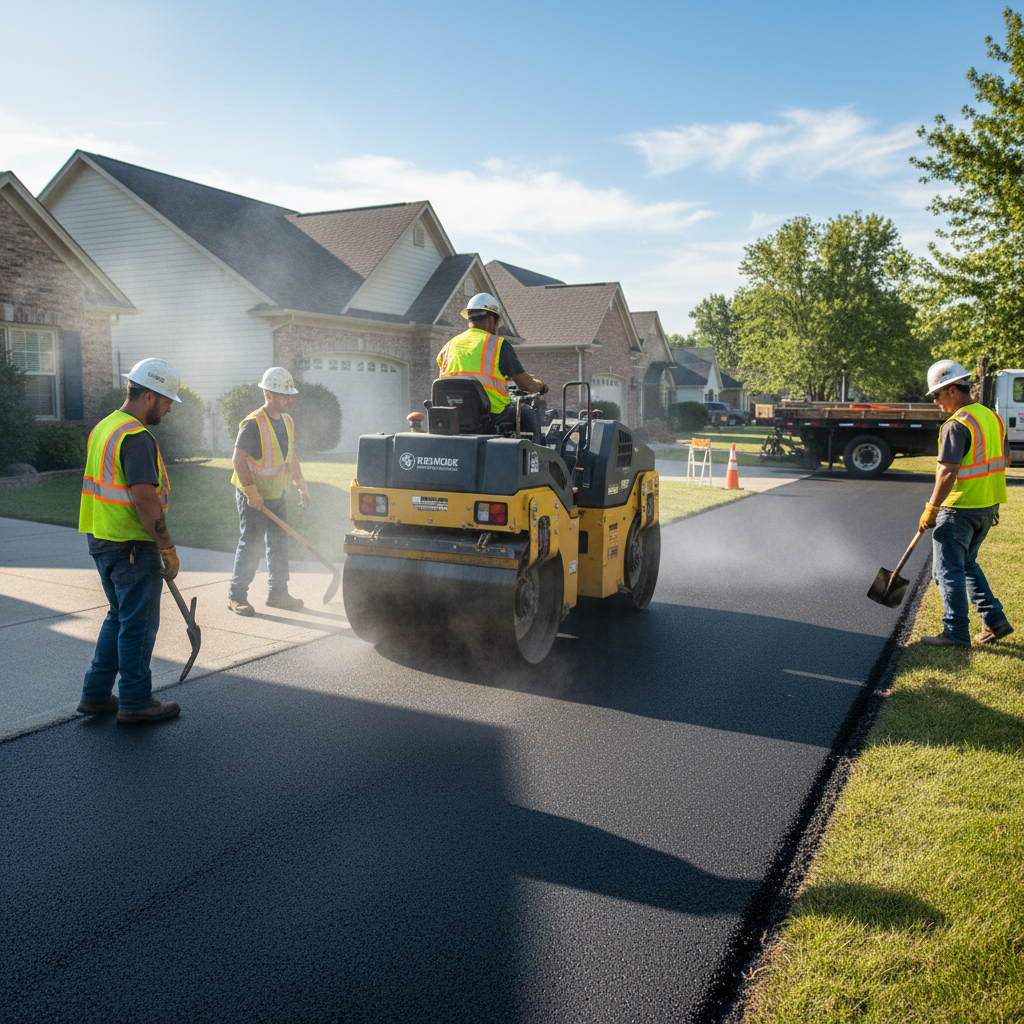
Driveway paving options and costs in Vancouver
Vancouver homeowners typically have a few proven driveway paving routes, and the “right” choice usually comes down to how much you want to spend now versus how much maintenance you can handle later. In Vancouver’s Lower Mainland–Southwest housing market, detached homes make up a meaningful share of the dwelling mix (13.9% of dwellings are single-detached in the local profile), and most private driveways are tied to those properties. The city also has an older housing stock—43.0% of homes were built before 1981 (Statistics Canada, 2021 Census)—which matters because older lots often have less reliable drainage and may require more excavation to reach solid, compactable sub-base.
On the cost side, Lower Mainland–Southwest pricing is shaped less by deep frost than by intense rainfall and drainage performance over repeated freeze–thaw near a relatively shallow frost line. Even where coastal freeze is modest, poor base thickness or clogged weeping/drainage swales can lead to rutting in wet spells, followed by cracking as conditions cycle. That’s why reputable contractors prioritize proper granular base thickness (commonly 6" compacted base plus 2.5–3" asphalt on typical residential builds) and compaction, not just “paving over what’s there.” In neighbourhoods with busy trades and lots of redevelopment—such as South Vancouver/Champlain Heights and parts of East Vancouver—demand can also tighten scheduling, which can affect pricing and availability during peak spring.
Use the table below to compare typical lifespan, maintenance, and Vancouver price bands before you request a site visit.
| Material |
Lifespan |
Maintenance |
Best For |
Price per sq ft |
| Asphalt (new installation, proper base) |
15–25 years |
Seal every 3–5 years; patching as needed |
Good value, smooth ride, easiest resurfacing |
$12 – $20 |
| Asphalt (overlay on existing gravel base) |
10–18 years |
Seal every 3–5 years; more frequent patch repairs |
When the base is sound and excavation is limited |
$10 – $17 |
| Interlocking concrete pavers |
25–35 years |
Spot replace stones after settlement; re-level bedding if needed |
Maximum curb appeal, repairable without full replacement |
$20 – $40 |
| Poured concrete (broom finish) |
20–30 years |
Crack control joints; occasional resurfacing/coating |
Low maintenance look, solid long-term surface |
$18 – $35 |
| Exposed aggregate concrete |
25–35 years |
Sealer reapplication; manage random surface efflorescence |
Better slip resistance and decorative finish |
$22 – $45 |
| Gravel / crushed stone (budget option) |
5–12 years |
Re-grade and top up every 1–3 years; weed control |
Temporary or low-traffic driveways |
$8 – $14 |
Prices are estimates only and vary by project scope, site access and material selection.
What affects the price of paving in Vancouver
In Vancouver and across British Columbia’s coastal regions, the same “driveway size” can land 30–50% apart between quotes—mostly because base prep, drainage correction, and disposal work often get under-scoped. Two contractors may both price “asphalt,” but one may include the granular base depth, proper compaction, and edge restraint needed for wet-weather stability, while another may assume the existing subgrade is already suitable. That difference is where a quote can jump from a lower $12–$20 per sq ft range into the higher end, especially when excavation increases.
Frost line depth and freeze–thaw cycles are decisive cost factors for Vancouver, even though coastal frost penetration is relatively shallow. Local practice still assumes a frost line (often around 18") for exposed infrastructure, meaning sensitive driveways typically require granular base and drainage that sit below that zone. In colder parts of Canada, you may see 6–12" bases become standard; in coastal BC, we commonly see around 4–6" base in straightforward situations, but weak or saturated soils can push excavation deeper to reach firm, compactable material. Asphalt must also be produced to meet freeze–thaw requirements; higher-performance mixes cost more than basic binder-and-aggregate blends.
Local concrete examples: older lots (43.0% pre-1981) often have undersized or clogged weeping tile outlets, which can add drainage corrections before you pour. Conversely, if your site is well-drained and you’re simply resurfacing in a straight, accessible run, that can keep you closer to the low end of asphalt or concrete price bands. In short, Vancouver pricing reflects how much work it takes to make the base last through spring rain and winter cycling—not just the surface material.
| Price Factor |
Why It Matters |
Cost Impact |
| Driveway area in sq ft |
Labour, asphalt/concrete tons, and base materials scale with area |
Often the largest single driver; changing size by 200 sq ft can move total price significantly |
| Base depth required |
Determines resistance to heaving/rutting from freeze–thaw and saturation |
Extra excavation and more granular material can add substantial cost |
| Grading and drainage work |
Correct slope and water routing prevent ponding and soil pumping |
May require cutting, regrading, and drainage tie-ins that are labour-intensive |
| Tear-out of existing surface |
Concrete breaking, asphalt milling, and hauling change the job scope |
Can add meaningful disposal and equipment costs compared with overlay work |
| Edge restraints and curbing |
Stops paver movement and asphalt edge deterioration |
Added materials and formwork can move a project toward the higher end |
| Sealing requirement |
Asphalt needs sealing after cure (typically 6–12 months) to slow moisture damage |
Maintenance budgets should include an ongoing annual/periodic line item |
| Site access |
Narrow lanes and limited staging slow equipment and increase labour time |
Can add truck/machine time and reduce productivity |
| Asphalt mix specifications |
Freeze–thaw-rated mix designs improve durability but increase material cost |
Higher mix spec can push pricing toward the upper $/sq ft band |
Permits & regulations in British Columbia
In British Columbia, paving a private driveway on your own property usually does not require a building permit, as long as you are not making significant changes that affect public infrastructure. The work that typically does require municipal approval includes changes within the municipal right-of-way—such as installing or altering a curb cut, changing the boulevard, modifying a ditch or storm drainage connection, or reworking municipal catch basins/drainage routes. Some areas also have lot-grading bylaws that restrict how close a hard surface can be to property lines and how stormwater must be handled.
Before anyone digs, confirm utility locates. In BC, you’d use BC 1 Call (the call-before-you-dig service) so crews can identify buried services—this is critical for driveways where excavation for base and drainage can extend below shallow frost concerns. Then, verify lot-grading rules with your local municipality (for Vancouver specifically, check the relevant bylaw/engineering requirements that govern grading and drainage on private property and how it discharges).
To verify a Vancouver contractor properly, follow these steps: (1) confirm their British Columbia licence/registration through the applicable provincial registry for the contracting category they perform; (2) ask for a current certificate of liability insurance naming you and/or showing adequate limits for the scope; and (3) confirm their clearance letter / workers’ compensation coverage status (WSIB/WCB equivalent coverage) for their workforce. A reputable paving contractor should send these documents quickly—before you sign or pay significant deposits.
Asphalt vs pavers vs concrete for Vancouver driveways
For Vancouver driveways, asphalt, interlocking concrete pavers, and poured concrete each fit different homeowner priorities under our coastal freeze–thaw and heavy rainfall reality. Asphalt typically has the lowest upfront cost and delivers a smooth surface, but it performs best when you plan for sealing every 3–5 years after it cures. That sealing helps asphalt resist moisture infiltration—important in Lower Mainland winters where wet weather can saturate base layers and accelerate deterioration.
Interlocking concrete pavers cost more up front, but they’re the most homeowner-friendly choice for repair: individual stones can be lifted and re-set if the base ever needs adjustment. That matters in Vancouver’s older lots (43.0% built before 1981), where localized drainage problems can surface years later. Pavers also handle curb appeal extremely well, which is why they’re common in higher-visibility areas of neighbourhoods like East Vancouver where driveways are part of the streetscape.
Poured concrete sits mid-range in price and is long-lasting when air-entrained and properly jointed, but it can crack under freeze–thaw if workmanship is weak or if the slab is placed on a poorly prepared base. In Vancouver, the winter maintenance routine usually includes plowing and sanding more than heavy de-icing salt, yet water entry through cracks can still be a problem. In most cases, the option that holds up best long-term is the one with the right drainage design and compacted base. For typical residential builds, many projects still target a foundation concept of ~6" compacted granular base and then a surface thickness around 2.5–3" for asphalt, with deeper excavation where soils are weak or saturated.
Dollar example: if your driveway quote comes in around the asphalt band of $12 – $20 per sq ft but pavers land near $20 – $40 per sq ft, the extra cost is justified when you value repairability and a premium look—or when you anticipate future grade/drainage changes.
| Material |
Frost Resistance |
Curb Appeal |
Repair Method |
Lifespan |
Price Band |
| Asphalt (sealed regularly) |
Good when base is well-drained and properly compacted |
Medium (clean, uniform finish) |
Patch milling and repaving localized sections |
15–25 years |
$12 – $20 |
| Interlocking concrete pavers |
Very good with restrained edges and correct bedding |
High (wide colour/style options) |
Lift-and-replace stones; re-level bedding as needed |
25–35 years |
$20 – $40 |
| Poured concrete (air-entrained) |
Good when air-entrained, jointed, and set on solid base |
Medium to high (finish options) |
Patch repairs for cracks; may require resurfacing over time |
20–30 years |
$18 – $35 |
| Exposed aggregate concrete |
Good, with proper sealing and base prep |
Very high (decorative surface texture) |
Limited patching aesthetics; usually targeted repairs |
25–35 years |
$22 – $45 |
| Permeable pavers (drainage grid) |
Excellent drainage performance when designed correctly |
Medium to high (system look) |
Spot replacement of affected sections |
25–35 years |
$24 – $48 |
| Chip seal / tar-and-chip |
Moderate; best for low-traffic applications |
Low to medium |
Overlay or re-chip when surface wears |
8–15 years |
$10 – $18 |
How to choose a paving contractor in Vancouver
Choosing a paving contractor in Vancouver is mostly about verifying competence on paperwork and clarity in the quote. First, confirm the contractor’s British Columbia licensing/registration for the type of paving/contracting work they will do. Next, ask for a certificate of liability insurance and ensure the policy is active for the project dates (you should be able to request the COI showing your address as an additional insured if applicable). For workforce coverage, request their clearance letter status for the provincial workers’ compensation system and verify it matches the work period—if they can’t provide this, treat it as a major concern.
Then get 2–3 itemised written quotes with a materials-and-labour breakdown—not just a lump sum. You want to see the scope for excavation depth, compaction, base type, asphalt thickness (or paver slab/bedding), and whether disposal and site protection are included. Read exclusions carefully: is tearing out the existing driveway included or billed separately? Will they pull and replace failed subgrade? Is the permit/municipal approval work included if you’re changing a curb cut or drainage tie-in? Also check warranty terms: workmanship warranty length, product/manufacturer warranty coverage (if any), and whether warranties are transferable if you sell the home.
On payment schedule, never pay more than about 10–15% upfront. Hold back the remainder until the job is complete and properly inspected. Finally, insist on a written start date and a realistic completion window—Vancouver’s long season can help, but heavy winter rains and wet shoulder periods can still disrupt timelines.
- Ask for BC paving/licensing details before signing.
- Request a current certificate of liability insurance (COI) for your project.
- Get their workers’ compensation clearance letter and confirm coverage dates.
- Choose itemised quotes: show base depth, asphalt/concrete thickness, and disposal.
- Confirm tear-out scope (how much, what gets hauled away, what gets reused).
- Require edge restraints/curbing specs for pavers and asphalt perimeter integrity.
- Ask how they’ll handle drainage: slope targets, tie-ins, and any weeping tile issues.
- Get compaction method details (roller type, lift thickness guidance, density targets if provided).
- Verify asphalt mix spec meets local freeze–thaw expectations.
- Confirm sealing timing for asphalt (typically after cure, often 6–12 months).
- Written warranty in plain language: workmanship coverage and what’s excluded.
- Schedule in writing: start date, completion estimate, and contingency for rain delays.
Red flags specific to Vancouver paving: crews that won’t put base thickness in writing, “overlay only” pricing without proof the existing base is stable, refusal to provide insurance/coverage documentation, vague warranty wording (no workmanship term), and contractors asking for large deposits before confirming site conditions and disposal plans.
Frequently asked questions — paving in Vancouver
How often should I seal my asphalt driveway?
In Vancouver, most properly installed asphalt driveways benefit from sealing every 3–5 years, then re-evaluating based on weather exposure and surface condition. Coastal rainfall doesn’t dry the surface quickly, and water can work its way into joints and micro-cracks; sealing helps slow moisture infiltration and oxidation. If you just had new asphalt laid, you generally wait until it cures before sealing—often around 6–12 months—so the binder can develop strength. If your contractor priced your driveway around the local asphalt range of $12 – $20 per sq ft, make sure your long-term plan includes this maintenance step. If the surface is already heavily rutted or base problems exist, sealing won’t fix the root cause—repair or resurfacing may be needed first.
Why does my driveway crack and heave in winter?
Cracking and heaving in British Columbia are usually symptoms of water movement and weak support beneath the surface. In Vancouver’s Lower Mainland–Southwest climate, intense rain can saturate clay-heavy areas in parts of the region; when temperatures dip near the local frost line, shallow freeze–thaw cycles can lift the surface if the granular base isn’t thick enough or well drained. Common contributors include poor slope (ponding), clogged drainage outlets, inadequate edge restraint, and skipping proper compaction. If your driveway was poured or paved on an inconsistent base, the pavement may fail first at wheel paths where loads concentrate. The result can look like heave, then cracking as the surface settles back. The most durable fix is correcting drainage and rebuilding the base, not just filling cracks.
Do I need a permit to pave my driveway in British Columbia?
Typically, paving a private driveway within your own property on a like-for-like basis usually does not require a building permit in Vancouver or the rest of BC. However, you may need municipal approval when you change municipal right-of-way elements—such as installing or altering a curb cut, changing boulevard drainage, or connecting/altering storm drainage infrastructure. Some municipalities also regulate lot grading and how hard surfaces affect stormwater discharge. The practical way to verify is to confirm with your local municipality before you schedule excavation and before work begins. Also, make sure utilities are located through BC 1 Call before anyone digs. If your paving contract involves any right-of-way work, the best quotes will flag whether permits/approvals are included and who is responsible for them in the scope.
How long before I can drive on new asphalt?
For Vancouver jobs, many asphalt driveways are ready for foot traffic relatively quickly, but vehicle timing depends on how the asphalt was installed and weather conditions. After paving, asphalt needs time for the surface to cool and the binder to lock up. In practice, contractors often allow light vehicle traffic after a curing period and may recommend keeping cars off until the next day or until the mat has cooled sufficiently—especially if the lift is thick or if rainfall is expected. Wet, cool conditions can extend the wait. If your contractor is sealing or resurfacing as part of a multi-step project, they should explain cure and re-coating timelines, and you should get it in writing. If you’re budgeting in the asphalt range of $12 – $20 per sq ft, ask whether the price assumes standard cure times and whether they’ll schedule to avoid rain contamination during early set-up.
What causes potholes and how are they repaired?
Potholes usually start with water infiltrating a weak spot—often at the edge of a crack, patch, or utility cut—then expanding as freeze–thaw cycles and traffic loads break up the binder and base. In Vancouver’s wet season, small failures can grow faster when water can’t drain away. Common causes include insufficient compaction, poor drainage, and repairs done without addressing the underlying base voids. Repair methods typically involve saw-cutting or milling out the damaged asphalt to reach stable material, then removing any saturated base, compacting fresh granular material, and repaving with the correct asphalt thickness and compaction. If you keep patching the surface but don’t fix water pathways, the pothole tends to return near the same location. A good contractor will inspect for drainage and base stability during repairs, not just “top up” the hole.
How do I prepare for a paving project?
To prepare for paving in Vancouver, start with site readiness: clear the driveway area of vehicles and stored items, and make sure garden beds, fences, and landscaping protection plans are understood. Mark any items that need protection (e.g., irrigation heads, meters, or exterior lights) and confirm where hoses/temporary power must go. Schedule utility locates early (BC 1 Call) if excavation is expected beyond a shallow surface lift. Ask your contractor to provide an itemised scope that clearly states what’s included: tear-out depth, hauling/disposal, base type and thickness, edge restraints, and whether drainage corrections are part of the work. Confirm the payment schedule (generally no more than 10–15% upfront), the start date, and what weather conditions will delay work. Finally, review your long-term plan—if you choose asphalt, sealing maintenance is a key part of keeping your driveway within its expected performance life.