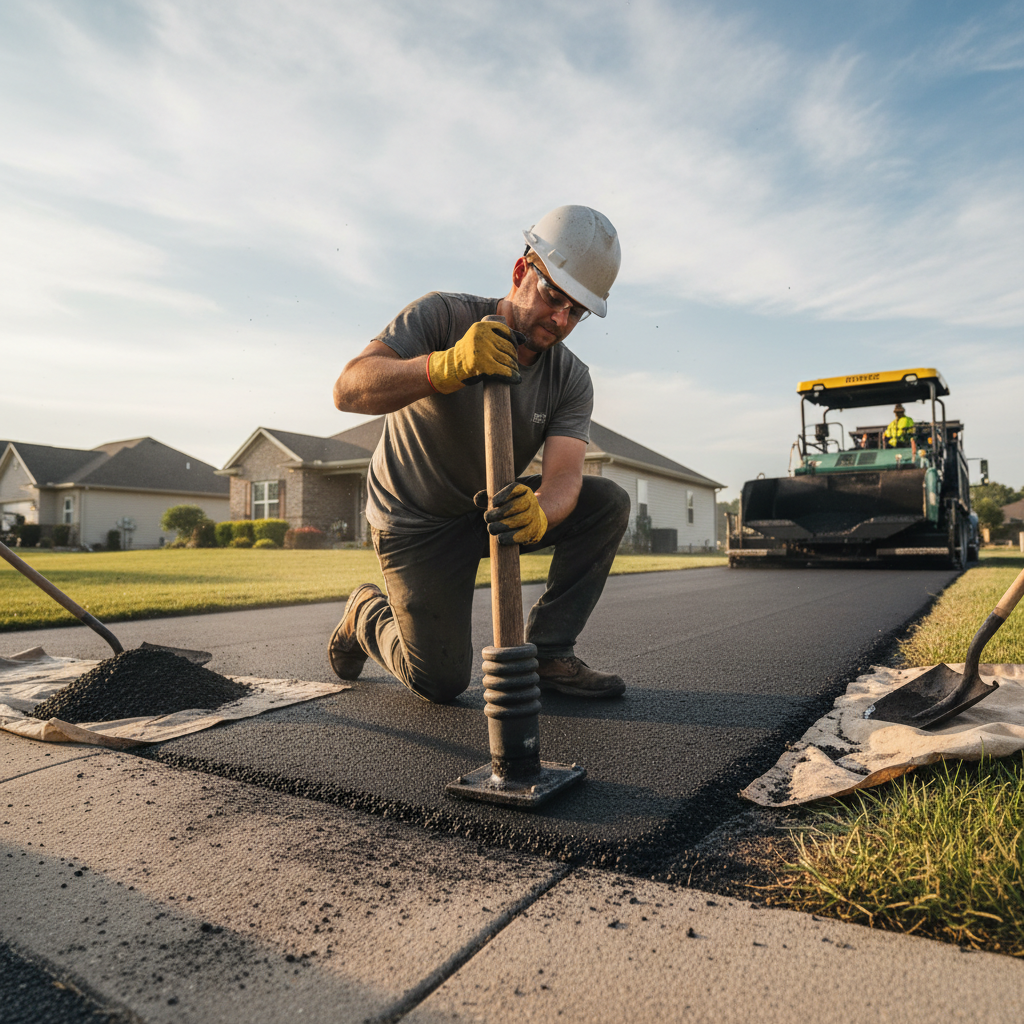
Driveway paving options and costs in Port Moody
Port Moody homeowners usually have more than one good driveway choice, but the “best” option depends on drainage, base prep and how much maintenance you want to stay on top of. With 30.1% of dwellings being single-detached homes and about 75.6% of households owning their home (Statistics Canada, 2021 Census), the majority of private driveway work here targets detached properties—so access constraints, landscaping tie-ins, and runoff control tend to show up in nearly every estimate. Port Moody’s Lower Mainland–Southwest climate is milder than inland BC, so frost penetration is relatively shallow; however, intense rainfall and frequent shoulder-season storms still load the base with water. In areas like Glenayre and rocky, clay-leaning pockets along the lower slopes, we often see saturated subgrades that make proper granular base thickness and compaction a bigger cost driver than “deep frost” itself. Scheduling can also tighten: hot-mix asphalt still needs adequate air/track temperatures (commonly above 10°C), and winter rain can compress workable windows, pushing crews into earlier spring or summer dates. That’s why two quotes for the same driveway footprint can differ meaningfully—especially if one contractor assumes full-depth excavation for saturated soils and the other assumes the existing base is salvageable.
Below is a practical Port Moody cost range for common driveway materials and typical performance expectations when the base and drainage are done correctly. Use it as a baseline for comparing itemized quotes in your neighbourhood.
| Material |
Lifespan |
Maintenance |
Best For |
Price per sq ft |
| Asphalt (new installation, proper base) |
15–25 years |
Seal coat every 3–5 years (typical) |
Smoother ride, lower upfront cost, good value |
$12–$20 |
| Asphalt (overlay on existing gravel base) |
12–20 years |
Seal coat every 3–5 years; monitor settlement |
When existing base is sound; budget-conscious upgrades |
$10–$18 |
| Interlocking concrete pavers |
25–40 years |
Occasional panel resetting; no full-surface replacement for localized issues |
Curb appeal, repairability, uneven subgrade tolerance |
$20–$40 |
| Poured concrete (broom finish) |
20–30 years |
Minimal; occasional patching if cracks form |
Low maintenance look; clean edges with proper form work |
$18–$35 |
| Exposed aggregate concrete |
20–30 years |
Minimal; sealing sometimes used for stain resistance |
Slip-resistant surface and enhanced finish |
$20–$38 |
| Gravel / crushed stone (budget option) |
3–10 years |
Top-ups 1–3 times per year; weed control |
Temporary solution or drainage-focused lots |
$6–$12 |
Prices are estimates only and vary by project scope, site access and material selection.
What affects the price of paving in Port Moody
In Port Moody and across the Lower Mainland–Southwest, it’s common to see quote variation of 30–50% for what sounds like the same driveway—especially between contractors who plan for full-depth drainage and those who rely on “light rehab.” The difference usually comes down to how each company measures excavation depth, base thickness, slope/drainage corrections, and disposal. In British Columbia, the frost line and freeze–thaw cycle are decisive cost factors because even though coastal BC has relatively shallow frost, we still design for a freeze depth on the order of ~18 inches for sensitive infrastructure. When clay-heavy soils get saturated from winter rain, that shallow freeze line can still drive heaving or rutting if the granular base and drainage aren’t right. In colder regions, hot-mix asphalt is also constrained by weather because paving typically needs track/air temperatures above about 10°C; while the season is longer in Port Moody than Northern BC, scheduling pressure during spring and early fall still affects crew availability and pricing.
Concrete examples: if your driveway sits on older fill or gets water pooling near the curb line, contractors often need deeper excavation and additional base/sub-drain work—pushing asphalt closer to the upper end of the $12–$20 band or concrete up from the mid $18–$35 range. Conversely, a well-drained slope with stable soil and easy access from laneway to the work area can keep costs closer to the lower ends because less base replacement is required. Housing age also matters: with 33.1% of homes built before 1981 (Statistics Canada, 2021 Census), many driveways were installed with different drainage assumptions, and older curb interfaces can require more tear-out and rebuilding.
| Price Factor |
Why It Matters |
Cost Impact |
| Driveway area in sq ft |
Most material and most labour scale with square footage |
High (primary driver) |
| Base depth required |
Frost line design and saturated subgrade risk govern granular thickness |
High (often the largest variable) |
| Grading and drainage work |
Correct slope prevents ponding and protects the base through freeze–thaw |
Medium to High |
| Tear-out of existing surface |
Breaking/hauling asphalt or concrete changes disposal and equipment time |
Medium to High |
| Edge restraints and curbing |
Pavers and asphalt need stable edges to prevent spreading and washout |
Medium |
| Sealing requirement |
Asphalt performance in wet BC weather depends on sealing cycles |
Low to Medium (ongoing maintenance) |
| Site access |
Narrow driveways and tight turnarounds slow equipment and increase labour |
Medium |
| Asphalt mix specifications |
Freeze–thaw-rated mixes can cost more but reduce early failures |
Low to Medium |
Permits & regulations in British Columbia
In British Columbia, paving a private driveway within your own property usually does not require a building permit. However, if the work touches municipal infrastructure, you typically need municipal approval first—especially for any changes that affect drainage, curb geometry, or the boulevard area. Common items that usually do require approval include: creating or changing a curb cut/apron in the right-of-way, altering storm drainage connections, modifying boulevard grading, or relocating/adjusting municipal catch basins and related drainage elements. If your driveway ties into a municipal sidewalk or involves work that changes how runoff leaves your property, confirm requirements with the City of Port Moody before excavation.
Here’s a homeowner-friendly step-by-step to verify both compliance and contractor readiness. First, confirm whether your scope involves any boulevard/right-of-way features (curb/apron/drainage tie-ins). Next, ask your contractor whether they will handle permit applications/approvals if the scope requires it; get it in writing. Then, always call for utility locates before digging (BC One Call / utility locator). Finally, verify the contractor’s credentials: check their business licensing details (as applicable) and request a certificate of liability insurance that matches the project value. For compensation coverage, confirm whether they carry the required workers’ coverage through the provincial system (and provide documentation on request). When a contractor is properly set up, they can quickly supply clearance/coverage evidence and explain who’s responsible for approvals and scheduling.
Asphalt vs pavers vs concrete for Port Moody driveways
For Port Moody driveways, asphalt, interlocking pavers and concrete all work—but they shine in different homeowner priorities and they respond differently to Lower Mainland–Southwest freeze–thaw and winter maintenance routines. Asphalt typically has the lowest upfront cost and, when properly installed on compacted granular base, can deliver excellent ride quality. The trade-off is that asphalt needs sealing relatively regularly—often every 3–5 years in wet coastal climates—to protect binder and reduce water infiltration. Interlocking concrete pavers usually cost more upfront, but they’re repairable panel-by-panel, which matters when you occasionally need subgrade access for drainage repairs. Pavers also deliver strong curb appeal, and with proper edge restraints, they resist minor subgrade movement better than rigid surfaces.
Poured concrete sits in a mid-range position. In Port Moody, concrete must be air-entrained and placed with the right mix and curing practices; otherwise, freeze–thaw cycling and water movement through joints can lead to cracking and spalling earlier than expected. Base prep and drainage design remain critical for all materials, but concrete is more sensitive to settlement because it doesn’t “flex.” If you plow in winter or use de-icing salts, the concrete surface needs to be planned accordingly.
A practical example: upgrading an asphalt driveway to interlocking pavers may move you from roughly $12–$20 per sq ft to about $20–$40 per sq ft. That extra spend is justified when you want a long service life, standout curb appeal, and easier localized repairs—particularly useful on older properties where drainage paths may be uncertain. If your priority is budget control and smooth driving, asphalt is often the best fit, provided sealing is planned and the drainage base is correctly built.
| Material |
Frost Resistance |
Curb Appeal |
Repair Method |
Lifespan |
Price Band |
| Asphalt (sealed regularly) |
Good with compacted granular base + drainage |
Medium (clean and uniform) |
Mill and patch or overlay section |
15–25 years |
$12–$20 |
| Interlocking concrete pavers |
Very good (segmental flexibility) |
High (variety of patterns/colours) |
Remove and reset individual pavers |
25–40 years |
$20–$40 |
| Poured concrete (air-entrained) |
Good when air-entrained and properly drained |
Medium (finish depends on formwork) |
Patch for minor cracks; manage jointing |
20–30 years |
$18–$35 |
| Exposed aggregate concrete |
Good with correct mix/finish |
High (textured, premium look) |
Patch with matched finish or overlay |
20–30 years |
$20–$38 |
| Permeable pavers (drainage grid) |
Very good for wet-site water management |
High (design-forward look) |
Replace small grid/paver sections |
20–35 years |
$22–$45 |
| Chip seal / tar-and-chip |
Moderate; best for lower traffic |
Low to Medium |
Spot repair chips; periodic re-chip |
6–12 years |
$8–$15 |
How to choose a paving contractor in Port Moody
Choosing a paving contractor in Port Moody is mostly about verifying paperwork and comparing scopes, not just chasing a low per-square-foot number. Start with British Columbia licensing/registration (where applicable for the contractor’s business activity) and ask for a current certificate of liability insurance with limits appropriate to your project. For workers, confirm provincial workers’ compensation coverage and request documentation that shows coverage is active. Don’t accept “it’s covered” verbally—ask for a certificate or clearance letter and confirm the name on the policy matches the contracting company.
Next, get 2–3 itemised written quotes. You want line items that separate excavation, base supply/placement, compaction, hauling/disposal, asphalt/paver/concrete placement, edge restraints/curbing, and any sealing schedule for asphalt. A fair comparison includes what’s excluded: for example, is permit work included (if any right-of-way changes apply), is disposal of old material included, and does the quote include any required drainage or sub-drain adjustments? Ask about warranty: workmanship warranty length, what product/material warranty applies, and whether it’s transferable if you sell the property. For payment schedule, keep it conservative—never pay more than about 10–15% upfront, and hold back a meaningful portion until the job is complete and clean. Finally, insist on a start date and estimated completion timeline in writing so weather delays can be planned around.
- Request itemised labour and material breakdown (not lump-sum only).
- Confirm granular base depth and compaction method in the written scope.
- Ask how they handle wet soils and drainage corrections before paving.
- Verify whether tear-out and disposal are included (as a line item).
- Check whether edge restraints/curbing are included for pavers and transitions.
- For asphalt, confirm planned tack coat and seal coat timing (6–12 months).
- Request mix specification language (freeze–thaw-rated where appropriate).
- Confirm equipment access plan and whether traffic control is included.
- Verify insurance certificate and workers’ compensation coverage documents.
- Ask about warranty terms: length, exclusions, and who performs repairs.
- Set payment milestones tied to inspection checkpoints (base complete, surface complete).
- Get start/completion estimates in writing and ask about weather contingency.
Red flags to watch in Port Moody: a quote that skips base-depth details or drainage/slope corrections, “we’ll pave no matter the weather” promises without temperature/curing constraints, refusal to provide insurance/coverage proof, vague warranty wording (no workmanship term), and pricing that lumps tear-out/disposal together with no breakdown—making it hard to dispute scope changes later.
Frequently asked questions — paving in Port Moody
How do I compare paving quotes fairly?
To compare quotes fairly in Port Moody, insist on like-for-like scopes. Ask each contractor to quote the same driveway area (in square feet), the same base depth and granular type/compaction requirements, and the same drainage/grading corrections. Make sure tear-out and disposal are priced the same way—some companies treat removal as “included” while others price it as an add-on. For asphalt, confirm tack coat, paving thickness, and whether a sealing step is included later (typically sealing within about 6–12 months, then every 3–5 years). If pavers are an option, verify edge restraints/curbing because that’s what prevents lateral movement. Finally, compare timelines: Lower Mainland–Southwest weather can compress paving windows, so scheduling constraints sometimes reflect real costs rather than inefficiency. (Statistics Canada, 2021 Census)
Can asphalt be laid in cold weather in Port Moody?
In Port Moody, you can sometimes pave near the cooler shoulder of the season, but quality depends on temperature and curing conditions—cold-weather asphalt work is where premature failures start. Hot-mix asphalt generally needs air/track conditions that support compaction and proper binder performance; a common practical threshold is around 10°C or above. Coastal rain also matters: if the surface is wet or base moisture is too high, you can get poor bonding or early rutting. The best contractors will check forecast conditions, protect the base, and won’t rush paving when curing would be compromised. If a contractor claims they can “pave anytime,” ask how they manage mix temperature, compaction, and curing. When done right, asphalt still fits Port Moody well and typically lands in the $12–$20 per sq ft range depending on excavation and base requirements.
What is a driveway apron and do I need one in Port Moody?
A driveway apron is the transition area between the curb/sidewalk area and your driveway surface—essentially the built-in “entry” that helps manage runoff and provides a durable connection. In Port Moody, whether you “need” one depends on how your current access meets the street, and whether there’s an existing curb cut or drainage structure that’s being replaced/modified. If your driveway work involves the municipal right-of-way (for example, altering curb geometry or drainage tie-ins), approvals are usually required before construction. Many homeowners benefit from an apron because it reduces edge breakdown at the curb line and helps prevent water from cutting under the driveway. Ask your contractor to specify in writing whether an apron is included, what materials are used at the curb interface, and whether municipal approval is part of the scope when changes affect the boulevard.
How do I maintain my driveway through Port Moody winters?
In British Columbia’s Lower Mainland–Southwest climate, winter maintenance is mostly about managing water and avoiding surface damage. Start by keeping catch points and drainage pathways clear so runoff doesn’t pond at the lowest part of the driveway. For asphalt, plan for regular inspections after heavy rains and address early soft spots before they grow—then schedule sealing in line with the contractor’s recommendation (often every 3–5 years, with the first seal usually after about 6–12 months). When snow is removed, plow carefully to avoid gouging edges; use methods that don’t scrape the surface aggressively. For de-icing, use sparingly—excess salt can accelerate surface wear on concrete and edges. For pavers, control weed growth at joints and re-level small areas if you notice movement. If you want the “set it and forget it” approach, pavers tend to be more forgiving for localized maintenance.
Is it worth sealing a new driveway right away in Port Moody?
Sealing a new asphalt driveway “right away” usually isn’t the goal. In Port Moody, the common approach is to allow asphalt to cure first—often sealing within about 6–12 months after installation, depending on weather, surface condition, and the contractor’s material plan. Sealing too early can trap moisture and interfere with binder performance. When you seal at the right time, you help protect against water infiltration from intense rain cycles, which reduces the risk of early cracking or raveling in wet seasons. It’s also a smart life-cycle move: asphalt in this region commonly runs in the $12–$20 per sq ft range, and sealing is part of maintaining that lifespan. If you’re unsure, ask your contractor when they recommend your first seal coat and whether it’s included in the warranty or maintenance plan.
What is a chip seal driveway and is it suited to Port Moody?
Chip seal (also known as tar-and-chip) is a surface treatment that uses a binder layer with rock chips broadcast on top. It’s less expensive up front than asphalt paving, but it isn’t always the best fit for a residential driveway with frequent turning, heavier loads, or a strong preference for a smooth ride. In Port Moody’s wet Lower Mainland climate, chip seal can work well when drainage is correct and traffic patterns are moderate, but it typically requires periodic maintenance (re-chipping or touch-ups) to keep the surface uniform. It can be a reasonable budget choice if you’re looking for a short- to mid-term solution—especially if your priority is drainage first and appearance second. If you want long-term performance with fewer touch-ups, many homeowners compare against asphalt’s $12–$20 per sq ft range or pavers in the $20–$40 range for repairability and curb appeal.