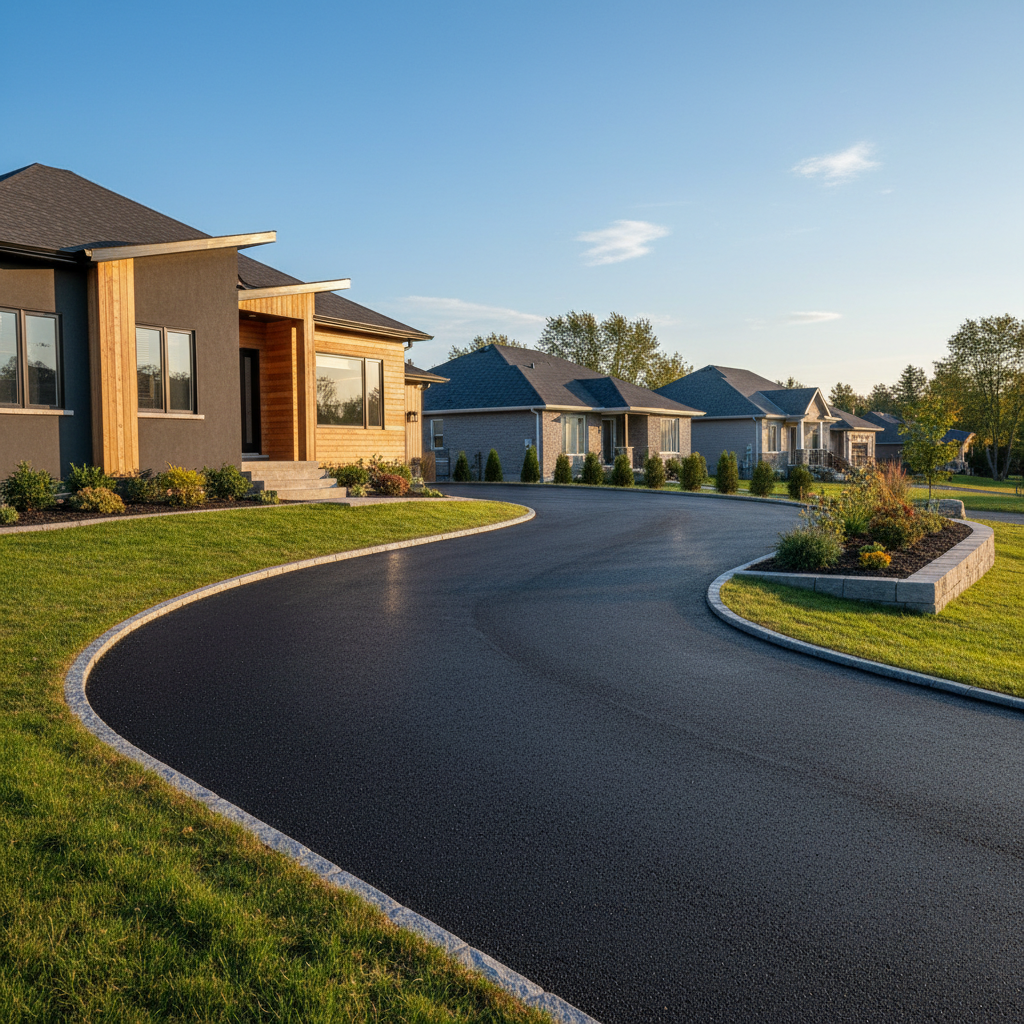
Driveway paving options and costs in North Vancouver
North Vancouver homeowners have a few dependable driveway paths, and the “right” one usually comes down to budget, how much curb appeal you want, and how seriously you want to address drainage. With 58,120 residents and roughly 14,535 homeowner households (Statistics Canada, 2021 Census), demand is steady, especially in detached-house areas—single-detached homes account for 10.7% of dwellings, which lines up with where private driveway work is most common. Another local reality is that 44.0% of homes were built before 1981 (Statistics Canada, 2021 Census). Older lots often have aging services, flatter grades, and drainage that’s less forgiving, so the base prep and runoff control become a bigger part of the price.
In the Lower Mainland–Southwest, paving costs are shaped more by intense rainfall and drainage than by extreme frost alone. Frost penetration is relatively shallow compared with Interior and Northern BC, but we still design for freeze–thaw behavior around the effective freeze line. Repeated wetting and freezing (or near-freezing) can push water through weak spots in the base—especially on clay-heavy soils—so contractors spend time on excavation depth, granular thickness, and proper slope/drainage detailing. Scheduling also affects pricing: the paving season stretches longer than in colder provinces, but heavy winter storms and shoulder-season rain still compress workable windows and tighten labour availability.
In North Vancouver, work is especially active around the North Shore corridor and neighbourhoods like Lower Lonsdale and deep lots toward Edgemont—long driveways and frequent vehicle turn-arounds mean the surface and base take real punishment. Use the table below to compare typical options and price bands, then we’ll break down what changes the final number for your specific site.
| Material |
Lifespan |
Maintenance |
Best For |
Price per sq ft |
| Asphalt (new installation, proper base) |
12–20 years |
Seal every 3–5 years; patch as needed |
Solid value where drainage and base prep are done right |
$12–$20 |
| Asphalt (overlay on existing gravel base) |
8–14 years |
Seal every 3–5 years; frequent spot patches early on |
When the existing base is stable and excavation can be limited |
$13–$22 |
| Interlocking concrete pavers |
25–35 years |
Resand joints; lift/replace individual stones |
Curb appeal and easier repairs without tearing out the whole driveway |
$20–$40 |
| Poured concrete (broom finish) |
20–30 years |
Minimal; occasional crack repair; consider sealing |
Low-maintenance look with good long-term service if properly reinforced/air-entrained |
$18–$35 |
| Exposed aggregate concrete |
20–30 years |
Seal if desired; repair spalls/cracks as needed |
Slip-resistant texture and premium finished appearance |
$22–$45 |
| Gravel / crushed stone (budget option) |
5–10 years |
Regrade, top up and weed-control periodically |
Temporary solutions or steep budgets while improving drainage first |
$8–$15 |
Prices are estimates only and vary by project scope, site access and material selection.
What affects the price of paving in North Vancouver
In North Vancouver and across the Lower Mainland–Southwest, the same “driveway size” can come in 30–50% apart on quotes. That gap is usually not the asphalt or paver price by itself—it’s the amount of excavation, how thick and well-compacted the base is, how drainage is corrected, and how much labour time is spent dealing with tight access and disposal. Even when your home is similar to a neighbour’s, older sites (44.0% built before 1981) may have buried issues like undersized drainage, deteriorated subbase, or settlement zones that force deeper removals.
Frost line depth and freeze–thaw cycles are decisive cost factors in coastal BC, even though the frost is usually shallower than Ontario/Alberta. In colder provinces, builders often plan around deeper freeze, which translates to thicker compacted granular base—typically 6–12 inches in Ontario/Alberta—whereas coastal BC projects may use something closer to 4–6 inches in many exposed residential sections, provided drainage is excellent. In North Vancouver, the risk comes from water: repeated freeze–thaw near that shallow freeze zone plus clay-heavy pockets can loosen the subgrade. When that happens, contractors must increase granular thickness, add geotextile where appropriate, and rebuild the slope to shed water away from foundations. That’s why an asphalt driveway that looks “simple” on paper can still land in the $12–$20 per sq ft range once proper base work is included.
Concrete pricing can also swing. A basic broom-finish pour may sit in the $18–$35 per sq ft band, but if the crew needs extra reinforcement, a more complex form layout, or added drain tie-ins, costs move up quickly. On the paver side, $20–$40 per sq ft is common, but the number increases when edge restraints, deeper base, and more precise grading are required to prevent lifting and spread during winter freeze events.
| Price Factor |
Why It Matters |
Cost Impact |
| Driveway area in sq ft |
Most costs scale directly with removal, base, and surface area |
High (primary driver) |
| Base depth required |
Granular thickness controls heaving/rutting from freeze–thaw and moisture |
Medium–High |
| Grading and drainage work |
Correct slope and runoff direction prevents pooling and water infiltration |
Medium |
| Tear-out of existing surface |
Concrete breaking/hauling and asphalt removal add time and disposal costs |
Medium–High |
| Edge restraints and curbing |
Edges keep pavers stable and stop asphalt/aggregate from migrating |
Medium |
| Sealing requirement |
Asphalt sealcoating after curing helps protect from rainwater and surface aging |
Low–Medium (adds future cost) |
| Site access |
Tight driveways slow equipment movement and increase labour hours |
Medium |
| Asphalt mix specifications |
Freeze–thaw-rated mixes resist moisture-related deterioration |
Low–Medium (mix cost + QC) |
Permits & regulations in British Columbia
In British Columbia, paving your own private driveway within your property typically does not require a building permit. The usual exception is when the work touches municipal infrastructure or alters drainage/boulevard conditions that affect public space. For example, the work that commonly does require municipal approval (and sometimes a permit) includes new or modified curb cuts, changes to boulevard/grading in the right-of-way, and any modification to storm drainage connections that impact runoff on municipal property. If your project requires changes near the road allowance, expect the municipality to want a review for safe grades, drainage patterns, and transitions.
To verify rules in North Vancouver, start with the City’s requirements for driveway/curb-bulb or right-of-way work, and confirm any lot-grading bylaw limits—especially where a hard surface could change how water flows toward a neighbour’s property or foundation. Also, before any excavation, confirm utility locates through the province’s One-Call process (BC 1 Call) so the contractor can dig safely.
For contractor verification, you should check licensing and coverage before the first shovel hits the ground: (1) look up the contractor on the appropriate BC registry/online listing for their business status (and that the paving/contracting scope is covered), (2) ask for a current Certificate of Insurance showing liability coverage and effective dates, and (3) confirm workers’ compensation coverage documentation (WCB) for any employees. Finally, get a clearance letter or account confirmation if the contractor uses subcontractors—then keep copies with your contract paperwork.
Asphalt vs pavers vs concrete for North Vancouver driveways
For North Vancouver driveways, asphalt is usually the lowest upfront option, interlocking concrete pavers provide the best long-term repair flexibility, and concrete sits in the middle—though each material reacts differently to the coastal Lower Mainland–Southwest mix of heavy rainfall, wet seasons, and freeze–thaw near the effective frost zone. Asphalt typically starts with a strong value case because it’s priced efficiently in the $12–$20 per sq ft band, but it does require sealing every 3–5 years to protect the surface from rainwater ingress and aging. If your drainage is corrected and the base is compacted properly (commonly about 6" of compacted granular base with roughly 2.5–3" of asphalt for residential driveways), asphalt performs well through repeated wet weather and winter temperature swings.
Interlocking concrete pavers cost more upfront—often $20–$40 per sq ft—but they excel where you want curb appeal and easy spot repairs. If a utility line is accessed later or a settlement spot develops, pavers can be lifted and reset without tearing out the entire driveway. Poured concrete is generally mid-range (often $18–$35 per sq ft), but it’s more sensitive to cracking if it’s not properly air-entrained and reinforced, especially in areas that see de-icing or repeated freeze–thaw. Exposed aggregate can add slip resistance, while permeable drainage-grid pavers can be a strong choice when your site struggles with runoff.
Base preparation is the real divider in all three options. In the Lower Mainland–Southwest, the “right” design is less about extreme frost depth and more about keeping water out of the base and ensuring compacted granular thickness under the surface. On a typical North Vancouver site with older grades, improving slope and drainage can be the difference between a driveway that lasts and one that heaves.
Where the price difference is justified: if asphalt is $12–$20 per sq ft and pavers run $20–$40, pavers can be worth the premium if you expect future repairs, want the best aesthetics for a detached-home frontage, and need a surface that tolerates localized adjustments without full replacement.
| Material |
Frost Resistance |
Curb Appeal |
Repair Method |
Lifespan |
Price Band |
| Asphalt (sealed regularly) |
Good when base/drainage is correct |
Medium |
Patch and resurface localized areas; reseal |
12–20 years |
$12–$20 |
| Interlocking concrete pavers |
Excellent with proper base and edge restraint |
High |
Lift/replace individual pavers; resand joints |
25–35 years |
$20–$40 |
| Poured concrete (air-entrained) |
Good with air entrainment and proper reinforcement |
Medium–High |
Crack repair/patching; partial repairs possible |
20–30 years |
$18–$35 |
| Exposed aggregate concrete |
Good with correct curing and mix design |
High |
Spall/crack repairs; partial resurfacing limited |
20–30 years |
$22–$45 |
| Permeable pavers (drainage grid) |
Good with engineered drainage detailing |
Medium–High |
Replace affected units; maintain filtration layers |
20–30 years |
$28–$55 |
| Chip seal / tar-and-chip |
Fair to good; depends heavily on base stability |
Low–Medium |
Spot repairs and reapplications over time |
7–12 years |
$10–$18 |
How to choose a paving contractor in North Vancouver
Choosing the right paving contractor in North Vancouver is mostly about verifying coverage and matching the quote to your actual drainage and base needs. In British Columbia, ask for proof of general liability insurance (with the effective dates visible), and confirm that any workers are covered under the workers’ compensation system (WCB). If a contractor uses subcontractors, don’t just assume—ask for documentation for each party and keep copies. For licensing, verify the business status through the appropriate BC registry/listing where applicable, and confirm the scope they’re offering aligns with paving/excavation and surface installation work.
Next, get 2–3 itemised written quotes. You want a breakdown showing excavation/tear-out, base gravel thickness, compaction, geotextile (if required), asphalt/concrete/pavers supply, edge restraints, and any drainage corrections. Avoid “lump sum only” quotes that don’t identify whether disposal is included, whether permit/right-of-way applications are part of the work, or what surface thickness is being installed. Scope clarity matters because small omissions can push you toward a cheaper number that fails sooner.
Confirm warranty details in writing: workmanship warranty length, what product/manufacturer warranties cover, and whether warranties are transferable to you as the homeowner. For payment, don’t pay more than 10–15% upfront; keep a holdback until the job is complete and the final grade and cleanup meet the scope. Insist on a start date and completion estimate in writing—weather can affect scheduling in the Lower Mainland, but timelines should still be documented.
- Ask for proof of liability insurance with the certificate and expiry date visible.
- Confirm WCB coverage for the contractor’s employees (and documentation if subs are used).
- Request an itemised quote showing excavation, base thickness, compaction, and surface thickness.
- Check whether disposal/hauling is included in the price.
- Confirm whether drainage corrections (slope, catch basin tie-ins, swales) are included or add-ons.
- Verify edge restraint details (steel/aluminum forms, curb transitions, or restraint system).
- For asphalt, ask about paving temperature/mix design fit for freeze–thaw conditions.
- Ask when sealcoating is planned (typically after curing, not immediately).
- For pavers, ask about geotextile use, bedding sand type, jointing sand spec, and compaction method.
- Confirm whether utility locates are performed and responsibility for any additional locates is stated.
- Require a written warranty and what it excludes (e.g., homeowner-caused damage, poor drainage changes).
- Never sign a contract with vague scope language like “standard prep” or “as needed” without definitions.
Common red flags in North Vancouver include quotes that omit base depth and compaction details, refusal to provide insurance/WCB documentation, vague warranty terms (no length or coverage scope), schedules that promise “guaranteed” completion regardless of rain, and contracts with large upfront payments that don’t include a clear holdback for completion.
Frequently asked questions — paving in North Vancouver
Asphalt vs interlocking pavers vs concrete — which is best in North Vancouver?
For most North Vancouver homes, asphalt is the best “value” if the contractor designs drainage and builds a proper compacted granular base. That typically lands in the $12–$20 per sq ft range, and you get a smooth, uniform surface that’s cost-effective to install. Interlocking pavers are usually the best choice when curb appeal and repairability matter most—pavers often run $20–$40 per sq ft, but you can lift and reset individual units instead of replacing the whole driveway. Poured concrete (commonly $18–$35 per sq ft) can be great when it’s air-entrained and reinforced, but it can crack if the base or joints aren’t right. In British Columbia’s wet, freeze–thaw-prone winters, drainage detailing is the real deciding factor across all three materials.
How long does a paved driveway last in North Vancouver?
In North Vancouver and the Lower Mainland–Southwest, lifespan depends heavily on base preparation and drainage—not just the surface material. Asphalt driveways commonly last about 12–20 years when installed over a well-compacted base and sealed every 3–5 years. Pavers are built for longevity and can reach 25–35 years with proper restraint, correct bedding sand, and periodic joint resanding. Concrete often performs in the 20–30 year range when it’s air-entrained, cured properly, and placed with good subgrade support and control joints. If water pools on the driveway or the subbase stays saturated, all materials age faster. Older lots (including many built before 1981) can be especially prone to hidden subgrade issues that shorten lifespan if not addressed during excavation.
When is the best time of year to pave in North Vancouver?
The best window is typically late spring through summer, when rain is less frequent and the ground is drier enough to compact base material thoroughly. While the Lower Mainland–Southwest has a longer paving season than Northern BC, heavy winter storms and shoulder-season rain still cause delays and can weaken compaction if crews push work onto wet subgrades. Asphalt placement also depends on conditions because hot-mix asphalt generally requires air temperatures above 10°C for proper installation and compaction. That said, many contractors plan earlier site prep—excavation and base installation—then schedule surface placement when weather supports quality compaction and curing.
How deep should the base be for North Vancouver's frost?
North Vancouver’s effective freeze depth is relatively shallow compared with Interior provinces, but coastal freeze–thaw still punishes waterlogged or poorly compacted bases. For residential asphalt, a common approach is about 6" of compacted granular base with about 2.5–3" of asphalt surface thickness, adjusted upward where soils are weak, saturated, or clay-heavy. For pavers, many projects start around 6" of base gravel plus bedding sand with 2.5–3.5" of pavers, again increasing base depth if drainage needs correction. The correct “how deep” answer depends on whether your contractor finds soft spots during excavation and whether drainage is being improved to keep water from the subgrade. A reputable quote will state base thickness and compaction steps, not just the surface thickness.
How often should I seal my asphalt driveway?
In North Vancouver, a well-installed asphalt driveway should generally be sealed every 3–5 years after it has fully cured. Sealing sooner than the asphalt is ready can trap moisture and reduce performance, so contractors usually wait for an appropriate curing window before applying sealcoating. You’ll see different recommendations depending on sun exposure, traffic, and whether your driveway sits in shaded, wet spots that stay colder longer. While sealing is an added line item, it’s usually the most practical way to protect your asphalt surface during British Columbia’s rainy winters and to slow oxidation and raveling. If you’re comparing quotes, ask whether sealing is included or scheduled as a future maintenance cost within the $12–$20 per sq ft price context.
Why does my driveway crack and heave in winter?
In North Vancouver, cracking and heaving are usually a drainage and base story, not a “bad luck” story. Water can infiltrate through surface voids or hairline cracks, then freeze and expand near the effective frost zone—creating upward pressure that lifts sections (heave) and opens cracks. Clay-heavy soils or older base layers can amplify the issue because they hold water. Another common cause is insufficient granular thickness or poor compaction, which leaves air gaps and unstable support. On sloped driveways, if runoff isn’t directed away from the house and foundation, you can get localized saturation and movement. A proper repair typically involves correcting drainage and rebuilding the base where movement has occurred, not just patching the surface.