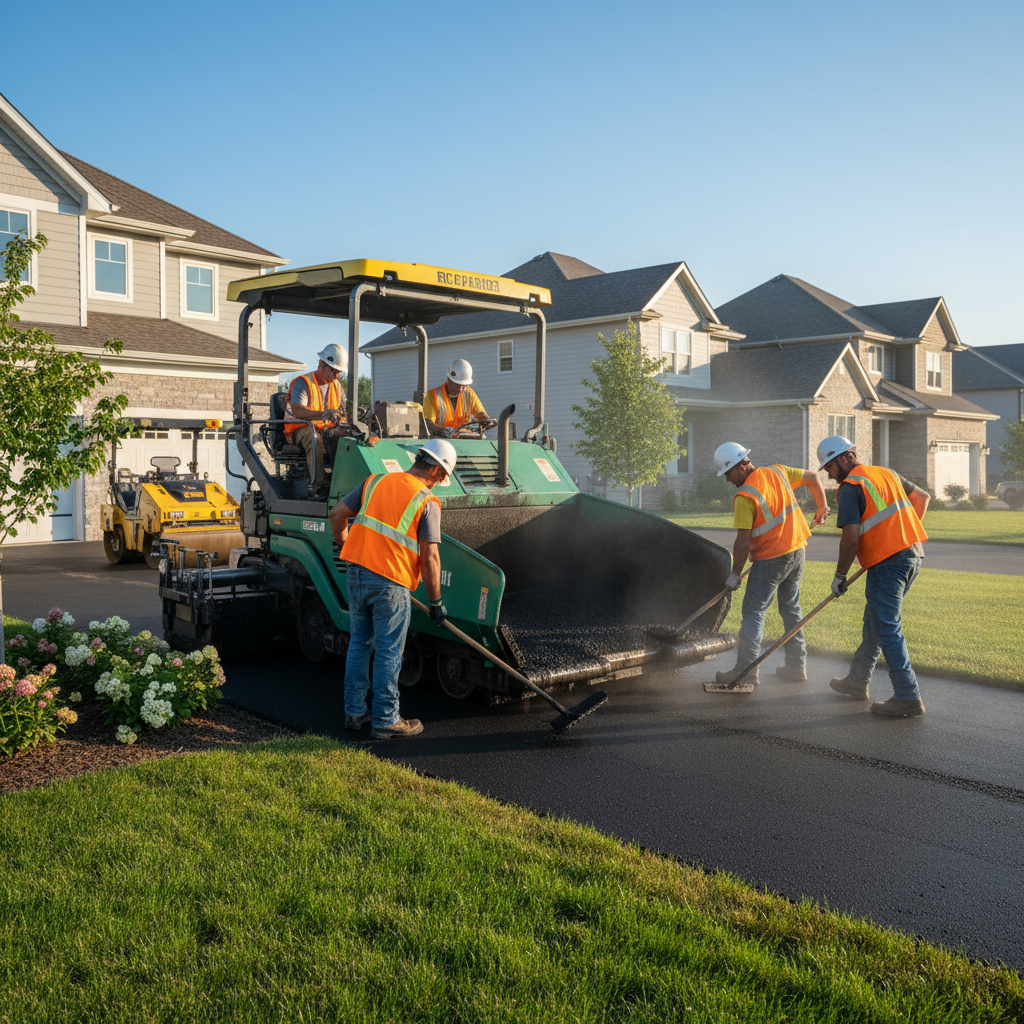
Driveway paving options and costs in Kensington-Cedar Cottage
Kensington-Cedar Cottage, British Columbia is a busy, older neighbourhood where driveways are a big part of curb appeal—and where proper drainage matters as much as surface thickness. With a local population of 49,235 people (Statistics Canada, 2021 Census), there’s steady year-round demand for contractor crews, especially around the Kensington-Cedar Cottage core near Kingsway and the Cedar Cottage area. Most private driveways in this part of the city serve single-family homes, and that concentration of detached housing means many jobs start with similar site realities: narrow access lanes, existing asphalt that’s worn at the wheel paths, and clay-heavy patches where water can pond.
In the Lower Mainland–Southwest, costs tend to be driven less by extreme frost depth and more by intense rainfall and how water behaves in the base. Frost penetration is relatively shallow compared with Interior or Northern BC, but regional practice still assumes a meaningful frost line for exposed infrastructure—so we plan granular base thickness and compaction to resist heaving, rutting, and cracking. The paving season is longer than in colder provinces, yet shoulder-season storms still tighten workable windows, which is one reason quality workmanship can cost more even when the surface looks simple.
Below is a practical comparison of common driveway materials and typical installed ranges you’ll see in Kensington-Cedar Cottage. Use it as a baseline, then adjust for area, tear-out, base depth, drainage corrections, and access constraints when you request quotes.
| Material |
Lifespan |
Maintenance |
Best For |
Price per sq ft |
Price Range |
| Asphalt (new installation, proper base) |
15–25 years |
Sealcoat every 3–5 years |
Best value where you want a smooth, low-maintenance surface |
$3.25–$5.50 |
$3,500–$8,500 |
| Asphalt (overlay on existing gravel base) |
10–18 years |
Sealcoat every 3–5 years; monitor edge settlement |
When the existing base is stable and drainage is corrected |
$2.75–$4.75 |
$2,800–$7,200 |
| Interlocking concrete pavers |
25–40 years |
Replace a few units as needed; re-screed bedding occasionally |
High curb appeal; easier patching without replacing the whole driveway |
$6.00–$9.50 |
$5,500–$14,500 |
| Poured concrete (broom finish) |
20–30 years |
Occasional patching; seal optional (helps with staining) |
Clean, durable look with straightforward maintenance |
$5.00–$8.25 |
$4,800–$13,000 |
| Exposed aggregate concrete |
20–30 years |
Seal every few years if desired for colour retention |
Slip-resistant texture and premium appearance |
$6.50–$10.50 |
$6,500–$16,000 |
| Gravel / crushed stone (budget option) |
5–12 years |
Top up 1–2 times per decade; manage weeds; re-grade as needed |
Temporary solution or low-budget drainage strategy |
$1.75–$3.25 |
$1,800–$4,500 |
Prices are estimates only and vary by project scope, site access and material selection.
What affects the price of paving in Kensington-Cedar Cottage
In Kensington-Cedar Cottage, you can see the same driveway come in 30–50% apart between quotes because paving cost is mostly “site work plus base quality,” not just the asphalt or concrete surface. Two crews may both quote “new asphalt,” but one might include proper excavation, correct base thickness for the frost line assumption, and drainage correction, while the other leaves ponding issues to future seasons. Labour rates and scheduling pressure in the Lower Mainland–Southwest also affect pricing—crews can be booked tight during dry spells, and the availability of experienced operators who handle drainage detail can influence turnaround time.
Frost line and freeze–thaw cycles remain decisive, even in coastal BC. A deeper frost requirement in exposed applications means a thicker compacted granular base—typically planned around the 4–6 inch range for many coastal residential driveways when drainage is excellent, and more when soils are weak or saturated. Get that wrong and you invite heaving and cracking at the same time winter rains drive water into the structure. Asphalt mix design matters too: freeze–thaw-rated mixes can cost more, and they’re one reason a premium “new install” often sits closer to the $12–$20 per sq ft backbone band than a barebones quote.
Concrete pricing can move in either direction based on job conditions. For example, a poured broom-finish driveway on well-drained compacted base may land around the $18–$35 per sq ft range, while an exposed aggregate finish usually costs more due to finishing labour and material handling. In older Kensington-Cedar Cottage lots, excavation depth and disposal fees can add meaningful dollars if you uncover saturated clay or oversized stone.
| Price Factor |
Why It Matters |
Cost Impact |
| Driveway area in sq ft |
The surface is the biggest component; small area differences change production time and material quantity. |
Largest swing; commonly 50–70% of the total project cost |
| Base depth required |
Frost line assumptions and saturation drive how many inches of compacted granular base are needed. |
Often adds the equivalent of 10–25% if deeper excavation is required |
| Grading and drainage work |
Correct slopes, daylighting, and removing ponding prevent winter water from pumping into the base. |
Can add 5–20% depending on how much regrading is required |
| Tear-out of existing surface |
Breaking, hauling, and disposal of old asphalt or concrete increases labour and equipment time. |
Typically 8–25% for asphalt tear-out; more if concrete is thick |
| Edge restraints and curbing |
Pavers need restraints to stop lateral spread; edges also protect asphalt from raveling. |
Often 3–12% depending on linear metres of restraint |
| Sealing requirement |
Asphalt should be sealed after it cures—usually within 6–12 months—to protect binder from moisture and UV. |
Add 1–4% in year one if included; impacts lifecycle cost |
| Site access |
Narrow lanes, steep grades, and limited staging slow equipment movement and can increase labour hours. |
Can add 5–15% on tight urban lots |
| Asphalt mix specifications |
Freeze–thaw-rated mixes improve durability under Lower Mainland rain cycles and winter temperature swings. |
Often adds 2–8% versus basic mixes |
Permits & regulations in British Columbia
In British Columbia, paving a private driveway within your own property usually does not require a building permit. Most homeowners simply replace or build the driveway surface where it sits entirely on private land and you’re not altering major stormwater infrastructure. The work that commonly does require municipal approval is anything that affects the municipal right-of-way—especially at the street line. That can include new or modified curb cuts, changes to boulevard/sidewalk areas, altering storm drainage patterns, or reworking catch basins and grades that tie into municipal drainage.
In Kensington-Cedar Cottage, it’s also smart to confirm lot-grading rules. Some municipalities restrict how close hard surfaces can sit to property lines, and they can require that drainage be handled so water doesn’t flow onto a neighbour’s property. Before excavation, always arrange utility locates through BC 1 Call so nobody hits buried services.
To verify a contractor’s credentials in British Columbia, follow these steps: (1) confirm their business registration and any applicable paving/contracting standing through online listings, (2) request an up-to-date certificate of insurance for liability coverage and ensure it lists you as an additional insured where appropriate, and (3) confirm their provincial coverage for workers—typically WSBC coverage documentation for insured employers. Ask them to provide clearance letters or current account status documents before work begins. If they can’t show documentation promptly, that’s usually a red flag.
Asphalt vs pavers vs concrete for Kensington-Cedar Cottage driveways
For Kensington-Cedar Cottage, the “best” driveway material comes down to your priorities: upfront cost, appearance, repairability, and how the driveway performs under the Lower Mainland–Southwest pattern of heavy winter rain and repeated freeze–thaw around a shallow frost line. Asphalt is often the lowest upfront choice. It lays smooth and tends to be cost-effective per square foot, but it needs sealcoating every 3–5 years to protect the binder. If you skip sealing, moisture can accelerate wear and you’ll see potholes form at wheel paths sooner.
Interlocking concrete pavers cost more upfront, but they shine where you might want targeted repairs later. If a section settles or you need access for a utility issue, pavers can be lifted, base corrected, and reset without replacing the entire driveway. In a neighbourhood with older services and frequent landscaping tweaks, that repairability is a real advantage.
Poured concrete sits in the middle on cost and looks clean, but it can crack if the base isn’t right or if water intrusion and freeze–thaw stress aren’t managed. It needs proper air entrainment and strong joints/finishing choices, especially when you also have de-icing habits in winter. Exposed aggregate offers slip resistance and premium curb appeal, while chip seal/tar-and-chip is usually a short-to-mid-term solution best for budget planning.
Base preparation is the common denominator in all three options. Typical residential practice in the Lower Mainland is around 6 inches of compacted granular base plus the asphalt surface thickness (about 2.5–3 inches for asphalt), with deeper excavation where soils are weak or saturated. As a simple price justification: if asphalt comes in around $12–$20 per sq ft while pavers price closer to $20–$40, pavers can be worth it when you want long-term patchability and higher curb appeal—especially on a driveway visible from the street. If you mainly want value and you’ll seal on schedule, asphalt is usually the smarter lifecycle choice.
| Material |
Frost Resistance |
Curb Appeal |
Repair Method |
Lifespan |
Price Band |
| Asphalt (sealed regularly) |
Good when granular base is correct and drainage is tight |
Moderate (clean, uniform black surface) |
Patch potholes; mill and resurface if needed |
15–25 years |
$12–$20 |
| Interlocking concrete pavers |
Very good with proper base and edge restraints |
High (wide range of colours and patterns) |
Lift/replace individual pavers and re-screed base |
25–40 years |
$20–$40 |
| Poured concrete (air-entrained) |
Good with air entrainment and correct base drainage |
Moderate to high (simple broom finish) |
Crack repair/patch; sometimes overlay with coating |
20–30 years |
$18–$35 |
| Exposed aggregate concrete |
Good with correct mix and curing; texture helps traction |
Very high (premium, textured finish) |
Patch the affected area; full replacement if widespread |
20–30 years |
$18–$35 |
| Permeable pavers (drainage grid) |
Excellent for managing heavy rainfall when designed correctly |
High (modern look; depends on paver style) |
Targeted replacement of affected units; maintain infill |
20–35 years |
$20–$40 |
| Chip seal / tar-and-chip |
Moderate; surface can wear faster in heavy traffic |
Low to moderate (more utilitarian) |
Spot patch; re-chip when surface degrades |
7–15 years |
$12–$20 |
How to choose a paving contractor in Kensington-Cedar Cottage
Choosing the right contractor in Kensington-Cedar Cottage is mostly about verification and scope clarity. In British Columbia, ask for their liability insurance certificate before you sign anything, and confirm workers’ coverage documentation for their employees—this is part of the safety and compliance you want to see in any paving job with equipment and excavation. How to check: request the certificate of insurance and review key details (policy effective dates, coverage limits, and that the certificate is current). For employment coverage, ask for the WSBC documentation or clearance letter that shows their account status; reputable contractors can provide this without delays.
Next, get 2–3 itemised written quotes, not just a lump sum. You want a line-by-line breakdown for excavation/haul-away, granular base (including thickness and compaction allowance), geotextile if included, asphalt or concrete supply, surface thickness, and finishing. Also ask whether the quote includes permit pulling (where needed), disposal of old material, and any drainage upgrades. In the Lower Mainland, the best bids often differ most in base and drainage scope.
Warranty matters for workmanship—ask how long it covers workmanship (not just product defects), and whether the warranty is in your name and transferable if you sell the home. For payment schedule, never pay more than 10–15% upfront; a holdback until completion and final cleanup is reasonable. Finally, insist on a start date and completion estimate in writing—weather windows and scheduling around heavy rain can shift timelines.
- Confirm insurance certificate is current and request proof of coverage before work starts.
- Ask for WSBC documentation/clearance letter for their staffing status.
- Get at least 2–3 itemised quotes with granular thickness, asphalt/concrete thickness, and compaction steps.
- Verify whether tear-out and disposal are included (hauling and dump fees matter).
- Ensure grading/drainage corrections are clearly described (slope, swales, and ponding fixes).
- Check whether geotextile and proper base material are specified.
- Require edge restraints/curbing details for pavers and edge protection for asphalt.
- Ask for the sealing plan for asphalt (timing after cure and who applies it).
- Review warranty terms for workmanship and how defects are handled.
- Confirm product/manufacturer warranty if applicable and whether you’re covered directly.
- Lock payment schedule: 10–15% max upfront and holdback until final acceptance.
- Get a written start/completion timeline and a notice process for rain delays.
In Kensington-Cedar Cottage, a few red flags to watch for are contractors who (1) skip discussing drainage and base thickness, (2) won’t provide insurance/coverage paperwork up front, (3) offer “asphalt over anything” without inspecting the existing structure, (4) quote without tear-out/disposal line items, or (5) pressure you into paying large deposits before any base work starts.
Frequently asked questions — paving in Kensington-Cedar Cottage
How do I prepare for a paving project?
Start by measuring your driveway and reviewing where water currently goes during winter rain. In Kensington-Cedar Cottage, ponding at low spots is common in older lots, so photos and notes help you and the contractor plan grading and drainage properly. Clear the driveway area the day before excavation so equipment can stage safely, and move vehicles out early—grinding, hauling, and base compaction aren’t quick. If you have sprinklers, landscaping edging, or low fences near the edges, identify what can be temporarily removed. Ask your contractor for a written schedule and any prep work they require (sometimes includes removing planters and marking utility points). Finally, confirm how debris will be disposed of and whether the quote includes tear-out. That prevents surprise charges later when the old surface has to be broken and hauled away. (Statistics Canada, 2021 Census)
How do I compare paving quotes fairly?
Compare quotes on scope, not just the final number. Ask each contractor to itemise excavation, granular base thickness, compaction steps, and whether drainage corrections are included—those are often the real difference. For asphalt, confirm the surface thickness (typically about 2.5–3 inches) and whether the mix is freeze–thaw rated. If someone is quoting asphalt within the local driveway backbone of $12–$20, make sure their base prep matches what other bidders include. For concrete, check if air-entrained concrete is specified (important in BC freeze–thaw conditions) and whether joints and finishing are addressed. Also verify disposal, edge restraints, and sealing plan. Fair quotes should also show timeline expectations and warranty terms for workmanship. When quotes align on scope, price becomes easier to judge—and when they don’t, you’ll know exactly what you’re paying for.
Can asphalt be laid in cold weather in Kensington-Cedar Cottage?
Asphalt placement is possible in British Columbia during mild stretches, but asphalt requires suitable air temperature and a workable surface. In practice, crews typically aim for air temperatures above about 10°C so hot mix asphalt can be placed, compacted, and compact into density before it cools too quickly. Kensington-Cedar Cottage can still see cold rain and damp pavement in fall and early spring, which shortens workable windows and can affect bond and compaction results. That’s why scheduling matters: a contractor may delay paving until the base is dry enough and temperatures are right. If someone offers “we’ll pave no matter what” without checking conditions, that’s a concern. Ask how they verify weather and base moisture, and whether they’ll protect the driveway after placement. Good base drainage and careful prep are what keep asphalt performing through repeated winter rain and freeze–thaw cycles.
What is a driveway apron and do I need one in Kensington-Cedar Cottage?
A driveway apron is the transition section between the street (or sidewalk/boulevard area) and your driveway—often at the curb cut. In Kensington-Cedar Cottage, whether you need one depends on how water and grading are handled at the street line. If your existing apron is broken, sunk, or not draining properly, replacing it can protect the driveway structure from washing and settlement at the approach. However, if changes are in the municipal right-of-way (for example, modifying a curb cut or drainage at the boulevard), municipal approval is typically required. Ask your contractor to clarify whether the apron work is included and whether they’ll coordinate with the city where approvals are needed. If your project stays entirely within your private property, you may not need a permit, but grading and drainage still must ensure water doesn’t discharge onto neighbouring lots or create ponding. A well-built apron reduces early edge failure for both asphalt and pavers.
How do I maintain my driveway through Kensington-Cedar Cottage winters?
Winter maintenance in British Columbia is mostly about managing water and avoiding unnecessary damage. For asphalt, keep snow removal equipment set so you don’t gouge the surface, and avoid overusing harsh de-icers that can accelerate binder deterioration. If you use sand for traction, sweep up loose sand once the season settles so it doesn’t abrade the surface. In paver driveways, avoid pulling out units during snow removal—use a rubber blade where possible and address any small edge settlement early by re-screeding or letting the contractor correct the base. The biggest maintenance lever is drainage: if you notice water ponding after rain, report it right away so drainage can be corrected before freeze–thaw stresses build. Lastly, plan sealing for asphalt on schedule—typically every 3–5 years—to protect against moisture intrusion. When workmanship and base prep are done right, routine care keeps the driveway performing through Lower Mainland winter conditions.
Is it worth sealing a new driveway right away in Kensington-Cedar Cottage?
Usually, no—most asphalt sealcoating isn’t applied immediately on day one. Asphalt needs time to cure so moisture and volatiles dissipate and the surface is ready to accept sealcoat properly. In Kensington-Cedar Cottage, good sealing timing commonly falls within about 6–12 months of paving, depending on weather and how the contractor built and compacted the surface. If you seal too early, you can trap moisture and weaken performance. What’s “worth it” is having the contractor plan the sealing window and using an appropriate product for local rain exposure and freeze–thaw cycles. Consider the lifecycle value: asphalt in the local backbone range of $12–$20 per sq ft typically lasts longer when sealed regularly, whereas skipping sealing can reduce lifespan. Ask for a written sealing plan and confirm who will perform it, especially if you want the driveway protected before the first heavy winter rains.