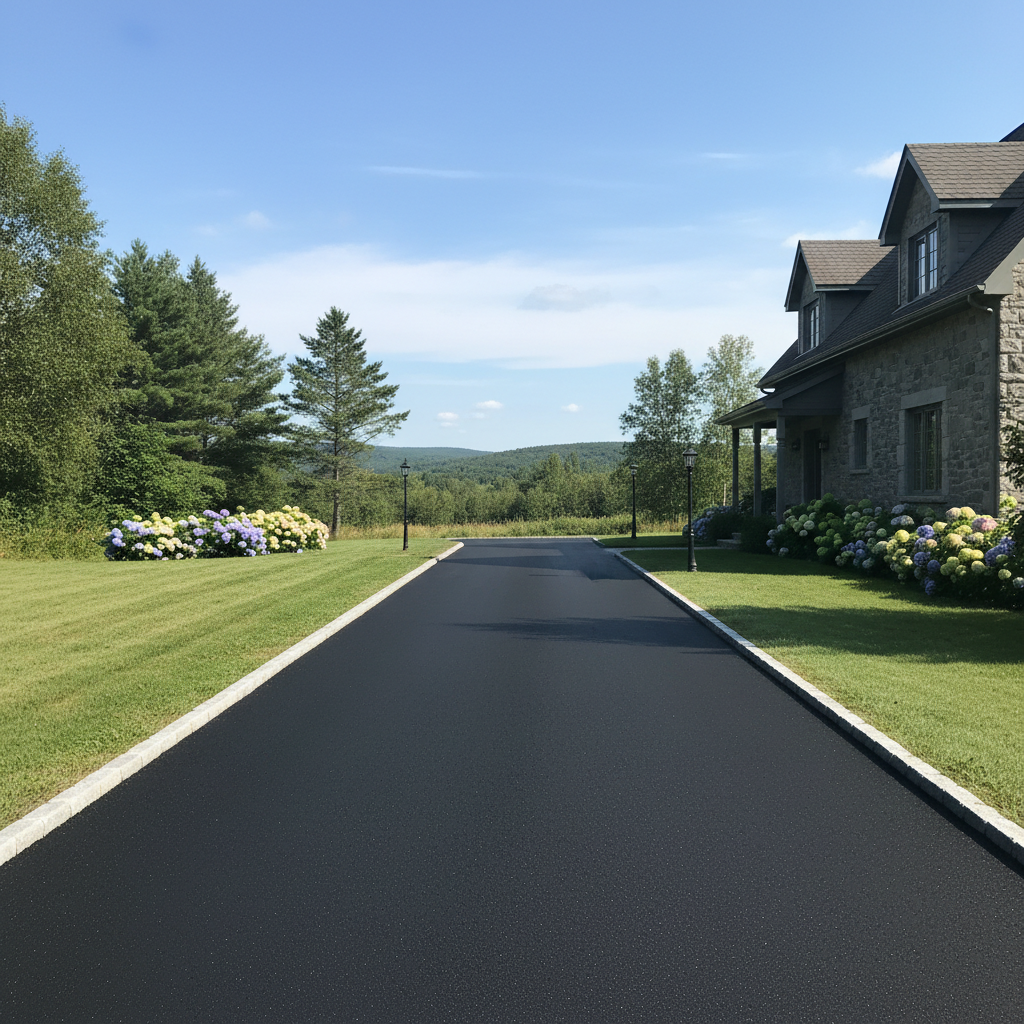
Driveway paving options and costs in Chilliwack
Chilliwack homeowners have plenty of driveway choices, but the right one comes down to how your site sheds water and how your base is built for Lower Mainland–Southwest downpours. With 93,203 residents in 2021 and about 25,790 homeowner households (Statistics Canada, 2021 Census), most private driveways serve single-detached homes—53.9% of dwellings—so long-term durability matters more than “lowest bid.” The region’s climate is milder than Interior BC, yet you still get intense winter rain and shoulder-season storms that saturate subgrades; repeated wetting and a modest freeze line demand proper granular thickness and drainage. That’s why contractor pricing in Chilliwack often clusters around the same fundamentals: excavation, compaction, and a correctly specified asphalt thickness (typically 2.5–3").
Another cost driver in Chilliwack is the local scheduling pressure created by longer paving season windows, which can improve availability in spring, but also compress timelines during peak dry weeks. Areas where paving is especially in demand include Sardis, Promontory, and parts of Vedder Crossing, where contractor traffic and lot access can affect excavation time and equipment staging. The flip side: more demand can mean more competitive pricing if you book early and provide clear access and accurate measurements.
Use the guide below to compare typical lifespan, maintenance needs, and per-square-foot pricing. Then, match the material to your drainage situation and how often you want to do upkeep.
| Material |
Lifespan |
Maintenance |
Best For |
Price per sq ft |
| Asphalt (new installation, proper base) |
12–18 years |
Sealcoat every 3–5 years; patch as needed |
Best balance of cost and performance on well-drained sites |
$12–$20 |
| Asphalt (overlay on existing gravel base) |
8–14 years |
Sealcoat every 3–5 years; pothole patching likely sooner |
When excavation is limited and base is firm after prep |
$10–$16 |
| Interlocking concrete pavers |
20–30+ years |
Re-sand lines as needed; individual unit replacement |
High curb appeal and repairable surface |
$20–$40 |
| Poured concrete (broom finish) |
20–30 years |
Seal every 5–8 years; crack sealing where needed |
Low maintenance look and straightforward cleaning |
$18–$35 |
| Exposed aggregate concrete |
20–30 years |
Seal periodically; maintain joints |
Non-slip texture and premium appearance |
$22–$40 |
| Gravel / crushed stone (budget option) |
3–7 years |
Re-grade and top up yearly |
Short-term solution or very limited budget |
$6–$12 |
Prices are estimates only and vary by project scope, site access and material selection.
What affects the price of paving in Chilliwack
In Chilliwack and across Lower Mainland–Southwest, it’s common to see quotes for the “same” driveway swing by 30–50% because the cheap quote often assumes simpler prep. Two contractors can quote different totals based on how they build the base, how they handle drainage, and whether they include haul-off, saw-cutting, and proper edge restraints. Even if asphalt pricing bands look similar, a thicker, well-compacted granular base and a correctly graded subgrade can add cost—but also prevents rutting, edge failures, and early cracking after wet winters.
Frost line depth and freeze–thaw cycles are decisive cost factors in British Columbia, but in coastal areas you pay more for drainage quality than for “very deep” frost protection. Regional practice still assumes a frost line around 18" for sensitive infrastructure; on exposed driveways, that typically translates into adequate granular thickness (often in the 6" compacted base range for many residential installs, with deeper excavation when the soil is saturated or weak). Where freeze–thaw affects the structure is around that shallow transition zone—if clay-heavy soils hold water, you can get heaving and pumping, and that work costs money to fix now, or later.
Concrete examples: older homes built before 1981 (33.8% of the local housing stock, Statistics Canada, 2021 Census) are more likely to have buried drainage issues or older slab remnants, which can increase tear-out and re-grading costs. Conversely, if your existing base is stable and already well-drained, a straightforward asphalt install can stay closer to the $12–$20 per-square-foot band; if you need significant base replacement, pricing can trend toward the top end or push you into higher upfront options. For repairs and overlays, sealing and patching requirements also affect long-term cost—especially if you’re trying to avoid repeated repairs during rainy shoulder seasons.
| Price Factor |
Why It Matters |
Cost Impact |
| Driveway area in sq ft |
Most materials and labour scale directly with square footage |
Often the largest single line item; adds up quickly |
| Base depth required |
Freeze-related movement is controlled by granular thickness and compaction |
Can increase cost materially if deeper excavation is needed |
| Grading and drainage work |
Slope, swales, and downspout management prevent saturation and pumping |
Common driver of 10–25% variance in quotes |
| Tear-out of existing surface |
Concrete breaking, asphalt milling, and haul-off add time and disposal costs |
Can add several dollars per sq ft depending on volume |
| Edge restraints and curbing |
Prevents paver spread and asphalt edge raveling during wet seasons |
Moderate cost; big impact on longevity |
| Sealing requirement |
Asphalt needs sealcoat protection to reduce water intrusion |
Typically a planned cost of roughly $2–$6 per sq ft equivalent over time |
| Site access |
Narrow driveways and tight turning radii slow equipment and can increase labour |
May raise labour costs even if material quantities stay the same |
| Asphalt mix specifications |
Freeze–thaw-rated mix and correct binder selection can cost more upfront |
Small per-unit difference; meaningful for long-term performance |
Permits & regulations in British Columbia
In British Columbia, most private driveway paving within your own property generally does not require a building permit. Where approvals usually come into play is work affecting the municipal portion of your property—especially the boulevard/road allowance area. For example, you typically need municipal approval if you’re creating or changing a curb cut, altering the boulevard profile, or making modifications that affect storm drainage (like tie-ins to catch basins or changing how water flows to the ditch). Some municipalities also have lot-grading bylaws that restrict how close a hard surface can be placed to property lines and how surface water must be directed.
Before excavation, always arrange utility locates. In BC, call BC 1 Call (and confirm privately owned utilities as well). Then verify your contractor meets BC requirements:
Step-by-step for homeowners in Chilliwack:
- Check the contractor’s British Columbia licence status using the appropriate provincial registry for the trade (look for an active number and match the legal business name to the quote).
- Request liability insurance and confirm the certificate of insurance names you appropriately if applicable and shows valid coverage for the work.
- Confirm workers’ compensation coverage (WSBC/WCB). Ask for proof or a clearance-style confirmation letter.
- Ask for their workmanship warranty details and who administers it.
If the scope touches municipal drainage, ask the contractor whether they will pull required permits/approvals—or if you will—and get that responsibility stated in writing.
Asphalt vs pavers vs concrete for Chilliwack driveways
For Chilliwack driveways, asphalt, interlocking pavers, and concrete all can perform well—if the base and drainage are done right for Lower Mainland–Southwest wet winters and a shallow frost transition. Asphalt is usually the lowest upfront cost and offers a smooth, practical surface, but it needs sealcoat attention to reduce water penetration; when you maintain it, it typically aligns with the $12–$20 per-square-foot band. Interlocking concrete pavers cost more up front, but they handle localized repairs well: if a weak spot or utility settlement occurs, individual units can be lifted and reset without replacing the whole driveway.
Poured concrete sits in the middle on cost, and exposed aggregate can add slip-resistant texture, yet both are more sensitive to cracking if the base isn’t uniform or if water infiltrates under the slab. In BC, the key is not “freeze is huge,” but that rain saturates the subgrade and freeze–thaw at the shallow frost line can contribute to movement. Concrete also needs proper air entrainment to reduce scaling risk in wet, winter conditions. For driveways where de-icing is used and water is frequently trapped at the edges, asphalt and pavers often tolerate minor imperfections more forgivingly.
Where the price difference is justified: if your driveway has drainage challenges or you suspect soil variability (common on older properties and low spots), pavers may cost in the $20–$40 per-square-foot range, but you pay for a surface that can be repaired section-by-section. If you have clean, stable subgrade and good slopes already, asphalt is often the better value because you’re buying fewer specialized labour steps and can schedule sealcoating proactively.
| Material |
Frost Resistance |
Curb Appeal |
Repair Method |
Lifespan |
Price Band |
| Asphalt (sealed regularly) |
Good when base is compacted and drainage is correct |
Medium (clean, dark finish) |
Cut-and-patch potholes/edges; overlay later |
12–18 years |
$12–$20 |
| Interlocking concrete pavers |
Very good with correct base and joint sand |
High (varied patterns and colours) |
Replace individual pavers; re-level and re-sand |
20–30+ years |
$20–$40 |
| Poured concrete (air-entrained) |
Good with uniform base and proper mix |
Medium to high (finish options) |
Crack repair/sealing; slab replacement if severe |
20–30 years |
$18–$35 |
| Exposed aggregate concrete |
Good when properly cured and sealed |
High (premium texture) |
Patch/replace affected sections; matching can be limited |
20–30 years |
$22–$40 |
| Permeable pavers (drainage grid) |
Excellent for water handling where permitted/appropriate |
High (engineered drainage look) |
Spot repairs to units; maintain drainage layer |
20+ years |
$25–$45 |
| Chip seal / tar-and-chip |
Fair to good; depends on base and traffic |
Low to medium (functional finish) |
Renew top dressing; localized patching |
6–12 years |
$10–$18 |
How to choose a paving contractor in Chilliwack
Start by confirming the contractor’s credentials before you compare prices. In British Columbia, ask for proof of a valid trade licence (and ensure the business name on the quote matches the registered business). Request liability insurance certificates and verify the coverage limits are appropriate for excavation and hauling. Then confirm workers’ compensation coverage—ask for proof related to WSBC/WCB coverage—so you’re not stuck with issues if a worker gets injured on your property.
Next, get 2–3 itemised written quotes. You want a labour + materials breakdown (not a single lump sum), including excavation depth, base gravel thickness, compaction method, asphalt or concrete thickness, and what’s included for cleanup and disposal. Scope clarity matters in Chilliwack because rain and drainage sensitivity can change how much prep is truly needed; a contractor who measures carefully should list the drainage corrections they’ll make—or exclude them with a noted condition.
Warranty should be specific: ask for the workmanship warranty length, whether the manufacturer provides product coverage, and if either is transferable if you sell your home. For payment, never pay more than 10–15% upfront; a holdback until substantial completion is standard. Timing matters too: get a start date and completion estimate in writing, and ask how they’ll protect the fresh surface from rain during the shoulder-season.
- Verify licence number and match it to the quote
- Review liability insurance certificate dates and coverage limits
- Confirm WSBC/WCB coverage proof
- Insist on itemised scope: excavation, base thickness, paving thickness
- Ask what’s included for disposal/haul-off of removed material
- Confirm edge restraints and joint details for pavers
- For asphalt, request sealcoat schedule (often 6–12 months after install)
- Ask whether drainage corrections are included (ditches, swales, downspouts)
- Require compaction proof method (roller type, passes, density checks if offered)
- Get permit responsibility in writing if boulevard or drainage is affected
- Clarify warranty terms and what voids it
- Use a payment schedule with a holdback until you accept the final surface
Red flags in Chilliwack: (1) quotes that skip excavation/base depth details, (2) refusing to explain drainage or slope expectations, (3) vague “we’ll make it work” language on permits/insurance, (4) asking for large upfront payments, and (5) no written start/completion timeline or warranty in the contract.
Frequently asked questions — paving in Chilliwack
What causes potholes and how are they repaired?
Potholes in Chilliwack are usually caused by water getting under the pavement structure, often at edges, low spots, or around driveway apron transitions. Once water saturates the subgrade, freeze–thaw action near the shallow frost transition can lift and weaken the base, and traffic then breaks the surface. In clay-heavy areas of the Fraser Valley, that process can accelerate after long rainy stretches. Repair is typically “cut and remove” to reach stable material, rebuild with compacted granular base, then patch with asphalt to match thickness and compaction. If you skip base restoration and only patch the top, you’ll often see the same failure come back. Asphalt repairs are commonly priced based on the affected area, and long-term protection usually means planning sealcoat (roughly $2–$6 per sq ft equivalent for sealing/repair allowances) on schedule.
How do I prepare for a paving project?
Preparation is mostly about access, drainage, and documentation. In Chilliwack, clear the driveway area so equipment can work efficiently—move vehicles, trailers, and basketball hoops, and protect landscaping borders. If you have downspouts that discharge onto the driveway or near the foundation edge, discuss the drainage plan early; contractors may need to adjust slopes or add swales to prevent recurring wetting. Mark any utilities, and confirm utility locates are completed before excavation (BC 1 Call). Provide an approximate driveway size, and if your lot has soft or muddy sections after heavy rain, tell the contractor—that’s a base condition that can change excavation depth. Finally, review the written scope for tear-out and haul-off, and confirm whether permits are required if the work touches the boulevard or storm drainage infrastructure.
How do I compare paving quotes fairly?
To compare quotes fairly in British Columbia, you need apples-to-apples scope. Ask for itemised proposals: excavation depth, base gravel thickness and type, compaction approach, and the finished asphalt or concrete thickness. Compare whether edge restraints are included (especially for pavers) and whether drainage corrections are part of the scope. Check what’s included for disposal/haul-off and cleanup. Many quote gaps come from “hidden assumptions,” like leaving an unstable base in place or skipping certain prep steps. Pricing can shift by 30–50% when one contractor builds a deeper or better-drained base. Use the local price bands as a reality check—new asphalt often lands around $12–$20 per sq ft, and interlocking pavers often fall in $20–$40 per sq ft—then verify the thickness and base work match the price.
Can asphalt be laid in cold weather in Chilliwack?
Asphalt placement depends on air temperature and weather conditions. In general, hot-mix asphalt needs adequate air temperature (commonly above about 10°C) to be placed and compacted properly, and it also needs to dry out so the binder can bond. In Chilliwack, you may get rainy or cool stretches even if winters are milder than Interior BC, and that shoulder-season timing can affect scheduling. A good contractor will refuse to place asphalt on frozen ground, excessive moisture, or when compaction conditions aren’t met. If the site is damp, drainage and base stabilization become more important—and crews may schedule prep days first, then pave during a suitable weather window. Ask for their plan in writing if weather changes: how they protect the base, how they schedule compaction, and what the stop-work criteria are.
What is a driveway apron and do I need one in Chilliwack?
A driveway apron is the transition area where your driveway meets the roadway or sidewalk/boulevard. It’s designed to manage the slope and surface drainage so the joint doesn’t fail from vehicle loading and water infiltration. Whether you “need” one depends on how your property connects to the municipal road allowance and whether the boulevard grade and curb/ditch area are already properly built. In Chilliwack, if your driveway has a rough or sagging approach, or if runoff flows toward the foundation during heavy rain, an apron (or a properly formed transition) can prevent premature cracking and edge failures. If you’re changing a curb cut, adjusting the boulevard profile, or altering storm drainage, municipal approvals are often involved, and the contractor should clearly state what elements are included. For many residential installs, a well-built apron is part of doing it right, not just a cosmetic add-on.
How do I maintain my driveway through Chilliwack winters?
Winter maintenance in British Columbia is mostly about controlling water and minimizing mechanical damage. For asphalt: keep it sealed and plan sealcoat after the recommended period (commonly 6–12 months after install, then every 3–5 years depending on wear). In rainy months, remove loose debris quickly so water doesn’t pond at low spots. When using a plow or shovel, avoid scraping the surface—especially around edges and seams. For pavers, keep joint sand topped up to prevent weed growth and water bypass. For concrete, ensure drainage doesn’t undermine the slab edge and avoid over-using de-icing where possible; air-entrainment helps, but repeated freezing conditions and trapped moisture can still contribute to cracking over time. If you see early signs—soft spots, pumping, or repeated cracks—repair promptly; waiting until potholes are larger usually pushes costs well beyond basic patching.