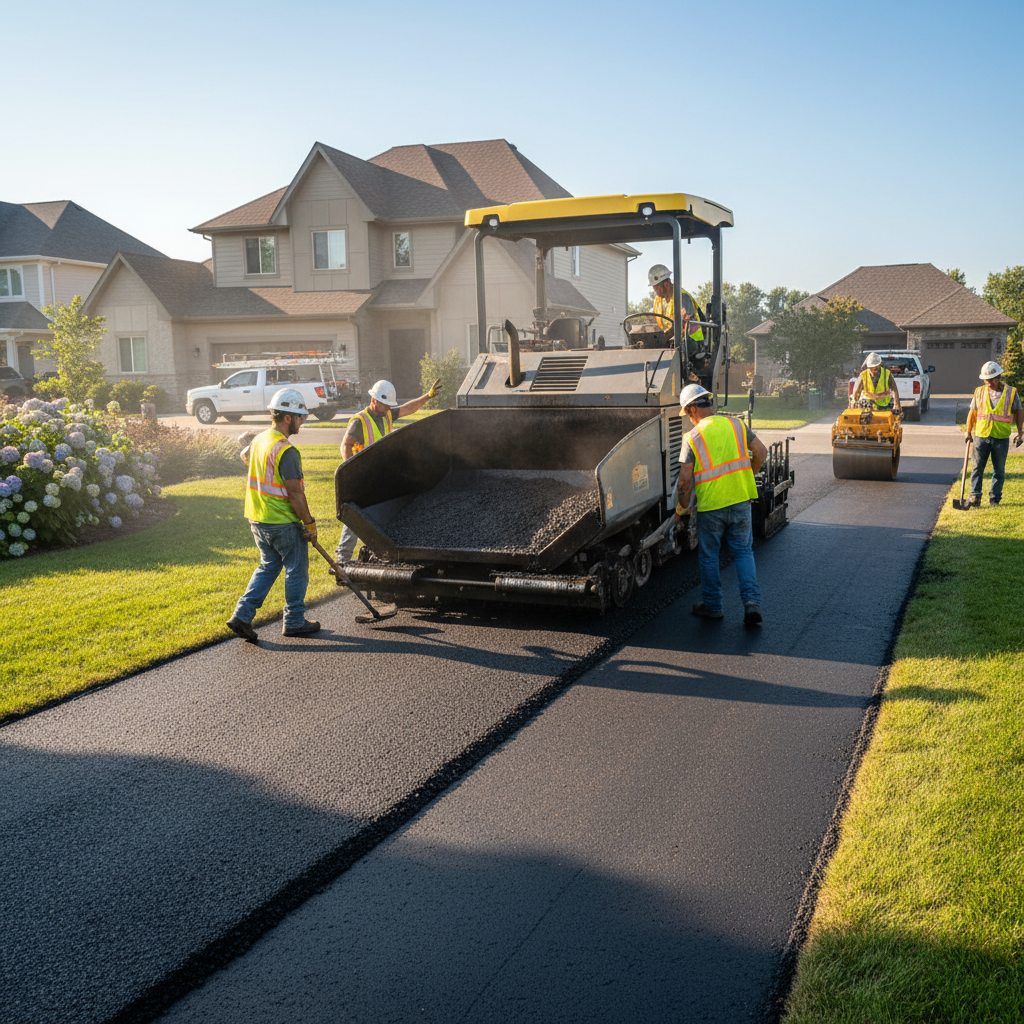
Driveway paving options and costs in Broadmoor
In Broadmoor, British Columbia, choosing the right driveway surface is less about “which looks best for a weekend” and more about how it performs through wet shoulders, long seasonal schedules, and the freeze-thaw behaviour around the shallow coastal frost line. With a population of 23,050 in the area served (Statistics Canada, 2021 Census), there’s enough steady residential demand that contractors can usually line up crews—provided your site prep and drainage are ready. Broadmoor also has a large base of single-attached and detached suburban homes, and for many of these properties the driveway is a major daily-wear surface.
Lower Mainland–Southwest pricing tends to be driven by base preparation and drainage corrections rather than extreme frost depth. Even though frost penetration is relatively shallow compared with Interior or Northern BC, repeated freeze–thaw around the assumed frost line still punishes weak granular base, undersized slopes, and poor runoff paths. That’s why realistic quotes for asphalt or pavers in Broadmoor often include proper excavation, 6" of compacted granular base as a starting point (with deeper excavation in weak or saturated soils), and a compacted subgrade that’s ready to hold grade.
If you’re near the shopping and commuter arteries around portions of Broadmoor’s busier residential blocks, contractors also see higher demand for quick turnarounds and clean vehicle access—especially when driveways double as parking for family and visitors. Use the comparison below to gauge what the different options usually cost per square foot and what trade-offs to expect before you request an itemised quote.
| Material |
Lifespan |
Maintenance |
Best For |
Price per sq ft |
Price Range |
| Asphalt (new installation, proper base) |
12–20 years |
Seal every 3–5 years; crack-fill as needed |
Value-focused, smooth driving surface |
$12–$20 |
$3,000–$7,000 |
| Asphalt (overlay on existing gravel base) |
8–15 years |
Seal every 3–5 years; monitor edge raveling |
When excavation is limited and base is sound |
$10–$17 |
$2,600–$6,200 |
| Interlocking concrete pavers |
25+ years |
Replace single stones; re-sand joints; occasional re-leveling |
Curb appeal and easy local repairs |
$20–$40 |
$5,200–$12,500 |
| Poured concrete (broom finish) |
20–30 years |
Seal if desired; patch hairline cracks |
Low-salt exposure areas and clean lines |
$18–$35 |
$4,800–$10,800 |
| Exposed aggregate concrete |
20–30 years |
Seal periodically; spot patch if needed |
More slip resistance and textured look |
$20–$38 |
$5,200–$12,000 |
| Gravel / crushed stone (budget option) |
3–8 years (varies widely) |
Re-grade; top up annually; weed control |
Temporary solution or soft-access sites |
$6–$12 |
$1,600–$4,200 |
Prices are estimates only and vary by project scope, site access and material selection.
What affects the price of paving in Broadmoor
In the Lower Mainland–Southwest region, you can see quote-to-quote differences of roughly 30–50% for what looks like the “same driveway” because contractors price for risk: site conditions, base stability, drainage requirements, and the time it takes their crew to excavate, haul, compact and finish. Broadmoor is part of the same Lower Mainland–Southwest labour and supply market, but cross-province comparisons (BC versus other parts of Canada) can shift costs because seasonal windows and material requirements differ—even when the final surface looks similar.
Two cost factors often decide the biggest portion of your total: frost-line assumptions and freeze–thaw cycles. Even in coastal BC, builders and engineers still account for a frost line (commonly assumed around 18" for sensitive infrastructure), so exposed driveway sections typically need properly compacted granular base thickness and subgrade preparation to prevent heaving, rutting and cracking. When base depth is increased or soil must be removed and replaced, labour and haul costs jump quickly. That’s also why deeper excavation in weak or saturated Fraser Valley soils can push you upward in the typical asphalt band (for example, $12–$20 per sq ft) rather than landing closer to the low end.
Concrete can also move in price based on local drainage and joint detailing. For example, adding proper slope correction and tying new paving into an existing drainage swale can raise the cost of both asphalt and concrete. If your current surface is failing with localized edge breakdown (common where runoff concentrates), paver and concrete systems can become more economical long-term because they allow repairs without full replacement. That said, if your site access is tight—think narrow gate openings or long driveway runs for equipment—the same driveway can cost substantially more due to slower excavation and material handling.
| Price Factor |
Why It Matters |
Cost Impact |
| Driveway area in sq ft |
Most material and production time scales directly with surface area |
High (often the biggest line item) |
| Base depth required |
Frost-line planning determines how much compacted granular base you need |
High (extra excavation/haul + compaction) |
| Grading and drainage work |
Slope corrections and drainage routing reduce ponding that triggers freeze–thaw damage |
Medium to High |
| Tear-out of existing surface |
Breaking up concrete or removing old asphalt adds labour, disposal and trucking |
Medium to High |
| Edge restraints and curbing |
Prevents paver spread and keeps asphalt from migrating/raveling at the edges |
Medium |
| Sealing requirement |
Asphalt needs sealing after installation—often within 6–12 months—to protect binder |
Low to Medium (but affects lifespan) |
| Site access |
Narrow/tight lots slow equipment movement and may force smaller loads |
Medium |
| Asphalt mix specifications |
Freeze–thaw-rated mix design costs more and requires correct placement |
Medium |
Permits & regulations in British Columbia
In British Columbia, paving a private driveway on your own property usually does not require a building permit. In Broadmoor and across the Lower Mainland, what changes the permit requirement is whether the work affects the municipal right-of-way (the area between your property line and the curb, including boulevard features). Generally, work that DOES require municipal approval includes new or modified curb cuts, any changes to boulevard/roadside surfaces, and adjustments that impact storm drainage patterns (for example, redirecting or altering drainage that ties into municipal infrastructure). Also confirm whether lot-grading bylaws restrict how close a hard surface or finished grade can sit to property lines—these rules vary by municipality.
Here’s a practical verification process you can use before excavation:
- Confirm the exact limits of work (property side vs. boulevard/right-of-way).
- Ask your contractor whether permits or municipal approvals are needed for curb cut changes or drainage modifications.
- Require utility locates before digging: in BC, call BC 1 Call so underground services are marked.
- Request the contractor’s BC business information and licence proof (where applicable), plus liability insurance.
- Ask for WSIB/WCB coverage details (for workers) and a clearance letter if they have one available.
- Keep copies of the certificate of insurance and any approval letters as part of your job file.
If the quote is vague about excavation limits, disposal, or whether right-of-way approval is included, treat that as a scope risk before signing.
Asphalt vs pavers vs concrete for Broadmoor driveways
For Broadmoor driveways, the “best” choice depends on how you balance upfront cost, winter maintenance habits, and long-term repairability through damp seasons and freeze–thaw at the shallow frost line. Asphalt is usually the lowest upfront option: you get a smooth drive and good performance when the base is compacted properly (often 6" of compacted granular base as a baseline, with deeper excavation when soils are weak or saturated). Asphalt does require sealing every 3–5 years to protect against water intrusion and binder aging.
Interlocking concrete pavers typically cost more upfront, but they shine for homeowners who want curb appeal and the ability to repair localized failures—if a settlement spot occurs or a future utility adjustment is needed, sections can be lifted and reset without replacing the entire surface. Poured concrete often lands in the middle range, but it can be more susceptible to cracking if the mix isn’t properly air-entrained and if joints and subgrade preparation aren’t handled correctly. Exposed aggregate increases texture and slip resistance, which can help in wet, muddy shoulder seasons, while chip seal/tar-and-chip can be a value surface in some cases but usually isn’t the same long-term curb appeal as pavers or a fully finished asphalt.
In Broadmoor’s Lower Mainland–Southwest climate, drainage design is the equalizer. The option that holds up best to winter routines (plowing, sand, and recurring rain) is the one with a stable base, correct slopes, and reliable edge restraint—not just the surface material. A common example: if asphalt comes in around the typical $12–$20 per sq ft band and pavers are $20–$40 per sq ft, the extra cost is justified when you value curb appeal and want easy, section-by-section repair over 20+ years.
| Material |
Frost Resistance |
Curb Appeal |
Repair Method |
Lifespan |
Price Band |
| Asphalt (sealed regularly) |
Good with proper base and drainage |
Moderate |
Crack-fill, patching and spot resurfacing |
12–20 years |
$12–$20 / sq ft |
| Interlocking concrete pavers |
Very good when base is compacted and joint sand is maintained |
High |
Lift, re-compact, replace individual stones |
25+ years |
$20–$40 / sq ft |
| Poured concrete (air-entrained) |
Good with air-entrainment and correct joints |
Moderate to High |
Patch cracks; address spalls with targeted repair |
20–30 years |
$18–$35 / sq ft |
| Exposed aggregate concrete |
Good with air-entrainment and solid base |
High |
Patch and re-seal for localized damage |
20–30 years |
$20–$38 / sq ft |
| Permeable pavers (drainage grid) |
Very good where runoff and ponding are concerns |
High (modern look) |
Replace grid sections; re-level and re-sand |
20+ years |
$22–$45 / sq ft |
| Chip seal / tar-and-chip |
Fair to good; depends heavily on base quality |
Low to Moderate |
Spot patch; full re-coat typically later |
6–12 years |
$10–$18 / sq ft |
How to choose a paving contractor in Broadmoor
When you’re hiring a contractor in Broadmoor, British Columbia, start with proof that they’re set up to do the work safely and legally. Verify their BC business details (and any applicable construction licensing or registration). Ask for a certificate of liability insurance and confirm the policy is active for the project period. For workers’ coverage, request documentation of WSIB/WCB coverage—then ask for a clearance letter if they can provide one. If they can’t supply it, that’s a major red flag.
Next, get 2–3 itemised written quotes instead of one “lump sum.” You want labour and material breakdowns that show base removal, granular base depth, compaction method, drainage/grading allowances, asphalt/paver/concrete thickness, edge restraints, and disposal. Confirm what’s excluded: permit fees (if any), utility locates, sawcutting, and whether haul-off is included. Ask about warranty wording: workmanship warranty length, whether product/manufacturer warranty applies, and if the warranty is transferable if you sell your home.
Finally, align payment terms with risk. A good rule is never pay more than 10–15% upfront, and use a holdback until the job is complete and broom-clean/finished. Get the start date and completion estimate in writing, and ask how they handle rain delays in the Lower Mainland—these can affect asphalt placement and compaction timing.
- Confirm contractor insurance is current and project-specific.
- Verify WSIB/WCB coverage and ask for a clearance letter (if available).
- Require an itemised scope: excavation, base, thickness, and compaction.
- Ask whether granular base thickness is 6" compacted as a minimum, or deeper if soils are weak.
- Confirm drainage and slope targets (no ponding spots at the garage or apron).
- Check if edge restraints/curbing are included (especially for pavers).
- Make sure tear-out disposal/hauling is included if replacing existing asphalt or concrete.
- Ask how joints are handled for concrete (and whether air-entrainment is specified).
- Confirm asphalt sealing timing (often after 6–12 months) and whether it’s included or optional.
- Review warranty terms in writing and who covers what.
- Agree on payment milestones and holdback percentage before work starts.
- Get a written schedule, including how weather and rain delays are managed.
In Broadmoor, I see these red flags often: quotes that skip base depth and drainage details, “free removal” promises that don’t include disposal, no written start/completion dates, warranty language that’s only verbal, and contractors who won’t show insurance/coverage documents before you sign.
Frequently asked questions — paving in Broadmoor
What causes potholes and how are they repaired?
In Broadmoor and across the Lower Mainland–Southwest, potholes usually start with water. When runoff concentrates on a weak area, it undermines the granular base, then freeze–thaw cycles around the shallow frost line help enlarge the damage. Repeated wet winters and shoulder-season rain also reduce asphalt life if it’s not sealed on schedule. Common triggers are poor drainage slope, missing edge restraint, and patched spots that didn’t get compacted base beneath the patch. Repairs typically involve sawcutting to a sound perimeter, removing unstable asphalt down to proper base, re-compacting granular material, then placing a properly matched asphalt patch. If the surrounding area is failing broadly, a localized patch won’t be enough—an overlay may be the longer-term fix, especially when cost-effective asphalt resurfacing is within your $12–$20 per sq ft band.
How do I prepare for a paving project?
Start by clearing the driveway area so the contractor can excavate, compact, and place materials without delays. Move vehicles, garden items, and anything on the surface a day before crews arrive. Mark any items that need protection (sprinkler heads, low-voltage lights, and deck steps). Make sure landscaping boundaries are understood—if drainage corrections require adjusting grade, you may need to plan for minor rework of edges. Confirm whether the scope includes removal/disposal of existing asphalt or concrete; that affects how much disruption to expect. Finally, schedule utility locates through BC 1 Call before excavation and ask your contractor to confirm the planned working hours and staging location in your yard. Good preparation is what protects the schedule during Broadmoor’s rainy shoulder seasons and helps your quote match the final results.
How do I compare paving quotes fairly?
Compare quotes on scope, not just totals. Request itemised breakdowns showing excavation depth, granular base thickness (often starting at 6" compacted granular base for residential asphalt, with deeper excavation in weak soils), compaction requirements, and finished thickness. For asphalt, ask what mix specification is being used to meet freeze–thaw expectations and whether sealing is included (often after 6–12 months). For concrete, confirm air-entrainment and joint/sawcut plan. For pavers, check if edge restraints/curbing are included and whether bedding sand and joint sand are specified. If one quote is in the asphalt band of $12–$20 per sq ft and another is noticeably lower, you’re likely paying for less base or fewer drainage corrections. Align your quotes by ensuring both include the same tear-out/disposal and drainage/grading allowance.
Can asphalt be laid in cold weather in Broadmoor?
Yes, asphalt can sometimes be placed in cooler conditions in Broadmoor, but it depends on air temperature, pavement temperature, and how the crew manages production and placement. The asphalt contractor must be able to maintain placement temperatures and achieve adequate compaction while the mix is workable. As a practical rule, hot-mix asphalt placement generally requires air temperatures above about 10°C to compact properly and reduce risk of premature cooling issues. In shoulder-season rain and cool snaps, crews may delay start times to avoid poor compaction—because that’s what leads to early raveling and cracking. A reputable contractor will schedule around the weather and won’t rush. If someone insists on paving outside acceptable conditions, ask what steps they take to meet freeze–thaw-rated mix requirements and ensure compaction in the Lower Mainland–Southwest climate.
What is a driveway apron and do I need one in Broadmoor?
A driveway apron is the portion of paving that transitions from your driveway up to the garage/entry area, and sometimes the first section near the curb cut where water flow and vehicle turning concentrate. Whether you “need” one depends on the geometry of your property and how vehicles approach the driveway, but it’s often recommended for Broadmoor homes where runoff pools or where the driveway edges are vulnerable to impacts from ploughing and tires. An apron can be part of the solution when you need to correct slope, match new pavement to existing grade, or install robust edge restraint so the surface doesn’t break down at the transition points. If your current driveway shows edge breakdown or soft spots near the entrance, discuss apron work as part of drainage/grading. That scope can shift your project cost within typical driveway ranges (for example, asphalt commonly starting around the $12–$20 per sq ft band), but it often protects the whole system.
How do I maintain my driveway through Broadmoor winters?
Winter maintenance in Broadmoor is about reducing water damage and minimizing mechanical stress. Start with drainage: keep catch basins and any yard runoff paths clear so the driveway surface doesn’t pond. For asphalt, plan for sealing every 3–5 years; sealing helps reduce water intrusion that accelerates freeze–thaw deterioration. During snow removal, avoid scraping too aggressively with the plough—deep gouges can expose base layers. Use sand instead of harsh de-icing salts when possible; salt accelerates surface wear on some concretes and finishes. If you have pavers, keep joint sand topped up so joints don’t wash out and settle. After heavy rain events, check for soft spots or low areas where water lingers—addressing a small problem early is far cheaper than waiting for full-area repairs. With the right maintenance routine, your selected surface has a much better chance of reaching its expected lifespan.