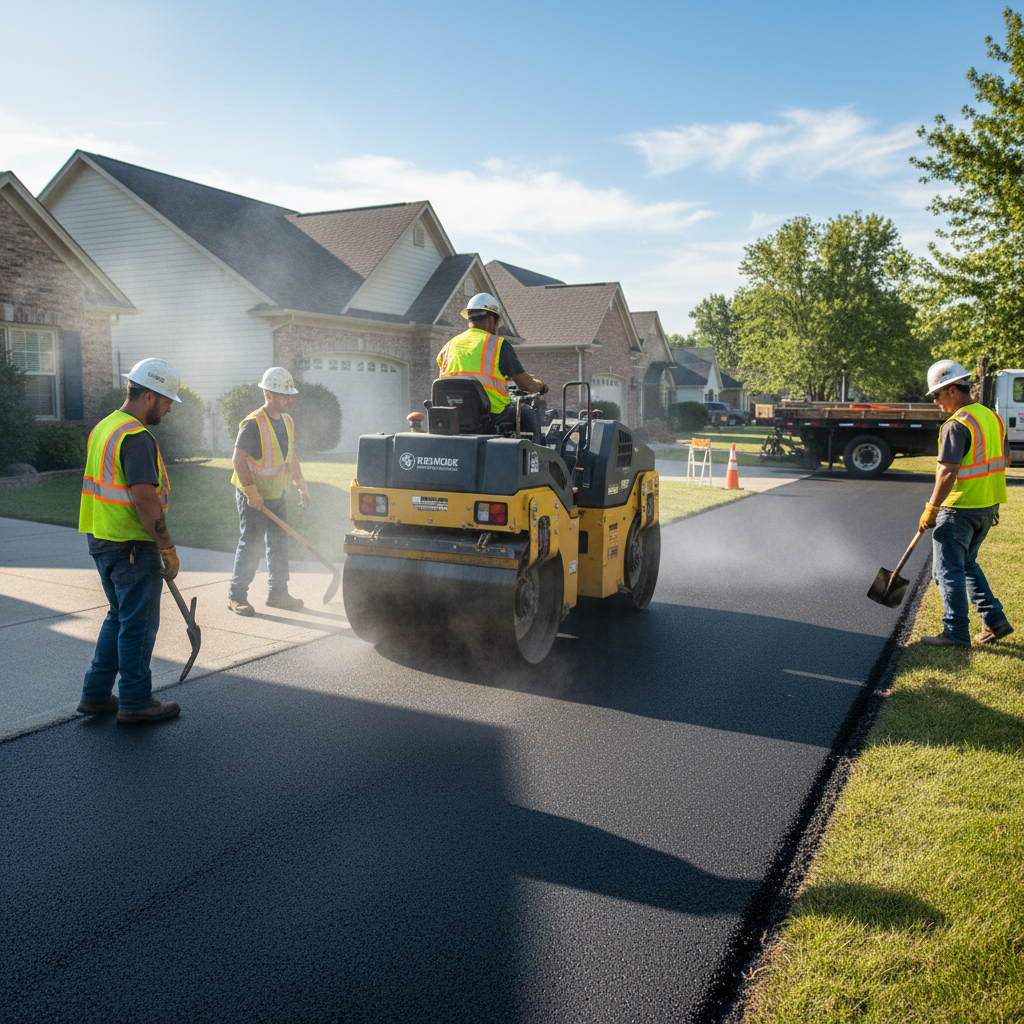
Driveway paving options and costs in Cranston
Cranston, Alberta is a fast-growing community in the Calgary region, and most homeowners here are paving driveways on single-detached properties—typically attached garages with driveways that need strong winter performance. With a local population of 20,850 (Statistics Canada, 2021 Census), the demand for paving crews is steady, especially around neighbourhood pockets where lots sit with variable soil or where runoff from early spring melt needs better control—areas like the newer residential growth around 152 Avenue and the broader southeast Cranston corridor often see higher turn-over and driveway upgrades.
Pricing in Calgary-area communities can shift noticeably because of the cold continental climate. Frost can penetrate to about 1.2 m (4 ft), and repeated freeze–thaw cycles move moisture and stress pavements. That means most quotes assume deeper, well-graded granular base, tight grading, and positive drainage—work that costs more than “just paving.” The season is also compressed: hot-mix asphalt generally requires air temperatures above about 10°C, so scheduling pressure during late spring and summer can push costs up for smaller jobs when crews are booked.
Below is a practical comparison of common driveway choices in Cranston—use it to calibrate your quote before you book a site visit—then match the option to how you maintain your driveway through Alberta winters (plowing, sand/salt use, and whether you’re willing to seal).
| Material |
Lifespan |
Maintenance |
Best For |
Price per sq ft |
Price Range |
| Asphalt (new installation, proper base) |
15–20 years |
Seal every 3–5 years |
Lowest upfront cost with strong winter results when base and drainage are done right |
$3.50–$7.50 |
$12–$20 |
| Asphalt (overlay on existing gravel base) |
10–15 years |
Seal every 3–5 years; monitor for edge breakdown |
Smaller upgrades when you’re improving an older gravel pad |
$3.80–$8.00 |
$14–$22 |
| Interlocking concrete pavers |
25–30 years |
Spot repairs as needed; occasional re-leveling |
Curb appeal and easy repairs without full replacement |
$7.50–$14.00 |
$18–$30 |
| Poured concrete (broom finish) |
20–25 years |
Crack sealing as needed; keep joints maintained |
Clean, solid look with mid-range cost |
$6.00–$11.00 |
$15–$25 |
| Exposed aggregate concrete |
20–30 years |
Seal periodically; maintain joints and drainage |
Slip resistance and upgraded appearance |
$7.00–$13.50 |
$18–$28 |
| Gravel / crushed stone (budget option) |
3–7 years (varies heavily) |
Re-grade and top up; weed control |
Short-term or low-budget drainage-friendly approach |
$2.00–$4.50 |
$6–$12 |
Prices are estimates only and vary by project scope, site access and material selection.
What affects the price of paving in Cranston
Even when two homeowners describe the “same” driveway, Cranston paving quotes can vary by 30–50% across the Calgary region because contractors price for site conditions, base design, and how much prep is actually required. In a cold continental climate where frost penetration can reach around 1.2 m (4 ft), the pavement system has to resist moisture movement and subgrade movement during freeze–thaw cycles. The deeper and more stable the granular base needs to be, the more material and labour are added—particularly where soils are silty, saturated, or where drainage is poor. In practical terms, Alberta residential projects commonly require a more substantial base layer than you’d see in milder areas, and the cost of correcting drainage is often the difference between a driveway that lasts and one that deteriorates early.
Demand timing matters too. Hot-mix asphalt typically needs air temperatures above about 10°C, and Calgary’s paving season is short—late spring through early fall. That compressed window can concentrate crew schedules and equipment availability, raising labour rates and mobilization costs for smaller jobs during peak months.
Concrete examples from Cranston: if your driveway ties into a garage slab or needs doweling, that can move a concrete price band from the lower end (around $15–$25) toward the mid/high end once joint detailing and subgrade work are included. If an asphalt overlay is planned but the existing gravel base is pumping or uneven, the project can shift from a simple pave to a tear-out and rebuild, making it closer to new-install pricing in the $12–$20 range.
| Price Factor |
Why It Matters |
Cost Impact |
| Driveway area in sq ft |
Material quantities scale directly with square footage |
Typically the biggest line item; small driveways can feel disproportionately expensive in peak season |
| Base depth required |
Frost line depth and moisture control dictate granular thickness and compaction effort |
Higher base design can add substantial labour and aggregate cost |
| Grading and drainage work |
Proper slope and drainage prevent water pooling and freeze–thaw damage |
Can increase costs markedly if culverts, swales, or regrading are required |
| Tear-out of existing surface |
Breaking, hauling, and disposing of old asphalt/concrete adds equipment time |
Often one of the most variable costs between quotes |
| Edge restraints and curbing |
Edges keep pavers/asphalt from spreading and protect against freeze movement |
Increases upfront cost but reduces long-term failure and patching |
| Sealing requirement |
Asphalt needs protective sealing to resist water penetration and oxidation |
Less cost in year 1; ongoing maintenance budget needed for longevity |
| Site access |
Tight lots slow equipment movement and extend setup time |
Labour and mobilization costs rise; crews may need smaller equipment |
| Asphalt mix specifications |
Freeze–thaw-rated mix design improves durability in Calgary winter conditions |
Higher mix spec cost can push the price toward the upper end of asphalt bands |
Permits & regulations in Alberta
In Alberta, paving a private driveway on your own property—such as asphalt or concrete placed within your lot boundaries—usually does not require a building permit. Most homeowners in Cranston can plan an installation without a permit for typical driveway replacement or new driveway surfacing that stays entirely on private land.
Where permits and approvals can come into play is work that touches the municipal right-of-way or changes how water drains from the boulevard. Examples that typically require municipal approval include: cutting or changing a curb cut for driveway access, altering boulevard areas, changing storm drainage routes, or modifying catch basins/outlets tied to municipal drainage infrastructure. If your project involves any of that right-of-way work, ask your contractor to confirm the approval requirements before excavation starts.
Before the job begins, a homeowner can protect themselves with a straightforward verification process. First, ask for the contractor’s current Alberta business information and confirm licensing/registration where applicable for contracting activities. Next, request a certificate of liability insurance showing coverage limits and that you are named as an interested party/endorsed if required. Finally, confirm coverage for workers by asking for proof of WSIB/WCB status (depending on the coverage type the contractor carries) and keep the certificate on file for your records. Utility locates are also essential: call Alberta One-Call before any excavation so buried services are marked and the crew can excavate safely.
Asphalt vs pavers vs concrete for Cranston driveways
Choosing a driveway surface in Cranston usually comes down to upfront cost, winter durability, and how much maintenance you’re willing to do. Asphalt is typically the lowest upfront option. When installed with a proper granular base and sealed on schedule, asphalt performs well through Calgary’s freeze–thaw cycles. The trade-off is that asphalt needs sealing every 3–5 years, and without that protection, water can get into the surface and accelerate raveling and cracking.
Interlocking concrete pavers cost more initially, but they’re the most forgiving for future repairs. In Calgary’s climate, where salt, sand, and plowing can create localized wear, pavers allow spot replacement or re-leveling without tearing out the entire driveway. That makes pavers a strong curb-appeal choice when you want a crisp edge and easy long-term maintenance.
Poured concrete lands in the middle. It can hold up for decades, but freeze–thaw damage and cracking risk is higher if the concrete isn’t air-entrained and properly jointed for Alberta winters. Drainage is critical with concrete too—if water sits, freeze expansion can widen cracks and push debris up through joints.
To ground it in dollars: for a typical 600 sq ft driveway, asphalt might land near the $12–$20 per sq ft band (so roughly $7,200–$12,000 total), while interlocking pavers often follow the $18–$30 per sq ft band (roughly $10,800–$18,000 total). The extra cost is justified when you value curb appeal, plan for easier repairs, or expect heavier plow traffic. If you want lowest initial cost and are comfortable with periodic sealing, asphalt is often the better fit.
| Material |
Frost Resistance |
Curb Appeal |
Repair Method |
Lifespan |
Price Band |
| Asphalt (sealed regularly) |
Good when base is engineered and drainage is positive |
Medium (clean, simple look) |
Patch and reseal; milling/overlay for wider issues |
15–20 years |
$12–$20 |
| Interlocking concrete pavers |
Excellent with proper bedding and edge restraints |
High (upgrade look, many style options) |
Remove and replace individual units; re-level as needed |
25–30 years |
$18–$30 |
| Poured concrete (air-entrained) |
Good to very good if air-entrained and properly jointed |
Medium to high (depending on finish) |
Crack sealing; localized patching; larger failures may require replacement |
20–25 years |
$15–$25 |
| Exposed aggregate concrete |
Good when drainage and finish timing are done correctly |
High (texture and slip resistance) |
Seal and patch; replacement if extensive scaling occurs |
20–30 years |
$18–$28 |
| Permeable pavers (drainage grid) |
Good for managing surface water if subdrainage is designed properly |
Medium to high (modern look) |
Re-level or replace affected paver sections; periodic cleaning of grid |
20–30 years |
$20–$34 |
| Chip seal / tar-and-chip |
Moderate; best as a specific-use surface or for certain budgets |
Low to medium |
Spot patching and periodic rejuvenation |
5–10 years |
$10–$16 |
How to choose a paving contractor in Cranston
Start with verification. In Alberta, ask for the contractor’s current business registration and confirm they carry liability insurance (and that coverage is active). Request their proof of WSIB/WCB coverage—this is especially important if they’re employing crews or sub-contractors. You can also ask for a clearance letter or current coverage documentation depending on how the company manages its workers. For licensing and related contractor eligibility, use the applicable online registry sources and cross-check the company name exactly as it appears on the proposal and insurance certificates.
Next, get 2–3 written, itemised quotes that break labour and materials out separately (base prep, haul/disposal, asphalt/concrete quantities, compaction, edge restraints, and sealing). A fair comparison depends on like-for-like scope: confirm whether a permit or municipal approval is included (if needed), and whether disposal, saw-cutting/tack coat (for asphalt), and surface preparation are part of the price. Also verify warranty details: you want workmanship coverage in writing, a clear product/manufacturer warranty statement (and whether it transfers if you sell the home), and what happens if settlement or cracking occurs due to base issues.
For payment, a healthy schedule is typically small upfront—never more than about 10–15%—and you should hold back payment until the driveway is complete, cleaned, and any punch-list items are finished. Finally, request a written timeline with start date windows and an estimated completion date so you’re not guessing during Calgary’s short paving season.
- Use a written contract with an itemised scope (base, surfacing, edging, drainage).
- Ask for insurance certificate and confirm liability limits are current.
- Confirm WSIB/WCB coverage for workers before work begins.
- Check the quote includes site prep: grading, compaction, and proper subbase.
- Clarify disposal of old asphalt/concrete (haul and landfill fees).
- Confirm whether sealing is included for asphalt and when it will be applied.
- Request the proposed base thickness and aggregate specification (well-graded material).
- Verify edge restraint/curb requirements to prevent spread and frost movement.
- Ask how they will protect nearby landscaping and control sediment runoff.
- Get a start date range and completion estimate in writing.
- Ensure warranty terms include workmanship and the conditions for service.
- Keep payment structured: small deposit, progress payments, holdback at end.
Common red flags I see in the Cranston area include: quotes that lump “materials” without listing base depth or drainage work, no proof of insurance/coverage provided up front, missing start-date estimates during the short season, warranties that only cover materials (not workmanship), and contractors pushing for large deposits immediately without a signed scope or completion criteria.
Frequently asked questions — paving in Cranston
Do I need a permit to pave my driveway in Alberta?
In most cases in Alberta, you can pave or resurface a private driveway within your property boundaries without a building permit. That typically covers new asphalt, concrete, or paver installations that stay off municipal right-of-way. Where approvals are often required is when the work affects municipal infrastructure—such as changing a curb cut, altering boulevard grading, or modifying storm drainage routes (for example, tying into municipal catch basins). Because Cranston projects can vary by lot layout, confirm whether any portion of your scope touches boulevard/right-of-way and ask your contractor to clarify approval steps before excavation. Also remember to follow utility locate requirements before digging.
How long before I can drive on new asphalt?
For most residential asphalt in the Calgary region, you can usually drive on it shortly after rolling and cooling—often within about 24 hours, depending on weather. In Cranston, that’s especially important because late spring and summer can still swing cooler at night, and frost risk influences curing conditions for the subgrade. If temperatures are cooler or the mix has taken longer to place, it may take longer to allow safe tire travel without scuffing. Your contractor should also explain when sealing is recommended: asphalt sealing is generally done after the pavement has cured, commonly within 6–12 months, and then repeated every 3–5 years if you want long-term protection.
What causes potholes and how are they repaired?
Potholes usually start from water problems. In Cranston’s freeze–thaw environment (frost penetration around 1.2 m / 4 ft), water gets into a weak spot, freezes, expands, and breaks the asphalt surface and underlying base. Common causes include thin or improperly compacted granular base, poor drainage/slope, and failed edges where water can infiltrate. Repair is typically more than “filling a hole”: a good fix saw-cuts or breaks back the damaged asphalt to expose stable material, removes and replaces failing base (not just surface patch), then re-paves and compacts. When potholes are widespread, an overlay or full rebuild can be more cost-effective than repeated patching.
How do I prepare for a paving project?
Start by clearing the driveway and access routes. Remove vehicles, stored items, and anything you don’t want to be damaged by haul trucks or compaction equipment. Mark any landscaping boundaries and let your contractor know about sprinkler heads, shallow utilities, or drainage features. If you know you have an older driveway with settlement or drainage issues, describe what you’ve observed (standing water, winter heaving, ruts). Your contractor should also perform a site assessment of base and drainage and confirm utility locates before excavation. Finally, plan for the short paving season in Alberta: ask for a written schedule, and be ready to coordinate weather-dependent curing and sealing timing.
How do I compare paving quotes fairly?
Compare the scope, not just the total. Ask each contractor for itemised labour and materials, including base thickness, grading/drainage corrections, edge restraints, and whether tear-out and disposal are included. For asphalt, confirm whether they’re using a freeze–thaw-rated mix and whether sealing is scheduled (often 6–12 months after installation). For concrete and pavers, confirm finish type, reinforcement/joint approach, and how they handle drainage at the garage approach. Use the local price bands as a reference point—Cranston asphalt often falls around $12–$20 per sq ft, while pavers commonly sit around $18–$30—but only after you confirm the base and drainage work are truly comparable.
Can asphalt be laid in cold weather in Cranston?
In Cranston and the Calgary region, you generally should not plan asphalt placement when temperatures are too cold. Hot-mix asphalt relies on adequate air temperature (commonly above about 10°C) for proper placement, compaction, and rolling. If it’s laid too cold, you risk poor compaction and early surface distress when freeze–thaw cycles begin stressing the pavement. Even if the weather is “not freezing,” cool nights can affect how the subgrade and binder behave. A reputable contractor will watch forecasts and likely schedule work within the practical late spring through early fall window. If weather is borderline, they may reschedule rather than risk a driveway that doesn’t perform through Alberta winters.