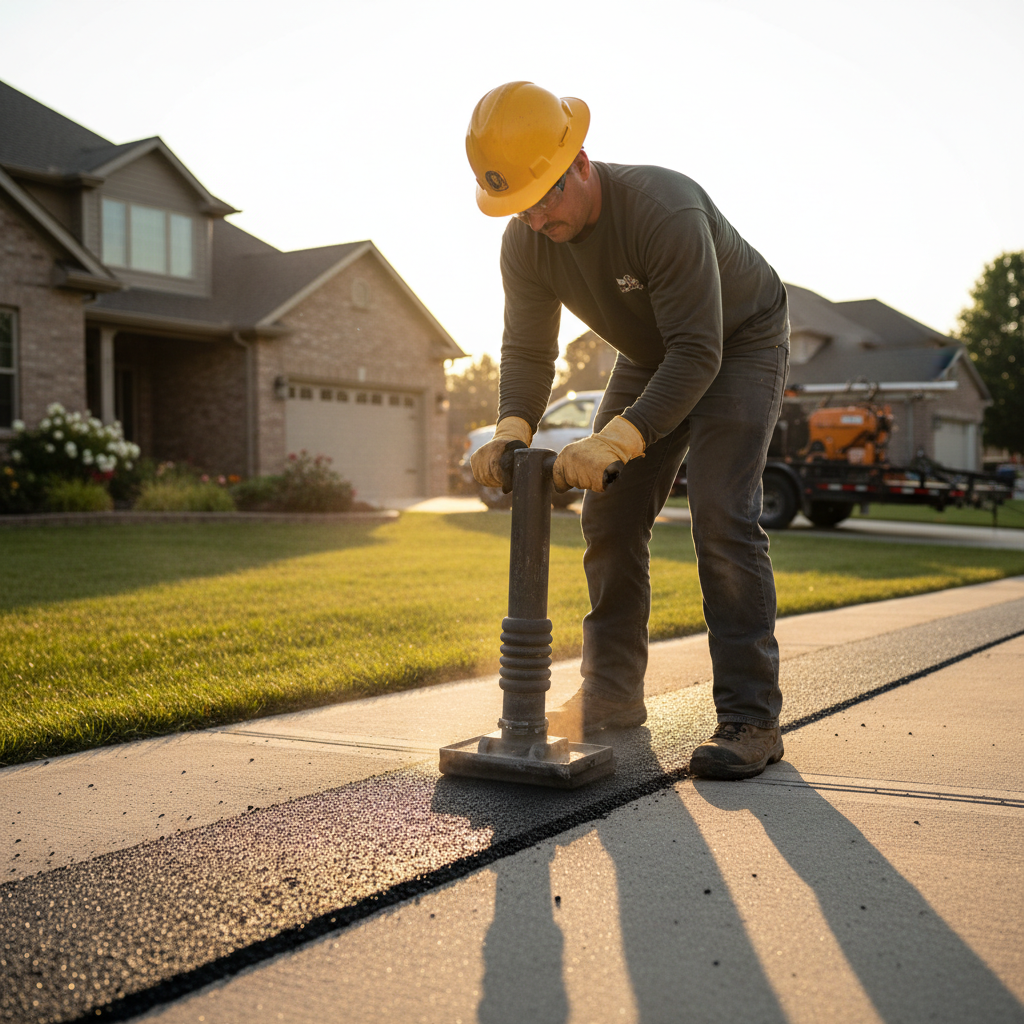
Driveway paving options and costs in Thorncliffe
In Thorncliffe, Alberta, homeowners usually have three main driveway directions: asphalt, interlocking pavers, or concrete. With a population of 8,695 (Statistics Canada, 2021 Census), the area is a small, steady market where driveway replacements and upgrades tend to cluster around the same short summer window. Most private driveways in Thorncliffe are tied to single-family housing patterns, so demand often comes from properties that need dependable access year-round—especially once snow ploughing, salt, and meltwater become part of normal winter maintenance.
Calgary’s cold continental climate changes the math on every quote. Frost can push down to about 1.2 m (4 ft), so contractors build deeper, well-compacted granular bases and focus heavily on positive drainage to prevent heaving, cracking, and surface raveling. On top of that, hot-mix asphalt must be placed in warmer conditions (typically when air temperatures are above about 10°C), which compresses paving season and can raise labour and equipment costs during peak months. That’s why you may see the same driveway size price move noticeably across the Calgary region, particularly for smaller projects where mobilization to Thorncliffe (and nearby rural pockets) takes longer.
If you’re comparing options, use the table below as a practical baseline. It reflects typical Thorncliffe material performance when the base is built correctly for frost and freeze–thaw cycles.
| Material |
Lifespan |
Maintenance |
Best For |
Price per sq ft |
| Asphalt (new installation, proper base) |
15–25 years |
Seal every 3–5 years (often after 6–12 months), crack fill as needed |
Most cost-effective all-around choice in Calgary’s freeze–thaw conditions |
$12 – $20 |
| Asphalt (overlay on existing gravel base) |
10–18 years |
Seal every 3–4 years; more frequent patching if base isn’t upgraded |
When you’re budgeting and the existing base is already stable and well-drained |
$10 – $16 |
| Interlocking concrete pavers |
25–40 years |
Occasional re-sanding and spot repairs; sealant optional |
High curb appeal and repairability without tearing out the whole driveway |
$18 – $30 |
| Poured concrete (broom finish) |
20–30 years |
Sealant recommended; joint maintenance and crack repair as needed |
Clean, low-fuss look with a solid, uniform surface |
$15 – $25 |
| Exposed aggregate concrete |
25–35 years |
Seal when recommended by your contractor; crack filling as needed |
Slip-resistant surface with upgraded appearance |
$18 – $30 |
| Gravel / crushed stone (budget option) |
2–8 years (depends on grading and drainage) |
Regrade and top up annually; weed control; add fines to stabilize or replace washed areas |
Temporary access or lowest initial cost where you’ll pave later |
$6 – $12 |
Prices are estimates only and vary by project scope, site access and material selection.
What affects the price of paving in Thorncliffe
In Thorncliffe and across Calgary’s surrounding municipalities, you can easily see the same driveway end up 30–50% apart between quotes. The reason usually isn’t “random pricing”—it’s that the scope behind the numbers changes: base depth, drainage corrections, haul distance for haul-off, disposal fees, and how much edge support and tear-out work the contractor includes. Two contractors may both say “asphalt driveway,” but one may be building a frost-resilient base properly while the other is trying to reuse questionable granular material.
Frost line depth and freeze–thaw cycles are decisive cost drivers in this region. With frost reaching roughly 1.2 m (4 ft), deeper, well-graded granular bases matter to prevent subgrade movement and water-related expansion. Practically, that means thicker, properly compacted granular layers and careful grading and drainage details so meltwater doesn’t sit under the new surface. In colder Calgary conditions, asphalt mix design also needs to meet local freeze–thaw performance—otherwise you get early rutting, cracking, and surface raveling, which triggers more patching and higher maintenance costs later.
The paving season is shorter in colder regions, and hot-mix asphalt typically requires air temperatures above 10°C to place and compact successfully. That seasonal pressure can push labour availability and equipment scheduling, especially for smaller projects where mobilization to Thorncliffe and nearby rural sites can be less efficient. For concrete, you’ll also feel the climate in the details: air-entrainment and proper jointing help manage freeze–thaw stresses, but skipping those steps can shorten lifespan.
As a homeowner example, upgrading from a basic asphalt install to one built to the correct base requirements can move your driveway closer to the $12 – $20 per-sq-ft tier rather than the low end, but it’s often the difference between a driveway that needs heavy patching in a few seasons and one that holds up for 15–25 years with proper sealing. Similarly, moving from asphalt to pavers can land near the $18 – $30 per-sq-ft band; that cost can be justified when you want repairable sections around utilities or you’re planning long-term curb appeal.
| Price Factor |
Why It Matters |
Cost Impact |
| Driveway area in sq ft |
Labour, asphalt/concrete quantities, and finishing time scale directly with area |
Often the biggest driver; small changes in size and thickness affect total cost |
| Base depth required |
Frost line conditions require adequate granular thickness and compaction to reduce heaving and cracking |
Can add significant material and machine time—commonly one of the biggest quote differences |
| Grading and drainage work |
Proper slope and drainage prevents water pooling under the surface |
May add sub-drainage, regrading, and additional granular/backfill |
| Tear-out of existing surface |
Breaking, removing and hauling concrete or old asphalt can be labour-intensive |
Can materially increase cost depending on thickness and disposal distance |
| Edge restraints and curbing |
Edges keep pavers/aggregate from spreading and keep asphalt/concrete from migrating |
Added materials and forming; usually worth it in freeze–thaw zones |
| Sealing requirement |
Asphalt sealing slows oxidation and helps limit water infiltration |
Usually an added line item at 6–12 months after paving, then periodic renewal |
| Site access |
Narrow driveways or tight turns slow equipment movement and increase labour time |
May require smaller trucks and more handling time |
| Asphalt mix specifications |
Freeze–thaw-rated mix and correct binder selection improve performance in Calgary winters |
Typically slightly higher per-ton cost but can prevent early failure |
Permits & regulations in Alberta
In Alberta, paving a private driveway within your own property typically does not require a building permit. Where things change is when the work touches municipal infrastructure. If you need work in the municipal right-of-way—such as a new curb cut, a change to boulevard grading, or any modification that affects storm drainage—municipal approval is usually required before excavation or construction. Some areas also enforce lot-grading expectations to protect drainage patterns and limit how close to property lines a hard surface can be. Because requirements can differ by municipality, confirm your local lot-grading rules early.
No matter what material you choose in Thorncliffe, step one for excavation is utility locates. Before anyone digs, the homeowner should ensure the proper utility locate process is completed through Alberta One-Call so contractors can excavate safely and avoid service damage. That’s a practical requirement, but it’s also how you prevent hidden delays and change orders.
Next, verify contractor readiness in writing and on paper. Ask for: (1) proof of a valid Alberta licence/registration where applicable for the paving work being performed, (2) current liability insurance with adequate coverage for property damage and bodily injury, and (3) WSIB/WCB coverage documentation. When you review documents, look for matching contractor names, current policy dates, and coverage status. If your contractor provides a clearance letter or confirmation of coverage, keep it with your contract so you’re protected if anything goes wrong during excavation, base work, or concrete/asphalt placement.
Asphalt vs pavers vs concrete for Thorncliffe driveways
For Thorncliffe driveways in Calgary’s freeze–thaw climate, asphalt, interlocking pavers, and concrete each have a “fit” depending on your budget, appearance goals, and how you maintain the surface through winter. Asphalt is typically the lowest upfront cost and the easiest to install, but it performs best when sealed regularly—most homeowners plan for sealing every 3–5 years, with the first seal usually within 6–12 months after installation. In a region where frost and meltwater can stress the subgrade, asphalt’s longevity depends heavily on proper base prep and drainage, not just the asphalt thickness.
Interlocking concrete pavers cost more upfront, but they’re the most homeowner-friendly if something in the ground needs future access. In freeze–thaw conditions, pavers can also handle localized movement better because individual units can be lifted, re-set, and re-sanded without replacing the entire driveway. That repairability is a real advantage for Thorncliffe properties where utility lines may be nearby. Poured concrete sits in the mid-range: it’s durable and looks clean, but it can crack if not properly air-entrained and properly jointed. Calgary winter maintenance—plowing, sand, and salt—can accelerate surface wear, especially if de-icing practices are aggressive.
As a concrete example, on a driveway that’s 600 sq ft, asphalt often lands in the $12 – $20 per-sq-ft tier. Pavers on the same driveway can land closer to the $18 – $30 per-sq-ft band. That difference can be justified when you want curb appeal and “patch without full replacement” capability, or when you anticipate future repairs near edges or service points.
| Material |
Frost Resistance |
Curb Appeal |
Repair Method |
Lifespan |
Price Band |
| Asphalt (sealed regularly) |
Good with frost-built base and drainage |
Medium |
Patch/overlay asphalt areas |
15–25 years |
$12 – $20 |
| Interlocking concrete pavers |
Very good with proper bedding sand and edge restraints |
High |
Lift and replace individual pavers |
25–40 years |
$18 – $30 |
| Poured concrete (air-entrained) |
Good to very good with air-entrainment and jointing |
Medium to high |
Crack repair and patching; full re-pour only if widespread failure |
20–30 years |
$15 – $25 |
| Exposed aggregate concrete |
Very good when properly air-entrained and sealed |
High |
Seal/coating repair and targeted patching |
25–35 years |
$18 – $30 |
| Permeable pavers (drainage grid) |
Good when designed for correct sub-drainage and base specification |
High |
Spot replace pavers and maintain drainage structure |
25–35 years |
$22 – $38 |
| Chip seal / tar-and-chip |
Moderate; works best on very stable bases |
Low to medium |
Spot re-seal and maintenance reapplications |
7–15 years |
$8 – $14 |
How to choose a paving contractor in Thorncliffe
Choosing a paving contractor in Thorncliffe is less about finding the lowest bid and more about confirming they’re set up to build a frost-resilient base, manage drainage correctly, and stand behind their workmanship. Start with Alberta coverage and compliance. Ask for proof of current liability insurance: the certificate should show your property is covered for the work and that the policy is active for the project dates. For WSIB/WCB, request confirmation/clearance letters or coverage documentation before work begins—don’t rely on verbal assurances.
Next, get 2–3 written, itemised quotes (not lump-sum only). A strong quote breaks down labour and materials by major steps—excavation, base supply and compaction, grading and drainage correction, forms/edge restraints, and the surface course (asphalt or concrete). It should also clearly state what disposal is included, whether haul-off is separate, and what happens if the existing base is unsuitable once the contractor removes it. If a contractor can’t clearly explain exclusions (like regrading, replacing failing base, or restoring landscaping), that’s a red flag in a freeze–thaw market.
Review warranty terms. Look for a workmanship warranty length, what’s covered, and whether it applies to crack repair or only to “installation defects.” Product/manufacturer warranty should also be identified for materials like sealant or specific paving products, and confirm whether coverage transfers if you sell your home.
Finally, keep payment tied to milestones. In practice, never pay more than about 10–15% upfront; hold back a portion until the job is complete, cleaned up, and the final surface quality meets the agreed specs. Ask for a written start date and completion estimate, since Calgary’s spring scheduling can shift quickly when temperatures swing.
- Request itemised quotes for excavation, base, drainage/grading, and surface placement (labour + materials).
- Confirm how they calculate square footage (length × width, allowance for edges, and driveway apron areas).
- Ask for the proposed base specification and compaction approach suited to frost and freeze–thaw cycles.
- Verify drainage details: slope, tie-ins, and how meltwater will be directed away from the subgrade.
- Check that tear-out and disposal/haul-off are included or clearly excluded.
- Require a written plan for traffic management and access during construction.
- Ensure edge restraints/curb supports are listed (especially for pavers and exposed aggregate edges).
- Confirm sealing plans for asphalt, including timing (typically after 6–12 months) and product type.
- Review warranty length for workmanship and whether it covers cracking caused by construction deficiencies.
- Ask if the warranty is transferable if you sell the home.
- Verify contractor insurance (liability) and request WSIB/WCB clearance/coverage documentation.
- Set a payment schedule: keep upfront payment near 10–15% and hold back until final acceptance.
Red flags I commonly see with paving contractors in Thorncliffe include: vague quotes that don’t break down base and drainage work, pressure for large upfront deposits, no proof of WSIB/WCB coverage or current insurance, promising “no need for thicker base” in a frost zone, and skipping documentation for warranty terms and product specifications.
Frequently asked questions — paving in Thorncliffe
How do I maintain my driveway through Thorncliffe winters?
In Thorncliffe and across Calgary’s cold continental climate, maintenance is mostly about managing water and abrasion, not just removing snow. Keep the surface clear to reduce freeze–thaw trapping: plow soon after storms so meltwater doesn’t soak and refreeze repeatedly. Use sand appropriately; avoid over-salting because salt can accelerate surface wear and joint deterioration on concrete. If you have asphalt, stay ahead of small cracks with crack fill so water doesn’t migrate into the base. For homeowners budgeting repairs, remember that surface protection (like sealing on asphalt) is cheaper than redoing failing base work. If you’re still on older asphalt near the low end of the $12 – $20 pricing tier, it’s even more important to seal on schedule and address cracks early.
Is it worth sealing a new driveway right away in Thorncliffe?
In Thorncliffe, sealing is usually worth it, but “right away” depends on curing. Most asphalt driveways should be sealed after the asphalt has properly cured—often around 6–12 months after installation—so you don’t trap moisture or compromise adhesion. When sealing is timed correctly, it helps slow oxidation and reduces water infiltration, which is critical when frost can penetrate deep and freeze–thaw cycles stress the subgrade. Think of sealing as part of the lifespan plan: the driveway still needs a frost-built base and positive drainage, but sealing can materially reduce surface breakdown and the need for frequent patching. If you choose asphalt in the $12 – $20 per-sq-ft tier, ask your contractor for the sealant product, coverage rate, and the expected re-seal interval (commonly every 3–5 years).
What is a chip seal driveway and is it suited to Thorncliffe?
A chip seal (tar-and-chip) is a sprayed asphalt binder followed by aggregate. It can be a budget-friendly option, but it relies heavily on a stable base and good surface drainage—two things that matter a lot under Calgary’s freeze–thaw conditions. In Thorncliffe, chip seal can work for certain properties if the contractor prepares the base correctly and controls water runoff so the surface doesn’t break down into raveled stone. It’s generally less ideal if you want a long, low-maintenance lifespan comparable to asphalt or pavers, because it typically needs more periodic maintenance. It can also be more sensitive to heavy plow impacts and aggressive de-icing. If you’re comparing options, chip seal may be priced lower than the typical asphalt $12 – $20 tier, but it usually won’t match the same durability without reapplications.
How much does driveway crack repair cost in Thorncliffe?
Crack repair cost in Thorncliffe depends on crack width, length, depth, and whether there’s edge movement or underlying base issues. Small “saw-cut and seal” repairs or surface crack filling are usually the least expensive, while active cracks that indicate drainage problems or base movement may require more than just sealing. As a homeowner planning for realistic budgeting, sealing & repair projects in the area commonly fall into the $400 – $1,500 range, with higher costs when prep work expands (routing, cleaning, patching adjacent asphalt, or addressing spalling). If you’re seeing cracks soon after installation, it’s worth asking whether the contractor used a freeze–thaw-rated mix and built the granular base to the needed thickness for frost conditions.
What base thickness do I need for pavers in Thorncliffe?
For pavers in Thorncliffe, the exact base thickness should be based on soil conditions, frost exposure, and how well drainage is handled—but in Calgary’s freeze–thaw environment you should expect a deeper, properly compacted granular base than in milder climates. Contractors typically design a frost-resilient assembly with a compacted granular base layer(s) plus a bedding sand layer under the pavers, and they ensure edge restraints are installed to prevent lateral movement. If water can sit in the base, freeze–thaw cycles can shift material and cause uneven paver surfaces. When comparing quotes, don’t just ask for “paver thickness”—ask what base depth and gradation they’re using, and how they’ll compact it to spec. This is also why pavers often land above simple budget installs.
How do I get the most accurate paving quote in Thorncliffe?
To get an accurate paving quote in Thorncliffe, prepare the basics so contractors can measure and assess properly. Provide driveway dimensions, including width at the entry and the area that must be paved (including apron transitions). Ask for the site visit so they can check drainage, observe existing base conditions, and confirm access for trucks and equipment. Request 2–3 itemised quotes that separate excavation/tear-out, base and compaction, drainage/grading corrections, edge restraints, and the final surface course. Make sure the quote specifies whether disposal and haul-off are included. Since frost and freeze–thaw cycles drive costs, insist on a base and drainage plan tied to Calgary conditions—especially if you’re moving between options such as asphalt near the $12 – $20 tier versus pavers near the $18 – $30 tier.