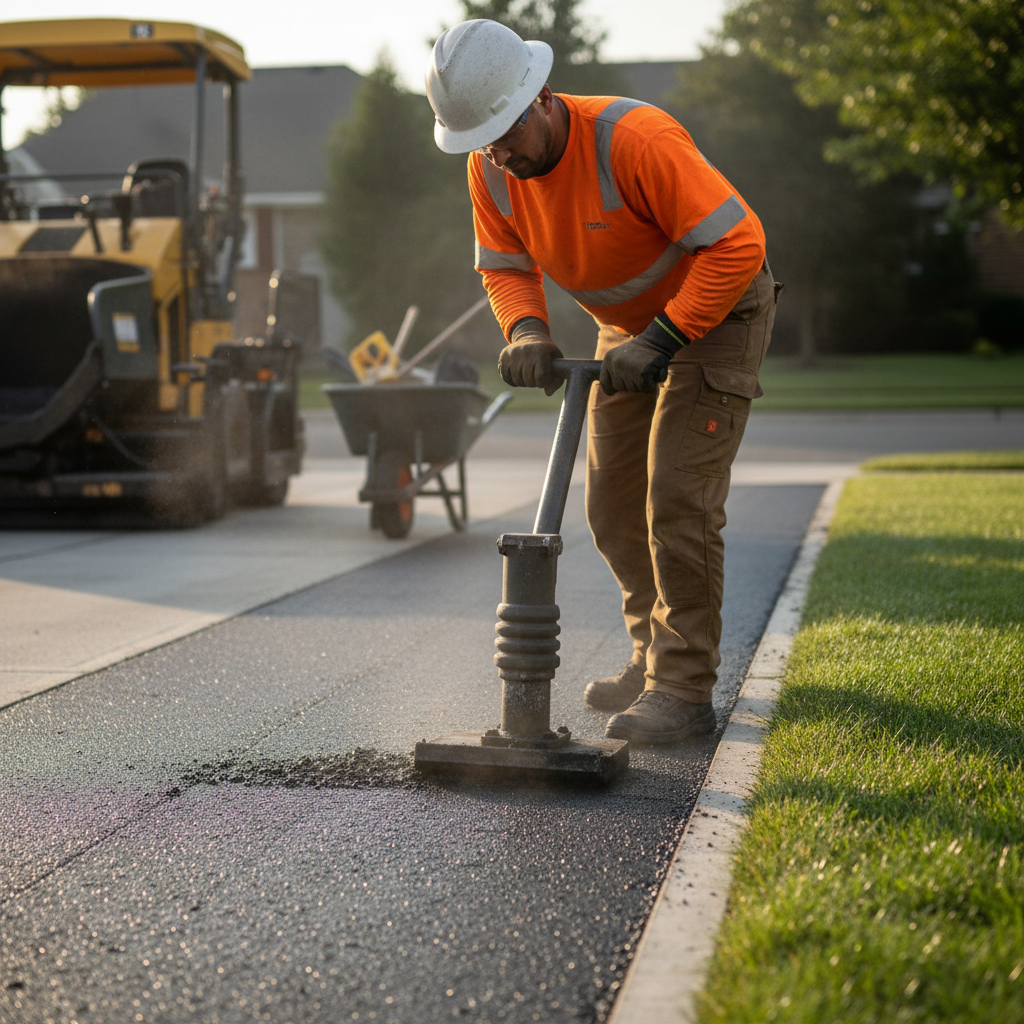
Driveway paving options and costs in South Calgary
South Calgary homeowners typically choose between asphalt, interlocking pavers, and concrete based on budget, winter durability, and how easy they want the driveway to be to maintain. In South Calgary’s housing stock, most private driveways are tied to detached homes (Statistics Canada, 2021 Census), which means a lot of projects are residential backyard and side-yard installs—not just simple front-lane replacements. On average, the local market is small (Population in the 2021 Census for this profile area is 4,540), but demand still spikes every year when crews can work, especially on neighbourhood streets in areas like Midnapore.
Cost swings here can be noticeable because Calgary’s cold continental climate drives frost well below the pavement. Frost routinely penetrates to about 1.2 m (4 ft), and repeated freeze–thaw moves water in and out of the subgrade. To prevent heaving, cracking, and surface raveling, contractors usually have to build a deeper, well-graded granular base and design positive drainage. That base and drainage work is where many “cheap” quotes get corrected once the site is measured. Also, the paving season is compressed: hot-mix asphalt needs air temperatures above about 10°C for best placement and compaction, so scheduling pressure in late spring through early fall can affect pricing and lead times.
Below is a practical comparison of common materials in South Calgary, including typical lifespan and maintenance expectations, so you can align your quote with what you actually want to live with for the next 5–20 years.
| Material |
Lifespan |
Maintenance |
Best For |
Price per sq ft |
| Asphalt (new installation, proper base) |
15–25 years |
Seal every 3–5 years; minor crack repair as needed |
Lower upfront cost with good longevity if sealed |
$12–$20 |
| Asphalt (overlay on existing gravel base) |
10–18 years |
More frequent crack patching; seal within 6–12 months |
Budget refresh where base is stable and well-draining |
$10–$17 |
| Interlocking concrete pavers |
25–40 years |
Re-sand and spot-repair; level adjustments as needed |
Curb appeal and repairability without full replacement |
$18–$30 |
| Poured concrete (broom finish) |
25–35 years |
Sealer optional; manage joint maintenance and spalls |
Smooth, hard-wearing surface with clean modern lines |
$15–$25 |
| Exposed aggregate concrete |
25–35 years |
Sealer recommended for staining; joint repairs over time |
Slip resistance and premium look |
$18–$28 |
| Gravel / crushed stone (budget option) |
3–10 years |
Top up annually; re-grade and manage rutting |
Short-term cost control or temporary access |
$4–$9 |
Prices are estimates only and vary by project scope, site access and material selection.
What affects the price of paving in South Calgary
If you receive two quotes for “the same driveway,” it’s common to see 30–50% variation across Calgary and the wider province because the real scope often differs: base thickness, drainage fixes, tear-out depth, hauling distances, and how tight the access is for paving equipment. In South Calgary, contractors also price with the expectation of frost management and a shorter working window—once temperatures drop or the ground is too wet, production slows and margins tighten.
Frost line depth and freeze–thaw cycles are decisive cost factors here. With frost penetrating roughly 1.2 m (4 ft), deeper compacted granular bases are typically required to limit subgrade movement. In practice, that means more aggregate, more compaction passes, and better drainage detailing compared with milder climates. If a contractor underestimates base requirements, you’ll pay later through premature cracking and patching.
The paving season is also shorter: hot-mix asphalt typically needs air temperatures above about 10°C to place and compact properly, so demand concentrates in late spring and summer. When crews are booked, smaller jobs can cost more per square foot due to mobilization and limited crew availability. Asphalt mix design must be freeze–thaw rated, which can add cost versus a generic mix.
Concrete costs can rise when the driveway needs extra subbase, jointing, or protection to handle winter maintenance. For example, wider driveways with poor runoff drainage often require more base and grading work before a poured slab is viable. Conversely, if you’re only replacing a few cracked asphalt patches and the existing base is sound, an asphalt resurfacing can stay closer to the $12–$20 band rather than jumping into higher rebuild pricing. For driveways where you want long-term curb appeal and easy spot repairs, pavers in the $18–$30 range can be justified—especially when you anticipate future landscaping changes.
| Price Factor |
Why It Matters |
Cost Impact |
| Driveway area in sq ft |
Labour, base material, and equipment time scale directly with area |
Large projects can be more cost-efficient per sq ft; small jobs cost more per sq ft |
| Base depth required |
Calgary freeze–thaw requires adequate granular thickness to prevent heaving |
More depth usually increases material and compaction time |
| Grading and drainage work |
Correct slope and daylighting reduce water pooling under pavement |
Can add significant labour and hauling if regrading is extensive |
| Tear-out of existing surface |
Old asphalt/concrete must be broken and hauled; disposal fees apply |
Higher when thickness is unknown, rebar is present, or excavation is deep |
| Edge restraints and curbing |
Prevents paver spread and helps asphalt/concrete stay aligned |
Adds material and labour, especially on irregular edges |
| Sealing requirement |
Asphalt needs sealing to resist moisture and oxidation |
Low to moderate cost now, but skipping it increases long-term patching expense |
| Site access |
Narrow lots slow equipment movement and may require smaller crews/loads |
Can raise labour cost and extend timelines during peak season |
| Asphalt mix specifications |
Freeze–thaw performance mix improves durability under Alberta winters |
Can shift pricing upward compared with standard mixes |
Permits & regulations in Alberta
For most South Calgary homeowners, paving work on your private driveway within your own property typically does not require a building permit. The key exception is when your project affects anything in the municipal right-of-way (the area between your property and the roadway), or when it changes how storm water is handled. Work that commonly does require municipal approval includes new curb cuts, changes to an existing boulevard approach, and any alterations to storm drainage (such as tie-ins, re-routing flows, or changing drainage patterns that affect the street system). Some municipalities also have lot-grading bylaws that restrict how close a hard surface can go to property lines or regulate how runoff can be directed.
Regardless of permit needs, always start with Alberta One-Call (utility locates). Ask your contractor to schedule locates before excavation and to confirm what utilities run across or near your driveway area—especially near older neighbourhoods where service lines can be irregularly placed.
To verify a contractor properly in Alberta, follow this order:
- Check their Alberta business licence/registration status (as applicable) via online listings in Alberta.
- Request a certificate of insurance (liability) showing current coverage and project address or scope.
- Confirm WSIB/WCB coverage for the company and the crews that will be on-site (a clearance letter is often provided).
- Verify they’re insured for excavation and paving-related risks before any base removal begins.
- Get everything in writing: scope, exclusions, and start/completion dates.
Asphalt vs pavers vs concrete for South Calgary driveways
In South Calgary’s freeze–thaw climate, the “best” driveway material usually comes down to upfront budget versus how much you value predictable maintenance and easy repairs. Asphalt is typically the lowest upfront option, and when it’s built on a properly graded and compacted base, it can perform well for many years. The tradeoff is maintenance: sealcoating every 3–5 years (with early sealing after installation) is what helps asphalt resist moisture and surface deterioration in Alberta winters.
Interlocking concrete pavers cost more upfront, but they’re the easiest to repair. If a spot settles from a drainage issue or a utility trench in the future, pavers can be lifted, base reworked, and reset without replacing the entire driveway—an advantage in neighbourhoods where plumbing and drainage upgrades sometimes happen over a driveway’s lifetime. In South Calgary, they also handle winter sanding/plowing use well when edge restraints are done properly.
Poured concrete is mid-range in many cases and can last a long time if it’s air-entrained and correctly jointed. However, concrete is susceptible to cracking and spalling if the base is unstable or if de-icing practices introduce aggressive freeze–thaw stresses without proper mix design. For example, if you’re replacing a driveway with significant slope issues and poor runoff drainage, paying for deeper base and drainage can bring asphalt or concrete back into a reliable lifespan window. If your base is already well-drained, the price gap between options may not justify the premium.
A common real-world example: upgrading from asphalt in the $12–$20 range to pavers in the $18–$30 range can be justified when you want maximum curb appeal and you’re willing to keep the base problem-free. If your main concern is controlling cost, asphalt on a built-for-frost base is often the smarter first step.
| Material |
Frost Resistance |
Curb Appeal |
Repair Method |
Lifespan |
Price Band |
| Asphalt (sealed regularly) |
Good when base and drainage are correct |
Medium (clean, modern finish; less variety) |
Patch and seal; localized repairs under traffic |
15–25 years |
$12–$20 |
| Interlocking concrete pavers |
Very good with proper bedding and restraints |
High (colour and pattern options) |
Lift-and-reset stones; rework base only where needed |
25–40 years |
$18–$30 |
| Poured concrete (air-entrained) |
Good with air-entrainment and correct base compaction |
Medium to high (clean slab lines) |
Jointing repairs; patching spalls/spots when needed |
25–35 years |
$15–$25 |
| Exposed aggregate concrete |
Good to very good with quality mix and base |
Very high (textured, premium look) |
Limited to localized repairs; best done quickly when small |
25–35 years |
$18–$28 |
| Permeable pavers (drainage grid) |
Very good when the drainage layer is designed correctly |
High (modern and functional look) |
Spot replacement with controlled base layers |
20–35 years |
$22–$35 |
| Chip seal / tar-and-chip |
Fair to good; more sensitive to freeze–thaw and rutting if poorly built |
Low to medium |
Maintenance re-treatments; patching and re-coating |
8–15 years |
$8–$14 |
How to choose a paving contractor in South Calgary
Choosing a paving contractor in South Calgary is mostly about verifying coverage and matching the quote to the real site conditions. Start by confirming Alberta coverage for the company and workers on your property: ask for a current certificate of liability insurance and evidence of WSIB/WCB coverage (often shown via a clearance letter). These documents protect you if an employee is injured or if property damage occurs during excavation, grading, or asphalt placement.
Next, request 2–3 itemised written quotes that break down labour and materials. You want line items that show base preparation (including granular type and depth), drainage work, tear-out/disposal, the paving material (and thickness), and any curb/edge restraints. A lump-sum number is not enough for freeze–thaw durability—especially here, where deeper base and better drainage can change the outcome by thousands of dollars.
Read the scope carefully for inclusions and exclusions: is permit/municipal approval assistance included if your driveway affects a curb cut or right-of-way? Is disposal included for old concrete/asphalt? Are topsoil replacement, landscaping reinstatement, and final grading included? For warranty, look for workmanship duration, how product/manufacturer warranty works, and whether it transfers to future owners if you sell the home.
For payment, never pay more than 10–15% upfront. Hold back a portion until the driveway is completed and clean, edges are correct, and any initial crack sealing or stabilization requirements are met. Finally, get a written start date and completion estimate so you can plan around Calgary’s shorter paving season.
- Ask for Alberta licence/registration details applicable to the contractor and confirm the exact business name matches the documents.
- Request certificate of liability insurance and verify coverage limits are current.
- Confirm WSIB/WCB coverage for crews working at your site (clearance letter is best).
- Insist on itemised quotes: base, drainage, tear-out, material type, thickness, and compaction.
- Confirm disposal/hauling is included if tear-out is required.
- Check whether curb/edge restraints are included for your specific material (especially pavers).
- Make sure drainage corrections (slope/daylighting) are in writing—no “assumed” work.
- Ask about asphalt mix specifications for freeze–thaw performance, not just “asphalt.”
- Confirm sealing timing for asphalt (typically within 6–12 months after placement).
- Review warranty terms for workmanship and whether product warranty applies to materials.
- Set a payment schedule with no more than 10–15% upfront and a holdback until completion.
- Get start and completion dates in writing, acknowledging weather impacts in Alberta.
Concrete red flags in South Calgary include: (1) a quote that skips base depth details or compaction requirements; (2) “guarantees” that ignore freeze–thaw realities (no mention of drainage or frost preparation); (3) pressure for large upfront deposits; (4) no proof of insurance or WSIB/WCB coverage when you request it; and (5) vague warranty wording with no defined workmanship period.
Frequently asked questions — paving in South Calgary
How long does a paved driveway last in South Calgary?
In South Calgary, driveway lifespan depends heavily on base thickness and drainage design because frost routinely penetrates deep and repeat freeze–thaw cycles move moisture in and out of the subgrade. With a properly built base, asphalt driveways typically last about 15–25 years when they’re sealed on schedule (often every 3–5 years). Interlocking pavers are commonly 25–40 years because you can do spot repairs without replacing the whole surface. Poured concrete can also reach 25–35 years if it’s air-entrained, jointed correctly, and installed over a stable granular base. If a contractor underbuilds drainage or base depth, you can see cracking and heaving much sooner—sometimes within a few seasons.
When is the best time of year to pave in South Calgary?
The best window is late spring through early fall, when ground conditions allow proper compaction and curing. For asphalt, hot-mix placement generally requires air temperatures above about 10°C for best results, so pricing and scheduling can tighten as the weather warms up. In colder periods, crews may slow production due to moisture and frozen ground, increasing costs and reducing compaction quality. If you’re planning concrete, you still want temperatures that support curing without excessive freezing risks. A good contractor will outline weather contingencies in the estimate and propose realistic start dates based on your driveway’s base preparation needs.
How deep should the base be for South Calgary's frost?
Because frost penetration is about 1.2 m (4 ft) in this region, South Calgary driveways usually require a properly engineered granular base with sufficient thickness and compaction to prevent heaving and cracking. The exact depth depends on soil conditions, driveway load (single vehicle vs. heavier use), and how well drainage is handled. As a rule of thumb, deeper granular bases are commonly needed in colder regions compared with milder climates, and contractors may adjust thickness based on subgrade strength and whether frost-susceptible material is present. Don’t accept quotes that state only the surface finish—ask for base preparation details, including expected granular layers and drainage corrections.
How often should I seal my asphalt driveway?
Asphalt sealing is one of the biggest “do-it-right” maintenance steps to extend pavement life in Alberta winters. Most homeowners should plan to seal after installation within about 6–12 months, then repeat sealing roughly every 3–5 years depending on traffic, sun exposure, and how aggressively winter maintenance is done (plowing and sanding). Sealing helps reduce moisture intrusion and oxidation, which contributes to raveling and cracking over freeze–thaw cycles. If your asphalt quote is in the typical $12–$20 band, ask the contractor to explain whether their warranty assumes sealing, and confirm whether crack repair is included before sealing.
Why does my driveway crack and heave in winter?
Cracking and heaving usually come from water and movement at the base. In South Calgary, repeated freeze–thaw cycles cause water to expand and subgrade soils to shift if drainage is poor or if the granular base isn’t thick and well-graded enough to limit frost effects. Common triggers include low spots that hold meltwater, missing slope away from the garage, and edge failure where pavement can spread and lose support. Sometimes it’s also tied to an asphalt overlay placed on a gravel base that wasn’t fully stabilized. The fix is often more than surface patching: a contractor should evaluate base condition, drainage, and whether a deeper granular base or improved grading is required.
Do I need a permit to pave my driveway in Alberta?
In Alberta, paving a private driveway within your own property typically does not require a building permit. However, if your driveway project affects the municipal right-of-way—such as new curb cuts, changes to the boulevard approach, or alterations to storm drainage—you’ll need municipal approval. Some municipalities also have lot-grading rules that can limit how runoff is directed or how hard surfaces relate to property lines. Your best first step is to ask your contractor to confirm whether your scope impacts the right-of-way and to ensure utility locates are done before excavation (utility services near older neighbourhoods can be irregular). If in doubt, confirm requirements with the local municipality before work begins.