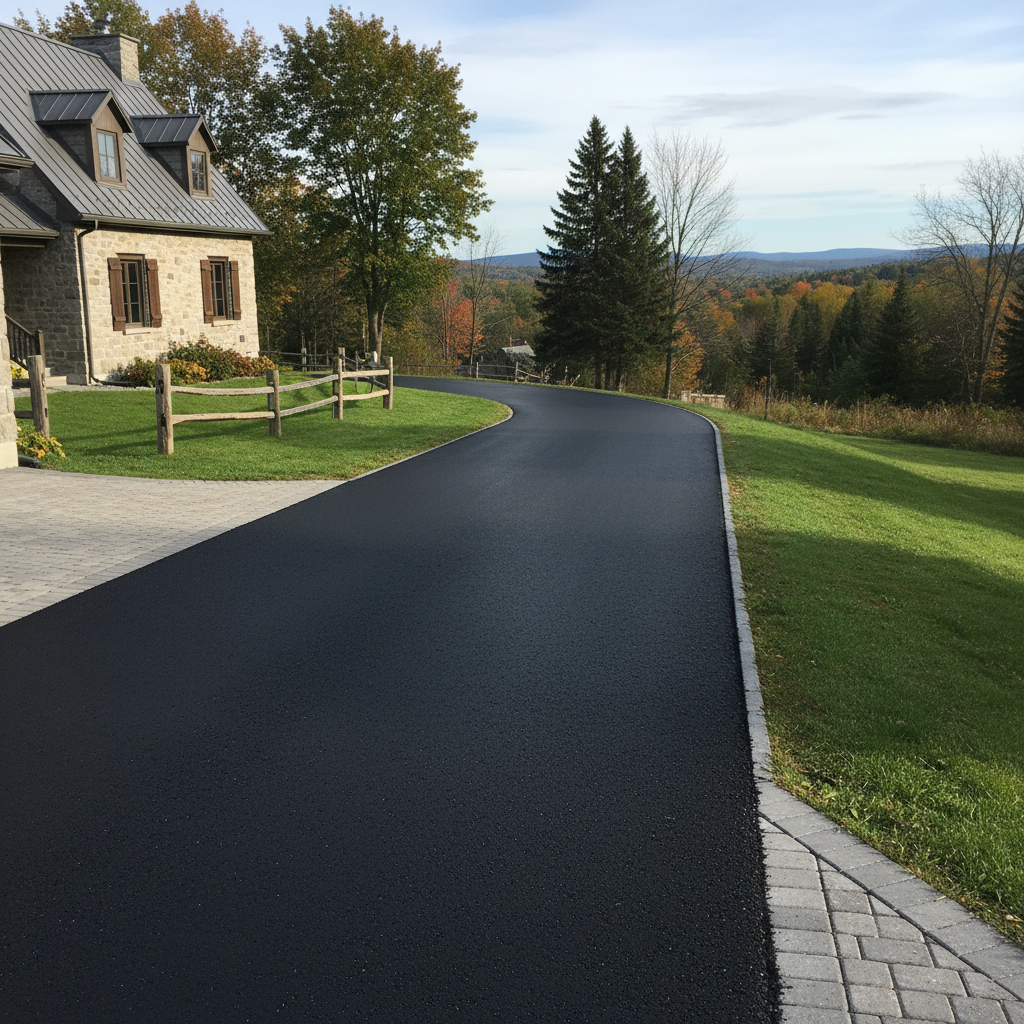
Driveway paving options and costs in Sylvan Lake
Sylvan Lake homeowners typically have a few solid driveway choices, and the “right” one usually comes down to your frost-proofing plan, how long you want to wait between major repairs, and your tolerance for maintenance during Alberta winters. With 65.8% of homes in the area being single-detached houses and 67.8% of households owning their home, there’s a large, steady market for private driveway work. In practical terms, most projects you see around Sylvan Lake—especially on newer subdivisions and older established streets—are priced for family-sized driveways that take repeated freeze-thaw stress.
In the Red Deer economic region, hard-winter pavement conditions affect both design and scheduling. Frost action is not a minor detail here; it pushes contractors to excavate deeper, build a thicker compacted granular base, and improve drainage to reduce heaving and cracking. Asphalt also depends on a short paving season: hot-mix asphalt needs air temperatures above 10°C, so crews often concentrate work in spring and early summer, which can tighten availability and pricing. If you’re in the hills or near areas like the east end/Highland Green area where access and grading can be more particular, many quotes will differ quickly based on soil condition and how much base correction is needed.
Below is a helpful comparison of common driveway options and typical pricing ranges you’ll see for Sylvan Lake, to guide your conversations before you request itemised quotes.
| Material |
Lifespan |
Maintenance |
Best For |
Price per sq ft |
Price Range |
| Asphalt (new installation, proper base) |
15–25 years |
Seal coat typically every 3–5 years (timing depends on traffic and workmanship) |
Best value with strong drainage and a frost-rated base |
~$6.00–$12.00 |
$5,500–$12,000 |
| Asphalt (overlay on existing gravel base) |
8–15 years |
Sealing every 3–5 years; monitor edges and settlement areas |
When the base is sound and you want a cost-controlled improvement |
~$4.50–$9.50 |
$4,500–$10,500 |
| Interlocking concrete pavers |
20–30 years |
Occasional panel resetting; joint sand top-ups as needed |
High curb appeal and repairability without full replacement |
~$10.00–$18.00 |
$9,000–$22,000 |
| Poured concrete (broom finish) |
20–30 years (with air-entrainment and proper joints) |
Seal/water-repellent optional; crack monitoring |
Straightforward, durable surface with clean maintenance |
~$11.00–$16.00 |
$8,500–$18,000 |
| Exposed aggregate concrete |
20–30 years |
Seal optional for stain resistance; occasional minor resurfacing |
Better traction and a decorative look |
~$13.00–$20.00 |
$10,000–$20,500 |
| Gravel / crushed stone (budget option) |
3–8 years (depends heavily on drainage and grading) |
Regrade and add rock periodically; weed control |
Lowest upfront cost while you plan a long-term build |
~$3.00–$6.00 |
$5,000–$9,000 |
Prices are estimates only and vary by project scope, site access and material selection.
What affects the price of paving in Sylvan Lake
In Red Deer and across Alberta, you can see the same driveway “type” priced 30–50% differently because the real cost drivers aren’t the pavement brand—they’re the site conditions. Two contractors may quote asphalt at the same surface thickness but still price very differently once you account for excavation depth, granular base requirements, drainage corrections, and how much old material has to be hauled away. That’s why a quote that looks cheap on paper can cost more later if the base wasn’t built for freeze-thaw performance.
In this region, frost line depth and freeze-thaw cycling are decisive cost factors. Deeper frost requires a thicker compacted granular base to reduce heaving and cracking; in Alberta, contractors commonly design around a frost line rule-of-thumb in the range of about 1.2 metres (4 feet) for planning, then translate that into base thickness and subgrade protection. Practically, that means more digging and more rock—often moving a project closer to the higher end of the asphalt band (for many driveways, the paving work trends toward the mid-to-upper portion of $5,500–$12,000 once full drainage and base replacement are included).
Concrete and pavers also respond to local conditions. For example, older subgrades (common on homes built before 1981—14.7% of dwellings in the area) may settle or contain variable fill, which increases tear-out and base reconstruction time. If you’re near a wet spot or downspouts flow toward the driveway, drainage corrections can raise costs and make asphalt sealing more critical. Conversely, a straightforward replacement on solid, well-drained soil can keep asphalt closer to the lower end of the band, and pavers may land nearer to $9,000–$22,000 only when edge restraint, bedding layers, and proper compaction are truly manageable.
| Price Factor |
Why It Matters |
Cost Impact |
| Driveway area in sq ft |
Labour, base, asphalt/concrete volume, and equipment time scale with size |
Largest variable; often drives total cost more than material choice |
| Base depth required |
Frost protection depends on granular thickness and compaction |
Adding depth can noticeably increase material and excavation costs |
| Grading and drainage work |
Slope, swales, and culverts prevent water from undermining the pavement |
Can move a job into the higher end of a typical budget |
| Tear-out of existing surface |
Breaking concrete/old asphalt and hauling disposal takes time and machinery |
Often a significant add-on, especially with thick slabs |
| Edge restraints and curbing |
Pavers need containment to stop movement and maintain lines |
More restraint = better longevity; increases material and forming cost |
| Sealing requirement |
Asphalt must be sealed after proper curing to protect against moisture and oxidation |
Costs a little upfront but helps extend pavement life |
| Site access |
Narrow drives slow equipment and can increase labour for material handling |
Can raise labour costs due to extra time and multiple staging trips |
| Asphalt mix specifications |
Freeze-thaw-rated mix design performs better under Alberta winters |
Higher-quality mix typically increases per-ton pricing |
Permits & regulations in Alberta
In Alberta, paving a private driveway within your own property usually doesn’t require a building permit. Most homeowners can proceed with asphalt, concrete, or pavers on their lot surface as long as the work stays within the property line and doesn’t modify major municipal infrastructure. However, if you’re changing anything in the municipal right-of-way—such as installing or altering a curb cut, changing the boulevard, or adjusting storm drainage near the road—municipal approval is typically required. Some areas also have lot-grading or surface drainage expectations that restrict how close hard surfaces can go to property lines and how water is directed, so it’s worth confirming with the City of Sylvan Lake or your local authority before excavation.
Step-by-step, here’s how a Sylvan Lake homeowner can verify a contractor is compliant and insured:
- Call to request the contractor’s current Alberta business licence information (if applicable) and ask for their trade/contracting registration details.
- Verify liability insurance by requesting a Certificate of Insurance listing the policyholder and showing adequate coverage for your job.
- Confirm WSIB/WCB coverage: ask for the clearance letter or proof of coverage for the employer doing the work.
- Ask for the utility locate confirmation: ensure they’ve called Alberta One-Call before digging, and that locates are respected on-site.
- Ask if they’re handling any municipal permits/approvals (if curb or drainage is involved) or whether you need to.
When you get these documents before work begins, you reduce the risk of schedule delays and cost surprises—both of which matter in a shorter paving season.
Asphalt vs pavers vs concrete for Sylvan Lake driveways
Choosing between asphalt, interlocking concrete pavers, and concrete in Sylvan Lake is less about style and more about how each option handles Red Deer’s freeze-thaw cycles, drainage, and winter maintenance. Asphalt typically has the lowest upfront cost and can look great when installed over a properly designed base; the trade-off is maintenance. In Alberta, asphalt generally performs best when sealed regularly (often every 3–5 years), because trapped moisture and oxidation speed up age. Asphalt in the Sylvan Lake market commonly lands within the broader driveway paving band of $5,500–$12,000, especially when the base and drainage are handled correctly.
Interlocking concrete pavers have the highest upfront cost in most quotes, but they’re repairable. If a section settles, the installer can lift and reset panels rather than replacing an entire driveway. For many homeowners, that’s worth it when ploughing and salt exposure are consistent year after year. That “best curb appeal + patchability” value is why pavers often track the market range of $9,000–$22,000.
Poured concrete sits in the middle: it’s durable, but cracking risk is real if joints, air-entrainment, and base preparation aren’t done right. Freeze-thaw plus de-icing chemicals can be harsher on poorly designed concrete. A typical example: if you’re deciding between asphalt at about $7,500 and pavers at about $14,000 for a similar-sized drive, the extra cost is usually justified only when you want long-term curb appeal and planned, section-level repairs rather than expecting full-surface replacement later. With good drainage and base depth, all three can work—but poor subgrade and shallow base will punish every material in the same way.
| Material |
Frost Resistance |
Curb Appeal |
Repair Method |
Lifespan |
Price Band |
| Asphalt (sealed regularly) |
Good with frost-rated base and drainage |
Good (clean and uniform finish) |
Patch/cut and overlay local sections |
15–25 years |
$5,500–$12,000 |
| Interlocking concrete pavers |
Very good when properly edged and bedded |
Excellent (best visual flexibility) |
Lift-and-reset individual/limited sections |
20–30 years |
$9,000–$22,000 |
| Poured concrete (air-entrained) |
Good with air-entrainment and correct joints |
Medium to good (finish dependent) |
Crack repair/patching or panel-level rehab |
20–30 years |
$8,500–$18,000 |
| Exposed aggregate concrete |
Good (similar to concrete base/joint requirements) |
High (textured decorative surface) |
Patch and re-finish limited areas (match finish) |
20–30 years |
$10,000–$20,500 |
| Permeable pavers (drainage grid) |
Very good when designed with proper underdrainage |
High (modern look) |
Reset pavers; inspect/clean drainage layer if needed |
20–30 years (system-dependent) |
$12,000–$26,000 |
| Chip seal / tar-and-chip |
Moderate (surface binder performance varies) |
Low to medium |
Localized rework and recoat |
6–12 years |
$5,000–$10,000 |
How to choose a paving contractor in Sylvan Lake
To protect your driveway investment in Sylvan Lake (and avoid surprises in Alberta’s short paving season), verify three core items: licensing/qualification, liability insurance, and workers’ compensation (WSIB/WCB). Start by asking for proof of coverage before work begins. For insurance, request a Certificate of Insurance showing liability coverage and the correct business name doing the work. For WCB, ask for a clearance letter or proof of coverage for the employer performing the project. If they can’t provide documentation promptly, that’s a stop sign.
Next, get 2–3 itemised written quotes. You want a labour + materials breakdown—not just a lump sum—so you can compare base thickness, excavation depth, drainage work, disposal, and the pavement structure (including whether the contractor is proposing frost-rated granular layers). Pay attention to what’s excluded: for instance, grass restoration, permit pulls for curb cuts, disposal/hauling of removed concrete, and any subgrade stabilization if the soil is soft.
Warranty matters too. Ask for the workmanship warranty length and what it covers (surface-only vs base problems). Confirm whether manufacturer warranties apply to paving materials and whether they’re transferable to you if you sell the home. For payment scheduling, never pay more than 10–15% upfront. Use a holdback tied to substantial completion, and keep final payment conditional on cleanup and any required curing/sealing steps.
Finally, demand a start date and completion estimate in writing, including weather-related contingencies common to central Alberta.
- Request proof of liability insurance and keep the certificate on file
- Ask for WSIB/WCB clearance letter before excavation
- Verify Alberta One-Call locates were completed for your property
- Confirm who pulls any municipal approvals if curb cut or right-of-way drainage changes are involved
- Get itemised quotes showing excavation depth, base depth, and compaction layers
- Ask what happens if soft subgrade is found (price adjustment method)
- Ensure tear-out and disposal are clearly included or excluded
- Confirm edge restraint plan (especially for pavers)
- For asphalt, ask when seal coat is planned (curing window and responsibility)
- Request a schedule that matches Alberta temperatures (hot-mix needs suitable conditions)
- Review warranty terms in plain language (workmanship vs material)
- Use a payment schedule with limited upfront deposit and holdback until final walkthrough
Red flags in Sylvan Lake: “one price fits all” without seeing soil/drainage, no written breakdown of base thickness, skipping utility locate verification, pressure for a large deposit upfront, and vague warranty wording (especially on base preparation, which is where most winter failures start).
Frequently asked questions — paving in Sylvan Lake
Is it worth sealing a new driveway right away in Sylvan Lake?
In Sylvan Lake and across Alberta, it’s usually not worth sealing “right away.” Asphalt needs proper curing so the surface can fully release moisture and bind properly; sealing too early can trap water and accelerate aging. Most reputable installers plan seal coat after the asphalt has had time to cure and harden, then schedule it based on weather and temperature. For budgeting, homeowners often factor sealing into a multi-year plan—especially since asphalt typically needs sealing about every 3–5 years when exposed to ploughing and winter salt. If your driveway quote lands near the asphalt band of $5,500–$12,000, ask whether the contractor includes a future sealing recommendation and timing.
What is a chip seal driveway and is it suited to Sylvan Lake?
Chip seal (tar-and-chip) is a surface treatment where a binder is applied and then covered with aggregate chips to create a textured wearing layer. In central Alberta, it can be a reasonable option for certain low-traffic or transitional driveways, but it’s not the best choice for every Sylvan Lake home—especially where you want premium curb appeal or highly consistent ploughing performance. Chip seal generally has a shorter lifespan than new asphalt or pavers, commonly landing around the mid-to-lower end of the typical driveway surface budget (for some projects, that can be in the approximate range of $5,500–$12,000 depending on prep and area). Its performance depends heavily on proper base, grading, and the ability to keep water away from the subgrade.
How much does driveway crack repair cost in Sylvan Lake?
Crack repair pricing in Sylvan Lake depends on crack width, whether the crack is surface-level or caused by base movement, and how much preparation is needed (cleaning, routing, and sealing). For small, hairline cracks, repair can be relatively straightforward and typically falls in the “repair & sealing” budget range—often around $500–$3,500 once you include prep and sealing of affected areas. If the cracking is linked to drainage issues or settlement, the cost can rise because contractors may need spot base correction before sealing, or recommend a larger overlay strategy rather than repeated patching. The best approach is usually an on-site assessment so you avoid paying for sealing a problem that’s actually underneath.
What base thickness do I need for pavers in Sylvan Lake?
For pavers in Sylvan Lake, base thickness is designed around frost protection and drainage—not just aesthetics. While exact requirements depend on soil type, moisture conditions, and the planned total build-up, a contractor should be discussing a frost-rated granular structure with adequate excavation and compaction. If water can reach the subgrade or the base is too shallow, you can see heaving, joint opening, or edge settlement after repeated freeze-thaw cycles. In Alberta conditions, contractors commonly plan for thicker compacted granular layers than you’d see in milder climates, plus a proper bedding layer for pavers. If your area has challenging soils or you’re replacing pavement on older subgrades (14.7% of area dwellings are from before 1981), expect more base correction work in the quote.
How do I get the most accurate paving quote in Sylvan Lake?
To get an accurate paving quote in Sylvan Lake, insist on an itemised estimate that addresses the full driveway build-up and site realities. Provide or request: driveway dimensions, photos from the street and from the yard, and any info on drainage (where spring meltwater flows, whether downspouts discharge toward the driveway, and how it behaves after heavy rain). A good quote should include excavation scope, granular base depth, compaction method, grading and drainage corrections, and disposal of removed material. It should also state what’s excluded and what triggers price changes. If you compare apples-to-apples bids, you’ll better understand whether you’re closer to asphalt pricing such as $5,500–$12,000 or whether base and drainage upgrades push the project toward the higher end.
How much does it cost to pave a driveway in Sylvan Lake?
The total cost to pave a driveway in Sylvan Lake depends most on driveway size, base preparation, drainage work, and whether you’re installing new pavement or overlaying an existing surface. For asphalt driveway paving, many projects fall within about $5,500–$12,000, while interlocking concrete pavers often land higher at roughly $9,000–$22,000. Concrete driveways commonly sit in between, often around $8,500–$18,000 depending on finish and thickness, and repairs/sealing are usually a smaller add-on in the $500–$3,500 range. With central Alberta’s hard-winter pavement conditions, quotes can vary if frost-proofing needs are underestimated, so always verify base depth and drainage in the written scope.