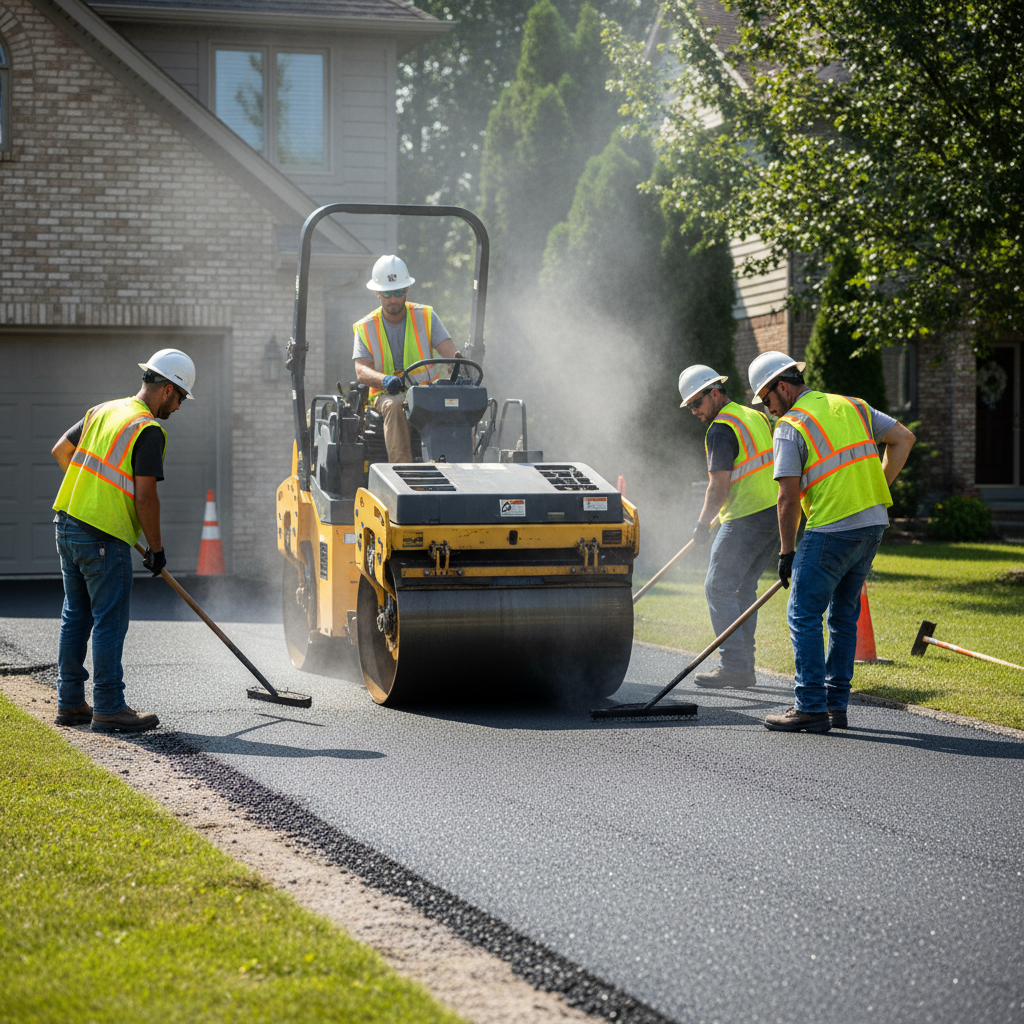
Driveway paving options and costs in Strathcona Park
Strathcona Park driveways often sit on compacted residential lots where Calgary-area freeze–thaw cycles punish weak bases. With a 2021 population of 1,980 residents (Statistics Canada, 2021 Census), demand is steady year to year, and most paving projects are for single-family homes where the driveway is a major part of daily life. In many neighbourhoods in and around Strathcona Park, the area around local collectors and busier residential corridors sees the most frequent driveway refresh work—especially where older gravel driveways have washed out ruts during spring melt.
In Calgary’s cold continental climate, frost can penetrate to about 1.2 m (4 ft). That depth matters because asphalt and concrete fail the same way if water gets into a poorly drained subgrade: the ground expands, shifts, and pushes the surface up (heaving), then later cracks as it settles. Labour availability is also a real pricing driver here—because the paving season is tight, crews and equipment concentrate from late spring through early fall. Small jobs can feel more expensive during peak months, and mobilization to outlying areas is often folded into the quote.
Here’s a practical side-by-side of common materials you’ll see in Strathcona Park, with price bands that match local market reality. Use the table to compare options by lifespan, upkeep, and the typical cost per square foot before you request itemised quotes.
| Material |
Lifespan |
Maintenance |
Best For |
Price per sq ft |
Price Range |
| Asphalt (new installation, proper base) |
12–20 years |
Seal every 3–5 years; crack filling as needed |
Cost-conscious driveways with good drainage |
$12–$20 |
$6,500–$14,000 |
| Asphalt (overlay on existing gravel base) |
8–15 years |
Seal every 3–5 years; more frequent patching may be needed |
When full rebuild isn’t feasible |
$12–$18 |
$5,500–$12,500 |
| Interlocking concrete pavers |
20–30 years |
Occasional joint sand re-top; lift-and-relay for repairs |
Maximum curb appeal and modular repairs |
$18–$30 |
$8,500–$18,000 |
| Poured concrete (broom finish) |
20–25 years |
Sealant optional; repair spalls/caulking joints as needed |
Clean, low-maintenance look |
$15–$25 |
$7,000–$16,500 |
| Exposed aggregate concrete |
20–30 years |
Seal periodically; manage jointing and minor repairs |
Enhanced texture and slip resistance |
$20–$30 |
$9,000–$20,000 |
| Gravel / crushed stone (budget option) |
2–7 years (depends on base and drainage) |
Re-grade and add stone 1–3 times per year |
Temporary solution or very limited budgets |
$6–$12 |
$3,000–$7,500 |
Prices are estimates only and vary by project scope, site access and material selection.
What affects the price of paving in Strathcona Park
In Strathcona Park, two homeowners can receive quotes that differ by 30–50% for the “same” driveway because the price isn’t just asphalt or concrete—it’s the build-up that stops frost damage and keeps water moving away from the pavement. Contractors also price for schedule risk: Calgary’s paving season is compressed, so labour and equipment become more expensive during peak spring and summer weeks. When crews are booked out, smaller jobs can carry higher mobilization and coordination costs.
Frost line depth and freeze–thaw cycles are decisive cost factors in Calgary. With frost routinely penetrating to about 1.2 m (4 ft), the subgrade must be protected with a thicker, well-graded granular base and properly compacted lifts. In practice, that means deeper granular thicknesses and more attention to edge support and drainage corrections than you’d typically see in milder climates. Asphalt mix design also matters; freeze–thaw-rated hot mix helps resist early raveling and cracking, but it can cost more than a basic mix.
Local site conditions can raise or lower your costs quickly. For example, a driveway that sits slightly low and channels meltwater toward the garage can add grading and drainage work, while a straightforward, level approach with solid access can keep costs closer to the lower end of the $12–$20 asphalt band. Tear-out makes another big difference: removing old asphalt or concrete, hauling debris, and restoring base thickness can push you toward higher totals—similar to what you’d budget when you’re comparing against the $18–$30 paver range.
Finally, driveway age changes what you actually have to fix. Older lots often have weaker base layers or buried topsoil, so even if the surface looks “serviceable,” the correct rebuild is what prevents heaving and cracking that show up again after winter plowing and thaw cycles.
| Price Factor |
Why It Matters |
Cost Impact |
| Driveway area in sq ft |
Materials and machine time scale directly with surface area |
High: typically drives most of the total |
| Base depth required |
Frost line protection depends on compacted granular thickness |
High: deeper base adds haul, compaction, and time |
| Grading and drainage work |
Slope corrections and ditches prevent water pooling under pavement |
Medium to high: can be a major line item on sloped sites |
| Tear-out of existing surface |
Breaking, removal, and disposal plus base restoration |
Medium to high: often one of the largest “surprise” costs |
| Edge restraints and curbing |
Prevents paver spread and asphalt edge break-down |
Medium: adds materials and extra forming time |
| Sealing requirement |
Asphalt needs sealing after cure window to reduce oxidation |
Low to medium: usually a later lifecycle cost (not always included) |
| Site access |
Narrow gates and tight turns slow equipment movement and production |
Medium: may require smaller crews/equipment or extra handling |
| Asphalt mix specifications |
Freeze–thaw-rated mixes improve durability in Calgary winters |
Low to medium: can raise material cost but reduce early failures |
Permits & regulations in Alberta
For paving work on a private driveway in Strathcona Park, Alberta homeowners typically do not need a building permit when the work is fully within your own property limits (for example: removing old driveway surface and rebuilding asphalt or concrete on your driveway footprint). Where things change is when you touch infrastructure in the municipal right-of-way—this can include building or changing a curb cut, altering boulevard drainage/grades, or making changes that affect how stormwater flows toward the municipal system. In those cases, municipal approval is usually required.
Step one for homeowners is to confirm what your contractor proposes to change: measure the driveway layout and ask specifically whether any part of the work involves the boulevard, curb line, or storm drainage adjustments. Step two is to arrange utility locates before excavation. Call Alberta One-Call (utility locate service) so underground services can be marked. Step three is to verify the contractor’s credentials before any equipment shows up: ask for their Alberta licence reference (as applicable to their trade), a current certificate of insurance showing liability coverage, and proof they carry WSIB/WCB coverage for their workers. Then, check documentation directly—look for a valid insurance certificate (and that the jobsite address is covered), and if the contractor provides a clearance letter or coverage evidence, confirm it matches the timeframe of the work.
If your property is subject to lot-grading rules, confirm how close to property lines you can place a hard surface and whether additional grading approvals are needed. This is especially important where meltwater could otherwise be forced toward neighbouring lots.
Asphalt vs pavers vs concrete for Strathcona Park driveways
Choosing asphalt, interlocking pavers, or concrete in Strathcona Park is mostly about how you want the driveway to behave through freeze–thaw winters and how you’ll manage maintenance. Asphalt is usually the lowest upfront option; in Calgary’s climate it holds up well when built on a strong, frost-protected granular base and when it’s sealed properly. That said, asphalt is an asphalt—sealcoating every 3–5 years helps slow oxidation and reduces water penetration that leads to cracking.
Interlocking concrete pavers have the highest upfront cost, but they’re also the most repair-friendly: if a section settles or a utility repair is needed later, you can lift and relay individual units without replacing the entire driveway. In winter conditions with plowing and salt, pavers tend to stay visually neat because jointed surfaces don’t “all crack at once” the way a monolithic slab can. For many homeowners in Strathcona Park, the curb appeal and modular repairability justify budgets that often land in the $18–$30 range.
Poured concrete sits mid-range and can last decades when air-entrained and properly jointed. However, it’s more sensitive to poor drainage and shrinkage/cracking if the subbase isn’t right. Exposed aggregate concrete adds texture and slip resistance but follows the same basic freeze–thaw principles.
Base preparation matters across all three. With frost routinely penetrating to roughly 1.2 m (4 ft), contractors must build deeper, well-graded base layers and ensure positive drainage away from the garage and toward swales where applicable. To illustrate the trade-off: if a 600 sq ft driveway is quoted at around $12–$20 per sq ft for asphalt, that’s roughly $7,200–$12,000; pavers at $18–$30 can land around $10,800–$18,000. In that gap, many homeowners recover value through easier repairs and a longer-looking surface during harsh Calgary winters.
| Material |
Frost Resistance |
Curb Appeal |
Repair Method |
Lifespan |
Price Band |
| Asphalt (sealed regularly) |
Good when base is frost-protected and drainage is correct |
Moderate (clean, classic finish) |
Crack filling, patching, and spot resurfacing |
12–20 years |
$12–$20 |
| Interlocking concrete pavers |
Very good (flexible surface with strong edge restraint) |
High (variety of colours and patterns) |
Lift-and-relay individual stones or small sections |
20–30 years |
$18–$30 |
| Poured concrete (air-entrained) |
Good to very good if properly jointed and drained |
Moderate to high (clean broom finish) |
Joint resealing and targeted slab repair for spalls |
20–25 years |
$15–$25 |
| Exposed aggregate concrete |
Good (depends on mix, base, and finishing) |
Very high (textured, premium look) |
Spot grinding/replacement for damaged areas |
20–30 years |
$20–$30 |
| Permeable pavers (drainage grid) |
Very good for water control when detailed correctly |
High (modern look) |
Replace individual units; inspect drainage layer |
20–30 years |
$22–$35 |
| Chip seal / tar-and-chip |
Moderate (more upkeep in freeze–thaw environments) |
Low to moderate |
Spot patches and re-seals as needed |
5–10 years |
$10–$15 |
How to choose a paving contractor in Strathcona Park
When you’re hiring a paving contractor in Strathcona Park, verify credentials before you discuss price. In Alberta, ask for their insurance certificate showing liability coverage for the work, and confirm they carry WSIB/WCB coverage for workers. You can check coverage by requesting an active certificate close to the start date and ensuring it lists the correct business entity; certificates should clearly reflect current dates. For the licence side, request the contractor’s Alberta licence information (where applicable to their trade) and confirm it matches the company you’re contracting with. If they can’t provide documentation, that’s a major red flag.
Next, get 2–3 itemised written quotes. Don’t accept a single lump sum—ask for a breakdown of labour, base/subbase materials, asphalt or concrete quantities, thicknesses, and whether disposal and haul are included. Read the scope carefully: is the tear-out included? Is permit work included if the job affects the right-of-way? Who supplies and places edge restraints and forms? Confirm whether the contractor includes final grading, compaction testing practices (where used), and how clean-up is handled.
For warranty, ask for both workmanship warranty length and any product/manufacturer warranty for asphalt mix, concrete additives, or paver systems. Clarify whether warranties are transferable to future owners. On payment schedule, never pay more than 10–15% upfront; hold back a portion until the job is complete and final grading/cleanup are verified. Finally, insist on a timeline in writing: start date, cure windows (especially concrete), and the expected completion date.
- Ask what thickness of compacted base is included and whether drainage fixes are scoped.
- Confirm frost-protective build-up details (well-graded aggregate) rather than vague “proper base” language.
- Require an itemised line for tear-out and disposal if an overlay isn’t specified.
- Check the contractor’s liability insurance expiry date and ensure the jobsite is within coverage.
- Verify WSIB/WCB coverage for workers before excavation begins.
- Request a copy of their warranty terms in plain language.
- For asphalt, ask about cure time and when sealing will be recommended (often after 6–12 months).
- Confirm edge restraints are included for pavers and that asphalt has proper edge support.
- Ask how they handle low spots and ponding risk near the garage approach.
- Make sure site access constraints are discussed (gate width, turning radius, driveway approach).
- Get start and completion dates in writing, not just “weather permitting.”
- Ensure cleanup and final brooming/compaction passes are part of the scope.
Specific red flags I see around Strathcona Park: quotes that only list a surface price per sq ft without stating base thickness and compaction approach; contractors who won’t show insurance/coverage documents; no itemised tear-out/disposal line when overlays aren’t clearly specified; vague warranty language like “standard warranty” with no length or exclusions; and rushing to pour or pave with unknown subgrade moisture or drainage issues.
Frequently asked questions — paving in Strathcona Park
How often should I seal my asphalt driveway?
In Strathcona Park and across the Calgary area, sealing is typically about protecting asphalt from oxidation and water infiltration during winter freeze–thaw cycles. Most homeowners plan to seal new asphalt after it has properly cured (commonly after the first season), then re-seal about every 3–5 years depending on wear, sun exposure, and how much salt and plowing traffic it takes. If your driveway sees heavy snow clearing with blades and frequent sand/salt, you may be closer to the 3-year end. If it’s lighter-use and stays relatively clean, 5 years can be achievable. When comparing quotes, remember sealing is a lifecycle cost—so an asphalt install that lands in the $12–$20 per sq ft range can require an additional sealing budget over time.
Why does my driveway crack and heave in winter?
The most common cause in Alberta is water + frost. In Calgary’s cold continental climate, frost can penetrate down to around 1.2 m (4 ft), and repeated freeze–thaw expands and contracts the ground. If the driveway base isn’t deep enough or well-graded, water moves into the subgrade during melt, then freezes and lifts the surface (heaving). When the freeze releases, the pavement can settle unevenly and crack. Poor drainage around the garage approach is another frequent factor—low spots channel meltwater toward the driveway. Even a decent-looking surface can fail early if edge support is missing, letting water undercut the edges. The fix is not just patching: a proper rebuild includes frost-protected granular base and positive drainage corrections.
Do I need a permit to pave my driveway in Alberta?
Often, no permit is needed when you pave entirely within your own property footprint in Alberta, such as replacing asphalt or concrete on your driveway area. However, you should expect municipal approval when the work affects the municipal right-of-way—for example, new or changed curb cuts, changes to boulevard grading, or altered storm drainage patterns. In Strathcona Park, the practical test is whether excavation or grading touches the curb/boulevard/storm system. Ask your contractor to clearly state what parts of the work are “on private property only” versus any work in the boulevard. Regardless, you should still arrange Alberta One-Call utility locates before digging so you don’t hit buried services.
How long before I can drive on new asphalt?
It depends on how the asphalt was placed and the weather, but generally you can drive on newly laid asphalt sooner than with concrete. Typical practice is that light traffic may be allowed after it cools and is firm enough to resist marking, while heavier vehicles may need more time—especially in cooler conditions. In the Calgary area, crews also watch for temperature and wind because asphalt needs workable placement temperatures and proper rolling. Avoid parking on one spot for the first period and follow the contractor’s guidance for cure and seam sealing. If you’re budgeting, remember asphalt sealing usually comes later—often after 6–12 months—so your early “drive on it” window doesn’t mean the driveway is maintenance-free. Plan for temporary caution rather than immediate full-duty use.
What causes potholes and how are they repaired?
Potholes usually start with water. In Alberta winters, water seeps into small cracks or weak joints, freezes, and expands. When the pavement can’t flex or the base has voids, the surface breaks down into a pothole—often near wheel paths, driveway edges, or low spots that pond after snowmelt. Plowing can also accelerate breakdown where repeated impacts happen. Repairs typically involve cutting out the failed area, removing unstable material, and restoring the base as needed before placing new asphalt to the correct thickness and compaction level. A good repair should address the underlying drainage or base weakness; otherwise, the pothole returns. Depending on the severity, spot patching is far cheaper than full resurfacing and is aligned with staying within typical asphalt $12–$20 per sq ft budgets when you catch issues early.
How do I prepare for a paving project?
Preparation makes the job faster and reduces rework. In Strathcona Park, clear the driveway area of vehicles and obstacles at least a day ahead, and ensure access for dump trucks and small equipment (gate width and turning radius matter). Remove landscaping items that could obstruct base excavation and confirm where you want topsoil transitions or edge tie-ins. Schedule the project so you’re available for questions about drainage and any planned grading. Ask your contractor to confirm utility locates are done before any digging and to outline the site protection measures during the work window. Review the contract for what’s included—tear-out, disposal, base thickness, and whether permit or right-of-way approvals are needed. Finally, plan for concrete cure time or asphalt cure limitations so you’re not rushing vehicles onto fresh surfaces.