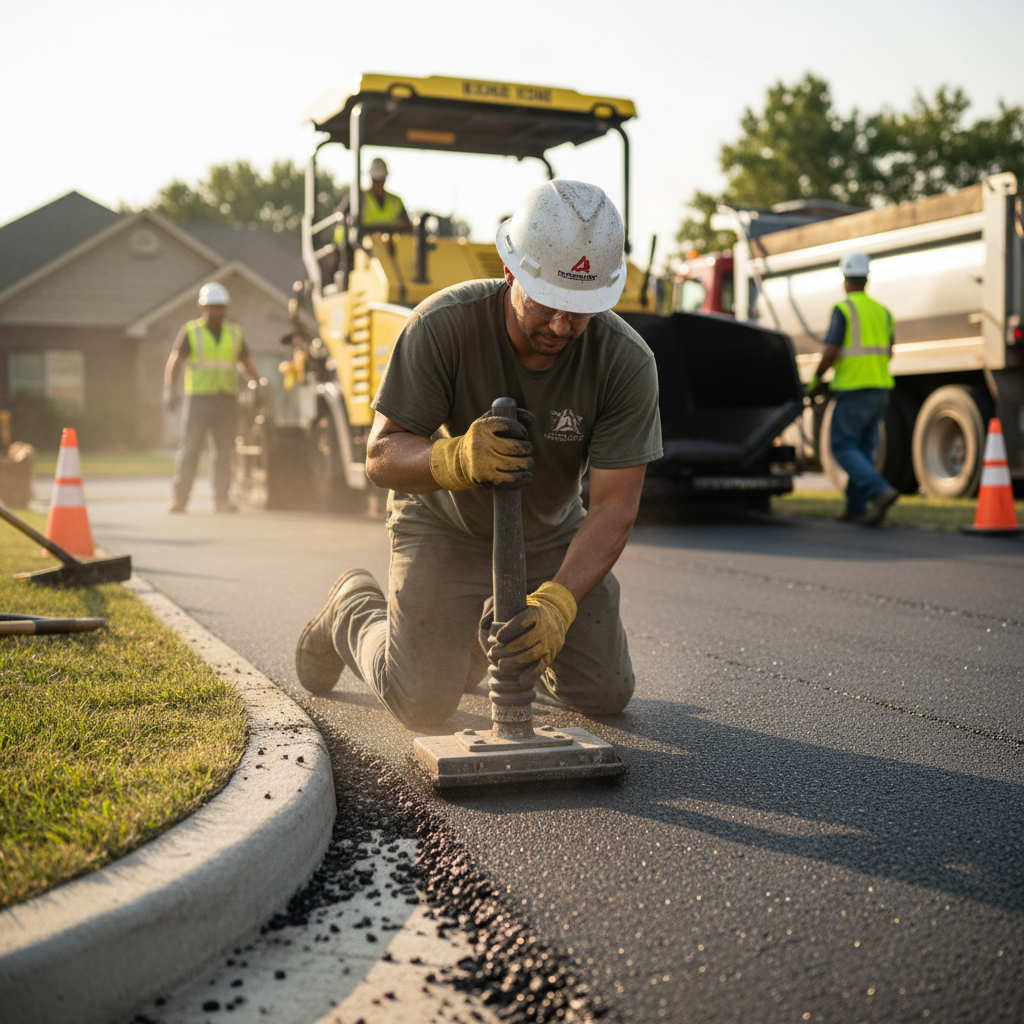
Driveway paving options and costs in Hidden Valley
Hidden Valley, Alberta has a lot of driveways attached to single-family living, and with the community sitting at a population of 11,540 (Statistics Canada, 2021 Census), there’s steady demand for new installs and re-surfacing. In practical terms, most homeowners are paving private approaches for detached homes—meaning your driveway is typically a high-use surface that must handle spring thaw, winter ploughing, and salted roads.
In the Calgary region, cost is strongly shaped by our cold continental climate: frost can penetrate to about 1.2 m (4 ft), and repeated freeze–thaw cycles push on weak or poorly drained subgrades. That’s why the “cheap” option on paper can get expensive later if the granular base and drainage aren’t built deep and well-compacted. The paving season is also compressed—hot-mix asphalt typically needs warm air temperatures for proper placement and compaction—so spring and early-summer scheduling can raise labour and equipment rates, especially for smaller projects.
In Hidden Valley, we often see the highest trade activity in semi-urban pockets where soil conditions and drainage patterns vary across lots, making base prep and edge support more labour-intensive. If you’re comparing bids, start with material differences and what each option typically does well in our freeze–thaw conditions, then verify the scope (base depth, drainage, and tear-out) matches across quotes. Use the table below as a realistic starting point for budgeting.
| Material |
Lifespan |
Maintenance |
Best For |
Price per sq ft |
| Asphalt (new installation, proper base) |
15–25 years |
Seal 6–12 months after paving, then every 3–5 years |
Value-focused driveways with good base and drainage |
$12 – $20 |
| Asphalt (overlay on existing gravel base) |
10–18 years |
Seal within the first year, plus crack sealing as needed |
Budget refresh where grading is already close |
$10 – $16 |
| Interlocking concrete pavers |
25–40 years |
Joint sand top-ups, replace individual stones if needed |
Curb appeal and repairability without full replacement |
$18 – $30 |
| Poured concrete (broom finish) |
20–30 years |
Occasional crack sealing; keep edges supported |
Clean, solid look with straightforward maintenance |
$15 – $25 |
| Exposed aggregate concrete |
25–35 years |
Seal (if specified) and seal cracks early |
Slip resistance and a premium appearance |
$17 – $28 |
| Gravel / crushed stone (budget option) |
3–8 years (typically) |
Re-grade and re-top up 1–3 times per year |
Short-term solution or low-budget approach |
$5 – $10 |
Prices are estimates only and vary by project scope, site access and material selection.
What affects the price of paving in Hidden Valley
If you’ve seen multiple quotes for the same driveway, it’s common to notice a 30–50% difference across Calgary-area bids—mostly because “paving” can include very different amounts of base repair, drainage correction, and tear-out. Two contractors might both say “asphalt driveway,” but one may price a full-depth granular rebuild and properly engineered slope/drainage, while the other relies on what’s already in the ground. In Alberta, those differences show up fast during thaw season and winter freeze–thaw cycles.
Here’s the biggest driver: frost line depth and freeze–thaw movement. With frost regularly penetrating to about 1.2 m (4 ft), the granular base must be thick and well-graded so water can drain instead of freezing and expanding. That typically means deeper, compacted granular thickness than milder regions, and it directly impacts material and machine time. The paving season is also shorter in colder climates—hot-mix asphalt needs air temperatures typically above 10°C for reliable compaction—so crews and equipment can book up quickly. That scheduling pressure can be why one quote lands near the lower end of the $12 – $20 asphalt range, while another lands closer to the top end.
Concrete and pavers are affected too. For example, if your existing subgrade is pumping fines or holding water, the concrete base prep can cost more than expected due to extra excavation and replacement. Conversely, if your lot already has strong drainage and stable subsoil, an overlay or a thinner rebuild may be possible—keeping concrete closer to the $15 – $25 range. As a rough budget reality check, even a modest 200–300 sq ft driveway can swing by hundreds of dollars when base depth, haul distance, and tear-out are different.
| Price Factor |
Why It Matters |
Cost Impact |
| Driveway area in sq ft |
Most costs scale with asphalt/concrete tonnage, paver quantities, and labour hours |
High |
| Base depth required |
Frost movement requires a thicker compacted granular structure to prevent heaving and cracking |
High |
| Grading and drainage work |
Proper slope and positive drainage reduce water pooling that fuels freeze–thaw damage |
Medium–High |
| Tear-out of existing surface |
Breaking concrete/old asphalt and hauling debris increases labour and disposal costs |
Medium–High |
| Edge restraints and curbing |
Prevents paver spread and protects asphalt/concrete edges from washout and raveling |
Medium |
| Sealing requirement |
Asphalt performance depends on sealing; typically sealed after 6–12 months, then periodically |
Low–Medium (but important) |
| Site access |
Narrow lots, tight turns, and overhead hazards slow equipment movement and staging |
Low–Medium |
| Asphalt mix specifications |
Freeze–thaw-rated mixes and proper binder content cost more but hold up better under winter maintenance |
Medium |
Permits & regulations in Alberta
In Alberta, paving a private driveway within your own property usually does not require a building permit. In most cases, asphalt and concrete placed on your driveway approach are considered private works. However, the permitting/approval conversation changes when work touches the municipal right-of-way—especially if you’re altering how water drains or changing how the city street meets your driveway.
Work that typically does require municipal approval includes: creating a new curb cut, changing an existing curb cut location, altering boulevard areas, or modifying storm drainage patterns tied to municipal infrastructure (for example, redirecting runoff to a different discharge point). Some municipalities also have lot-grading or surface-drainage bylaws that can restrict how close hard surfaces can be to certain property lines or how stormwater must be managed.
Step-by-step, Hidden Valley homeowners can verify a contractor properly:
- Confirm the contractor’s Alberta licence status using the provincial business/contractor registration search where applicable (and ask for their company number or licensing details directly).
- Request a current Certificate of Insurance showing general liability coverage.
- Verify they carry the correct worker coverage (WSIB/WCB as applicable) and obtain proof before work starts.
- Ask for a clearance letter or proof of clearance where available and keep copies for your records.
- Have them describe who will handle traffic control and any approvals if the job crosses into right-of-way areas.
Finally, before excavation, always confirm utility locates are completed via Alberta One-Call so you don’t hit buried services during base removal or drainage corrections.
Asphalt vs pavers vs concrete for Hidden Valley driveways
For Hidden Valley’s freeze–thaw winters, your best choice comes down to balancing upfront cost with how each surface handles water, salt, and plough impact. Asphalt usually has the lowest upfront cost and a relatively smooth, quiet ride, but it does require sealing regularly to protect against oxidation and moisture movement. Pavers tend to have the highest upfront investment, yet they’re also the most forgiving when you need targeted repairs—individual stones can be lifted, base areas can be corrected, and then the surface is re-installed without replacing the entire driveway.
Poured concrete sits in the middle on cost and can look excellent when finished and cured properly. The catch is that freeze–thaw cycles can lead to cracking if the base and jointing aren’t engineered, and de-icing salt can be harsher on concrete if it’s not air-entrained. In Calgary-area conditions, proper base preparation and positive drainage are non-negotiable for all three materials because water is what freezes, expands, and then lifts weak layers.
Base depth matters: with frost penetration to about 1.2 m, we typically build deeper, well-compacted granular bases to keep the subgrade stable. Asphalt and concrete both benefit from well-graded aggregate layers and engineered edge support. In practical winter maintenance, asphalt and concrete can be managed with careful plough technique, but pavers often tolerate localized work better—especially around driveway aprons and transitions where water collects.
Example budgeting: if your asphalt driveway is estimated near $12 – $20 per sq ft, moving to pavers at $18 – $30 per sq ft may be justified if you want a long curb-appeal lifespan and the option to repair only sections after a drainage correction or settlement. If you’re trying to minimize upfront spend and accept routine sealcoating, asphalt is often the most economical way to go.
| Material |
Frost Resistance |
Curb Appeal |
Repair Method |
Lifespan |
Price Band |
| Asphalt (sealed regularly) |
Good with proper base and drainage |
Medium |
Mill/patch or re-surface; seal cracks |
15–25 years |
$12 – $20 |
| Interlocking concrete pavers |
Excellent when edges and base are built right |
High |
Lift-and-reset individual stones/sections |
25–40 years |
$18 – $30 |
| Poured concrete (air-entrained) |
Good to very good with air-entrainment and joints |
Medium–High |
Crack repair/seal; limited patching |
20–30 years |
$15 – $25 |
| Exposed aggregate concrete |
Good with correct mix and curing |
High |
Patch/grind localized areas; reseal if specified |
25–35 years |
$17 – $28 |
| Permeable pavers (drainage grid) |
Very good where drainage design is engineered |
High (modern/eco look) |
Section repairs similar to pavers |
20–35 years |
$20 – $38 |
| Chip seal / tar-and-chip |
Variable; depends on base stability |
Low–Medium |
Top-up maintenance; re-chip as needed |
8–15 years |
$10 – $16 |
How to choose a paving contractor in Hidden Valley
Choosing the right contractor in Hidden Valley isn’t just about the lowest number—it’s about proof. Start with Alberta coverage and eligibility: ask for their Alberta business registration details (and any applicable contractor licensing info), then request a current Certificate of Insurance for general liability. Next, verify worker coverage under WSIB/WCB as applicable and ask for proof/clearance documentation before work begins. A good paving contractor will provide these without hesitation because it protects both you and their crew.
Then get 2–3 itemised written quotes that break down labour and materials—especially base preparation, excavation depth, granular type, drainage work, tack coat, asphalt mix, concrete air-entrainment, and disposal. Avoid quotes that only list “driveway paving” as a single line item. Read what’s excluded: permit pull, traffic control, sweeping, saw cutting, reinstatement of sod, and hauling/disposal of removed material.
Warranty matters too. Ask for the workmanship warranty length and what it covers (for example, cracking that is the result of improper base versus minor surface shrinkage). Clarify product/manufacturer warranty separately, and whether it’s transferable to you as the homeowner.
Payment schedule should be conservative: never pay more than 10–15% upfront, and use a holdback until the job is substantially complete and you’ve reviewed the finished grading and edges. Finally, get the start date and completion estimate in writing because the paving season is short—schedule slips can affect curing and surface quality.
- Confirm Alberta licensing/registration details in writing.
- Collect Certificate of Insurance (general liability) with your address listed if possible.
- Verify WSIB/WCB coverage proof before any excavation starts.
- Insist on an itemised scope (base depth, drainage, materials, and thickness).
- Ask who handles utility locates and confirm it’s included in the plan.
- Check disposal/haul-away is included for old asphalt/concrete.
- Confirm edge restraints/curbing specs (pavers especially).
- For asphalt, confirm when sealing is planned (typically after 6–12 months).
- Request photos of similar nearby projects or references from Calgary-area jobs.
- Ask for a compaction testing approach (at least by method/standard).
- Clarify warranty: workmanship vs material and duration.
- Use written scheduling: start date, cure/traffic timing, and completion target.
Red flags I see in Hidden Valley include: (1) vague quotes that don’t specify base depth or drainage; (2) refusing to provide insurance/coverage documentation; (3) asking for a large deposit upfront (over 15%); (4) starting excavation without utility locate proof; and (5) promising “any weather is fine” paving dates without addressing cure temperature and freeze–thaw risk.
Frequently asked questions — paving in Hidden Valley
How long before I can drive on new asphalt?
In Hidden Valley, Alberta, the safe drive-on time for new asphalt depends on temperature, thickness, and weather the week of your pour/placement. Typically, light traffic can be allowed sooner than full, heavy-use loading—crews often recommend waiting until the surface is cool and the asphalt has properly broken and compacted. If the temperature is cool or humidity is high, cure/settling takes longer and tire pickup risk increases. If your contractor plans to seal, sealing is usually done after the asphalt has cured—often after 6–12 months—because sealing too early can trap moisture and accelerate wear. When budgeting, remember asphalt jobs often fall within $12 – $20 per sq ft, but cure timing and winter protection are part of what you’re paying for.
What causes potholes and how are they repaired?
Potholes in Hidden Valley usually start with water. Freeze–thaw cycles allow moisture to seep into tiny voids or weak spots; when water freezes it expands, and the surface breaks down under ploughing and traffic. Sometimes the cause is drainage that doesn’t shed water properly, or a base that wasn’t built to the required depth/compaction. Repairs typically involve cutting out the failed area, removing loose material down to stable base, installing fresh hot-mix asphalt, compacting, and then tack coating the edges. A patch is a temporary fix if the underlying grading or base drainage issue isn’t corrected. If your driveway is showing repeated potholes, ask whether the contractor proposes base/grade correction rather than just surface patching.
How do I prepare for a paving project?
Preparation is mostly about access and protection. Clear vehicles and landscaping along the driveway path, and confirm where materials and equipment can be staged. If there’s an existing asphalt or concrete surface, discuss how tear-out will be handled so you know whether sod reinstatement is included. In Hidden Valley, call for utility locates before excavation (Alberta One-Call) and ensure the contractor confirms utilities are marked on-site. You should also consider the weather window: asphalt placement needs suitable temperatures for compaction, and concrete work must be protected during cold snaps to avoid early freezing. Finally, set expectations for cleanup and disposal. A good contract will define who sweeps, hauls debris away, and handles reinstatement so you don’t get surprises later.
How do I compare paving quotes fairly?
To compare quotes fairly in Alberta, you need like-for-like scopes. Start by matching measurements: driveway area (sq ft) and thickness/base depth. Check whether each quote includes drainage/grading correction, edge restraints (especially for pavers), and disposal of the removed material. For asphalt, confirm the sealing plan and timing; for example, sealing is typically done after 6–12 months and then every few years. Compare materials specs: a freeze–thaw-rated asphalt mix and a properly engineered granular base can shift a bid upward, even though the price per sq ft might still sit within the $12 – $20 range. If one quote is far cheaper than others, ask what corners are being cut—usually base prep or drainage.
Can asphalt be laid in cold weather in Hidden Valley?
Cold-weather paving is where many problems start. In Hidden Valley and the Calgary region, asphalt placement generally requires air temperatures that support proper compaction—often referenced as needing above roughly 10°C for reliable results (and even then, the ground temperature matters). If it’s too cold, asphalt can’t be compacted to density, and moisture may remain in the mat, leading to early raveling, cracking, or uneven settling when freeze–thaw cycles begin again. A reputable contractor will check weather forecasts, document temperatures, and explain what happens if conditions drop (for example, pausing work rather than pushing ahead). If you’re choosing asphalt near the $12 – $20 range, don’t trade quality for schedule—timing is part of the performance.
What is a driveway apron and do I need one in Hidden Valley?
A driveway apron is the transition area where your driveway meets the sidewalk and/or curb line (and sometimes the boulevard), designed to manage water runoff and protect the edge from plough damage. In Hidden Valley, whether you “need” one depends on how your driveway ties into the municipal right-of-way and whether there’s an existing apron structure already in place. If the work involves changing a curb cut or altering drainage tied to the street interface, municipal approval is often required, so it’s important to confirm scope before starting. Even when permits aren’t required for private work, a properly built apron helps reduce edge failure, spalling, and washouts caused by thaw water and winter maintenance. Ask your contractor to show how they’ll grade the apron for positive drainage and protect transitions with edge restraints.