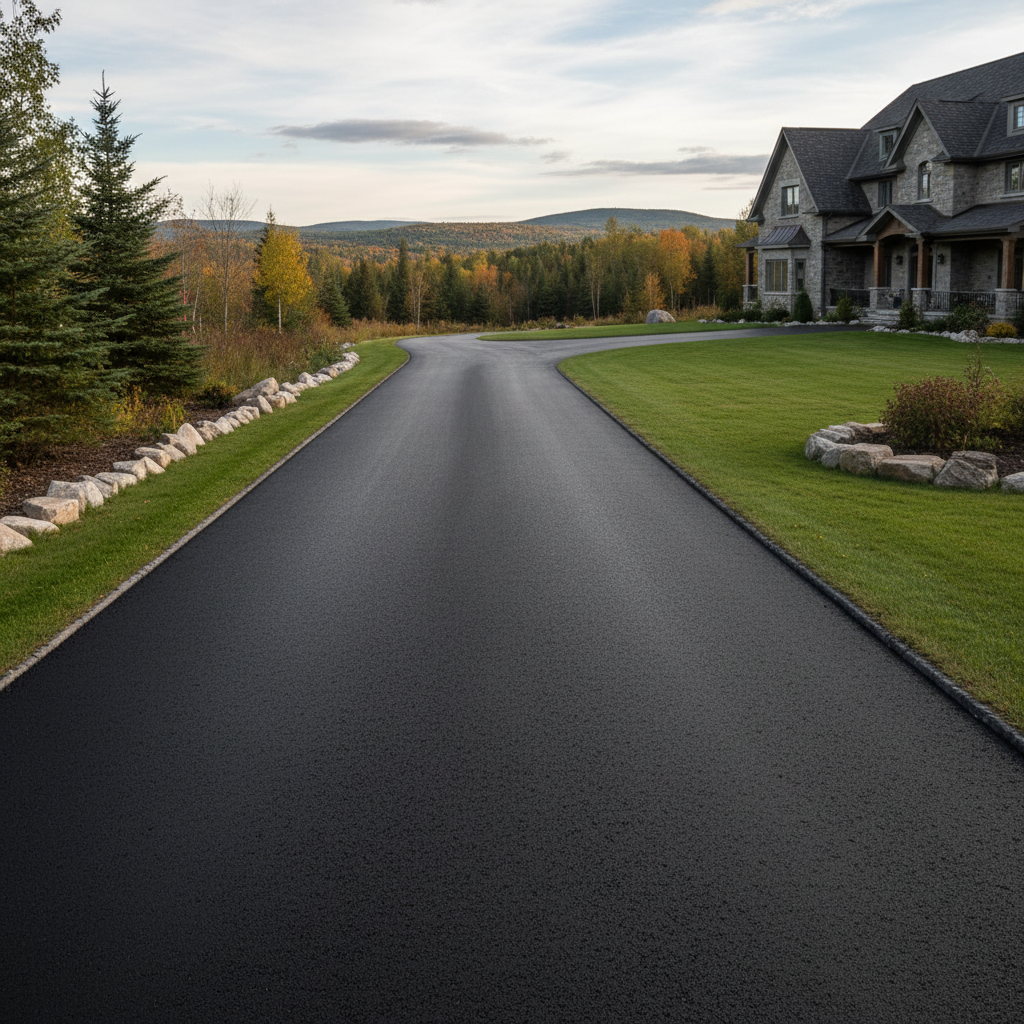
Driveway paving options and costs in Drayton Valley
In Drayton Valley, Alberta, choosing the right driveway surface is a balance of upfront cost, winter durability, and how well the contractor manages frost protection. With 2,065 homeowner households and 63.0% of dwellings being single-detached homes (Statistics Canada, 2021 Census), most driveways here attach to detached properties where access and grading can strongly affect project complexity. Homes built before 1981 make up 45.6% of the housing stock (Statistics Canada, 2021 Census), and older neighbourhoods often have settlement-prone subgrades, meaning resurfacing can be riskier than starting fresh with a properly rebuilt base.
Edmonton-area paving pricing is shaped less by asphalt or concrete alone and more by frost depth and drainage design. In the Edmonton economic region, freeze-thaw cycling can be hard on poorly drained bases; water left in the granular layers expands during freezing and then weakens the structure during thaw. Contractors typically price in deeper, well-graded granular base and careful compaction to reduce heaving, cracking, and spring settlement. Demand also concentrates during the short paving window, so scheduling and mobilization can be tighter in late spring and early fall.
Trade demand is especially noticeable around the south-central residential areas of Drayton Valley, where lots are a bit older and driveways often sit close to ditches or have limited room for equipment. If you’re comparing options, use the table below as a practical starting point for budgeting your project size and the surface you want.
| Material |
Lifespan |
Maintenance |
Best For |
Price per sq ft |
Price Range |
| Asphalt (new installation, proper base) |
12–20 years |
Seal coat every 3–5 years; patch as needed |
Best value when drainage and frost protection are done right |
$4.50–$7.50 |
$7,000–$15,000 |
| Asphalt (overlay on existing gravel base) |
8–15 years |
Earlier sealing; more frequent patching if base is unstable |
When the existing base is sound and only the driving surface needs improvement |
$3.75–$6.50 |
$6,500–$12,500 |
| Interlocking concrete pavers |
20–30 years |
Replace individual stones; re-sand joints as needed |
Curb appeal and repairability (no full replacement when sections fail) |
$10.00–$15.50 |
$12,000–$28,000 |
| Poured concrete (broom finish) |
15–25 years |
Seal if desired; occasional joint sealing and patching |
Smooth, long-lasting surface with fewer visual seams than pavers |
$7.50–$12.50 |
$9,000–$22,000 |
| Exposed aggregate concrete |
15–25 years |
Seal and re-seal for stain resistance (varies by sealer) |
Slip-resistant finish and higher-end appearance |
$9.00–$14.50 |
$11,000–$24,000 |
| Gravel / crushed stone (budget option) |
3–7 years |
Re-grade and top up; weed control; winter traction upkeep |
Lowest cost while you plan a permanent surface later |
$3.00–$5.50 |
$2,500–$7,000 |
Prices are estimates only and vary by project scope, site access and material selection.
What affects the price of paving in Drayton Valley
In Drayton Valley and the wider Edmonton economic region, it’s common to see quote differences of 30–50% for what looks like the “same” driveway on paper. The main drivers are frost protection, drainage corrections, and how much reconstruction is needed beneath the surface. Asphalt and concrete materials may not change dramatically, but contractors price the risks: if the base is soft, wet, or too shallow for Edmonton-area freeze depth, then freeze-thaw cycling accelerates failure and crews must excavate deeper and rebuild with stable, well-compacted granular layers.
Freeze-thaw is decisive here because water in the base expands during freezing and leaves voids when it thaws. In practical Edmonton-area terms, deeper frost protection commonly calls for a thicker compacted granular base (often in the 6–12 inch range depending on your existing subgrade and design), plus a proper slope and drainage pathway. Also, hot-mix asphalt requires air temperatures above about 10°C to lay and compact correctly, so the season is shorter in colder Prairie markets. When weather limits working days, labour scheduling and equipment mobilization can push pricing upward—especially if the contractor must return for cure windows.
Concrete cost can jump when jointing, reinforcement decisions, or air-entrainment requirements affect the mix and finish. For example, a broom-finished poured slab on firm subgrade might land near the driveway concrete band starting around $9,000, but the same size job can rise toward the upper $20,000s if tear-out and base rebuild are required. Asphalt can feel like the bargain at the $7,000–$15,000 range, yet costs climb when drainage must be corrected to prevent water trapping along the garage approach.
| Price Factor |
Why It Matters |
Cost Impact |
| Driveway area in sq ft |
Most charges scale with square footage and thickness (base + surface). |
High: typically the biggest line-item driver |
| Base depth required |
Frost line determines granular thickness needed to resist heave and settlement. |
High: deeper frost protection increases excavation, hauling, and compaction time |
| Grading and drainage work |
Slope correction and drainage rock placement control where water goes. |
Medium–High: can add significant labour and stone quantities |
| Tear-out of existing surface |
Breaking and hauling old asphalt or concrete adds disposal and equipment time. |
Medium: often a major swing factor if full-depth removal is needed |
| Edge restraints and curbing |
Proper restraints keep pavers from spreading and asphalt from rutting at the edges. |
Medium: improves longevity but costs materials and layout time |
| Sealing requirement |
Asphalt typically needs sealing after 6–12 months to protect binder from winter wear. |
Low–Medium: a later cost that’s cheaper than premature resurfacing |
| Site access |
Narrow driveways and tight turnarounds slow equipment movement and limit truck staging. |
Medium: can add labour time and mobilization premiums |
| Asphalt mix specifications |
Freeze-thaw-rated mixes and proper design help reduce cracking and raveling. |
Medium: better mix can cost more but may extend service life |
Permits & regulations in Alberta
In Alberta, paving a private driveway within your own property usually doesn’t require a building permit—especially when you’re replacing an existing driveway surface on the same footprint and not changing how storm water drains. Where permits and municipal approvals commonly come into play is the municipal right-of-way: anything involving boulevard or ditch impacts typically needs local authorization before excavation or construction. That includes new curb cuts, changes to the boulevard, work that alters storm drainage patterns, or adjustments that affect how water flows from the roadway through or around your property.
Step one for homeowners in Drayton Valley is to confirm whether any part of the work touches the right-of-way. If the contractor proposes re-grading near the road, modifying catch basins, or changing drainage routes, ask what approval is required and who submits it. Step two is utility locating: always request utility locates through Alberta One-Call before any digging so crews know where power, gas, and telecom lines run.
Step three is to verify the contractor’s coverage before they mobilize. In Alberta, ask for a copy of their business licence/registration details (as applicable), then confirm liability insurance with the certificate showing your address listed as a project or certificate holder. For workers on site, confirm WSIB/WCB coverage is active and current—ask for the clearance letter and the effective dates. Finally, don’t be shy about asking for proof of similar driveway work locally and references you can contact.
Asphalt vs pavers vs concrete for Drayton Valley driveways
For Drayton Valley’s freeze-thaw climate, the “best” driveway material depends on how your base is built and how often you’re willing to maintain the surface. Asphalt usually has the lowest upfront cost, but it performs best when you seal it regularly and keep drainage working; in Alberta winters, that combination helps reduce binder aging and limits surface cracking. Interlocking concrete pavers cost more initially, yet they shine in our market because individual units can be lifted and reset if settlement or frost movement creates localized failures. Poured concrete sits in the middle on price and is durable when it’s air-entrained and properly finished, but it can crack over time if the base isn’t stable or if joints and reinforcement aren’t planned for movement.
In Edmonton-area conditions, a well-graded granular base and stable drainage are the real foundation for all three options—often with deeper frost protection than you’d expect in milder climates. If water can’t drain away, freeze-thaw cycling keeps stressing the structure, raising the risk of heave and settlement regardless of surface choice. Pavers also benefit from engineered jointing and edge restraint, which helps manage minor movement without turning every issue into a full replacement.
Here’s a practical example: a typical asphalt driveway project commonly lands in the $7,000–$15,000 band. If the same driveway has poor drainage or needs substantial tear-out and base rebuilding, asphalt could shift toward the higher end; interlocking pavers may still cost more, but if you’re planning to stay long-term and want easy spot repairs after winter impacts, the additional $ can be justified—especially where curb appeal matters at the front approach.
| Material |
Frost Resistance |
Curb Appeal |
Repair Method |
Lifespan |
Price Band |
| Asphalt (sealed regularly) |
Good with deep base and proper drainage |
Medium (smooth black finish) |
Cut-and-patch localized areas |
12–20 years |
$7,000–$15,000 |
| Interlocking concrete pavers |
Very good with correct bedding and restraints |
High (varied colours/patterns) |
Lift, reset, and re-sand affected sections |
20–30 years |
$12,000–$28,000 |
| Poured concrete (air-entrained) |
Good with stable subgrade and joints |
Medium–High (clean slab look) |
Patch slabs and repair joints; full replacement if extensive |
15–25 years |
$9,000–$22,000 |
| Exposed aggregate concrete |
Good with proper air-entrainment and curing |
High (textured premium finish) |
Patch is possible but often less seamless than standard concrete |
15–25 years |
$11,000–$24,000 |
| Permeable pavers (drainage grid) |
Very good for managing water at the surface |
High (modern look) |
Replace individual units; maintain openings/gravel infill |
20+ years with upkeep |
$14,000–$30,000 |
| Chip seal / tar-and-chip |
Fair–good; depends heavily on prep and maintenance |
Low–Medium (textured surface) |
Re-chip or patch areas |
5–10 years typically |
$5,500–$10,500 |
How to choose a paving contractor in Drayton Valley
Choosing a paving contractor in Drayton Valley starts with verification. First, confirm they carry current liability insurance—ask for the certificate of insurance and make sure it aligns with the project dates. Next, verify WSIB/WCB coverage for their workers; request the clearance letter or proof of active coverage before work begins. If a contractor can’t provide these documents promptly, treat it as a red flag.
Then get 2–3 itemised written quotes. Look for a breakdown that separates labour from materials and spells out what’s included: excavation, base course depth, drainage rock, disposal, compaction testing (if used), and the surface material and thickness. Avoid offers that list only a single lump sum without explaining whether they’re reusing existing base, whether they’ll mill/remove failing asphalt, or what happens if subgrade is soft after excavation.
Read the scope for exclusions: is the disposal fee included? Are permits and any municipal approvals included if drainage ties into the right-of-way? Ask about warranty details too—workmanship warranty length, what it covers, and whether the warranty is transferable if you sell. Payment schedule matters: never pay more than 10–15% upfront. Hold back a portion until the job is complete and the site is cleaned and graded to your satisfaction. Finally, insist on a start date and completion estimate in writing, because Alberta weather and cure windows can shift timelines if not planned.
- Confirm liability insurance and obtain the certificate before work
- Verify WSIB/WCB clearance (active coverage and dates)
- Request an Alberta-based point of contact and project manager name
- Get 2–3 itemised quotes (labour vs materials, not lump sum)
- Ask for base depth and granular spec—don’t accept “standard base”
- Confirm drainage plan: slope, underdrains if needed, and where water exits
- Ask what happens if excavation reveals weak/soft soil
- Ensure tear-out scope includes breaking and hauling if required
- Check edge restraints/curbing details (especially for pavers)
- Confirm asphalt sealing plan and timing (often after 6–12 months)
- Review warranty terms and whether they’re in writing and transferable
- Keep payments to 10–15% upfront; hold back until substantial completion
In Drayton Valley, common red flags include contractors who won’t discuss drainage or base depth, quotes that omit tear-out/disposal details, crews pressuring for large upfront payments, missing or outdated insurance/WSIB/WCB paperwork, and unfinished grading/cleanup that leaves water pooling near the garage or along the driveway edges.
Frequently asked questions — paving in Drayton Valley
How long does a paved driveway last in Drayton Valley?
In Drayton Valley and the Edmonton region, driveway life depends on frost protection and drainage as much as the surface. A properly built asphalt driveway with correct base and routine sealing typically lasts about 12–20 years, while interlocking concrete pavers can often go 20–30 years because sections are repairable when winter movement creates localized settlement. Air-entrained poured concrete, when joints and base are done correctly, commonly lasts 15–25 years. If water is allowed to sit in the granular base, freeze-thaw cycling will shorten lifespan for any material. That’s why a quote that focuses only on “top asphalt thickness” without discussing drainage usually leads to earlier failures.
When is the best time of year to pave in Drayton Valley?
The best window is usually late spring into early fall when temperatures stay workable for placement and compaction. For asphalt, hot-mix generally needs air temperatures above about 10°C, and crews also need enough dry weather to keep the base from staying saturated. In colder Alberta seasons, moisture trapped in the base can cause compaction issues and later cracking. Concrete work can be more flexible, but curing needs proper temperature management as well. Practically, most Drayton Valley homeowners get the best results by scheduling in mid-summer or early fall—after snowmelt has passed and before the ground turns too cold to compact reliably.
How deep should the base be for Drayton Valley's frost?
Base depth should be engineered from your existing subgrade and a frost-protection approach that matches Edmonton-area freeze conditions. In many Edmonton/central Alberta designs, deeper frost protection is commonly needed (often in the 6–12 inch range of compacted granular layers for the base, depending on site conditions), rather than a thin base that assumes milder weather. If your driveway experiences winter heave or spring settlement, it’s usually a sign the base thickness or drainage isn’t sufficient. The best contractors will explain their base build-up and compaction plan, and they’ll address where water goes away from the slab or asphalt. Ask for the proposed granular thickness and slope before you sign.
How often should I seal my asphalt driveway?
For asphalt in Alberta, sealing is typically recommended after the asphalt has cured—often around 6–12 months after installation—then every 3–5 years depending on traffic, sun exposure, and winter wear. Sealing doesn’t “fix” a failing base, but it helps protect the asphalt binder from aging and reduces surface breakdown during freeze-thaw cycles. If your driveway was only overlaid without addressing drainage, sealing may slow deterioration but won’t prevent structural movement. A homeowner might budget around the $7,000–$15,000 asphalt range for a new build, then plan a maintenance cycle to protect that investment rather than waiting for widespread cracking.
Why does my driveway crack and heave in winter?
Cracking and heaving in Drayton Valley usually point to frost-related movement driven by water. If the base doesn’t drain, water gets trapped in granular layers, freezes and expands, and then thaws later—weakening the structure and creating voids. Poor grading, low spots that collect meltwater, or missing edge restraint can also let water infiltrate and stress the surface. Another common contributor is an underbuilt base for Edmonton-area freeze depth; asphalt or concrete then “moves” with the ground. The quickest path to a lasting fix is addressing drainage and base build-up, not just patching cracks. When quotes compare options, ask what they’re doing below the surface.
Do I need a permit to pave my driveway in Alberta?
Typically, paving a private driveway on your own property footprint in Alberta doesn’t require a building permit, especially when you’re replacing the surface with no changes to storm drainage or the municipal right-of-way. However, Drayton Valley homeowners should be alert to work involving the boulevard, ditch, or right-of-way—such as new curb cuts, alterations to storm drainage routes, or changes that affect how water flows from the road. Those situations generally require municipal approval. Always confirm whether any part of your project touches municipal property and have utility locates completed through Alberta One-Call before excavation. A good contractor will tell you what’s included and whether approvals are required before they start.