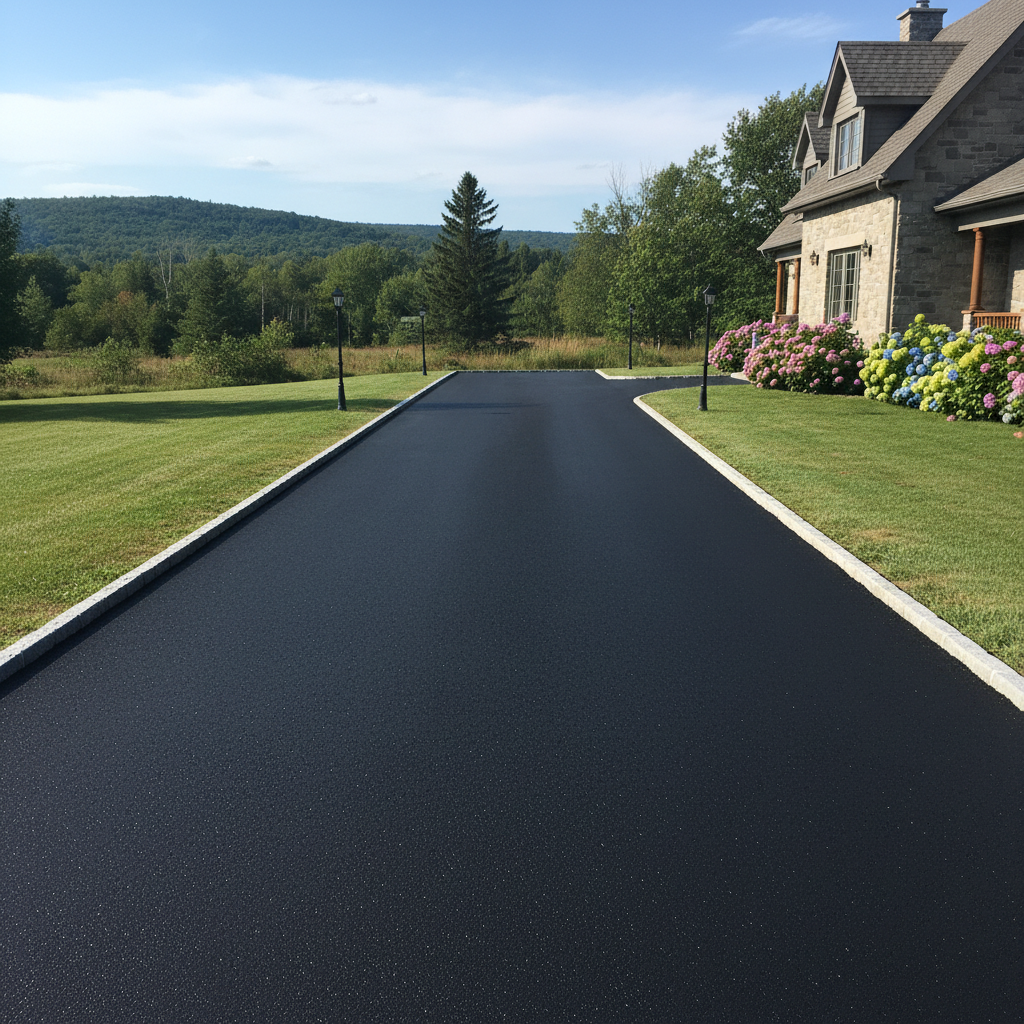
Driveway paving options and costs in Fort St. James
Fort St. James homeowners usually start by comparing asphalt, pavers and concrete, because most private driveways here are tied to single-detached homes. In the 2021 Census, single-detached houses make up 73.5% of local dwellings, and with a population of 1,386 there’s a tight, relationship-driven construction market. That matters: when a project window is short, contractors with the right crew availability and frost-prep experience get booked first—especially around neighbourhoods like the Downtown/Fort St. James core where access and drainage management are frequent issues.
In the Nechako economic region, the cost drivers are less about “fancy materials” and more about building a driveway that survives deep frost and repeated freeze–thaw cycles. Moisture movement through the structure can lead to heaving, cracking and surface raveling if the granular base isn’t deep enough and drainage isn’t corrected. Because the paving season is typically late spring through early fall, crews often compress work into fewer workable weeks, which can push labour and mobilisation premiums above milder parts of BC. On older properties—60.2% of homes were built before 1981—excavation and base reconstruction can be more common than homeowners expect.
Below are practical cost ranges homeowners in Fort St. James can use to sanity-check quotes. Use the “price per sq ft” as a quick comparison, then confirm what’s included (base depth, excavation, drainage, disposal and edge restraints) before you sign.
| Material |
Lifespan |
Maintenance |
Best For |
Price per sq ft |
| Asphalt (new installation, proper base) |
15–25 years |
Seal coat every 3–5 years if recommended |
Most Fort St. James driveways needing a durable, clean finish |
$12 – $18 |
| Asphalt (overlay on existing gravel base) |
10–18 years |
Seal coat sooner (often 2–4 years) if base is inconsistent |
Budget approach when gravel base is stable and drainage is corrected |
$10 – $15 |
| Interlocking concrete pavers |
25–35 years |
Occasional panel realignment; re-sand as needed |
Curb appeal and “repairable” surfaces near plough lines |
$18 – $28 |
| Poured concrete (broom finish) |
25–30 years |
Minor crack sealing; avoid salt pooling |
Low-maintenance, uniform look when base/drainage are right |
$20 – $30 |
| Exposed aggregate concrete |
25–30 years |
Sealant as specified; address cracks early |
Slip resistance and a higher-end surface texture |
$22 – $34 |
| Gravel / crushed stone (budget option) |
5–12 years |
Regrade and top up annually or every few seasons |
Short-term solution or overflow parking where paving can’t be timed |
$4 – $9 |
Prices are estimates only and vary by project scope, site access and material selection.
What affects the price of paving in Fort St. James
In the Nechako region—including Fort St. James—two quotes for what looks like the “same driveway” can differ by 30–50% once the details are priced in. The big reason is that cold-climate performance requires a deeper, better-built base and drainage system, not just a thicker-looking top layer. In Fort St. James, many driveways sit on glacial till or clayey soils where excavation, haul and recompaction costs are higher than in milder coastal areas. If you’re comparing to softer-climate BC projects, be cautious: in colder regions the standard granular thickness and compaction requirements are simply stricter.
Frost line depth and freeze–thaw cycles are decisive cost factors. When freeze–thaw cycles repeatedly push moisture upward, you need a thicker compacted granular base to reduce heaving and cracking. In colder interior work, granular base thickness is commonly on the order of 6–12 inches (and sometimes more) depending on subgrade conditions, which is why Nechako pricing tends to land closer to the higher end of local bands—like $12–$18 per sq ft for asphalt with a proper base.
Concrete pricing can move similarly when drainage and base work change. For example, if a driveway slope is causing water to pond near the garage apron, concrete may need additional base excavation and subdrain adjustments, pushing the job toward $20–$30 per sq ft rather than the low end. Conversely, a newer, well-drained base with straightforward grading can keep costs closer to average—provided the contractor still meets freeze–thaw-rated mix requirements for asphalt.
| Price Factor |
Why It Matters |
Cost Impact |
| Driveway area in sq ft |
Most material and equipment time scales with square footage |
High (can dominate the final number) |
| Base depth required |
Frost line and subgrade dictate granular thickness to resist heave |
High |
| Grading and drainage work |
Positive drainage (ditching/subdrains/crossfall) limits moisture movement |
Medium to High |
| Tear-out of existing surface |
Breaking, loading, hauling and disposal add labour and trucking |
Medium to High |
| Edge restraints and curbing |
Stops pavers/asphalt from spreading and protects the pavement edge |
Medium |
| Sealing requirement |
Asphalt typically needs sealing after 6–12 months, then cycles after |
Low to Medium (timing affects cash flow) |
| Site access |
Narrow lots slow equipment movement and may require extra labour |
Medium |
| Asphalt mix specifications |
Freeze–thaw-rated mix and proper compaction plan can cost more |
Medium |
Permits & regulations in British Columbia
In British Columbia, paving a private driveway within your own property usually does not require a building permit. Where approvals commonly come into play is work in the municipal right-of-way or anything that changes drainage and roadside infrastructure. For Fort St. James homeowners, that typically means you may need municipal approval if you’re doing things like a new curb cut, altering a boulevard ditch, changing culvert locations, or connecting/redirecting storm drainage. Some lots also fall under lot-grading bylaws that limit how close hard surfaces and grading can be to property lines or how water must be managed on-site.
Step one is to call for utility locates before any excavation. In BC, that’s done through BC 1 Call so lines are marked before base work begins. Step two is to confirm lot-grading and any right-of-way requirements with the municipality (particularly for driveway apron transitions, ditch alterations, or drainage tie-ins).
When you hire a contractor, verify three things in writing: (1) their BC paving/licensing status through the appropriate provincial business registry or contractor listing, (2) liability insurance with an active certificate of insurance naming you as additional insured where feasible, and (3) coverage for workers—in practice this is typically confirmed via a clearance letter or account verification for WorkSafeBC. Ask for the documents before work starts, not after mobilization. If they can’t provide current certificates, consider it a red flag.
Asphalt vs pavers vs concrete for Fort St. James driveways
Fort St. James freeze–thaw conditions reward the driveway system, not just the surface. Asphalt usually comes in lowest on upfront cost and can look great when installed with a proper base, but it’s a coating that benefits from sealing—plan on sealing every 3–5 years depending on traffic, snow storage practices, and how quickly water drains off. Interlocking concrete pavers cost more to install, yet they’re well suited to the reality of winter maintenance: when ploughing or settling happens, pavers can often be lifted, re-laid and reset without replacing the whole driveway. Poured concrete lands in the middle on material cost, but in cold climates it’s more sensitive to cracking if the base and drainage aren’t right, and if salt or brine pools on the surface (so air-entrainment and proper jointing matter).
For all three options, Nechako’s frost line means you should expect deeper granular base preparation and strict positive drainage (crossfall, proper slope, and ditch/subdrain considerations). In jobs where the existing base is poor—common on older properties (60.2% built before 1981)—the “hidden work” is excavation and rebuilding. That’s often where quotes diverge.
To put dollars on it: if a 500 sq ft driveway is quoted at asphalt, a typical band might be $12–$18 per sq ft. Pavers could land around $18–$28 per sq ft, which may feel steep—but the difference is justified when you want easier spot repairs after settlement near the garage or apron area. Concrete may be a good compromise at roughly $20–$30 per sq ft when the contractor designs for drainage and uses air-entrained concrete.
| Material |
Frost Resistance |
Curb Appeal |
Repair Method |
Lifespan |
Price Band |
| Asphalt (sealed regularly) |
Good when base and drainage are correct |
Medium (clean and uniform when new) |
Pothole patch and mill/overlay if needed |
15–25 years |
$12 – $18 |
| Interlocking concrete pavers |
Very good with correct edge restraint and bedding sand |
High (variety of colours/patterns) |
Lift-and-reset individual units or small sections |
25–35 years |
$18 – $28 |
| Poured concrete (air-entrained) |
Good to very good with proper base, joints and drainage |
Medium to high (uniform broom finish) |
Crack sealing and patch repairs |
25–30 years |
$20 – $30 |
| Exposed aggregate concrete |
Good to very good (surface texture helps traction) |
High (premium look) |
Targeted patching; sealer refresh as specified |
25–30 years |
$22 – $34 |
| Permeable pavers (drainage grid) |
Very good when designed with underdrains |
High (modern look) |
Reset paver sections; clean-out drainage components |
20–30 years |
$20 – $35 |
| Chip seal / tar-and-chip |
Moderate (maintenance-driven in harsh winters) |
Low to medium |
Re-chipping and rejuvenation coatings |
8–15 years |
$10 – $16 |
How to choose a paving contractor in Fort St. James
Choosing a contractor in Fort St. James is mostly about verifying they can build for cold-climate performance and can prove they’re insured. Start with licensing/credentials in British Columbia: confirm their business standing online through the appropriate provincial resources, and ask for a copy of their liability insurance certificate (COI). Make sure coverage is current and matches the project location and scope—“general liability only” is sometimes still acceptable, but never settle for vague paperwork.
Next, confirm workers’ coverage. In BC this is typically validated with a WorkSafeBC clearance letter or equivalent account verification. Ask for the most current document date. If a contractor can’t supply insurance/clearance documentation before mobilizing, that’s a major risk for you.
Get 2–3 itemised written quotes, not lump sums. You want labour and materials broken down (excavation, granular base, asphalt/concrete, bedding sand, paver materials, drainage, edging, disposal and any regrading). Pay attention to exclusions: does the quote include disposal of removed asphalt/concrete? Is permit-related work included if it’s required (often right-of-way/drainage changes)? Ask for the start date, expected duration and completion estimate in writing.
For warranty, request workmanship terms clearly stated and separate from manufacturer material warranties. Also confirm whether warranties are transferable if you sell the property. Finally, the payment schedule should be conservative: never pay more than about 10–15% upfront, and use a holdback until you’ve completed a walkthrough and snag list. In short season climates, holdbacks protect you if the contractor gets pulled into competing work.
- Ask for a written base design: excavation depth, granular type and compaction targets.
- Confirm drainage plan: crossfall, ditches/subdrains, and how water is managed at the apron.
- Require line-item pricing for tear-out and disposal (dump fees and trucking can be significant).
- Verify asphalt mix spec for freeze–thaw durability if you’re paving asphalt.
- Get paver edge restraint details (to prevent spreading after ploughing).
- Ask who supplies bedding sand and what depth/tolerance is specified.
- Request a project schedule with a realistic paving window for Fort St. James.
- Confirm seal coat timing for asphalt (often after 6–12 months, weather dependent).
- Review warranty length, coverage, and who performs repairs.
- Ask for insurance COI and confirm the policy is active before work begins.
- Confirm WorkSafeBC coverage via clearance/account verification.
- Use a contract that spells out exclusions, change orders and protection of landscaping.
Red flags to watch for: vague “base included” language with no depth or compaction details; refusal to provide insurance/WorkSafeBC clearance; quoting only “top layer” while excluding drainage correction; demanding a large upfront payment (beyond 10–15%); and starting without a utilities locate plan or a defined completion walkthrough.
Frequently asked questions — paving in Fort St. James
What causes potholes and how are they repaired?
Potholes in Fort St. James are usually caused by water getting under the pavement, then expanding and contracting through freeze–thaw cycles. If drainage is off (poor crossfall or water redirected into the driveway edge), moisture infiltrates the asphalt or concrete base and weakens it. Repeated traffic—especially ploughing and snow storage that traps salty water—can accelerate failure at wheel paths.
Repair typically starts with proper excavation down to stable material, removal of saturated base, and rebuilding the granular layers with compaction. For asphalt, contractors then patch with asphalt and ensure the repair ties into the existing pavement. If you’re seeing widespread cracking, a localized overlay or broader base correction may be more cost-effective than repeated patches. While pothole patching can be relatively quick, the longer-term fix is always base and drainage.
How do I prepare for a paving project?
For projects in Fort St. James, preparation is mainly about clearing access and planning for equipment and disposal. Move vehicles, store trailers and confirm where delivery trucks and excavators can park safely. If you have fences, gates or landscaping near the driveway edges, protect them or relocate fragile items.
Before excavation, ask the contractor about utility locates through BC 1 Call and confirm they will proceed only after markings are complete. If you have drainage concerns—wet areas near the garage apron or standing water—document them with photos so they can be included in the scope. Also plan for short paving-season weather: crews may need to pause during cold snaps or rain, so ensure you can accommodate a start date and schedule changes.
Finally, review the quote line-items to confirm disposal, grading and any sealing requirement are included. Asphalt jobs often need sealing after 6–12 months, which homeowners should budget for.
How do I compare paving quotes fairly?
To compare quotes fairly in Fort St. James, ignore the total price until you’ve compared what’s included. Look for itemised costs: excavation depth, granular base type and depth, drainage correction, edge restraints/curbing, disposal, and the paving surface specification. A quote that’s cheaper can be missing base reconstruction or drainage work—then it “catches up” later through early failure.
Make sure pricing aligns with local bands: for example, asphalt new installation with a proper base commonly sits around $12–$18 per sq ft, while pavers tend to run $18–$28 per sq ft depending on restraints, edging and base requirements. If one quote is far below these ranges, ask why—especially in a frost-heavy area where freeze–thaw durability depends on the sub-base.
Ask each contractor the same questions and require a written start/completion timeline and warranty terms. If the scopes differ, request a revised quote that matches the same scope so you can compare apples to apples.
Can asphalt be laid in cold weather in Fort St. James?
Cold weather is one of the main reasons driveway paving in Fort St. James is seasonal. Asphalt placement needs suitable conditions because the mix temperature and air temperature affect compaction and long-term durability. In practical terms, hot-mix asphalt typically requires air temperatures well above freezing—commonly “above 10°C” is used as a planning threshold—so crews generally schedule work late spring through early fall.
If it’s too cold, asphalt may not compact properly, which increases the risk of premature raveling, cracking and moisture pathways. Even if the surface “looks fine” at the end of day, cold placement can reduce performance after the first winter freeze–thaw cycle.
Your best approach is to let the contractor assess forecasts and follow their cold-weather procedure. A reputable crew won’t pressure you to pave when conditions jeopardize compaction and mix performance, especially in Nechako’s deeper frost environment.
What is a driveway apron and do I need one in Fort St. James?
A driveway apron is the transition section at the road/curb area or where the driveway meets an approach surface—often designed to manage drainage, prevent edge failure, and create a smooth grade change. In Fort St. James, whether you “need” an apron depends on existing drainage, the slope change, and whether water is currently pooling where the driveway meets the roadway or adjacent ditch.
If your driveway has noticeable rutting, spalling at the edge, or standing water near the transition, an apron (or an upgraded transition detail) can be critical to stopping water from undermining the pavement. Sometimes this work also intersects with municipal right-of-way rules if it changes curb cuts, boulevard drainage or culvert alignment—so approvals may be required.
Ask your contractor to explain their apron design and whether it’s included in your scope. If it’s not in the quote, request it as a line-item so you can avoid surprises later.
How do I maintain my driveway through Fort St. James winters?
Winter maintenance in Fort St. James is about limiting water infiltration and avoiding damage during snow clearing. For asphalt, keep water from ponding by ensuring the surface drains properly and the edges aren’t clogged with snow and debris. Avoid using excess salt/brine that can pool on the surface near the garage apron—salt pooling worsens deterioration, especially on concrete.
For asphalt, plan sealing around $2–$4 per sq ft for the sealing phase (often quoted separately or as an add-on, timing dependent). Sealing is typically done after the driveway has aged enough—commonly after 6–12 months—so the surface can shed moisture properly before the next protection cycle.
When ploughing, try to keep blade contact gentle at the edges and restraints. For pavers, avoid scraping loose bedding sand or dislodging edge restraints. If you notice small depressions after thaw events, report them early; fixing base/drainage issues before they become potholes is far cheaper in the long run.