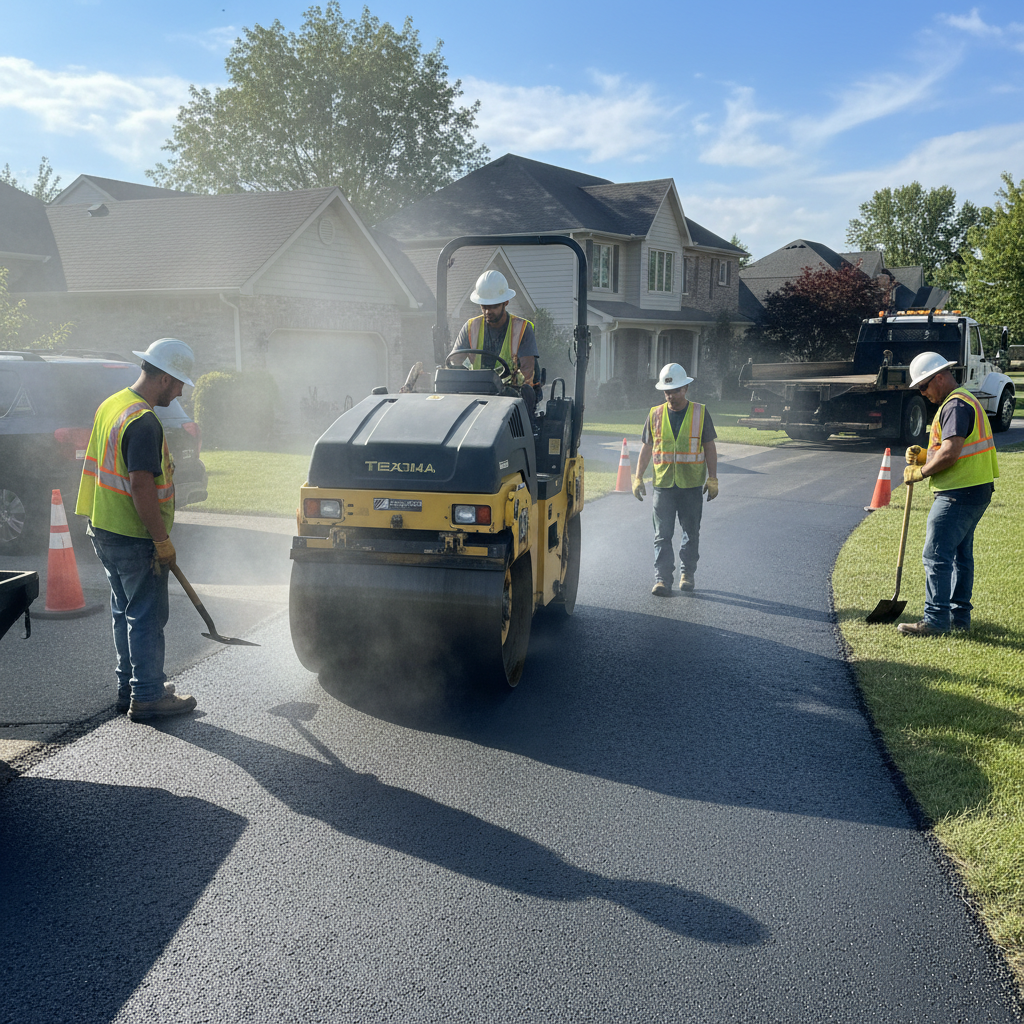
Driveway paving options and costs in Peachland
Peachland is a beautiful spot to live, but driveways here take a beating from Thompson–Okanagan freeze–thaw swings and the quick spring thaw that can saturate sub-grade. With 69.0% of dwellings being single-detached homes (Statistics Canada, 2021 Census), most private paving jobs in town are attached to detached houses—so demand is steady in areas like the Peachland Bench and along the lakefront corridors where access and drainage tend to be tight. In 2021, Peachland had 5,789 people overall (Statistics Canada, 2021 Census), and a high homeowner rate (81.8% of households own) typically translates into more planned upgrades versus quick “patch-and-go” repairs.
Pricing in Peachland is shaped by frost-resistant design rather than minimum sections. In the interior, paved surfaces and slabs see higher moisture exposure than many coastal jobs, so we build with substantially more compacted granular base to reduce heaving, rutting, and early cracking. Crews also plan around a shorter paving season; hot-mix asphalt generally needs air temperatures above about 10°C, and that means schedules tighten in late spring and early summer.
When you’re comparing materials, the biggest drivers are total structure depth, drainage/grading, and whether there’s tear-out and re-compaction. That’s why two homeowners can receive quotes that differ significantly even when the driveway width looks the same from the street. Use the table below to frame realistic expectations for common options in Peachland, then we can dial in the right structure for your soil and slope.
| Material |
Lifespan |
Maintenance |
Best For |
Price per sq ft |
Price Range |
| Asphalt (new installation, proper base) |
15–20 years |
Seal every 3–5 years |
Most cost-effective durable driveway |
$7.00–$12.00 |
$4,500–$9,000 |
| Asphalt (overlay on existing gravel base) |
10–15 years |
Seal within 6–12 months, then as needed |
When base is still solid and you want a refresh |
$6.50–$11.00 |
$3,800–$8,000 |
| Interlocking concrete pavers |
25–30 years |
Occasional joint sand top-up |
Premium curb appeal and easy spot repairs |
$14.00–$22.00 |
$6,500–$14,000 |
| Poured concrete (broom finish) |
20–25 years |
Seal/rehydrate coating when recommended |
Clean look and strong vehicle support |
$12.00–$20.00 |
$7,000–$15,000 |
| Exposed aggregate concrete |
20–25 years |
Low-touch sealing as advised |
Slip-resistant texture and standout appearance |
$15.00–$24.00 |
$8,500–$16,500 |
| Gravel / crushed stone (budget option) |
3–7 years |
Re-grade and re-top annually |
Short-term or low-budget approach |
$4.00–$7.00 |
$2,000–$5,500 |
Prices are estimates only and vary by project scope, site access and material selection.
What affects the price of paving in Peachland
In Peachland and across the Thompson–Okanagan, quotes for the “same” driveway can vary by 30–50% because the underlying structure, drainage work, and removal requirements often aren’t obvious from curbside. Two crews may quote different granular depths, different asphalt mix designs, and different disposal/tie-in details at edges and culverts, especially when soils are clayey or the driveway slope changes direction. Labour and mobilization also matter: the interior season is shorter, so contractors price in weather risk and schedule efficiency.
Freeze–thaw and frost depth are decisive cost factors. When effective frost penetration is deeper for a driveway section (due to moisture), the compacted granular base often needs a thicker build to reduce heaving and cracking. In many interior residential builds, homeowners typically end up around the 8.5–9 inch total structure range for asphalt/pavers with about 6 inches of compacted base, whereas coastal BC jobs may sometimes build closer to minimums because moisture exposure and freeze action are different. If your site needs deeper excavation and upgraded base materials, that alone can move you from a lower driveway band into the mid-to-upper range (for example, comparing $4,500–$9,000 asphalt installs versus higher-scope paver or concrete options).
Concrete costs can rise or fall fast based on cracking risk controls. For instance, a broom-finished slab with proper sub-grade compaction and well-planned control joints usually comes out closer to the lower end of the concrete band ($7,000–$15,000), but if the site is sloped and drainage corrections are needed, concrete may require more prep and reinforcement planning. Likewise, older homes in Peachland often mean older driveways—built when “good enough” drainage was common—so tear-out and grading become more likely, and the bill follows. Homes built before 1981 are 33.1% of the housing stock (Statistics Canada, 2021 Census), and that older infrastructure often adds hidden work.
| Price Factor |
Why It Matters |
Cost Impact |
| Driveway area in sq ft |
Most materials and labour scale directly with square footage |
High (can change quote by the most) |
| Base depth required |
Freeze–thaw resistance depends on compacted granular thickness |
High (thicker base = more excavation and material) |
| Grading and drainage work |
Slope, swales, and keeping water out of the structure prevent heaving |
Medium to high |
| Tear-out of existing surface |
Breaking and hauling old asphalt or concrete increases labour and disposal |
Medium to high |
| Edge restraints and curbing |
Prevents pavers/spread and keeps the profile true through winter |
Medium |
| Sealing requirement |
Asphalt typically needs sealing after curing (often 6–12 months) |
Low to medium (time and materials later) |
| Site access |
Narrow gates, long hauls, and limited staging slow equipment movement |
Medium |
| Asphalt mix specifications |
Freeze–thaw-rated mixes cost more but improve durability in the interior |
Low to medium |
Permits & regulations in British Columbia
For paving a private driveway within your own property in British Columbia, a building permit is often not required. However, you can run into municipal approvals when the work affects the area the municipality controls—especially the right-of-way. In practical terms for Peachland homeowners, work that typically DOES require municipal approval includes new or modified curb cuts/driveway approaches into the boulevard, changes to storm drainage patterns, and any alteration that directs runoff toward a municipal asset. Work that typically does NOT require a permit is replacing or paving on your private driveway footprint where grades, drainage, and any right-of-way interface remain consistent and utilities aren’t being impacted.
Before any excavation, call to have utilities located (BC 1 Call) and confirm your underground service locations. Then, verify your contractor’s compliance in three steps: (1) licensing—check the contractor’s active business information and trade credentials where applicable via online provincial/business resources; (2) liability insurance—ask for a current certificate of insurance and confirm the expiry date and that they are naming you as required (at minimum, ensure coverage is valid for the job); and (3) workers’ compensation coverage—confirm they have WSBC coverage via their clearance information provided before work starts.
Finally, confirm any lot-grading bylaw considerations with the municipality so your driveway and runoff path stay within the rules. Good drainage is what keeps freeze–thaw from turning small cracks into full failures.
Asphalt vs pavers vs concrete for Peachland driveways
Choosing a driveway surface in Peachland is mostly about balancing upfront cost, winter performance, and how you want the driveway to look. Asphalt is usually the lowest upfront option and can be very durable when the granular base is built for freeze–thaw conditions; the trade-off is maintenance—plan to seal regularly, typically every 3–5 years, and more promptly after install. Interlocking concrete pavers cost more to put in, but they’re the most flexible for repairs: if a section settles or a minor base issue develops, crews can lift and re-set affected units without replacing the whole surface. Poured concrete sits in the middle on budget and appearance, but it’s more sensitive to cracking if the sub-grade and jointing aren’t handled correctly for the Thompson–Okanagan temperature swings. Air-entrained concrete and well-planned control joints are key.
In the interior, base preparation matters regardless of material. We typically plan on a frost-resistant granular structure rather than a thin layer, with proper compaction and drainage so water doesn’t sit under the slab or asphalt. Because Peachland winters can bring freezing conditions followed by thawing and wet periods, the best-performing driveways are those that keep water moving away from the structure and prevent pumping.
Is the price difference justified? Often it is. For example, if a comparable 600 sq ft driveway is around $4,500–$9,000 for asphalt versus $6,500–$14,000 for pavers, the paver premium can make sense if you want long-term curb appeal or you expect to address small drainage/settlement issues later. If you want the most predictable performance per dollar and are comfortable with sealing, asphalt is usually the best fit.
| Material |
Frost Resistance |
Curb Appeal |
Repair Method |
Lifespan |
Price Band |
| Asphalt (sealed regularly) |
Good with proper base and freeze–thaw-rated mix |
Medium |
Mill and overlay or patch |
15–20 years |
$4,500–$9,000 |
| Interlocking concrete pavers |
Very good; tolerates spot base corrections |
High |
Lift/replace individual pavers and re-level bedding sand |
25–30 years |
$6,500–$14,000 |
| Poured concrete (air-entrained) |
Good when jointed and properly air-entrained |
Medium |
Crack repair/patch; some sections may require section replacement |
20–25 years |
$7,000–$15,000 |
| Exposed aggregate concrete |
Good with proper finishing and cure |
Very high |
Localized repairs possible but often less seamless |
20–25 years |
$8,500–$16,500 |
| Permeable pavers (drainage grid) |
Good when designed for site soils and underdrain needs |
High |
Lift/replace sections; maintain infiltration layer |
20–25 years |
$9,000–$18,000 |
| Chip seal / tar-and-chip |
Fair to good; more maintenance sensitivity |
Low to medium |
Re-chip or patch potholes/raveling spots |
7–12 years |
$3,000–$7,000 |
How to choose a paving contractor in Peachland
When you’re hiring paving help in Peachland, don’t rely on “we’ve been doing it forever.” Start by verifying coverage and compliance. For British Columbia, ask for their liability insurance certificate (make sure it’s current for the job dates) and confirm WSBC coverage before work begins—your contractor should be able to provide confirmation/clearance documentation. For licensing and trade status, check the contractor’s business information and credentials through official online resources where available; if they can’t provide straightforward documentation, that’s a red flag.
Next, get 2–3 itemised written quotes. A good quote breaks down labour and materials and explains what’s included in excavation, base placement/compaction, asphalt/concrete installation, edge restraints, and disposal. Avoid a single lump sum with vague wording—ask what’s excluded (for example, landscaping restoration, utility locate fees, or additional excavation due to poor soils). Confirm whether permit handling is included (where municipal approval is needed) and whether debris haul-away and tipping are included.
For warranty, separate workmanship from product/manufacturer warranty. Ask for the workmanship warranty length and whether it covers settlement cracking, premature failure, and base issues. Also confirm if the warranty is transferable if you sell the home.
On payment, a common safe approach is not paying more than 10–15% upfront, with the majority due after key milestones. Hold back a final portion until the job is complete and cleaned up. Finally, insist on a written start date and completion estimate so you can plan around Peachland’s seasonal windows.
- Request proof of current liability insurance and check the policy expiry date.
- Confirm WSBC coverage (ask for clearance documentation before crews mobilize).
- Verify trade/business info from official online resources and match it to the contract.
- Get 2–3 itemised quotes (labour + materials + equipment time), not one lump sum.
- Ask for a site-specific base section plan: excavation depth, compacted base thickness, and compaction specs.
- Confirm drainage/grading responsibility—who corrects slope and where runoff goes.
- Clarify tear-out scope: what’s included for old asphalt/concrete breaking and hauling.
- Ask about edge restraints (especially for pavers) and whether curbs/retaining ties are included.
- Confirm asphalt mix type and freeze–thaw suitability for the interior climate.
- Discuss joints for concrete: control joints, spacing approach, and air-entrainment confirmation.
- Request a timeline in writing and understand weather-related hold points.
- Agree on warranty terms in writing and keep copies of documentation.
Red flags to watch for in Peachland: they won’t provide a written scope or base design; they ask for large upfront payments (beyond about 10–15%); they refuse to show insurance/WSBC documentation; they omit disposal and assume “you’ll handle it”; or they start without confirming utility locates and municipal right-of-way requirements when curb/drainage tie-ins are involved.
Frequently asked questions — paving in Peachland
What is a driveway apron and do I need one in Peachland?
An apron is the transition surface where your private driveway meets the roadway or the boulevard (often near the curb cut). In Peachland, whether you “need” an apron usually depends on whether the driveway approach ties into the municipal right-of-way and how the existing curb/boulevard is built. If you’re changing the curb cut, modifying drainage, or altering the boulevard edge, you’ll typically need municipal approval for that interface work, and an apron (or similar transition) is often required to manage runoff and reduce edge failure. For homeowners staying fully within their property limits and keeping the interface unchanged, an apron may not be required, but it can still be recommended for smoother transitions and better longevity in freeze–thaw.
How do I maintain my driveway through Peachland winters?
In British Columbia’s interior, the goal is to limit water movement under the structure and avoid damaging the surface with harsh de-icing habits. For asphalt, plan on cleaning debris in late fall, keeping the driveway drain paths clear, and applying sealing per your contractor’s schedule (often sealing after the first year, then every 3–5 years). For concrete, avoid aggressive salt overuse directly at cracks and joints—use sand for traction and keep ice removal from gouging edges. If you see a hairline crack, get it assessed early so water doesn’t work into the base. Also watch areas near the garage and low spots: these are where freeze–thaw can create pumping and more rapid deterioration. A well-drained grade and timely small repairs make the biggest difference in Peachland.
Is it worth sealing a new driveway right away in Peachland?
Usually, no—on asphalt you generally shouldn’t seal immediately the day it’s installed. In Peachland, the interior schedule often means you need the asphalt to cure and cool properly first; many crews recommend sealing after the surface has properly cured, often within a 6–12 month window depending on weather and mix. Sealing too early can trap moisture and reduce the long-term effectiveness of the membrane. If you wait until the right cure window, sealing helps slow oxidation and reduces the risk of surface raveling in repeated freeze–thaw cycles. As a budgeting reference, many driveways fall into asphalt install pricing of $4,500–$9,000, and sealing is an additional maintenance step typically worth planning for rather than treating as an optional “maybe later” item.
What is a chip seal driveway and is it suited to Peachland?
Chip seal (tar-and-chip) is a surface treatment where asphalt binder is sprayed and stone chips are embedded and rolled. It can be a good approach for certain rural or budget-focused applications because it’s typically lower cost upfront and can work well when done over a properly prepared base. In Peachland’s Thompson–Okanagan conditions—temperature swings and freeze–thaw—the main limitation is that chip seal can be more maintenance-sensitive. You may see raveling or patching needs sooner than asphalt or concrete, especially where water collects or traffic turns concentrate stress. If your driveway is on a stable, well-drained base and you’re okay with periodic re-spraying/patching, chip seal can be suited for some homeowners. Otherwise, homeowners often move up to asphalt or pavers for longer service life.
How much does driveway crack repair cost in Peachland?
Crack repair pricing in Peachland depends on crack type and the extent of preparation needed—hairline shrinkage cracks differ from cracks that show base movement or edge separation. For many residential repairs, contractors will clean and route/seal cracks or do localized patching, and the cost commonly varies with access and disposal. As a planning guide, small repairs often land in the “sealing & repair” style range of $500–$4,000 when it’s limited to a section or targeted crackwork. If repairs include tear-out and rebuild of a failing edge or spot settlement, pricing can step up quickly. The best way to keep costs controlled is to inspect early, especially after freeze–thaw seasons when water has the chance to infiltrate.
What base thickness do I need for pavers in Peachland?
For pavers in Peachland, base thickness should be designed for freeze–thaw performance and your site conditions (soil type, slope, and drainage). In the Thompson–Okanagan, a common durable residential target is around an 8.5–9 inch total paver structure with approximately 6 inches of compacted granular base, then the bedding layer and paver units. If your soil is clayey, if the driveway is on a slope, or if drainage corrections are required, you may need deeper excavation and upgraded base materials so the structure doesn’t heave or rut under repeated winter cycles. A reputable contractor will measure and specify granular thickness after inspecting your sub-grade—not just assume a one-size number. That’s what keeps paver joints stable and reduces “paver rocking” and edge failures.