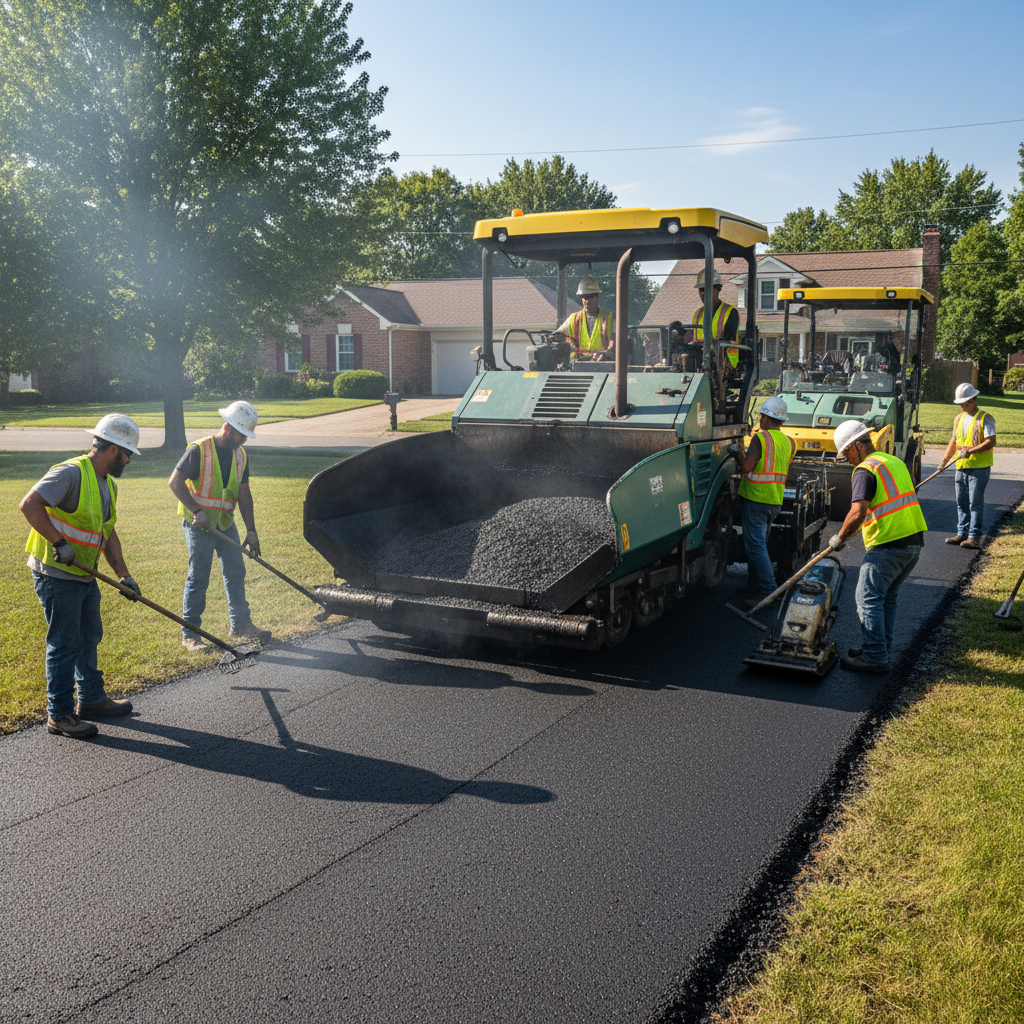
Driveway paving options and costs in Langford
In Langford, British Columbia, choosing the right driveway surface usually comes down to three things: your budget, how much maintenance you’re willing to do, and how your driveway handles the local freeze-thaw routine. Langford is a community where most private driveways serve single-detached homes—single-detached houses make up 35.1% of dwellings—and that matters because many homeowners are paving or re-paving long, vehicle-weighted drive approaches. Homeownership is also strong (64.8% of households own), so there’s steady demand for long-lasting surfaces that look good and stay functional.
Vancouver Island and the Coast have a mild coastal climate, but the “mild” part doesn’t eliminate pavement problems. We still see localized freezing and repeated freeze-thaw cycles around areas like Bear Mountain and the Sooke Road corridor, which can cause heaving, edge breakdown, and cracking if drainage and base prep aren’t engineered properly. The paving season can also tighten in spring and shoulder months, and Island trucking adds material and delivery premium—so two contractors quoting the same square footage can still differ by a meaningful amount, especially when tear-out and base corrections are needed. In addition, jobs where we uncover wet or poor subgrade (common on older, pre-1981 home sites—19.4% of homes were built before 1981) typically cost more because we’re not just resurfacing; we’re fixing the foundation layers first.
Below is a practical comparison of common driveway materials in Langford, with typical lifespan and maintenance expectations to help you translate “price per square foot” into a total project range.
| Material |
Lifespan |
Maintenance |
Best For |
Price per sq ft |
Price Range |
| Asphalt (new installation, proper base) |
12–18 years |
Sealcoat every 3–5 years |
Value-focused driveways with good drainage |
$10–$15 |
$6,500–$13,500 |
| Asphalt (overlay on existing gravel base) |
8–14 years |
Sealcoat; may need localized patching |
When you’re improving an existing gravel approach |
$12–$18 |
$7,500–$15,500 |
| Interlocking concrete pavers |
20–30 years |
Joint sand re-leveling as needed |
High curb appeal and easy spot repairs |
$25–$35 |
$12,500–$22,500 |
| Poured concrete (broom finish) |
20–28 years |
Crack monitoring; occasional patching |
Straightforward, low “surface” maintenance |
$18–$27 |
$10,000–$18,000 |
| Exposed aggregate concrete |
20–30 years |
Seal optional depending on product choice |
Non-slip finish and premium look |
$24–$35 |
$13,500–$23,500 |
| Gravel / crushed stone (budget option) |
3–8 years |
Re-grade and replenish annually |
Temporary solution or very tight budgets |
$6–$10 |
$4,000–$9,500 |
Prices are estimates only and vary by project scope, site access and material selection.
What affects the price of paving in Langford
In Langford and across Vancouver Island and the Coast, quotes for the same driveway can land 30–50% apart because the “real” scope often changes once we uncover the layers under the existing surface. On paper you might see a driveway size and a chosen finish, but in practice contractors price the foundation (excavation, base thickness, compaction), drainage corrections, and disposal—plus the cost of getting equipment in and out of your specific lot. Island trucking also pushes up material and some aggregate costs, and contractor availability tightens when conditions are ideal.
Two factors are decisive here: frost line depth and freeze-thaw cycles. Even though the coastal frost line is relatively shallow compared with Interior provinces, repeated freeze-thaw around the Victoria–Saanich–Langford area still creates heaving and cracking if the base isn’t engineered correctly. A deeper, more frost-exposed or poorly drained section typically requires a thicker, compacted granular base (on Vancouver Island we often target something closer to 4–6 inches for many driveway applications than you’d see in colder regions), along with improved grading and water management. Asphalt also has a seasonal constraint: hot-mix asphalt should be placed when air temperatures support proper compaction—often above 10°C—so scheduling pressure in spring and early summer can affect labour allocation.
Concrete pricing can move too. If your driveway is near curbs or has water runoff patterns from a slope, we may need additional forming and drainage adjustments to prevent ponding. And if the home is older (many properties in Langford have pre-1981 foundations), subgrade variability can force extra base rebuild work—sometimes pushing an “overlay” concept into a full-depth rebuild. That’s why a straightforward asphalt install (often starting around the $10–$20 per sq ft band) can become closer to the upper end once tear-out and drainage are included, while pavers can feel justified quickly when you’re trying to avoid “replace-the-whole-surface” repairs after localized movement.
| Price Factor |
Why It Matters |
Cost Impact |
| Driveway area in sq ft |
Most costs scale with square footage: excavation, base, asphalt/concrete/pavers, and finishing |
Typically 45–70% of total cost |
| Base depth required |
Frost line depth and drainage quality determine granular thickness needed to resist heaving |
Commonly +10–30% when extra rebuild is required |
| Grading and drainage work |
Correct slope and intercepting water reduces freeze-thaw damage around edges and transitions |
Often +5–25%, higher on complex lots |
| Tear-out of existing surface |
Breaking, removal, and hauling old asphalt or concrete changes labour and disposal time |
Typically +10–25% (can be more on thicker slabs) |
| Edge restraints and curbing |
Pavers need locking restraint; asphalt needs stable edges to prevent lateral spread |
Usually +3–15% |
| Sealing requirement |
Asphalt performs best with sealcoat after curing (often 6–12 months post-install) |
Adds recurring +$1–$4 per sq ft over time |
| Site access |
Narrow gates, steep drives, and limited parking spaces slow equipment movement and increase time |
Often +5–20% |
| Asphalt mix specifications |
Freeze-thaw-rated mix and binder selection improves long-term resistance in coastal conditions |
Typically +5–15% |
Permits & regulations in British Columbia
For most Langford homeowners, paving a private driveway within your own property generally does not require a building permit. Where things change is when the work affects the municipal right-of-way (the area between your property line and the street) or impacts stormwater flow. For example, you typically do need municipal approval if you’re creating a new curb cut, changing an existing boulevard driveway crossing, altering drainage patterns in the boulevard, or making modifications that affect storm drainage infrastructure. Some areas also enforce lot-grading rules that restrict how water is directed and how close hard surfaces can be to property lines.
Step one is always utility locates: in British Columbia, contact BC 1 Call before excavation so buried services are marked. Step two is contractor verification and paperwork before excavation begins. Ask for the contractor’s British Columbia licence (as applicable to the scope of work), liability insurance, and coverage for employees under the proper provincial workplace coverage program. Then confirm the details: request a current certificate of insurance showing your address as an interested party if available; verify the coverage is active for the dates of the job; and if you have to, request a clearance or proof-of-coverage document from the contractor’s WSIB/WCB account. Finally, confirm in writing who is responsible for permits (if any are required) and whether drainage corrections and disposal are included.
Asphalt vs pavers vs concrete for Langford driveways
When you’re weighing asphalt, interlocking pavers, and poured concrete in Langford, the freeze-thaw climate is the deciding background factor—even though we’re on a mild coastal Island. Asphalt is the lowest upfront option in most cases, typically helped by a well-built base and good edge stability, but it relies on routine maintenance. With sealcoat every 3–5 years (and after curing—often 6–12 months post-install), asphalt can hold up well; skip it and you’ll often see faster surface oxidation, raveling, and water getting into the system.
Interlocking pavers have the highest upfront cost, but they’re very forgiving when the ground moves. In a place like Langford where localized freeze-thaw around driveway edges can create small settlements, pavers can be lifted, re-levelled, and reset without replacing the entire driveway. Poured concrete sits in the middle on cost and can last a long time, but it’s susceptible to cracking if it’s not properly air-entrained, properly jointed, and installed on a base that resists moisture and movement. Concrete also needs good drainage detailing to avoid ponding—water is what accelerates freeze-thaw stress.
On Vancouver Island, we usually design driveway base and drainage with frost protection in mind (often closer to 4–6 inches of compacted granular base for many driveway applications, depending on subgrade and moisture), rather than the deep bases you’d see in colder continental zones. For salt and plough patterns, paver joints and surface sealing routines matter: pavers handle winter service well, while asphalt needs that ongoing seal strategy. As a simple justification example, if asphalt is near the $10–$20 per sq ft band and pavers land closer to $25–$45 per sq ft, the extra cost can be worth it when you want curb appeal plus easy repairs after edge or corner movement in freeze-thaw seasons.
| Material |
Frost Resistance |
Curb Appeal |
Repair Method |
Lifespan |
Price Band |
| Asphalt (sealed regularly) |
Good with proper base & drainage |
Moderate |
Patch localized areas; re-seal |
12–18 years |
$10–$20 |
| Interlocking concrete pavers |
Excellent when edges and base are engineered |
High (premium look) |
Lift/replace pavers in affected sections |
20–30 years |
$25–$45 |
| Poured concrete (air-entrained) |
Good with air entrainment and proper joints |
Moderate to high |
Patch cracks; manage joints |
20–28 years |
$18–$35 |
| Exposed aggregate concrete |
Good with correct base and moisture control |
High |
Limited patching; match finish |
20–30 years |
$24–$40 |
| Permeable pavers (drainage grid) |
Very good where you can manage subsurface drainage |
High (designed look) |
Reset pavers; clean infiltration system |
20+ years (system-dependent) |
$28–$50 |
| Chip seal / tar-and-chip |
Moderate; performance varies with maintenance |
Low to moderate |
Re-blot/recoat; localized repairs |
5–12 years |
$8–$16 |
How to choose a paving contractor in Langford
Choosing the right contractor in Langford is mostly about confirming three things: licensing/qualification (where applicable to the scope), insurance, and workforce coverage, then matching that with a quote that clearly explains what’s being built. Start by requesting the contractor’s British Columbia licence details (for the work they’re doing) and a current certificate of liability insurance. Ask for proof of workplace coverage for employees through the applicable provincial program; if you see “we’ll take care of it” but no certificate, that’s a stop sign.
Next, insist on 2–3 itemised written quotes. Look for a labour + materials breakdown (excavation, base, asphalt/concrete/pavers, compaction, forms/finishing, disposal, and any sealing allowance). Scope clarity matters: are permits (if required) included? Is disposal included? What’s excluded—like rock breaking, mud hauling, or trenching for drainage? A true paving contractor will explain what you’re paying for and why, especially in a coastal freeze-thaw area where base thickness and water management drive performance.
For warranties, separate workmanship from any product/manufacturer warranty. Confirm whether workmanship coverage is transferable if you sell your home. Keep the payment schedule sensible: never pay more than 10–15% upfront, and use a holdback until the job is complete and cleaned up. Also get your start date and completion estimate in writing so the schedule reflects Langford’s weather windows.
- Request written quotes with line items for excavation, base, compaction, surface material, and finishing.
- Confirm whether disposal/hauling of old asphalt or concrete is included.
- Ask how they handle drainage at the street transition and driveway edges.
- Verify contractor’s British Columbia licence/qualification for the scope.
- Obtain a current certificate of liability insurance before work starts.
- Confirm proper workplace coverage for employees (and request proof).
- Check warranty length for workmanship and what it actually covers.
- Clarify sealcoat timing for asphalt (commonly 6–12 months after install) and who supplies it.
- Confirm base thickness targets and how they account for soft subgrade.
- Verify edge restraints: asphalt needs stable edges; pavers need locking restraint.
- Ensure the quote includes jointing plans for concrete (and air-entrainment confirmation).
- Get a written schedule with weather contingencies.
Red flags in Langford: contractors who won’t put drainage/base thickness in writing, quotes that omit disposal or assume “existing base is good,” pressure for large upfront payments, no proof of current insurance/workplace coverage, and vague warranties that don’t clearly separate workmanship from materials.
Frequently asked questions — paving in Langford
How do I maintain my driveway through Langford winters?
For Langford (and much of Vancouver Island and the Coast), winter care is mostly about protecting the surface from water intrusion and preventing rapid freeze-thaw stress. For asphalt, avoid gouging with metal shovels; use plastic blades and clear snow promptly so water doesn’t pond and refreeze. If you use de-icers, choose ones that are less aggressive than heavy rock salt, especially on concrete; even the best installs can crack faster if de-icing salts are repeatedly concentrated in joints and low spots. Keep an eye on edges and low areas where water collects after rain—those spots often signal base or grading corrections are needed. Most importantly: keep to the maintenance plan—sealcoat is typically done every 3–5 years for asphalt to reduce oxidation and water permeability.
Is it worth sealing a new driveway right away in Langford?
In most Langford cases, sealing “right away” is usually not the right move. Asphalt needs curing first; many contractors plan the first sealcoat about 6–12 months after installation so the surface and binder can stabilize. If you seal too early, you can trap moisture and reduce how well the seal bonds to the asphalt, which can shorten life. That said, if your driveway is getting a lot of traffic early or you’re seeing light raveling, a contractor may recommend a controlled approach—so the best answer is job-specific. Budget-wise, sealing is relatively small compared to paving: sealing and repair are commonly in the $1–$4 per sq ft range depending on condition and product, so doing it at the correct time can protect an asphalt installation that would otherwise drift toward the upper end of your long-term costs.
What is a chip seal driveway and is it suited to Langford?
Chip seal (also called tar-and-chip in some areas) is a sprayed asphalt binder followed by stone chips rolled into place. It can be suited to properties where you want a more economical resurfacing approach, but it requires the right build and ongoing maintenance to perform well. In Langford’s freeze-thaw environment, chip seal can become patchy where water drains poorly or where edges aren’t properly restrained, because small movements let chips loosen. If your driveway sees heavy vehicle loads or frequent winter service with ploughing, chip seal can still work, but it’s not typically the “set and forget” option. Many homeowners prefer it when they’re working within the $8–$16 per sq ft kind of price mindset rather than investing in the longer lifespan of pavers or concrete.
How much does driveway crack repair cost in Langford?
Crack repair pricing in Langford depends on how many cracks you have, whether they’re active (widening with movement), and whether water has found a pathway beneath the surface. Small, stable cracks are often addressed with cleaning and crack sealing/patching, while wider or edge-related cracks may require localized base correction before resurfacing. As a rough homeowner planning reference, repairs usually fall within the “sealing & repair” band of about $1–$4 per sq ft, but the final number can be higher once mobilization, patch limits, and disposal are included. If you’re seeing repeating cracking after freeze-thaw seasons, it’s a sign the issue isn’t just cosmetic—proper drainage and base preparation may be the real cost driver to prevent the problem from coming back.
What base thickness do I need for pavers in Langford?
For paver driveways in Langford, base thickness is mainly driven by subgrade condition and drainage, not just the calendar. Because Vancouver Island and the Coast still experience localized freeze-thaw cycles, you need a stable, well-compacted base that resists movement. Many projects land around a compacted granular base in the general range of roughly 4–6 inches for typical coastal driveway conditions, but we often adjust based on whether the soil is draining well or if we find soft/wet areas during excavation. The bedding layer and joint sand design are also critical—pavers can look fine at first and still fail early if the base under them is too thin or not compacted properly. The most accurate thickness recommendation comes after we confirm your existing subgrade and grade/drainage.
How do I get the most accurate paving quote in Langford?
To get the most accurate paving quote in Langford, avoid comparing “price per sq ft” alone and instead compare what’s included. First, measure square footage and share driveway photos (front, sides, and where it meets the street). Then ask for an itemised quote that clearly states excavation depth, base thickness target, compaction method, disposal/hauling, and drainage/edge restraint details. Make sure the contractor addresses utilities by confirming that BC 1 Call locates are completed before digging. Also ask whether the quote includes permit work if you’re altering the municipal right-of-way or boulevard crossing. Finally, verify the contractor’s British Columbia licence/qualification where applicable, confirm liability insurance, and request proof of workplace coverage. A well-built proposal should be specific enough that you can predict performance through Langford’s freeze-thaw winters.