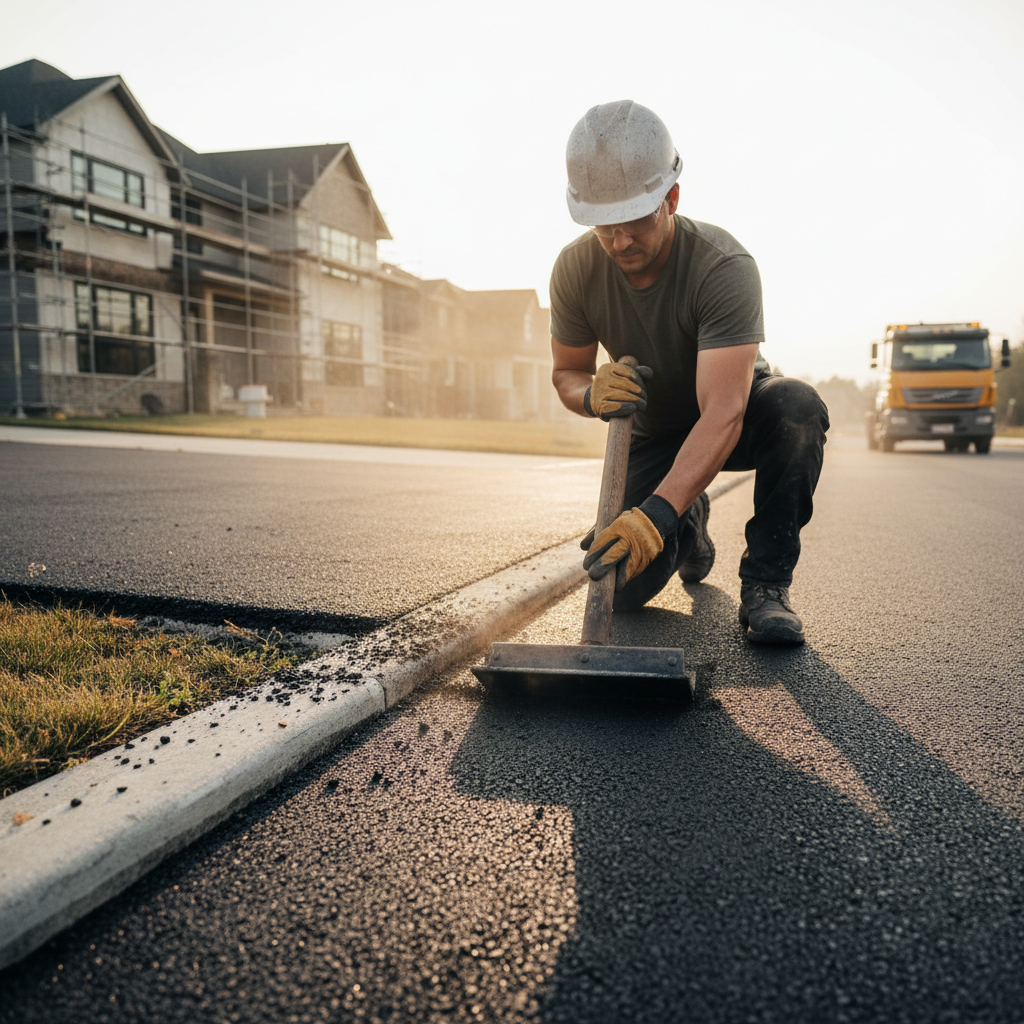
Driveway paving options and costs in Hatzic
In Hatzic, British Columbia, choosing a driveway surface is mostly about balancing upfront cost with how well the material performs through our wet winters and long shoulder-season storms. With a population of 2,952 people (Statistics Canada, 2021 Census), the market is smaller than Vancouver, but paving demand concentrates where homes are densest and access is easier—especially around Hatzic Bench and the older residential pockets near the Fraser Valley side roads. Most private driveways in this part of the Lower Mainland are on single-detached properties, so homeowners typically want a smooth, quiet ride that also looks good at the curb.
In the Lower Mainland–Southwest, the big cost driver isn’t extreme frost like Interior BC—it’s intense rainfall, drainage quality, and freeze–thaw cycling near a shallow frost line assumed for sensitive infrastructure (often treated around the ~18" range for planning). If drainage is poor or the granular base isn’t compacted to spec, you can see rutting, edge breakdown, and cracking even when temperatures don’t get “severe.” That’s why contractors in our region price more for excavation, base work, and compaction than for the surface material alone. You’ll also notice scheduling pressure in spring and early summer because hot-mix asphalt is production- and temperature-dependent, and heavy rain compresses workable days.
The table below gives realistic starting points for common driveway materials—use it to sanity-check any quote before you compare detailed scopes and measurements.
| Material |
Lifespan |
Maintenance |
Best For |
Price per sq ft |
| Asphalt (new installation, proper base) |
15–25 years |
Sealcoat every 3–5 years; patch as needed |
Most common choice for smoothness and value |
$12–$20 |
| Asphalt (overlay on existing gravel base) |
12–20 years |
Sealcoat every 3–6 years; add localized patching |
When excavation is limited and base is stable |
$10–$18 |
| Interlocking concrete pavers |
25–35 years |
Re-lay individual stones; joint sand top-ups |
Curb appeal and repairable surface |
$20–$40 |
| Poured concrete (broom finish) |
25–30 years |
Minimal routine work; seal optional |
Low-maintenance look with strong traffic durability |
$18–$35 |
| Exposed aggregate concrete |
25–30 years |
Seal every few years to reduce staining |
Non-slip texture and upgraded curb appearance |
$22–$40 |
| Gravel / crushed stone (budget option) |
3–8 years (typical) |
Re-grade and top up annually; weed control |
Temporary solution or low-traffic access |
$6–$12 |
Prices are estimates only and vary by project scope, site access and material selection.
What affects the price of paving in Hatzic
In the Lower Mainland–Southwest, it’s common to see quotes for the “same” driveway differ by 30–50%. A lot of that gap comes down to how each contractor treats the work beneath the surface—excavation, drainage corrections, and base thickness/compaction. Another reason costs move is seasonality: in colder regions of BC, asphalt production windows are tighter, and hot-mix asphalt requires air temperatures above 10°C. Even in milder Hatzic, repeated winter rain and shoulder-season conditions can delay installs and drive up overhead because crews still need to be ready for short weather breaks.
Frost line depth and freeze–thaw cycles are decisive cost factors. While coastal BC generally uses shallower base planning than Ontario/Alberta, contractors still design for a frost line assumption (often around ~18" for sensitive infrastructure). That means the granular base thickness may not be as dramatic as interior provinces—yet it still can’t be “thin” in exposed areas. If the base is undersized, you can get heaving and cracking when the saturated subgrade repeatedly cycles. In clay-heavy soil pockets in the Fraser Valley, proper drainage (grading, sub-drain options, and clean granular layers) becomes a major part of the price.
Concrete examples from Hatzic: (1) if your driveway ties into a curb or changes direction at the property line, expect added grading and possibly a drainage rework; that’s where “cheap” resurfacing can become an expensive fix. (2) Older driveways with failing edges often need full tear-out, not just patching—disposal and breaking concrete can swing the job by hundreds. On asphalt-only jobs, homeowners often find new installation in the $12–$20 range makes sense because it usually includes a full base build. If you’re considering interlocking pavers, the $20–$40 pricing is typically justified where repairability and curb appeal are priorities, especially with long winter maintenance and frequent plowing traffic near the street.
| Price Factor |
Why It Matters |
Cost Impact |
| Driveway area in sq ft |
Surface area dictates material, paving time, and base quantity |
High (often the largest swing) |
| Base depth required |
Frost planning and subgrade condition determine granular thickness |
High (extra excavation and gravel) |
| Grading and drainage work |
Good slope and runoff control prevent saturation and future movement |
Medium–High |
| Tear-out of existing surface |
Breaking, loading, hauling, and disposal add labour and dump fees |
Medium–High |
| Edge restraints and curbing |
Prevents paver spread and asphalt edge deterioration |
Medium |
| Sealing requirement |
Asphalt seals after curing help protect from moisture and oxidation |
Low–Medium (recurring every few years) |
| Site access |
Narrow driveways slow equipment movement and increase setup time |
Low–Medium |
| Asphalt mix specifications |
Freeze–thaw-rated mix and appropriate binder can cost more |
Low–Medium |
Permits & regulations in British Columbia
For paving within your own property in British Columbia, a permit is often not required for typical driveway surfacing—especially when you’re replacing an existing driveway surface like-for-like (same footprint and drainage function). In Hatzic, where most driveways sit entirely on private lots, homeowners usually do not need a building permit to repave an asphalt driveway or install interlocking pavers on the same area.
Where permits and approvals can be required is work that affects the municipal right-of-way. That includes creating or changing a curb cut/apron at the street, altering boulevard areas, and making storm drainage changes that connect to or modify municipal infrastructure. Some properties may also be subject to lot-grading bylaws that restrict how close hard surfaces and drainage features can be to lot lines and ditches. The exact requirement depends on where your driveway ties into the street and whether you’re changing grading.
Before excavation, always ensure utility locates are completed (BC 1 Call). Then, to verify your contractor in Hatzic: (1) check their BC business licensing status and trade qualifications through the appropriate online registry resources, (2) ask for a valid certificate of insurance showing liability coverage for the job, and (3) request proof of WSIB/WCB coverage (or a clear exemption statement where applicable). When you receive paperwork, confirm the certificate dates align with your project start and that the named insured matches the paving contractor who will perform the work.
Asphalt vs pavers vs concrete for Hatzic driveways
For Hatzic driveways, asphalt, interlocking pavers, and concrete each manage freeze–thaw and wet-weather performance differently. Asphalt typically has the lowest upfront cost and gives a smooth ride, but it relies on good base preparation and regular sealing—usually every 3–5 years—to stay resilient against moisture and oxidation. Interlocking pavers cost more at the start, yet they’re highly repairable: if a section moves due to drainage or a utility issue, crews can lift and re-lay only the affected area instead of replacing the entire surface. Poured concrete sits in the mid-range for cost, and when properly air-entrained it performs well, but concrete is more prone to cracking if base prep, drainage, or joint spacing isn’t handled correctly. In our Lower Mainland–Southwest conditions, cracking risks rise where water sits on the surface or where thawing repeatedly saturates the subgrade.
Base preparation is the common denominator. Even with shallower coastal frost planning, you still need compacted granular base and drainage that prevents saturation near the shallow frost zone. In clay-heavy areas, proper granular layers and slope are what make whichever surface you choose last. For winter maintenance, all three can work with typical plowing, but asphalt generally benefits from clean plowing techniques and consistent sealing. De-icing salt and grit can accelerate wear—especially on unsealed asphalt and on concrete that isn’t air-entrained and properly finished.
Here’s a typical decision example: if you’re choosing between asphalt and interlocking pavers for a similar driveway footprint, asphalt might land around the $12–$20 per sq ft band, while pavers are commonly closer to $20–$40 per sq ft. Paying the higher paver price is often justified when you value curb appeal, want a surface that can be repaired section-by-section, and expect future drainage adjustments.
| Material |
Frost Resistance |
Curb Appeal |
Repair Method |
Lifespan |
Price Band |
| Asphalt (sealed regularly) |
Good with proper base and drainage |
Good (clean, uniform finish) |
Patch and re-compact; localized resurfacing |
15–25 years |
$12–$20 |
| Interlocking concrete pavers |
Very good (flexible surface system) |
Excellent |
Lift/re-lay individual pavers and re-sand joints |
25–35 years |
$20–$40 |
| Poured concrete (air-entrained) |
Good if air-entrained and properly jointed |
Good (clean broom finish or stamped options) |
Concrete replacement for cracked sections |
25–30 years |
$18–$35 |
| Exposed aggregate concrete |
Good to very good (surface durability improved) |
Very good |
Replacement for damaged areas |
25–30 years |
$22–$40 |
| Permeable pavers (drainage grid) |
Excellent when designed for site drainage |
Good (modern drainage-focused look) |
Replace paver sections; maintain aggregate infill |
20–30 years |
$26–$48 |
| Chip seal / tar-and-chip |
Fair (maintenance and drainage must be right) |
Low to moderate |
Re-surface with spotwork or re-seal cycles |
8–15 years |
$10–$18 |
How to choose a paving contractor in Hatzic
When you’re hiring a paving contractor in Hatzic, British Columbia, start by verifying three things: licensing/eligibility (where required for their business type), liability insurance, and WSIB/WCB coverage. Ask for a current certificate of insurance and confirm the coverage is valid for the project dates. For WSIB/WCB, request proof of coverage for workers (or a documented exemption if they truly don’t employ workers). If a contractor can’t provide clear documentation, that’s a sign to move on.
Next, get 2–3 itemised written quotes—don’t accept a single lump sum without details. You want breakdowns for excavation, disposal, base gravel depth, compaction, surface thickness, and any drainage/grading corrections. Make sure they list whether they’re doing full tear-out or partial overlay, and whether the quote includes permit/municipal approvals if your work touches any right-of-way features. In the Lower Mainland, disposal and grading are frequent hidden costs, especially on older driveways with failing edges.
Look at the warranty: workmanship warranty length matters, and product/manufacturer warranty should be clearly tied to what materials were installed. Ask if warranties are transferable to a future owner.
On payment schedule, never let the job start with a large deposit. A common rule of thumb is 10–15% upfront at most, with a holdback until completion and final cleanup. Finally, require a written timeline with a start date target and completion estimate, because weather can affect asphalt placement, and crews need to coordinate dispatch around rain windows.
- Confirm their insurance certificate date range matches your job period
- Request WSIB/WCB coverage proof (or a clear exemption statement)
- Ask for at least 2–3 recent local references in the Lower Mainland–Southwest
- Insist on itemised quotes: excavation, base, compaction, and surface thickness
- Verify whether tear-out and disposal are included
- Check whether drainage/grading corrections are in the scope or “extra”
- Make sure edge restraints/curbing are specified (especially for pavers)
- Confirm asphalt includes a sealing plan after curing (typically within months)
- Ask about subgrade checks (proof-rolling, density testing, moisture considerations)
- Get the warranty terms in writing, including what triggers it
- Agree on payment schedule with holdback until final acceptance
- Require a written schedule and “weather delay” communication process
Red flags to watch for in Hatzic: a quote that ignores drainage and base thickness, vague wording like “as required” without measurements, unwillingness to provide insurance/coverage proof, cash-only pricing or unclear deposits, and no written start date/permit statement when right-of-way changes are involved.
Frequently asked questions — paving in Hatzic
How long before I can drive on new asphalt?
In Hatzic, most contractors aim for you to drive on new asphalt once it has cooled and set to a safe traffic-ready temperature. For typical residential driveway placements, that’s often within 24–48 hours, but the exact timing depends on weather (rain risk and air temperature), lift thickness, and whether tack coat and compaction were done correctly. If the job includes base work and drainage corrections, the asphalt still needs a full cure window before heavy turning movements. Ask your paving crew what the temperature/curing criteria are for your specific day. If you’re scheduling deliveries or moving vehicles, plan on lighter use first and avoid parking or hard turning on the surface until the contractor confirms it’s ready.
What causes potholes and how are they repaired?
Potholes usually come from water getting under the surface. In the Lower Mainland–Southwest, heavy rainfall and freeze–thaw around a shallow frost zone can loosen the granular base and weaken the compacted layers. Common causes include poor compaction, inadequate drainage slope, failing edges, and localized base washouts—especially on driveways with flat spots or where runoff is trapped near the garage. Repairs typically involve cutting out the failed area, removing unstable material, re-compacting new base (often granular), applying appropriate tack/binder, then placing asphalt to match the existing thickness and grade. Good repairs should extend slightly beyond the pothole edges so you’re not just patching the symptom. A proper fix is usually more cost-effective than repeated thin patching.
How do I prepare for a paving project?
Preparation starts with making access easy and protecting what you’re keeping. Clear vehicles, trailers, and stored items from the driveway and adjacent working area, and trim low plants or remove landscaping that would interfere with excavation. Mark any utilities, irrigation lines, or objects you want protected. If you have a gate, tight side passage, or steep entry, discuss it upfront so equipment can be staged safely. For homeowners in British Columbia, also plan for utility locates—ask your contractor if they’re arranging BC 1 Call, and confirm your home’s service areas won’t be impacted. Finally, consider timing: asphalt work is weather-sensitive, and rainy periods can shift schedules. Have a plan for parking that avoids early heavy traffic on fresh surfacing.
How do I compare paving quotes fairly?
To compare quotes fairly in Hatzic, focus on scope and build-up—not just the total price. Request itemised quotes that list driveway measurements, excavation depth, base material type and thickness, compaction approach, and asphalt/concrete thickness. Confirm whether the contractor includes tear-out and disposal, grading and drainage corrections, edge restraints, and any sealing plan. Check warranties for workmanship and ask when the workmanship starts (usually after substantial completion). You should also compare surface specs: a freeze–thaw-rated asphalt mix or proper jointing in concrete can affect performance and cost. If one quote is far below the others, it often means less base, less drainage work, or thinner surface thickness. Use the local price bands—many asphalt driveway jobs land in the $12–$20 per sq ft range when the base is done properly.
Can asphalt be laid in cold weather in Hatzic?
Asphalt placement in British Columbia depends heavily on air temperature, surface temperature, and weather conditions. Hot-mix asphalt generally requires air temperatures above roughly 10°C to be properly produced, placed, and compacted with the right density. In Hatzic, that means fall and early spring pours can be risky if nights drop cold or if rain interrupts the work window. Contractors may still schedule paving on milder days, but they should monitor conditions and ensure the subgrade and aggregate are ready. If the plan doesn’t include temperature control considerations, it’s a workmanship risk that can show up later as early raveling, cracking, or poor compaction. Ask your contractor how they decide the “go/no-go” day and how they handle weather delays.
What is a driveway apron and do I need one in Hatzic?
A driveway apron is the paved transition area at the bottom of your driveway where it meets the street (or curb/boulevard), creating a smooth, durable slope from the road to your lot. In Hatzic, whether you “need” an apron depends on existing geometry, drainage, and whether the driveway connection to the right-of-way is already deteriorating or out of grade. If you’re changing the curb cut, modifying the boulevard area, or altering storm drainage at/near the municipal connection, that typically triggers municipal approval requirements. Even when no permit is needed, contractors often include an apron to manage water flow and reduce edge failures that lead to potholes. If your quote mentions sealing and repairs but doesn’t mention how the apron transition will be built, ask for clarification—because this area is where many driveway problems start.