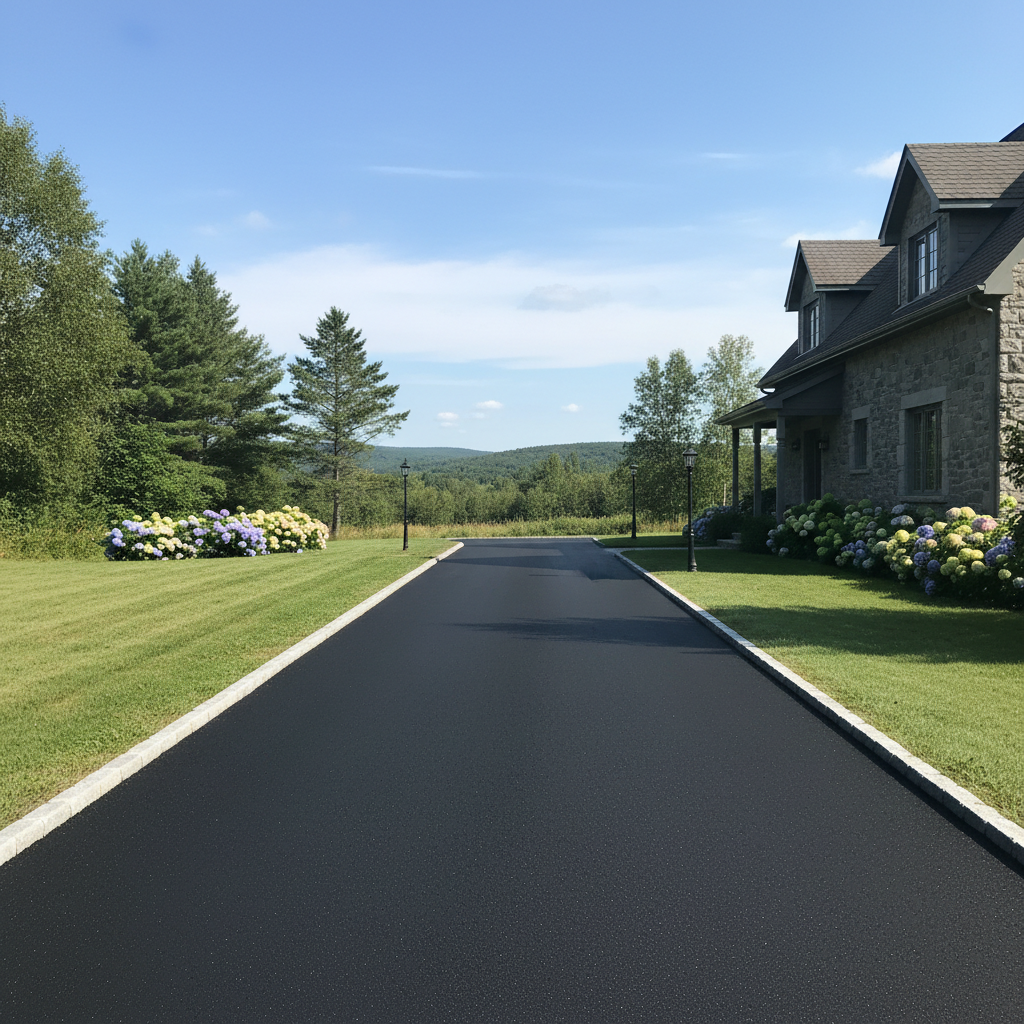
Driveway paving options and costs in Upper Mount Royal
Upper Mount Royal, Alberta is a small community in the Calgary economic region, with a population of 2,735 residents (Statistics Canada, 2021 Census). That matters for driveway paving because the local market is relatively compact: when crews are booked for nearby projects in Calgary and surrounding communities, scheduling windows tighten. In a neighbourhood like Upper Mount Royal, where most private lots sit next to single-family homes, driveways are a high-frequency improvement choice—so contractors often prioritize sites with straightforward access and clear drainage plans.
Calgary’s cold continental climate is the biggest driver of cost and performance. Frost can penetrate deeply (around 1.2 m / 4 ft), and the repeated freeze–thaw cycle in spring and fall expands and contracts moisture in the subgrade. For that reason, the “cheapest-looking” quote can change quickly once a contractor accounts for deeper compacted granular base, better drainage, and edge support to prevent heaving, cracking, and raveling. Work also has to fit a compressed paving season: hot-mix asphalt typically requires air temperatures above about 10°C, and concrete needs suitable curing conditions.
In Upper Mount Royal, demand tends to be especially strong in and around the residential corridors closer to major access routes where driveways must handle heavier winter maintenance (plowing and sanding) and quicker vehicle turnover. With that context, here’s a side-by-side comparison of common options and what you can realistically budget before you request an itemised quote.
| Material |
Lifespan |
Maintenance |
Best For |
Price per sq ft |
| Asphalt (new installation, proper base) |
15–25 years |
Seal coat every 3–5 years; crack fill as needed |
Budget-conscious installs with good drainage and base |
$12 – $20 |
| Asphalt (overlay on existing gravel base) |
10–18 years |
Seal coat every 3–6 years; monitor surface raveling |
Where you can prep and stabilize the base without full tear-out |
$10 – $16 |
| Interlocking concrete pavers |
25–40 years |
Weed control, re-sanding joints; occasional re-leveling |
High curb appeal and repairability (replace small sections) |
$18 – $30 |
| Poured concrete (broom finish) |
20–30 years |
Sealant every few years; crack repair as required |
Clean, uniform look and good load capacity with air-entrainment |
$15 – $25 |
| Exposed aggregate concrete |
20–30 years |
Sealant every few years; repair chips quickly to prevent spalling |
Slip-resistant finish and elevated curb appeal |
$18 – $28 |
| Gravel / crushed stone (budget option) |
3–8 years |
Re-grade, top up annually or as needed; edge maintenance |
Short-term solution or lowest upfront cost |
$6 – $12 |
Prices are estimates only and vary by project scope, site access and material selection.
What affects the price of paving in Upper Mount Royal
In Calgary and the wider Alberta market, quotes for the “same” driveway can vary by 30–50% because paving isn’t just asphalt or concrete—it’s base engineering, drainage, haul distance, crew time, and how much old material needs to be removed. A contractor quoting a low per-square-foot rate may assume an ideal base and simple access. Another contractor may include deeper granular thickness, geotextile, drainage corrections, and a full tear-out—costing more up front but reducing future repairs.
Frost line depth and freeze–thaw cycles are decisive cost factors here. With frost routinely penetrating to about 1.2 m (4 ft), contractors often need a thicker compacted granular base (commonly several additional inches beyond what you’d see in milder climates) to prevent heaving and cracking. Moisture control is equally critical: if water can’t drain away positively, you get pumping, weak subgrade, and surface raveling—especially when plows and sanding abrade edges. The paving season is also shorter in colder regions, and hot-mix asphalt generally requires air temperatures above about 10°C, which concentrates demand and can raise spring/summer scheduling pressure. Mix design matters too: freeze–thaw-rated asphalt mixes cost more than basic mixes, and they’re priced into the higher end of the $12,–$20 asphalt band when required for long-term performance.
Concrete costs can move as well. For example, a broom-finished driveway with air-entrainment and proper jointing may sit closer to the $15,–$25 range, while exposed aggregate typically costs more due to finishing labour and material. A small grade correction or drainage ditch extension can add labour and hauling, sometimes shifting a driveway from the lower end to the mid/high end of a band. On older or poorly compacted driveways—common on properties that have had multiple winter rebuilds—tear-out and base stabilization can add hundreds to thousands even before the final surface is placed.
| Price Factor |
Why It Matters |
Cost Impact |
| Driveway area in sq ft |
Most costs scale with surface area plus base and material volume |
Largest driver; typically 60–80% of total |
| Base depth required |
Frost control needs thicker, well-compacted granular layers |
More depth can add significant excavation and material haul |
| Grading and drainage work |
Proper slope and runoff direction reduce water trapping |
Can add labour, saw cutting, and additional drainage components |
| Tear-out of existing surface |
Breaking concrete or removing old asphalt and hauling it away |
Often a major swing factor versus “overlay” scopes |
| Edge restraints and curbing |
Prevents paver spread and keeps asphalt from migrating outward |
Increases material and formwork/labour time |
| Sealing requirement |
Asphalt needs seal coat timing to reduce oxidation and surface breakdown |
Adds recurring cost (often every 3–5 years) |
| Site access |
Narrow gates, long pulls, or tight turns slow equipment movement |
May increase crew time and mobilization |
| Asphalt mix specifications |
Freeze–thaw-rated mixes improve performance in Alberta conditions |
Pushes pricing toward the higher end of asphalt bands |
Permits & regulations in Alberta
In Alberta, paving a private driveway within your own property usually does not require a building permit, as long as you’re working on your private land and not altering municipal infrastructure. However, work in the municipal right-of-way typically does require municipal approval. That can include new curb cuts, changes to boulevard grading, altering or connecting to storm drainage, and any modifications that affect how water is routed from the street. Some municipalities also apply lot-grading bylaws that limit how close a hard surface can be to property lines or how drainage must be handled.
No matter what the surface is—asphalt, pavers, or concrete—start with utility locates. Call Alberta One-Call before excavation so the contractor can mark buried services. Then confirm lot-grading rules with the municipality to avoid a situation where the driveway surface drains toward a neighbour or the street in a non-compliant way.
For an Upper Mount Royal homeowner, the practical verification steps are straightforward: (1) confirm the contractor’s Alberta licence/registration status using the appropriate online registry resources for contractors; (2) request a current certificate of liability insurance showing adequate coverage; and (3) verify WSIB/WCB coverage where applicable by asking for a clearance letter or proof of account status. A reputable contractor won’t hesitate to provide these documents with your quote package before any work starts.
Asphalt vs pavers vs concrete for Upper Mount Royal driveways
For Upper Mount Royal driveways, the choice usually comes down to how you want to balance upfront cost, winter durability, and the ability to repair without replacing everything. Asphalt is typically the lowest upfront option, priced in the $12,–$20 per-square-foot band when the base is done correctly. Its trade-off in Calgary is lifecycle maintenance: a good seal coat program every 3–5 years helps slow oxidation and surface wear from freeze–thaw and plowing abrasions.
Interlocking concrete pavers cost more upfront—often within the $18,–$30 band—but they’re the most repairable. If a section heaves due to a localized drainage issue, it can often be lifted, corrected, and reinstalled without tearing out the entire driveway. That repairability is valuable in a neighbourhood where individual driveway conditions vary (soil moisture, slope, and how well runoff drains away).
Poured concrete generally sits mid-range, commonly within the $15,–$25 band for broom-finish work. In Calgary’s freeze–thaw climate, concrete must be air-entrained and properly jointed to control cracking. With de-icing salt and heavy vehicle loads, poor joint planning can lead to wider cracks over time, but well-designed concrete generally holds up well for decades.
Here’s a practical dollar example: on a 400 sq ft driveway, choosing asphalt at the low end might land around $4,800–$8,000 for surface and base (excluding any major tear-out), while pavers could jump to roughly $7,200–$12,000. That higher spend is often justified when curb appeal matters, when you prefer “repair small sections” over “replace the whole”, or when drainage is tricky and you want flexibility to correct localized problems.
| Material |
Frost Resistance |
Curb Appeal |
Repair Method |
Lifespan |
Price Band |
| Asphalt (sealed regularly) |
Good when base and drainage are engineered for frost |
Medium (clean, uniform finish) |
Mill/patch, seal maintenance, crack fill |
15–25 years |
$12 – $20 |
| Interlocking concrete pavers |
Very good with proper base and joint sand |
High (variety of colours/patterns) |
Lift and re-lay small areas |
25–40 years |
$18 – $30 |
| Poured concrete (air-entrained) |
Good when properly air-entrained and jointed |
Medium–High (clean modern slab look) |
Concrete crack repair, patching at joints/edges |
20–30 years |
$15 – $25 |
| Exposed aggregate concrete |
Good with proper mix design and curing |
High (texture and visual depth) |
Localized patch repair; reseal to protect finish |
20–30 years |
$18 – $28 |
| Permeable pavers (drainage grid) |
Very good for moisture management when designed correctly |
High (tech-forward look) |
Replace affected units; maintain infill/underdrain system |
25–35 years |
$22 – $35 |
| Chip seal / tar-and-chip |
Variable; depends heavily on aggregate quality and application |
Low–Medium (utilitarian finish) |
Spot repairs and re-chip/oversealing |
6–12 years |
$10 – $16 |
How to choose a paving contractor in Upper Mount Royal
Choosing the right contractor in Upper Mount Royal starts with documentation and a quote you can actually compare. In Alberta, ask for proof of licensing/registration (the contractor’s business credentials), current liability insurance, and WSIB/WCB coverage where applicable. How to check: verify the licence/registration using the relevant Alberta online registry resources; review the certificate of insurance for policy validity, insured party name, and coverage limits; and request a WSIB/WCB clearance letter or proof of account status so you know the contractor is properly covered for workers.
Next, request 2–3 written itemised quotes. You want a breakdown showing labour and materials separately, not just a single lump sum. Pay attention to exclusions: is demolition/tear-out included, is disposal (dump fees/hauling) included, and is permit or municipal approval support included when required in the right-of-way? Make sure base preparation is specified (depth, compaction method, aggregate type, and whether geotextile is included when needed for soil conditions). A clear scope protects you from budget surprises.
Warranty matters too. Confirm workmanship warranty length (not just “best efforts”), whether manufacturer product warranties apply to the specific materials used, and whether warranties are transferable to you as the homeowner. For payment, never agree to pay more than about 10–15% upfront; hold back a portion until the job is complete and deficiencies are addressed. Finally, get the start date and completion estimate in writing, including a weather contingency plan since Calgary’s freeze–thaw cycle can affect early-season compaction and cure times.
- Ask for their Alberta registration/licence number and verify it online.
- Request liability insurance with policy number, coverage limits, and expiry date.
- Get WSIB/WCB clearance proof (clearance letter or account status document).
- Demand an itemised quote: excavation/base, drainage, asphalt/pavers/concrete, and surfacing.
- Ensure tear-out scope is clearly stated (full removal vs overlay on existing base).
- Confirm drainage plan: slope direction, ditch connections, and whether positive runoff is included.
- Ask for base spec: depth, aggregate grading, compaction requirements, and any geotextile.
- For asphalt, confirm whether a seal coat is included (often needed after 6–12 months).
- For pavers, confirm edge restraints and joint sand spec.
- Review warranty terms in writing: workmanship, exclusions, and claim process.
- Agree on payment schedule with a holdback until final inspection and cleanup.
- Get a written timeline and conditions for rescheduling due to weather/curing temps.
In Upper Mount Royal, watch for red flags: vague “lump sum” quotes with no base depth or drainage details; reluctance to provide insurance/WSIB/WCB documents; no written scope for disposal and grading corrections; warranty terms that only cover materials (not workmanship); and crews that skip compaction evidence or refuse to discuss frost-protection and drainage design.
Frequently asked questions — paving in Upper Mount Royal
How do I get the most accurate paving quote in Upper Mount Royal?
For the most accurate quote in Upper Mount Royal (Alberta), schedule an on-site assessment so the contractor can measure your driveway area, check existing base condition, and verify drainage direction. Ask them to identify whether you can realistically overlay or if tear-out is needed—because removing old asphalt or broken concrete changes the budget quickly. Request an itemised estimate that includes base depth, aggregate type, and compaction steps, since Calgary’s freeze–thaw conditions and frost depth around 1.2 m drive base requirements. Also ask whether the paving window will affect scheduling; asphalt typically needs warm conditions (air temperatures above about 10°C), so spring jobs can be priced with higher demand.
How much does it cost to pave a driveway in Upper Mount Royal?
Cost in Upper Mount Royal typically depends on square footage, base preparation, and whether drainage corrections or full tear-out are included. As a practical reference, asphalt driveway paving usually lands in the $12 – $20 per-square-foot range when the base is built to resist frost-related heaving and cracking. Interlocking pavers commonly run $18 – $30 per-square-foot, especially when edge restraints and proper jointing are included. If you’re budgeting concrete, broom-finished poured concrete is often in the $15 – $25 range. If sealing is required, asphalt seal coating is commonly a separate line item—often in the $400 – $1,500 range depending on size and access.
Asphalt vs interlocking pavers vs concrete — which is best in Upper Mount Royal?
There isn’t one “best” for every Upper Mount Royal lot, but the decision usually follows your priorities. Asphalt is best when you want the lowest upfront cost and can commit to maintenance; in Calgary’s freeze–thaw climate, sealing every 3–5 years helps protect against oxidation and surface wear from plowing. Interlocking concrete pavers are often the best choice for homeowners who value curb appeal and repairability—small sections can be lifted and corrected if a localized drainage issue develops. Poured concrete (air-entrained) is a strong mid-range option for a durable, uniform look, but it must be properly jointed to control cracking through Alberta winters and de-icing use. If drainage is a concern, pavers can be more forgiving because they’re easier to renovate.
How long does a paved driveway last in Upper Mount Royal?
In Upper Mount Royal, lifespan is mostly determined by base quality and drainage—not just the surface material. With proper granular base and correct slope/runoff, asphalt commonly lasts about 15–25 years, assuming regular crack filling and seal coating. Interlocking pavers often reach 25–40 years because they can be repaired section-by-section, which is helpful when frost-related movement is localized. Poured concrete is often 20–30 years when air-entrained and jointed properly. Regardless of material, winter maintenance (plowing and sanding) stresses edges; good edge restraints and consistent drainage are key. If you neglect maintenance—especially asphalt sealing—surface raveling and water intrusion can shorten service life even when the base is otherwise sound.
When is the best time of year to pave in Upper Mount Royal?
The best time to pave in Upper Mount Royal is during the late spring through early fall window when temperatures support proper compaction and curing. For asphalt, hot-mix typically requires air temperatures above about 10°C, and you also want stable conditions so the mat can cool and compact correctly without trapping moisture. Concrete should be placed when temperatures won’t cause freezing during early curing, and contractors generally avoid cold snaps that can lead to surface scaling or inadequate strength gain. Planning early is especially important because Calgary’s shorter paving season increases demand for crews and equipment—small driveways can be pushed into peak scheduling when crews are busy.
How deep should the base be for Upper Mount Royal's frost?
Base depth is determined by soil conditions and drainage, but Calgary’s frost environment (frost penetration around 1.2 m / 4 ft) means you can’t rely on a thin base. In practice, contractors design a thicker, well-compacted granular layer specifically to reduce frost heave and limit water availability—especially on clayey or moisture-prone subgrades. The exact depth should come from the contractor’s assessment of your site and their frost-protection approach; it’s not one universal number. When you get quotes, insist the contractor state the proposed base depth and include details like aggregate type, compaction method, and whether drainage corrections or geotextile separation is needed. A properly built base is what protects your driveway from cracking and pumping after freeze–thaw cycles.