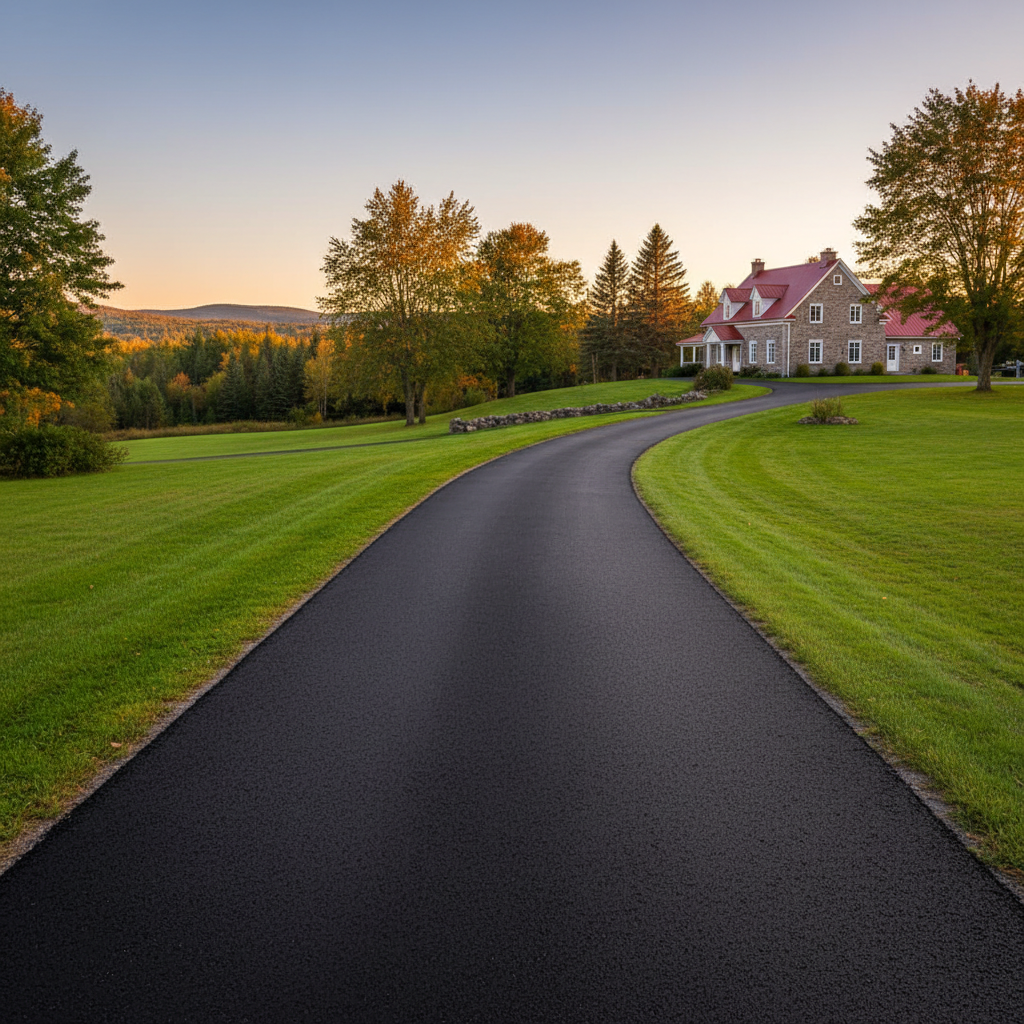
Driveway paving options and costs in Millet
In Millet, Alberta, choosing a driveway surface is about balancing upfront cost with winter durability. With 71.9% of dwellings in the area being single-detached houses, most driveways are tied to detached-home lots, where owners want a clean, reliable surface that can handle ploughing and the Edmonton-area freeze-thaw cycle. Millet’s housing mix also matters: 47.5% of homes were built before 1981 (Statistics Canada, 2021 Census), which often means older subgrades, older drainage patterns, and more “soft spots” under existing gravel or worn asphalt that need correction before you pave.
In the Edmonton economic region, paving quotes are driven less by material name and more by frost protection and drainage design. Local practice often targets frost depth protection around 1.5 metres or more, so contractors typically price extra excavation, granular base, and compaction time to reduce frost heave and settlement. Freeze-thaw cycling can be brutal when water is trapped in a base—water freezes, expands, and weakens the structure when it thaws—so drainage work is frequently the difference between a pavement that lasts and one that cracks early.
Trade demand is especially steady around established residential pockets where driveways are accessed directly from collectors and where homeowners want improved curb appeal before inspections or seasonal sales—conditions that also tighten scheduling. With that in mind, the table below gives realistic cost ranges you can use to sanity-check bids for Millet.
| Material |
Lifespan |
Maintenance |
Best For |
Price per sq ft |
Price Range |
| Asphalt (new installation, proper base) |
15–25 years |
Seal coat every 3–5 years; crack repairs as needed |
Value-focused driveways with good base and drainage |
$4.50–$8.50 |
$7,000–$15,000 |
| Asphalt (overlay on existing gravel base) |
8–15 years |
Seal coat sooner; pothole/crack monitoring |
Budget upgrades when base is stable |
$4.25–$7.75 |
$6,500–$12,500 |
| Interlocking concrete pavers |
25–35+ years |
Occasional re-leveling of a few units; joint sand refresh |
High-visibility curb appeal and easier targeted repairs |
$10.50–$15.50 |
$12,000–$28,000 |
| Poured concrete (broom finish) |
25–30 years |
Limited; keep surface clean, seal if recommended |
Low-maintenance, straightforward rectangular layouts |
$7.00–$12.50 |
$9,000–$22,000 |
| Exposed aggregate concrete |
25–30 years |
Seal as advised for stain resistance |
Enhanced traction and premium look |
$9.00–$14.50 |
$11,000–$24,000 |
| Gravel / crushed stone (budget option) |
3–7 years (varies widely) |
Re-grade and top up; weed control; add base annually |
Short-term solution or tight budgets |
$2.00–$4.50 |
$2,500–$6,500 |
Prices are estimates only and vary by project scope, site access and material selection.
What affects the price of paving in Millet
Two contractors can price the “same” driveway very differently in the Edmonton region because frost protection and drainage design are often treated as optional—or they’re handled with different engineering levels. That’s why quotes can swing by 30–50% even when the driveway size looks identical on paper. The biggest driver is whether a contractor plans for deeper granular base and stable subgrade to resist heave and settlement during the Edmonton-area freeze-thaw cycle. Another driver is schedule pressure: hot-mix asphalt production requires suitable air temperatures (often above about 10°C), so the paving season is tighter in colder markets, and crew mobilization costs rise when crews are booked.
Edmonton/central Alberta guidance frequently targets frost-depth protection near 1.5 metres or more, meaning base design commonly needs extra thickness and higher compaction requirements. In plain terms, if your existing base is weak or waterlogged, the job becomes excavation and rebuild rather than simple resurfacing. For homeowners, that can move a project from the asphalt band of about $7,000–$15,000 into the higher end quickly, and in tougher sites—poor grading, perched water, or soft clay—costs can approach the scope you’d see in interlocking paver projects.
Concrete pricing also responds to site conditions. A poured driveway may be higher when it needs thicker slab, tie-ins, or additional reinforcement because older lots may settle unevenly. Exposed aggregate can add cost due to finishing time. Conversely, a straightforward, well-drained site with a compactable base can keep asphalt closer to the lower asphalt range and reduce the need for costly base reconstruction.
| Price Factor |
Why It Matters |
Cost Impact |
| Driveway area in sq ft |
Most labour and material quantities scale directly with area |
Often 45–70% of total budget |
| Base depth required |
Frost line protection determines granular thickness and compaction |
Can add 15–40% if excavation is deeper than expected |
| Grading and drainage work |
Slope, ditch tie-ins, and subsurface drainage prevent water trapping |
Frequently 10–25% depending on conditions |
| Tear-out of existing surface |
Breaking, hauling, and disposing old asphalt or concrete |
Can add 8–20% (more if access is tight) |
| Edge restraints and curbing |
Prevents paver spread and asphalt edge failure |
Typically 3–12% depending on layout |
| Sealing requirement |
Asphalt performance depends on seal timing after installation |
Budget line item for future planning (often $600–$1,800/visit) |
| Site access |
Narrow lanes slow equipment and increase manual handling |
Can add 5–15% through labour and staging time |
| Asphalt mix specifications |
Freeze-thaw rated mixes can cost more and require correct placement |
Usually 5–10% but improves longevity |
Permits & regulations in Alberta
In Alberta, paving a private driveway within your own property typically does not require a building permit. That said, work that touches the municipal right-of-way often does. In Millet, that usually means anything like a new or altered curb cut/driveway apron at the road edge, changes to boulevard grading, or modifications to storm drainage that affect how water leaves the area. If your project includes any tie-in to municipal drainage or updates that change how the boulevard functions, you should expect to request municipal approval before construction.
Before anyone excavates, call for utility locates (Alberta One-Call). This is not optional—hitting buried services can halt the job, create safety risks, and lead to major repair costs. Next, confirm lot-grading rules with the local municipality or the authority overseeing drainage and runoff direction. Older lots (including many homes built before 1981 in the area) may have drainage arrangements that aren’t compliant with modern expectations, so it’s smart to verify how you’re allowed to direct surface water.
To verify a contractor in Millet, ask for: (1) their Alberta licence information (where applicable for the work scope), (2) a certificate of liability insurance showing adequate coverage for paving operations, and (3) proof of WSIB/WCB coverage for workers. Step-by-step: request the documents before booking, check that the certificate is current and matches the contractor name, and confirm the crew includes covered workers for the duration of excavation and paving.
Asphalt vs pavers vs concrete for Millet driveways
For Millet driveways in the Edmonton-area freeze-thaw climate, the “best” material depends on how much you want to pay upfront and how you prefer to deal with winter wear. Asphalt is usually the lowest upfront option and can look good when installed with a proper base and a timely seal, but it requires sealing every 3–5 years to protect against oxidation and water intrusion. In this region, that sealing schedule matters because trapped moisture accelerates freeze-thaw damage in the pavement structure.
Interlocking concrete pavers cost the most initially, but they’re repair-friendly: if one area shifts from subgrade issues, a contractor can remove and re-install affected units without tearing out the whole surface. That’s a big advantage on older lots where subgrade can vary. Poured concrete sits in the mid-range price band and can be a solid performer when it’s air-entrained and properly detailed for freeze-thaw. Still, concrete can crack—especially if drainage is off or de-icing salts are used aggressively—so a well-planned base and joints are critical.
Because Edmonton-area conditions often push frost protection demands deeper (frequently targeting around 1.5 metres), all three options need proper excavation, granular base thickness, and drainage design—not just “thicker asphalt” or “more concrete.” In winter maintenance routines with plowing and salt, asphalt that isn’t sealed tends to decline faster, while pavers handle localized repair better. If your site is stable and accessible, asphalt within the $7,000–$15,000 band can be a great value; if you’re spending closer to the paver band (up to $12,000–$28,000), you’re usually paying for longevity and easier repairs that can justify the premium over 20+ years.
| Material |
Frost Resistance |
Curb Appeal |
Repair Method |
Lifespan |
Price Band |
| Asphalt (sealed regularly) |
Good with proper base and drainage |
Medium (clean, dark finish) |
Patch and re-seal; overlay if needed |
15–25 years |
$7,000–$15,000 |
| Interlocking concrete pavers |
Very good with correct bedding and restraints |
High (premium look, many styles) |
Remove and re-install affected units |
25–35+ years |
$12,000–$28,000 |
| Poured concrete (air-entrained) |
Good when designed with freeze-thaw durability |
Medium–High (finish options) |
Panel repairs; limited patching if localized |
25–30 years |
$9,000–$22,000 |
| Exposed aggregate concrete |
Good when freeze-thaw and curing are controlled |
High (texture and traction) |
Limited patching; often re-finish or panel repair |
25–30 years |
$11,000–$24,000 |
| Permeable pavers (drainage grid) |
Very good for water management |
High (modern look) |
Targeted unit replacement; clean and re-sand joints |
20–30+ years |
$14,000–$30,000 |
| Chip seal / tar-and-chip |
Fair (shorter life in heavy freeze-thaw if base is weak) |
Low–Medium |
Re-seal; periodic maintenance |
6–12 years |
$6,000–$13,000 |
How to choose a paving contractor in Millet
Start with licensing and coverage checks, because paving in Millet is more excavation and compaction than “just laying material.” Ask for proof of Alberta licensing relevant to their scope, a certificate of liability insurance naming the correct legal business entity, and WSIB/WCB coverage for workers. Where to look: many reputable firms list registration details on their website or in an online business profile, but the documents themselves should be provided to you. For insurance, confirm the certificate is current (not expired) and the coverage matches the contractor named on the bid. For WSIB/WCB, request the clearance status letter or current evidence of coverage—if they can’t produce it, that’s a major red flag.
Next, get 2–3 itemised written quotes. You want a labour + materials breakdown (excavation/hauling/compaction, granular base, asphalt/paver/concrete supply, forming, disposal, and drainage) rather than a single lump sum. Read exclusions carefully: is permit work included if needed for right-of-way changes? Is disposal included for removed material? Are edge restraints or curbing included where required? Also confirm warranty details: workmanship warranty length, manufacturer/product warranty coverage, and whether warranties are transferable to future owners.
For payment schedule, never let the deposit exceed about 10–15%. Keep a holdback until the job is completed and the punch list is corrected. Ask for a start date and realistic completion estimate in writing—Edmonton-area seasonal constraints can affect paving timelines.
- Ask what frost-protection approach they’re designing (base thickness and drainage)
- Request a written scope with measurements (sq ft) and quantities
- Confirm whether tear-out and disposal are included
- Check edge restraint details (especially for pavers)
- Ask how they’ll compact each lift and what compaction testing method is used
- Verify seal timing for asphalt and who provides the first seal
- Confirm concrete mix is air-entrained (if poured concrete is proposed)
- Look for documented waste disposal method for removed base/concrete
- Check that utility locates are arranged before excavation
- Review warranty terms in writing (workmanship vs product)
- Ensure insurance and WSIB/WCB coverage are current and cover the full job window
- Agree on a schedule and holdback terms before work begins
Red flags in Millet: vague “installed price” with no breakdown, refusal to provide a current certificate of liability or WSIB/WCB evidence, no explanation of drainage/base design, cheap bids that assume no tear-out or no disposal, and missing or unclear warranty wording.
Frequently asked questions — paving in Millet
How long before I can drive on new asphalt?
In Millet, asphalt cure time depends on temperature, wind, and thickness, but most homeowners can expect temporary limited access sooner than full performance. Typically, light traffic may be possible after it’s cooled and stabilized, while full driveway use often aligns with the end of curing and compaction of the finished surface. If you allow vehicles on too early, you can mark the surface or push aggregates, which can become weak spots during the next freeze-thaw cycle.
Good contractors schedule work so your driveway is ready for household use within the same day or the following morning, then keep it closed long enough to avoid ruts. If your paving budget is within the asphalt band of $7,000–$15,000, ask your contractor to state the access window in writing, including whether they’ll provide barriers/temporary measures for safe entry.
What causes potholes and how are they repaired?
Potholes in the Edmonton-area climate usually start from water. If water gets into weak spots in the base or existing asphalt, it freezes and expands, then breaks the pavement further when it thaws—especially after repeated freeze-thaw cycles. Common causes include failing edges, poor drainage (water doesn’t slope away), inadequate granular base, or a surface that wasn’t sealed on schedule.
Repair depends on the cause and extent. Standard patching means cutting out unstable asphalt to reach firm material, cleaning and drying as needed, then placing hot mix in lifts and compacting. For recurring failures, a contractor should inspect the base and subgrade—sometimes it’s a localized base rebuild rather than repeated surface patches. If the work started as an asphalt install within the $7,000–$15,000 range but skipped base correction or sealing timing, potholes can return faster.
How do I prepare for a paving project?
Preparation is mostly about giving the contractor the information and access they need to build a stable, frost-resistant driveway. In Millet, clear vehicles and stored items first; contractors often bring grading equipment and need a straight path to manage compaction and hauling. Mark any buried lines you know of and ask your contractor to confirm utility locates through Alberta One-Call before digging.
Next, decide on drainage direction: if your driveway currently sheds water toward the foundation or pools near a corner, ask the contractor how they’ll correct grading and whether subsurface drainage is recommended. If your home was built before 1981 (Statistics Canada, 2021 Census notes 47.5% of area homes are that age), existing drainage and base conditions can be inconsistent—your preparation should include allowing a proper base assessment. Finally, remove landscaping that could be impacted and agree on a start date and access hours.
How do I compare paving quotes fairly?
To compare quotes fairly in Millet and the Edmonton market, focus on scope details—not just totals. Ask each contractor for a written breakdown: excavation depth, granular base thickness, compaction approach, drainage/grading changes, and whether tear-out and disposal are included. Verify the driveway area (sq ft) used in the calculation, and ensure edge restraints are included where required.
Check material and design specifics too. For asphalt, confirm freeze-thaw appropriate mix and whether sealing is included and when it will be applied (usually after 6–12 months). For concrete, confirm air-entrainment and finishing method (broom finish for traction). For pavers, confirm bedding and joint sand specs and the restraint system.
A good way to anchor your decision: if one bid is near the asphalt band of $7,000–$15,000 and another is near pavers at $12,000–$28,000, the difference should be explained by base work, drainage, and complexity—not by cutting corners. If it isn’t explained, ask questions before signing.
Can asphalt be laid in cold weather in Millet?
Asphalt placement in Millet depends on temperature. Hot-mix asphalt typically requires suitable air temperatures—often above about 10°C—to ensure proper paving, compaction, and adhesion. Cold weather placement can lead to poor compaction, reduced bonding between lifts, and higher risk of early cracking due to trapped moisture and weak structure.
If the weather turns, reputable contractors may delay paving or adjust scheduling rather than rush. That matters because freeze-thaw cycling will expose weak workmanship over the next winter. If your project is planned for late season, ask how they’ll protect the surface (tarping or stopping work) and how long they’ll wait before sealing. For homeowners budgeting asphalt in the $7,000–$15,000 band, treat seasonal timing as part of the cost: a crew that can’t meet temperature requirements may reschedule, and that affects mobilization and labour costs.
What is a driveway apron and do I need one in Millet?
A driveway apron is the paved section that transitions between the municipal roadway (or curb/ditch area) and your private driveway. In Millet, whether you need one depends on how your driveway meets the road edge and whether there’s an existing curb cut, boulevard grading, or drainage feature that requires a durable transition. If your work involves altering a curb cut, changing boulevard grading, or affecting storm drainage at the road edge, it typically falls under municipal approval requirements—so it’s important to confirm before you excavate.
An apron helps prevent washboarding, edge breakdown, and water runoff from undermining the driveway. It also improves plow durability where the roadway meets your driveway. If your quote includes right-of-way work, insist the contractor specifies what they’re installing and whether approvals are part of the scope. If you’re also considering asphalt around the $7,000–$15,000 band, a proper apron is one of the details that protects the investment in the harsh freeze-thaw stretch.