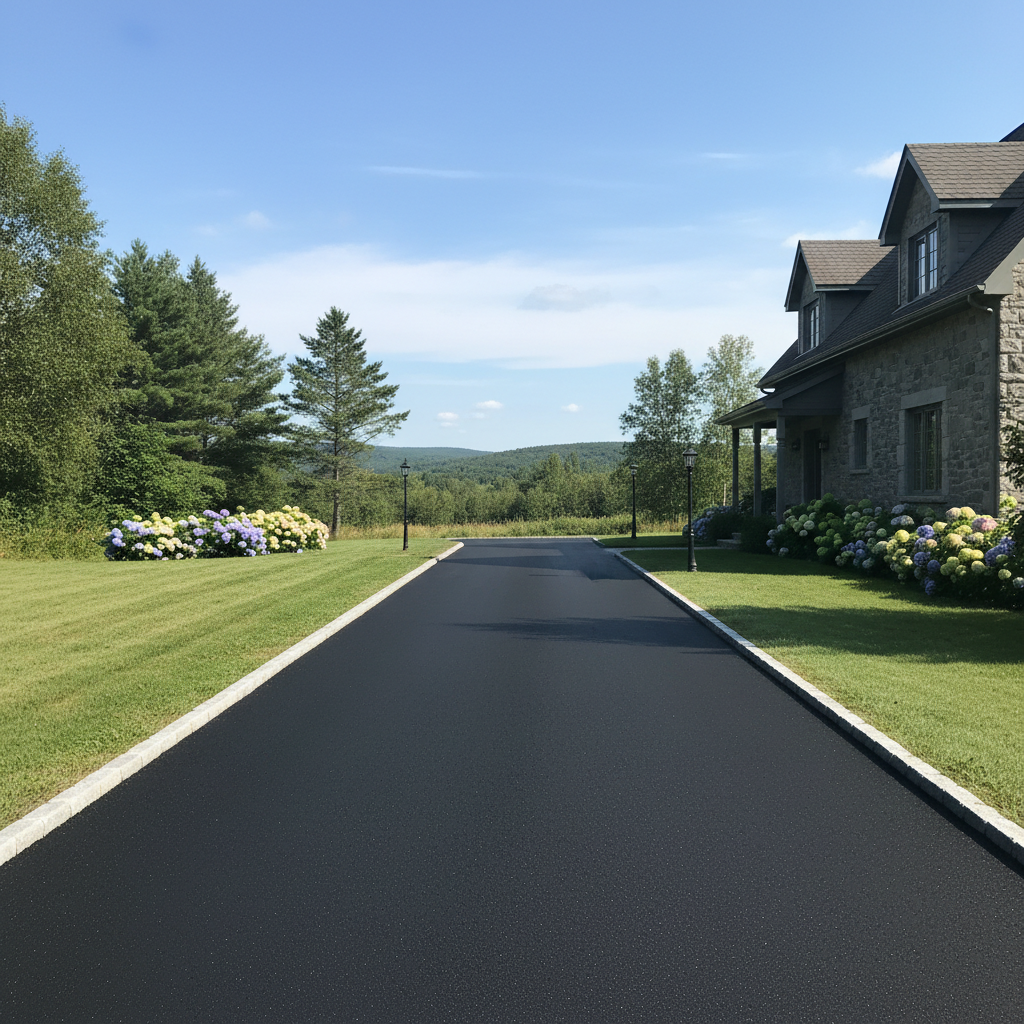
Driveway paving options and costs in Grande Prairie
Grande Prairie is a big driveway town, and the paving options you choose matter more here than in milder parts of Alberta because Athabasca–Grande Prairie–Peace River sits in a cold frost-susceptible zone. Frost can penetrate beyond 1 m in routine conditions, and freeze–thaw cycles keep stressing pavement edges and any weak subgrade. That’s one reason Northern Alberta bids often land toward the upper end of provincial norms—especially in spring when subgrades are soft and the paving window is tight. In 2021, Grande Prairie counted 64,141 people, with 16,305 homeowner households (65.7% of households own), and most private driveways serve single-detached neighbourhoods—single-detached houses make up 61.6% of dwellings. Much of the demand clusters in established areas like Heritage Estates (and similar older subdivisions), where older lots and 1981-or-earlier housing stock can mean more undercutting and drainage corrections before asphalt or pavers go down.
In practice, the “same driveway size” can price very differently depending on base preparation, granular thickness, and how much tear-out is required. A properly built asphalt driveway with a well-graded base commonly falls in the $6,500–$12,000 range, while interlocking concrete pavers often land higher at $9,000–$18,000 because of materials, bedding sand, and edge restraint work. If you’re comparing concrete, poured and exposed aggregate are usually priced similar to the broader concrete bands, but the true driver is whether the contractor must stabilize or replace frost-susceptible soil.
Use the table below to compare typical lifespan and budget expectations, then we can narrow pricing based on your site access, drainage, and existing conditions.
| Material |
Lifespan |
Maintenance |
Best For |
Price per sq ft |
| Asphalt (new installation, proper base) |
10–20 years |
Seal once after 6–12 months; re-seal every 3–5 years |
Best value for a clean, smooth driveway with solid base and drainage |
$6.50–$10.50 |
| Asphalt (overlay on existing gravel base) |
6–12 years |
Seal and patch spot failures early |
Quicker upgrade when the base is still sound |
$5.50–$9.00 |
| Interlocking concrete pavers |
20–35 years |
Sweep/clean; replace individual stones if needed |
Curb appeal and repairability on driveways stressed by freeze–thaw |
$9.00–$16.00 |
| Poured concrete (broom finish) |
20–30 years |
Minor crack sealing; keep water draining away |
Low-maintenance, uniform surface |
$10.00–$18.00 |
| Exposed aggregate concrete |
20–30 years |
Gentle cleaning; sealant as recommended to reduce staining |
Texture/grip plus premium curb look |
$12.00–$22.00 |
| Gravel / crushed stone (budget option) |
2–7 years |
Rake, top up annually; control washboarding |
Shortest upfront cost while you stabilize drainage and grading |
$3.00–$6.00 |
Prices are estimates only and vary by project scope, site access and material selection.
What affects the price of paving in Grande Prairie
In Athabasca–Grande Prairie–Peace River, it’s common to see driveway quotes vary by 30–50% for the same rough dimensions. The biggest reason is what’s under the pavement: frost action can punish thin bases and poor drainage, so contractors may need to undercut fine-grained subgrades (clays/silts) and replace with well-graded granular material, then build a deeper, compacted profile to resist heaving and cracking. Another driver is the regional paving season—hot-mix asphalt production typically requires air temperatures above 10°C, and Grande Prairie’s effective work window compresses most asphalt and concrete activity into about mid-May to September. When scheduling is tight, mobilization costs, overtime, and start-date premiums push pricing toward the upper end of typical Alberta bands.
Concrete and asphalt costs also depend on mix design and curing. For asphalt, a freeze–thaw-rated mix and proper compaction passes are essential in cold climates; for concrete, air-entrainment and proper jointing help it survive expansion and contraction. In the real world, two neighbours can pay very different totals. For example, a 600 sq ft asphalt driveway might come in near $6,500–$12,000 if the contractor only needs base shaping and compacting, but could climb toward the higher end if the job requires soil stabilization or extra drainage work. By comparison, interlocking pavers can be justified when you expect long-term curb appeal and easy spot repairs; their pricing often sits in the $9,000–$18,000 range because of labour-intensive edge restraint, bedding, and stone setting.
Housing age matters too. In Grande Prairie, 26.9% of homes were built before 1981, and older lots often have settled grades, thinner granular layers, and more water migration. That can turn a “simple overlay” into a tear-out and rebuild, adding thousands more in materials and disposal.
| Price Factor |
Why It Matters |
Cost Impact |
| Driveway area in sq ft |
Materials and labour scale directly with surface area |
Often the biggest swing; can change the total by thousands |
| Base depth required |
Frost line depth determines granular thickness to prevent heaving and cracking |
More depth typically adds material, hauling, and compaction labour |
| Grading and drainage work |
Slope and drainage corrections move meltwater away from the structure |
Can add significant cost if the yard needs regrading |
| Tear-out of existing surface |
Concrete breaking/hauling and old asphalt removal add time and disposal fees |
Commonly one of the higher “surprise” costs |
| Edge restraints and curbing |
Edges keep pavers/asphalt from spreading and failing at the perimeter |
Extra forms, rebar/blocks, and labour increase the estimate |
| Sealing requirement |
Asphalt needs sealing after curing to limit oxidation and water intrusion |
Regular sealing reduces long-term patching costs |
| Site access |
Narrow drives slow trucks, loaders, and compaction equipment |
May add crew time and minor mobilization premiums |
| Asphalt mix specifications |
Freeze–thaw-rated mixes cost more and require careful placement |
Higher mix cost can raise the paving component |
Permits & regulations in Alberta
In Alberta, paving a private driveway within your own property line typically does not require a building permit. However, work in the municipal right-of-way can trigger approvals. In Grande Prairie, that generally includes new or changed curb cuts, modifications to the boulevard area, and any changes that affect storm drainage (for example, redirecting runoff where it impacts municipal infrastructure). If your driveway project involves altering drainage patterns near the street or tying into catch basins, you should expect municipal review even if the main paving stays on your lot.
Step-by-step, here’s how a Grande Prairie homeowner can protect themselves and confirm contractor compliance:
- Ask the contractor what portion of the work is inside your property versus within the right-of-way.
- Confirm Alberta utility locates before any excavation; call the appropriate utility locate service (often referred to through Alberta One-Call) and do not start digging until you have clear locates.
- Verify the contractor’s Alberta licence status through the relevant online registry information they provide (or request their registration/licence details directly).
- Request a certificate of liability insurance naming you (or at least the project address/insured details) and confirm it covers the scope of work.
- Check WSIB/WCB coverage for workers (contractor can provide clearance or coverage documentation). If they can’t provide it, that’s a major red flag.
- If there are any grading impacts near the lot line, ask about any lot-grading bylaw requirements so drainage is controlled and doesn’t direct water onto neighbouring property.
Asphalt vs pavers vs concrete for Grande Prairie driveways
For Grande Prairie driveways, asphalt, interlocking pavers, and concrete all can work—but each reacts differently to the area’s long freeze–thaw cycle and how winter maintenance is performed (plough push, sand, and any de-icing chemicals). Asphalt usually has the lowest upfront cost and can look great when done with a thick, well-compacted granular base and proper drainage. The trade-off is maintenance: asphalt typically needs sealing every 3–5 years to slow oxidation and water intrusion. Interlocking concrete pavers cost more upfront, but they’re the most forgiving when the ground moves because you can lift and reset individual units rather than replacing the entire surface. Poured concrete sits in the middle cost-wise, but it’s more susceptible to cracking if the base is not properly prepared or if air-entrainment and jointing are not done correctly for freeze–thaw.
In the Athabasca–Grande Prairie–Peace River cold frost-susceptible zone, base preparation is non-negotiable. Expect contractors to design for frost penetration by using a deeper, well-graded granular base and drainage that keeps meltwater from cycling under the asphalt or slab. If your site has fine-grained subgrade, you may see added cost for undercutting/stabilization before any top surface goes down. A concrete example: if a 600 sq ft asphalt driveway prices in around the lower/mid band (roughly $6,500–$12,000), pavers might run closer to the higher band (often $9,000–$18,000). That price difference is usually justified when you want maximum curb appeal in neighbourhoods like Heritage Estates and you value “repair without a full tear-out” after a localized settlement spot.
All three materials benefit from the same winter routine: keep water directed away from the driveway edges, remove heavy snow consistently to avoid ponding, and avoid aggressive de-icing buildup on concrete. Pavers tend to hold up best to routine impacts because repairs are localized, while asphalt and concrete demand that the base and drainage be built to a freeze-resistant standard.
| Material |
Frost Resistance |
Curb Appeal |
Repair Method |
Lifespan |
Price Band |
| Asphalt (sealed regularly) |
Good when built on a deep granular base and sealed on schedule |
Mid (clean, smooth blacktop look) |
Patch and re-seal localized areas |
10–20 years |
$6,500–$12,000 |
| Interlocking concrete pavers |
Excellent because units can flex slightly and be reset |
High (multiple patterns/colours) |
Remove and replace individual stones |
20–35 years |
$9,000–$18,000 |
| Poured concrete (air-entrained) |
Good with air-entrainment, proper thickness, and joints |
Mid to high (depending on finish) |
Crack repair/seal; section repairs if needed |
20–30 years |
$8,000–$16,000 |
| Exposed aggregate concrete |
Good when the base and curing are correct |
Very high (texture and premium look) |
Patch and finish locally when feasible |
20–30 years |
$10,000–$20,000 |
| Permeable pavers (drainage grid) |
Excellent drainage control, reduces water cycling |
High (modern layout potential) |
Reset individual sections and keep drainage components clear |
20–35 years |
$11,000–$21,000 |
| Chip seal / tar-and-chip |
Moderate; depends on base and maintenance |
Low to mid (functional finish) |
Re-blend/chip reseal as wear occurs |
7–12 years |
$6,000–$10,000 |
How to choose a paving contractor in Grande Prairie
Choosing a paving contractor in Grande Prairie is mostly about proving they can build for frost and do the paperwork right. Start with licensing, liability insurance, and WCB/WSIB coverage: Alberta jobs should have clear coverage documentation before any excavation. Then protect yourself with itemized quotes—because in cold frost-susceptible zones, base depth, drainage correction, and disposal costs are where estimates separate.
Get 2–3 itemised written quotes that break down labour and materials separately (base material, asphalt/concrete, pavers, bedding sand, edge restraints, and any soil stabilization). Ask specifically what’s included: permit pull (if any), disposal/haul-away, granular compaction requirements, and whether the contractor will adjust slopes and tie into existing drainage. A good contractor will reference workmanship timelines and how they manage the short season; they’ll also give a clear start date target within the mid-May–September paving window.
Warranty matters in Grande Prairie. Look for a workmanship warranty length (often 1 year minimum for installation in many trades), then ask whether there’s a product/manufacturer warranty for asphalt mix or paver materials. Also ask whether the warranty is transferable if you sell your home. For payment, avoid large upfront cheques—typically keep deposits around 10–15%, and use a holdback until the job is complete and any final clean-up and touch-ups are confirmed. Finally, insist on a written timeline with completion estimate, not just a “this summer” promise.
- Confirm Alberta licence/registration status and ask for the specific document number.
- Request certificate of liability insurance and verify coverage limits are appropriate.
- Provide WSIB/WCB clearance or proof of coverage for workers before work starts.
- Ask for written itemized pricing: base, surfacing, edges, bedding, sealant, and disposal.
- Confirm base design assumptions (depth and compaction) for a frost-susceptible zone.
- Verify drainage scope: slopes, ditch ties, and removal of meltwater paths.
- Check whether tear-out is included and how disposal/hauling is priced.
- Require edge restraints/curbing details so pavers/asphalt can’t spread.
- Ask for asphalt sealing plan and whether it’s included after 6–12 months.
- Request a workmanship warranty in writing, including what it covers and for how long.
- Confirm the payment schedule and keep a holdback until final inspection.
- Get a signed schedule: start date window, weather contingencies, and completion target.
Red flags in Grande Prairie include contractors who won’t show insurance/WCB proof, quotes that lump “base” without depth/compaction detail, crews that start excavation without utility locates, and pricing that promises asphalt without sealing (or without explaining the 6–12 month cure timing). Also watch for “too-good-to-be-true” paver pricing that skips edge restraints—those are the jobs that shift and spread fastest under freeze–thaw pressure.
Frequently asked questions — paving in Grande Prairie
What is a driveway apron and do I need one in Grande Prairie?
A driveway apron is the paved transition area where your driveway meets the street/curb (often at the curb cut). In Grande Prairie, whether you “need” one depends on the condition of the curb opening and how water and snowmelt are handled at the road edge. If there’s a municipal curb cut or you need to change the boulevard connection, that’s the part that more often falls under municipal approval rather than just private-lot paving. A proper apron also helps reduce washboarding and premature cracking at the transition by improving load transfer and drainage control. If your quote is only covering the asphalt/pavers on your lot, ask if the apron work is included and whether any right-of-way approvals are required.
How do I maintain my driveway through Grande Prairie winters?
Winter maintenance is mostly about preventing water and protecting the edges. Keep ploughing consistent to avoid ruts that collect meltwater, and remove snow before it becomes ice. For asphalt, timely crack sealing of any small splits helps stop water from getting underneath and freezing during freeze–thaw cycles. For concrete, use sand rather than aggressive salt spreading when possible; excess de-icing can accelerate surface scaling on poor-quality finishes. If you have pavers, avoid pulling up edges with equipment—stone joints should stay snug and bedding should remain undisturbed. Finally, check after thaw periods: if you see ponding or soft spots near the edges, address grading/drainage early rather than waiting for full surface failure.
Is it worth sealing a new driveway right away in Grande Prairie?
For asphalt in Grande Prairie, sealing immediately “on day one” is usually not ideal. Asphalt needs to cure so the oil/fines can stabilize and moisture doesn’t get trapped under the sealer. Most reputable contractors plan sealing after about 6–12 months, then re-seal every 3–5 years depending on traffic, snow removal practices, and how quickly wear appears. That schedule is where you get real value in a cold frost-susceptible zone: sealing slows oxidation and reduces water intrusion that can contribute to freeze–thaw cracking. If you paid in the general asphalt range of $6,500–$12,000, sealing is typically a smaller follow-up cost than repairing failed areas later.
What is a chip seal driveway and is it suited to Grande Prairie?
A chip seal (also called tar-and-chip) is a bituminous binder sprayed onto a prepared base, followed by stone chips broadcast and compacted into the binder. It can be a cost-effective surface when the base is well-built, and it’s often used on lower-speed roads or budget-minded driveways. In Grande Prairie, it can work, but the key is base preparation and drainage: if the subgrade is frost-susceptible and water isn’t moving away, chip seal can wear unevenly and require maintenance. You may see higher maintenance needs than asphalt because chips can loosen if traffic and freeze–thaw stress are concentrated. Expect it to be less “refined” than asphalt or pavers, and discuss longevity openly before choosing—some estimates place chip seal in a broader budget range (for example near $6,000–$10,000).
How much does driveway crack repair cost in Grande Prairie?
Crack repair pricing in Grande Prairie depends on crack type, length, and whether it’s a simple seal versus a deeper patch after base exposure. Small, dormant cracks can often be sealed, while active cracks with edge movement usually need more than just a surface fill. As a budgeting guide, sealing and repair work is commonly estimated in the $500–$3,500 range depending on how much area is involved and whether any localized patching is required. If your driveway is asphalt and the crack is letting water in, sealing sooner rather than later usually prevents freeze–thaw blowups. If you share your driveway dimensions and whether cracks are widening after thaw, a contractor can recommend whether a seal-only approach is enough.
What base thickness do I need for pavers in Grande Prairie?
For pavers in Grande Prairie, the “right” base thickness is driven by frost susceptibility and drainage, not just paver thickness. In a cold frost-susceptible zone where frost penetration can exceed 1 m, contractors commonly design with a deeper compacted granular base and correct grading so meltwater doesn’t cycle through freeze–thaw directly under the bedding layer. In practice, you might see a base build that can be several inches of granular material plus proper bedding sand thickness, but the exact number should come from the contractor’s site assessment (subgrade type, existing soils, and drainage). Homes built before 1981 (26.9% locally) sometimes have settled or inconsistent base layers, which can increase required undercut and stabilization. Ask your contractor to explain their base and compaction plan and how it addresses drainage at the driveway edges.