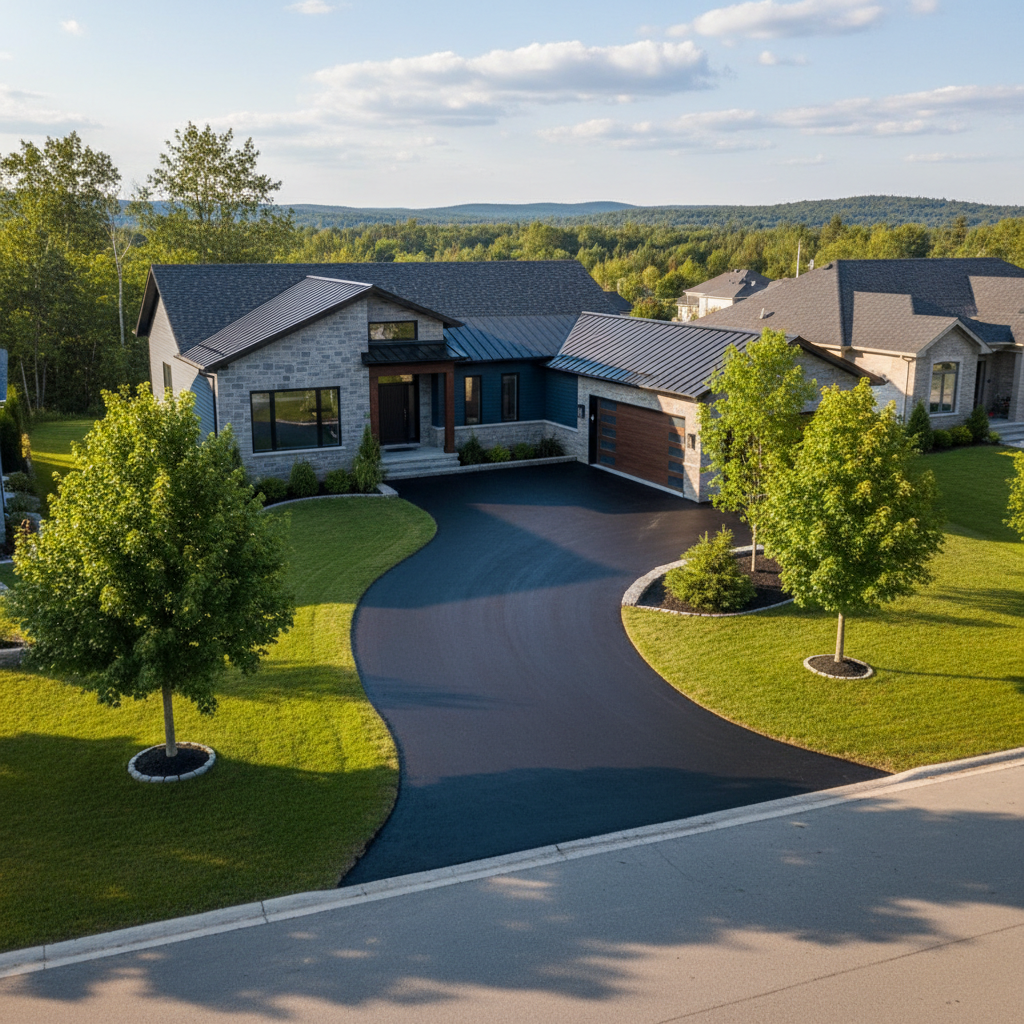
Driveway paving options and costs in Vista Heights
In Vista Heights, Alberta, homeowners typically want a driveway that survives Calgary-area freeze–thaw winters while still looking sharp against the neighbourhood’s mix of mature lots and newer builds. With a local population of about 2,300 people (Statistics Canada, 2021 Census), demand is smaller than in the core of Calgary, so smaller jobs can feel “peak-season expensive” when crews are already booked. Vista Heights also largely serves detached-home households, which means many driveways are single-access projects—great for consistency, but limited site access can still add labour and equipment time.
Cost in this part of the Calgary region is heavily influenced by frost depth and drainage. Frost can penetrate to around 1.2 m (4 ft), and repeated freezing and thawing can lift weak subgrades, leading to cracking, raveling, and edge breakdown if the granular base isn’t deep and well-graded. That’s why contractors price proper base preparation and positive runoff controls as much as they price the surface itself. The paving season is also compressed, so asphalt and concrete work often concentrates from late spring through early fall, tightening scheduling and affecting availability for small driveways.
Below is a practical comparison of common options you’ll see quoted in Vista Heights—so you can benchmark what “reasonable” looks like before you book an on-site measurement.
| Material |
Lifespan |
Maintenance |
Best For |
Price per sq ft |
| Asphalt (new installation, proper base) |
15–25 years |
Seal every 3–5 years; crack repairs as needed |
Best balance of upfront cost and performance in freeze–thaw when base and drainage are correct |
$12 – $20 |
| Asphalt (overlay on existing gravel base) |
10–18 years |
Seal every 3–5 years; monitor settling and edge breakdown |
When you need a faster upgrade and existing base can be improved without full tear-out |
$10 – $16 |
| Interlocking concrete pavers |
25–40 years |
Occasional re-setting of stones; joint sand top-ups; seal optional |
Curb appeal and easy localized repairs (no full replacement for a small failed area) |
$18 – $30 |
| Poured concrete (broom finish) |
20–30 years |
Minor patching; sealing optional depending on exposure |
Durability and a lower “maintenance mind-set” than asphalt |
$15 – $25 |
| Exposed aggregate concrete |
25–35 years |
Crack monitoring; sealing may be recommended |
Slip resistance and an upscale look that hides minor surface wear |
$18 – $28 |
| Gravel / crushed stone (budget option) |
5–12 years |
Re-grade and top up annually; edge containment needed |
Lowest short-term cost when you’re deferring a full rebuild |
$5 – $10 |
Prices are estimates only and vary by project scope, site access and material selection.
What affects the price of paving in Vista Heights
In Calgary and the surrounding Alberta market, two bids for what looks like the same driveway can vary by 30–50% because paving isn’t just “the surface.” Mobilization, excavation, haul distance, granular base design, drainage corrections, and how the contractor handles old material all change the labour and material quantities. In Vista Heights, where many projects are smaller residential driveways, contractors also price in the reality that crew time and equipment mobilization don’t shrink in proportion to square footage.
The biggest technical driver is frost and freeze–thaw. With frost penetration in the region to roughly 1.2 m (4 ft), deeper compacted granular bases and well-graded aggregates are often required to prevent heaving, which can otherwise show up as cracking, edge lifting, or surface raveling. That means base depth and compaction testing become cost items. The paving season is also shorter—hot-mix asphalt typically needs air temperatures above about 10°C for good paving and compaction—so spring and summer schedules can compress. When demand spikes, per-project pricing tends to move toward the top of the asphalt range (often around $12 – $20 per sq ft). For concrete, air-entrainment and proper curing are non-negotiable in Calgary’s freeze–thaw conditions, which can raise costs if a contractor has to adjust mix design to meet performance targets.
Concrete examples you’ll see in Vista Heights: (1) a driveway with poor runoff or a flat slope may require extra grading and sub-drain work, pushing the project upward; (2) a tight lot with limited truck and roller access often increases labour hours and equipment staging; (3) tearing out old asphalt or settlement-prone gravel can add breaking, hauling, and base rebuilding costs. Those scope changes are why a project that looks “simple” can land closer to $18 – $30 per sq ft for pavers or still land in asphalt at the higher end when the base rebuild is unavoidable.
| Price Factor |
Why It Matters |
Cost Impact |
| Driveway area in sq ft |
Surface area drives most material and paving crew time |
Higher area can lower unit cost; small jobs often cost more per sq ft due to mobilization |
| Base depth required |
Frost line demands enough granular thickness and compaction to prevent movement |
Deeper, well-graded base increases aggregate, labour and compaction time |
| Grading and drainage work |
Water must drain away from the base to reduce freeze–thaw damage |
Adding slope correction, ditches, or sub-drainage increases excavation and trucking |
| Tear-out of existing surface |
Removing failed asphalt/concrete reveals subgrade condition for correct rebuild |
Breaking, haul-off and disposal add significant labour and equipment costs |
| Edge restraints and curbing |
Edges hold the system together against spring thaw and plow vibration |
Higher-quality restraints can increase cost but reduce premature spreading and failure |
| Sealing requirement |
Asphalt needs membrane protection to resist oxidation and water infiltration |
Sealcoat adds an ongoing line item; skipping it shortens pavement life |
| Site access |
Tight gates, corners and slopes slow equipment movement |
More labour hours and potential smaller batching/handling increase cost |
| Asphalt mix specifications |
Freeze–thaw-rated mix design improves durability under winter stress |
Upgraded mix can raise per-ton cost; usually worth it where base quality is critical |
Permits & regulations in Alberta
For paving in Alberta, most homeowners are dealing with their own land, so the rules are typically straightforward. In general, paving a private driveway within your own property usually does not require a building permit. However, work that affects the municipal right-of-way often does. That can include new curb cuts, changes to boulevard areas, or alterations that impact storm drainage and how water leaves your site—those are the situations where municipal approval is commonly required. Also, some municipalities have lot-grading bylaws that limit how close a hard surface can be to property lines or require a certain drainage pattern so runoff doesn’t transfer onto neighbouring lots.
Before any excavation in Vista Heights, you should call for utility locates (Alberta One-Call is the local process) and confirm your underground service positions. That step reduces the risk of expensive damage claims and delays. Then verify that the contractor understands any grading or drainage conditions—because Calgary-area freeze–thaw performance depends on water control.
To check Alberta licensing and coverage step-by-step, ask the contractor for (1) their Alberta business documentation and contractor credentials (if applicable to the trade they’re performing), then (2) an up-to-date certificate of insurance naming you as additional insured where required, and (3) proof of worker coverage—typically WSIB coverage documentation where applicable in Ontario, but in Alberta you’ll want the relevant WCB clearance or coverage proof for their workers. Don’t rely on verbal confirmation: request current copies and verify the document dates before work starts.
Asphalt vs pavers vs concrete for Vista Heights driveways
In Vista Heights’ cold continental climate, your driveway material needs to handle frost penetration, freeze–thaw cycling, and winter maintenance impacts from plowing and sand/salt. Asphalt usually comes with the lowest upfront cost and is a common choice when homeowners want a quick, cost-effective upgrade. The trade-off is that asphalt needs sealing—typically every 3–5 years in our climate—to slow oxidation and reduce water infiltration into small surface voids. When the base is built properly, it performs well; when the base or drainage is off, asphalt can crack sooner.
Interlocking concrete pavers cost more up front, but they offer the best repairability. If a section settles due to localized base issues, pavers can be lifted, re-compacted and re-set without replacing the entire driveway. That’s a meaningful advantage in Calgary-area winters where water management and subgrade stability determine failure patterns. Poured concrete is mid-range in cost, and when it’s properly air-entrained and finished, it can be durable. Still, concrete can crack if drainage is poor or if the mix isn’t right for freeze–thaw and de-icing salt exposure.
Base prep matters across all options. In this region, contractors typically design deeper granular bases to resist frost movement and focus on positive slope and edge restraint. For a concrete example, a driveway that’s flat and sheds water toward the house or garage apron can require additional grading and possibly drainage corrections—adding cost to either asphalt or concrete, but often more for asphalt overlays that try to “work with” an existing base. A practical price justification: if you’re looking at asphalt around $12 – $20 per sq ft versus pavers around $18 – $30, pavers can be worth the difference when curb appeal and long-term repair flexibility are priorities.
| Material |
Frost Resistance |
Curb Appeal |
Repair Method |
Lifespan |
Price Band |
| Asphalt (sealed regularly) |
Good with a designed base and proper drainage; sealcoat helps manage water |
Moderate (clean, smooth finish; limited decorative options) |
Patch for localized failures; mill and replace small sections when needed |
15–25 years |
$12 – $20 |
| Interlocking concrete pavers |
Very good when installed on correct compacted base and edging restraints |
High (colour and pattern choices; crisp edges) |
Lift-and-relay affected paver sections; re-sand and reset |
25–40 years |
$18 – $30 |
| Poured concrete (air-entrained) |
Very good with air-entrainment and good curing; depends on drainage |
Moderate to high (broom finish is simple; upgrades available) |
Patch/repair small cracks; larger failures may require section removal |
20–30 years |
$15 – $25 |
| Exposed aggregate concrete |
Very good when properly mixed and cured for freeze–thaw |
Very high (textured look, hides minor wear) |
Patch with matching mix/colour; localized repairs can be more visible |
25–35 years |
$18 – $28 |
| Permeable pavers (drainage grid) |
Excellent water management for wet areas when base supports infiltration |
High (similar curb appeal to standard pavers) |
Lift-and-relay localized failures; maintain surface permeability |
25–35 years |
$22 – $34 |
| Chip seal / tar-and-chip |
Fair to good; performance depends on surface preparation and maintenance |
Low to moderate (functional finish) |
Spot repairs; occasional resurfacing is common |
8–15 years |
$10 – $16 |
How to choose a paving contractor in Vista Heights
When you’re choosing a paving contractor in Vista Heights, Alberta, start with proof—not promises. Ask for their Alberta business documentation and current liability insurance. Your certificate of insurance should show coverage limits, the effective dates, and it should clearly cover the type of work being quoted. Next, verify worker coverage documentation (WCB coverage proof/clearance where applicable) so you’re not left holding the risk if a worker is injured on your property. If they can’t provide current documents, that’s a strong sign to pause.
Then get 2–3 itemised written quotes that separate labour and materials—base excavation, granular supply, compaction, geotextile (if recommended), surface course, edge restraints, and any sealing. Avoid “lump sum” bids that don’t explain what thicknesses and drainage items are included. Read exclusions too: is permit/paperwork support included if the job impacts the right-of-way? Is disposal/haul-off included? Are utilities locate costs covered, or is that on you?
Warranty matters. Ask for the workmanship warranty length, and whether it covers labour and materials for specific defects (not just “cosmetic” issues). Also ask if product warranties are manufacturer-backed and whether they’re transferable to future owners. Payment schedules should be controlled: never pay more than 10–15% upfront, with holdback until the job is complete and you’ve received as-built details and any required closeout documentation. Finally, insist on a written timeline with a start date target and a completion estimate that fits the short late-spring to early-fall window.
- Confirm licensing/credentials and provide up-to-date proof documents on request.
- Request a current certificate of liability insurance (and additional insured status if required).
- Verify worker coverage proof/clearance so you’re protected.
- Get an itemised quote with base depth, thicknesses, and compaction steps.
- Ask whether geotextile is included (and why) for your soil condition.
- Confirm drainage plan: slope direction, tie-ins, and where runoff goes.
- Check if edge restraints/curbing are included and how they’re installed.
- Clarify tear-out scope: full removal or mill/overlay; include haul-off disposal.
- Require a written schedule and temp weather/curing plan for asphalt or concrete.
- Confirm sealcoat timing for asphalt and whether it’s included (often after 6–12 months).
- Review warranty details: workmanship coverage period and what triggers a claim.
- Use a payment schedule that limits upfront costs and holds retainage until finish checks.
In Vista Heights, common red flags include: (1) quotes that don’t specify base thickness or drainage corrections, (2) promises to pave regardless of short forecast windows, (3) no proof of insurance or worker coverage, (4) no written scope for tear-out and disposal, and (5) insisting on full payment up front with no holdback.
Frequently asked questions — paving in Vista Heights
How often should I seal my asphalt driveway?
In Alberta, and especially around Vista Heights where freeze–thaw drives water into micro-cracks, sealcoat is typically done every 3–5 years for driveways that see regular plowing and winter traffic. If your asphalt is newly installed, many contractors recommend waiting until the pavement has cured fully before the first sealcoat; follow the contractor’s schedule, because sealing too early can trap moisture. After that, annual inspection for hairline cracks and sealcoat touch-ups can extend the pavement life and delay the need for larger repairs. If your driveway is within the asphalt budget band (for example, roughly $12 – $20 per sq ft install quotes), sealing is the practical “maintenance lever” that keeps that lower upfront cost from turning into premature replacement.
Why does my driveway crack and heave in winter?
Cracking and heaving usually point to a moisture and movement problem in the base or drainage. In the Calgary-area climate, frost can penetrate deeply (about 1.2 m / 4 ft), and repeated freezing and thawing can expand water in the subgrade. If the driveway has insufficient granular base depth, poor compaction, or inadequate slope away from the garage or house, water collects, freezes, and pushes upward—often first noticeable at edges, low spots and around transitions. De-icing salt can also accelerate deterioration in some concrete situations, but for asphalt cracking the base and drainage are the main culprits. The fix is usually structural: rebuild the base, improve drainage, and address edges with proper restraints—rather than only patching the surface.
Do I need a permit to pave my driveway in Alberta?
In most cases in Alberta, paving a private driveway within your own property doesn’t require a building permit. However, if the work affects the municipal right-of-way—like creating or changing a curb cut, altering boulevard areas, or modifying storm drainage—you should expect municipal approval before excavation. Vista Heights homeowners often run into issues when runoff patterns change during grading, so check any applicable lot-grading rules with the local municipality before work starts. Also, regardless of permit needs, call for utility locates before digging to prevent service strikes. A good contractor will ask whether your proposed work stays wholly on private property and will flag right-of-way impacts before you sign.
How long before I can drive on new asphalt?
After asphalt paving in Alberta, the surface needs time to cool and set. Many crews keep vehicles off the driveway until it’s cool enough for tires and until the contractor completes any rolling and final checks. Weather matters: cooler, damp conditions slow curing, while warm, dry conditions help. For homeowners, the safest approach is to confirm the exact “re-occupancy” timing in writing with your contractor. If your project includes later steps like sealcoat, remember that sealcoat timing is usually separate from the initial paving; sealing is commonly scheduled after the asphalt has cured—often within the 6–12 month window depending on product and weather performance. If your quote sits in the asphalt range (for example $12 – $20 per sq ft), proper curing and follow-up maintenance are what protect that value.
What causes potholes and how are they repaired?
Potholes are typically the result of water intrusion plus base weakness. In winter, water enters small voids or cracks, freezes, expands, and loosens the pavement structure. Repeated freeze–thaw cycles and plow abrasion can then enlarge that damage until a localized depression forms. In Calgary-area driveways, this often appears after a portion of the base begins to settle or drainage is insufficient so water can’t escape. Repairs can be “patching,” but the best repairs remove the failed asphalt down to stable material, clean and compact the base, and then place new asphalt to the correct thickness. For recurring failures in the same location, the contractor should investigate base drainage and compaction—not just patch.
How do I prepare for a paving project?
Preparation reduces downtime and cost surprises in Vista Heights. Start by clearing the driveway area and giving access for equipment and material trucks (wide enough turning space matters). Mark any sprinkler heads, low-voltage lighting, or landscaping you want protected, and decide whether any plants/hedges need relocation ahead of excavation. Arrange pet/child safety, and if snow storage is an issue, discuss how they’ll stage material during the short late-spring to early-fall paving window. Ask for a written scope: include what’s in tear-out and haul-off, how drainage will be corrected, and whether disposal is included. Confirm the payment schedule (keep upfront to about 10–15%), and ask if sealcoat is included later—sealcoating and repairs can be an additional line item, often in the range of $400 – $1,500 depending on scope.