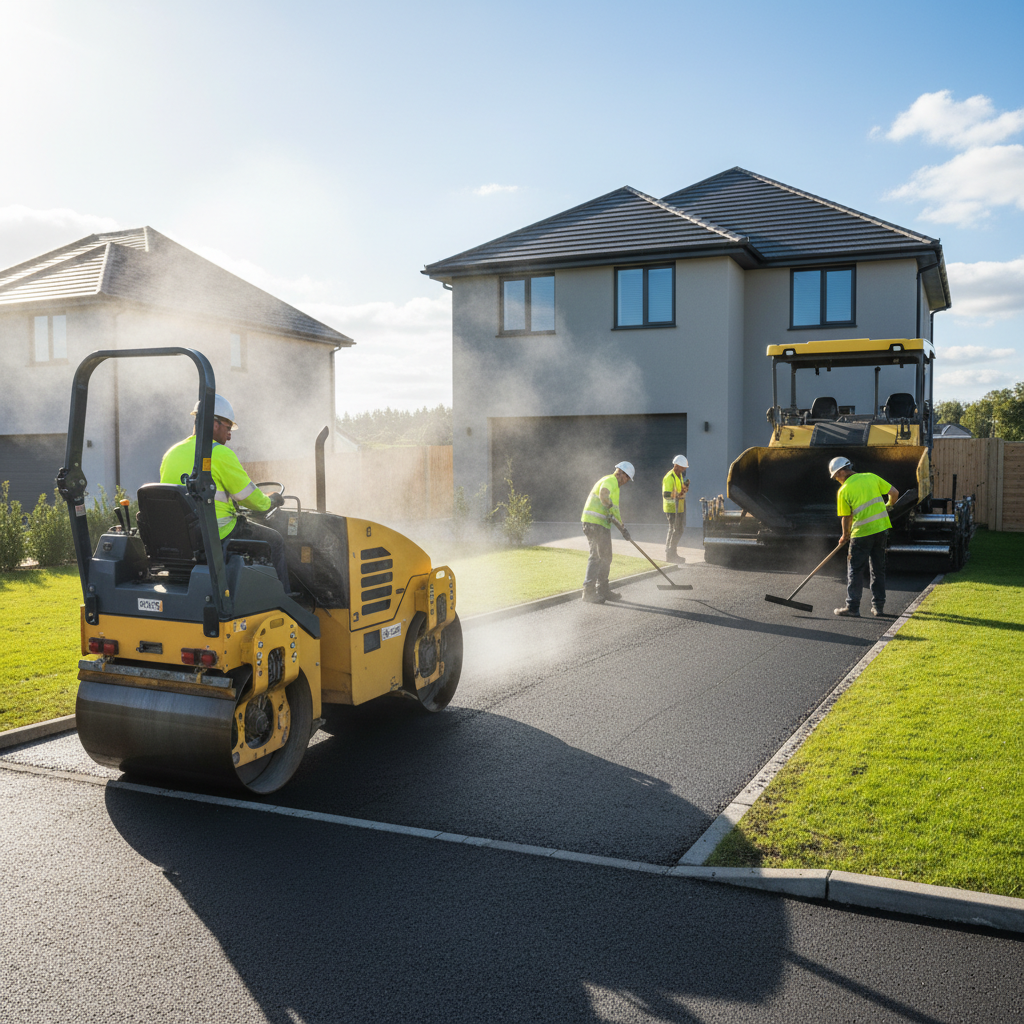
Driveway paving options and costs in Country Hills
Country Hills, Alberta is a small community where driveway paving is a practical, not just aesthetic, upgrade—especially with Calgary-area freeze–thaw conditions. With a 2021 population of 3,660 (Statistics Canada, 2021 Census), demand comes from a steady mix of homeowners renovating older driveways and new builds, most commonly serving detached homes with private driveway approaches. That matters because paving contractors typically price by surface area and base requirements, and those base requirements increase when frost penetrates deeper and water needs to be managed carefully.
In Calgary’s cold continental climate, frost commonly reaches about 1.2 m (4 ft), so the wrong base depth or poor drainage can lead to heaving, cracking, and raveling—then you’re paying again through repairs. The shorter paving season also affects availability and scheduling: asphalt needs warm enough conditions for proper placement and compaction (hot-mix asphalt requires air temperatures above about 10°C), so peak-season installs can be higher priced for smaller jobs. In Country Hills (and especially around the busier residential pockets used as practical “in-demand” staging routes, like the Country Hills Road-adjacent residential areas), we see extra crew pressure during late spring and early summer, plus mobilization costs for equipment travel from the broader Calgary market.
Below are realistic cost ranges for common driveway upgrades in Country Hills. Use them as budgeting targets before you lock in your base design and final material selection.
| Material |
Lifespan |
Maintenance |
Best For |
Price per sq ft |
| Asphalt (new installation, proper base) |
15–25 years |
Seal every 3–5 years; crack repairs as needed |
Lowest upfront cost with solid performance when base and drainage are done right |
$12–$20 |
| Asphalt (overlay on existing gravel base) |
12–20 years |
Seal every 3–5 years; monitor settlement |
When you want asphalt quickly and the base can be rebuilt/compacted to spec |
$10–$18 |
| Interlocking concrete pavers |
25–40 years |
Occasional panel leveling; re-sanding joints; sealing optional |
Premium curb appeal and repairs you can do section-by-section |
$18–$30 |
| Poured concrete (broom finish) |
20–35 years |
Fill spalls/cracks; seal selectively |
Clean look and strong long-term wear when properly air-entrained and drained |
$15–$25 |
| Exposed aggregate concrete |
20–35 years |
Sealer re-coat as recommended; patching where needed |
Better slip resistance and a textured finish that hides minor wear |
$18–$28 |
| Gravel / crushed stone (budget option) |
3–8 years (varies widely) |
Regrade and top-up annually; weed control |
Short-term/lowest-cost surface with easy access for equipment |
$3–$8 |
Prices are estimates only and vary by project scope, site access and material selection.
What affects the price of paving in Country Hills
Even when two homeowners want “the same” new driveway, quotes in Calgary and across Alberta can vary by 30–50% due to differences in base preparation, drainage corrections, disposal, and how much tear-out is required. Asphalt might look straightforward, but if frost heaves occur or water doesn’t drain properly, the contractor has to rebuild the foundation correctly. That’s why it’s common to see a low offer for surface paving only, followed by a higher quote once the site conditions are confirmed.
In Country Hills, the frost line depth and freeze–thaw cycles are decisive cost factors. With frost commonly penetrating to around 1.2 m (4 ft), a driveway that’s expected to stay solid typically needs a deeper, well-compacted granular base than you’d see in milder climates. If granular thickness and grading aren’t built to match the local soil and expected traffic, the pavement can crack and “pump” fine material upward—then water follows. Compounding that, the paving season is compressed: hot-mix asphalt generally can’t be placed properly until conditions are warm enough, which concentrates demand from late spring through early fall and raises scheduling costs for tight-window projects.
On the concrete side, air-entrainment and proper jointing matter. For example, a poorly drained approach that ponds in spring can increase expected labour because the base needs additional grading and possible underdrain work. A driveway with significant existing settlement might push you toward a full tear-out instead of a thin overlay—often shifting a job from the low end of asphalt pricing (closer to $12–$20/sq ft) toward more complete reconstruction budgets. Conversely, a straight, easy-access site with good fall away from the house can keep costs nearer the lower end of the band.
| Price Factor |
Why It Matters |
Cost Impact |
| Driveway area in sq ft |
Most items (asphalt, concrete, base, pavers) are priced by coverage and depth |
Largest swing—changing size by 50 sq ft can change totals noticeably |
| Base depth required |
Frost line and soil conditions determine how thick the compacted granular layer must be to prevent heaving |
Adding depth can increase material and compaction labour substantially |
| Grading and drainage work |
Proper slope and positive drainage reduce water infiltration and freeze–thaw damage |
May add excavation, regrading, and possible drainage components |
| Tear-out of existing surface |
Breaking asphalt/concrete and hauling away debris affects labour and disposal fees |
Can move a job from “overlay” economics to full reconstruction pricing |
| Edge restraints and curbing |
Stops pavers/asphalt from spreading and helps contain base fines |
Adds concrete/stone work and placement time |
| Sealing requirement |
Asphalt needs sealing after the proper cure period to slow oxidation and water penetration |
Maintenance cost adds to lifecycle budgeting; skipping shortens lifespan |
| Site access |
Narrow lots slow equipment, increase labour time, and may require smaller staging |
Can raise cost via extra handling and time |
| Asphalt mix specifications |
Freeze–thaw-rated mixes and proper binder selection can cost more but perform better |
May push asphalt toward the higher end of the $12–$20/sq ft band |
Permits & regulations in Alberta
For most homeowners in Alberta, paving work on your own private property typically does not require a building permit. That usually includes new driveway surfacing on your lot (asphalt, pavers, poured concrete), and related work like installing curb stops, setting forms, or building to your approved property grading—so long as you are not changing municipal infrastructure. The details can still vary by municipality, but the general rule of thumb in Alberta is that private-driveway surface work is usually handled under contractor scope and homeowners’ property responsibilities.
Where permits/approvals often are required: work within the municipal right-of-way, including creating or changing a curb cut, altering boulevard areas, and any modifications that affect storm drainage or municipal ditch systems. If your plan changes how water runs (especially during spring melt), the municipality commonly wants to review it.
Step-by-step checklist to protect yourself: (1) Call for utility locates before excavation through the Alberta One-Call system (and confirm marking prior to base work). (2) Ask your contractor for their Alberta business information and licence references. (3) Request a current certificate of insurance (liability) showing appropriate coverage limits for driveway excavation and paving work. (4) Confirm coverage for workers—WSIB/WCB clearance where applicable—by requesting documentation they can provide before start. (5) If there’s any chance the job touches boulevard grading or drainage, confirm lot-grading rules with the local municipality before the first load of base arrives.
Asphalt vs pavers vs concrete for Country Hills driveways
In Country Hills, the best choice depends on how you’ll maintain the driveway through long winters, winter traction needs, and how much repair flexibility you want. Asphalt is usually the lowest upfront option and performs well when the base is built for frost resistance and the surface is sealed correctly. Plan on sealing every 3–5 years in our climate to slow water and oxidation, and expect routine crack patching over time. Interlocking concrete pavers cost more up front, but they offer the strongest curb appeal and the easiest targeted repairs: if a section settles, panels can be lifted, base corrected, then reset. Poured concrete sits in the middle on price and looks sharp, but it must be properly air-entrained and jointed to manage freeze–thaw movement and de-icing exposure.
Calgary-area frost depth (commonly around 1.2 m) means base prep is not optional. Across all three options, drainage design is critical: the driveway must shed water away from the house and avoid ponding at the edges. Asphalt and concrete both benefit from a thicker, well-graded granular base and strong edge support, while pavers rely on stable bedding and restrained borders to prevent joint loss and movement. For winter maintenance, pavers tend to tolerate plowing and spot repairs well; concrete can crack if the base or joints aren’t designed well; asphalt is durable but relies on timely sealing.
Where price differences are justified: if your driveway is about 400 sq ft, asphalt might land around $12,000–$20,000 for a full install depending on scope, while pavers commonly start higher due to labour and materials (often aligning with the $18–$30 per-square-foot tier). Paying for pavers is usually worth it when you want premium appearance and the ability to repair only affected areas rather than replacing the entire surface later.
| Material |
Frost Resistance |
Curb Appeal |
Repair Method |
Lifespan |
Price Band |
| Asphalt (sealed regularly) |
Good with proper base and drainage |
Moderate (clean, dark finish) |
Crack patching, localized resurfacing |
15–25 years |
$12–$20 |
| Interlocking concrete pavers |
Excellent when bedding/base are stable |
High (premium look) |
Lift-and-replace individual sections/panels |
25–40 years |
$18–$30 |
| Poured concrete (air-entrained) |
Good to very good with correct mix/joints |
Moderate (varies by finish) |
Crack repair, patching; full replacement if badly heaved |
20–35 years |
$15–$25 |
| Exposed aggregate concrete |
Very good when sealed and properly drained |
High (textured finish) |
Patch and re-finish localized areas |
20–35 years |
$18–$28 |
| Permeable pavers (drainage grid) |
Very good with engineered drainage design |
High (clean, modern layouts) |
Section replacement; maintain joints and drainage layer |
20–35 years |
$22–$34 |
| Chip seal / tar-and-chip |
Fair (depends on base and maintenance) |
Low to moderate |
Spot re-chip; recoating in cycles |
6–15 years |
$10–$16 |
How to choose a paving contractor in Country Hills
Choosing a paving contractor in Country Hills is less about finding the cheapest quote and more about confirming they can build the frost-resistant base and drainage you need for Alberta winters. Start by verifying the contractor’s Alberta licensing and request proof of liability insurance (certificate of insurance) for excavation and heavy equipment work. Next, confirm workers’ coverage for their staff—WSIB/WCB documentation or clearance letter—before the first load of base arrives. Ask for these documents directly and keep copies for your records.
Then, get 2–3 itemised written quotes rather than one lump-sum number. You want a breakdown for labour and materials: base depth, granular type, asphalt mix type, concrete thickness, reinforcement/jointing approach (if applicable), and disposal/haul-away. Scrutinize the scope for exclusions: is tear-out and hauling included? Is permit pull included (if the job touches boulevard/drainage)? Will topsoil/overburden be removed and replaced to a specified elevation? A reputable contractor should also list a clear warranty and what it covers.
On payment, never pay more than about 10–15% upfront. Use a holdback until the work is complete and any seal cure/warranty checkpoints are met. Request a written timeline with a start date and completion estimate, recognizing that in Alberta the workable paving window is late spring through early fall. A contract that doesn’t specify sequencing (excavate → base → compaction verification → surfacing → finish/curing → final cleanup) is a red flag.
- Ask for insurance and WSIB/WCB clearance and verify validity dates.
- Request the proposed base build-up in inches/mm and the material grading.
- Confirm drainage plan: slope away from the house and edge capture.
- Get compaction and base preparation notes (not just “we’ll compact”).
- Ensure tear-out and disposal are clearly included (or excluded).
- Confirm curb/edge restraint details—pavers especially need containment.
- For asphalt, confirm sealing requirements and when it will be done.
- Ask about concrete air-entrainment and joint spacing for freeze–thaw.
- Get warranty terms in writing (workmanship length and exclusions).
- Ask if manufacturer warranty applies and whether it’s transferable.
- Use itemised pricing for labour, materials, and equipment/mobilization.
- Set a clear payment schedule with a holdback until final acceptance.
Red flags we see around Country Hills: (1) quotes that omit base depth and drainage details, (2) “overlay-only” suggestions without checking frost-sensitive settlement, (3) no proof of insurance or WSIB/WCB coverage when excavation is involved, (4) pressure to pay large deposits upfront, and (5) vague timelines like “sometime in summer” without a start/completion estimate.
Frequently asked questions — paving in Country Hills
How much does driveway crack repair cost in Country Hills?
In Country Hills and the broader Calgary market, crack repair pricing depends on whether the job is a simple crack seal, a routed-and-filled section, or a deeper fix where water has undermined the base. For typical asphalt hairline cracking, homeowners often see smaller repairs priced around the mid-hundreds when accessed easily and prepped properly. If cracks are wider or there’s evidence of base movement, repair can be closer to a “small patch” project and may approach the lower end of sealing/repair budgets (for example, the $400–$1,500 range for many repair-and-prep combinations). Concrete repairs can be higher if grinding, lifting/patching, or re-leveling is required. The key is diagnosing whether it’s surface cracking only or an ongoing freeze–thaw water issue—otherwise repairs won’t last.
What base thickness do I need for pavers in Country Hills?
For pavers in Country Hills, base thickness is driven by frost protection and soil stability, not by “typical” online templates. Because frost commonly penetrates to around 1.2 m (4 ft) in this region, you should plan around a well-compacted granular base built to handle freeze–thaw movement and prevent water infiltration. In practice, most good installs include a compacted granular base layer (often several inches to more than a foot total combined layers depending on subgrade conditions) plus a bedding layer for paver alignment. The exact thickness depends on your existing soil, drainage, and whether there’s current settlement. The right contractor will confirm grades and drainage first, then propose the base build-up in inches on the quote, rather than promising a single “one-size-fits-all” number.
How do I get the most accurate paving quote in Country Hills?
To get an accurate paving quote in Country Hills, treat the site visit like part of the pricing process. Ask for an assessment of subgrade condition, existing settlement, drainage flow, and how water behaves during spring melt. Provide measurements (length, width, and any irregular shapes) or let the contractor measure during the visit. Then request itemised pricing that lists base depth, material types, tear-out and disposal, and any edge restraints. For asphalt, ask which freeze–thaw-rated mix approach they plan to use, and confirm when sealing will be done after the cure period. For concrete, ask about air-entrainment and jointing. Finally, confirm what’s excluded (permit pull if boulevard work is involved, haul-away fees, and landscaping restoration) so the final invoice doesn’t surprise you.
How much does it cost to pave a driveway in Country Hills?
Costs in Country Hills generally track the Calgary-area price bands, primarily based on driveway square footage, base requirements, and tear-out needs. Asphalt driveway paving commonly lands in the $12–$20 per-square-foot tier for a properly built installation with the right base and drainage. If you choose interlocking concrete pavers, budgeting often aligns with the $18–$30 per-square-foot band depending on layout complexity and restraint/edge details. Poured concrete and exposed aggregate typically fall in the $15–$25 band (varies by finish and prep). If your driveway needs significant regrading, drainage corrections, or full tear-out, expect the price to move toward the higher ends of these ranges.
Asphalt vs interlocking pavers vs concrete — which is best in Country Hills?
The “best” material for Country Hills depends on how you balance upfront cost against long-term repair flexibility and winter performance. Asphalt is usually best when you want the lowest initial install price and you’re willing to maintain it—sealing every 3–5 years and addressing cracks early. Interlocking pavers are best if curb appeal matters and you want the ability to lift and replace only the affected sections if there’s localized settlement from frost cycles. Poured concrete can be a strong choice when it’s properly air-entrained, jointed, and built on a properly compacted, well-drained base; it offers a clean look but cracks can be visible if the base or joints aren’t right. In short: asphalt for budget-focused builds, pavers for longevity-and-repair, and concrete for a mid-range durable finish.
How long does a paved driveway last in Country Hills?
Longevity in Country Hills is primarily about frost-resistant base construction, drainage, and maintenance. With proper installation, asphalt commonly lasts about 15–25 years, but without timely sealing and crack patching, wear accelerates because water gets into micro-cracks and freeze–thaw expands those pathways. Paved paver driveways often last 25–40 years because individual panels can be repaired or reset if movement occurs. Poured concrete typically lasts 20–35 years when air-entrained and properly jointed; poor drainage or inadequate base can reduce that. Winter maintenance also affects lifespan: consistent plowing (avoiding direct blade contact with edges), using sand instead of aggressive de-icing when possible, and keeping water from ponding near the driveway all help.